


▶ 〈Humint〉 Actor Jo In-sung's interview continues in Part 1.
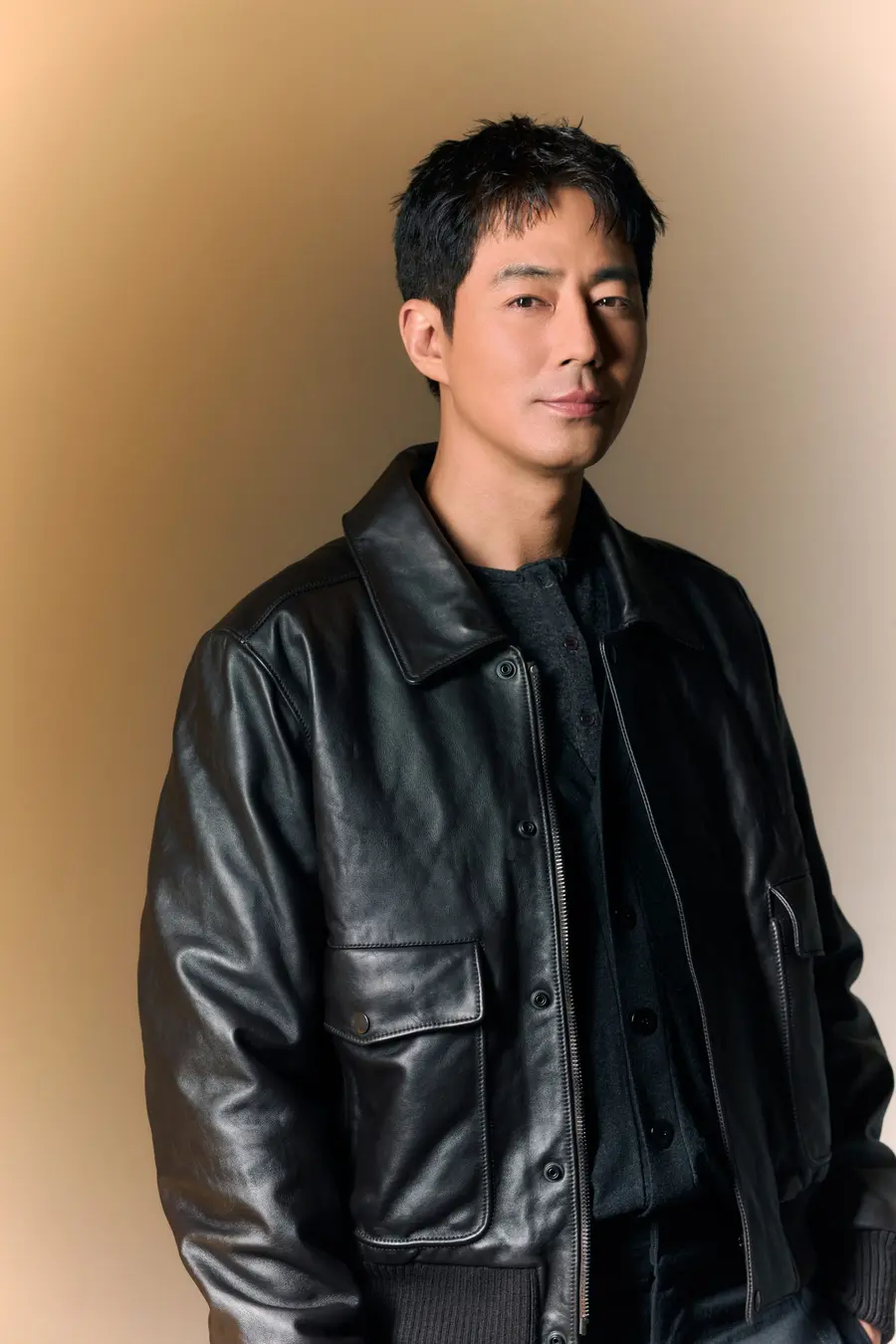
In 〈Mogadishu〉 and 〈Moving〉, you took on the role of a National Intelligence Service agent for the third time. What were the differences between your previous roles as a National Intelligence Service agent and this one as Section Chief Jo?
The National Intelligence Service is an organization shrouded in mystery, much like the CIA. There’s a sense of mystique that comes from ignorance, and it’s a job filled with fantasy. On the other hand, there are also prejudices. This time, Section Chief Jo in 〈Humint〉 is more realistic compared to 〈Moving〉. Of course, the film doesn’t delve into the details of covert operations. Recently, while receiving firearms training from the National Intelligence Service for filming 〈Humint〉, I jokingly asked a National Intelligence Service employee, "Are there any black agents like Kim Doo-sik from 〈Moving〉?" and they replied, "I can’t disclose that as it’s a state secret." (laughs) That was an interesting episode. Anyway, I tried to portray the National Intelligence Service agent as an office worker, and as I mentioned, I made an effort to approach 〈Humint〉 with kindness. I felt that while I needed to restrain my emotions, I also had to leave some space for interpretation. Lately, I’ve realized that having that space allows the audience to accept their own emotions. If I show something too clearly, it might create a sense of rejection, so I tried to act with a relaxed demeanor. What I aimed to express was the image of an office worker revealed in Section Chief Jo's first sequence. I thought of it as the feeling of waking up tired in the morning, preparing equipment to go to work, and even when drinking water, it’s like the office worker who feels a severe thirst from the previous day. Just like how sometimes before heading to the filming set, I wake up feeling exhausted and think, 'I don’t want to go out today, what kind of day will it be?' I approached Section Chief Jo with the mindset of being an office worker before being a National Intelligence Service agent.
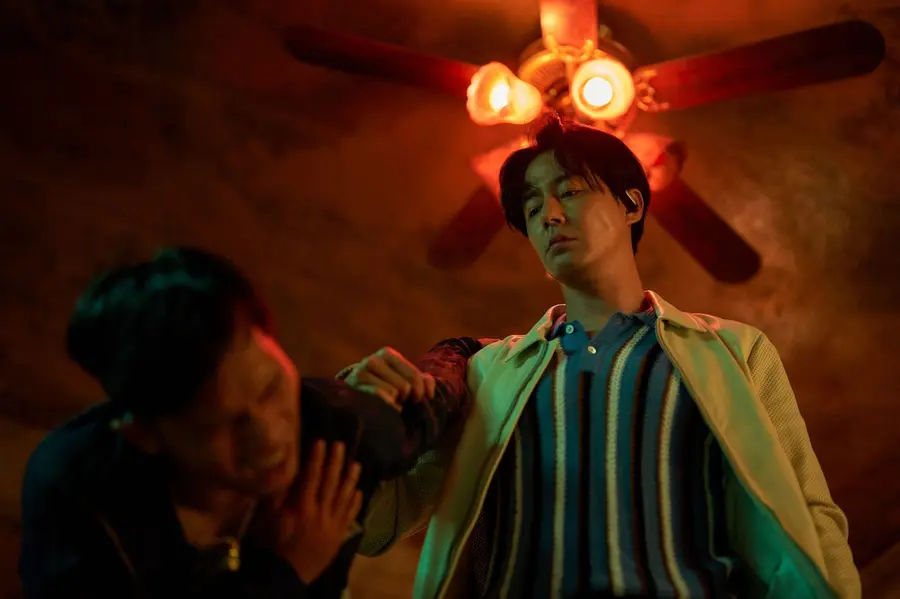
Section Chief Jo's action scenes are concentrated in the beginning and the end. The tone of the action in the first half and the second half is distinctly different. How did you approach each action sequence differently?
In the first half, the action shows a lot of Section Chief Jo's emotions, while in the second half, it becomes cooler. In a way, it’s a process of showing Section Chief Jo's transformation. After losing Humint, in the second half, he doesn’t focus on emotions but approaches things rationally, with a relaxed demeanor. In the action scenes, you can also catch glimpses of Section Chief Jo's character trying to overcome the wounds of losing Humint. Therefore, I think the action in the second half was conducted more calmly than in the first half, but I’m not sure how you will perceive it.
I felt that Section Chief Jo in 〈Humint〉 is like an observer. He is in a third-party position, watching the relationship between Park Geon and Chae Seon-hwa from a distance. As you mentioned in the press conference, it seems that it would have been more challenging to portray a character who is more restrained than flashy.
The justification of Park Geon and Chae Seon-hwa is clear. However, for me, it was a significant task to consider how Section Chief Jo would view them. So, I thought I needed to give the audience a feeling that their emotions are reflected in Section Chief Jo.
Another noticeable aspect of 〈Humint〉 is the abundance of close-up shots. Looking at Jo In-sung's filmography, I don’t think there has been a work that has built up the character's thoughts and emotions with so many close-up shots. Did you have any concerns about that?
That’s right. When there are many close-ups, it becomes very easy to expose emotions. Close-ups are quite intimidating shots. The camera angles are calculated to absolute precision, so in close-up shots, there are times when you can get lost in yourself. So, I tried to do nothing instead. Just by 'observing' itself, I thought about whether I was putting in strength, whether my eyes were relaxed, and whether I was getting lost in myself.
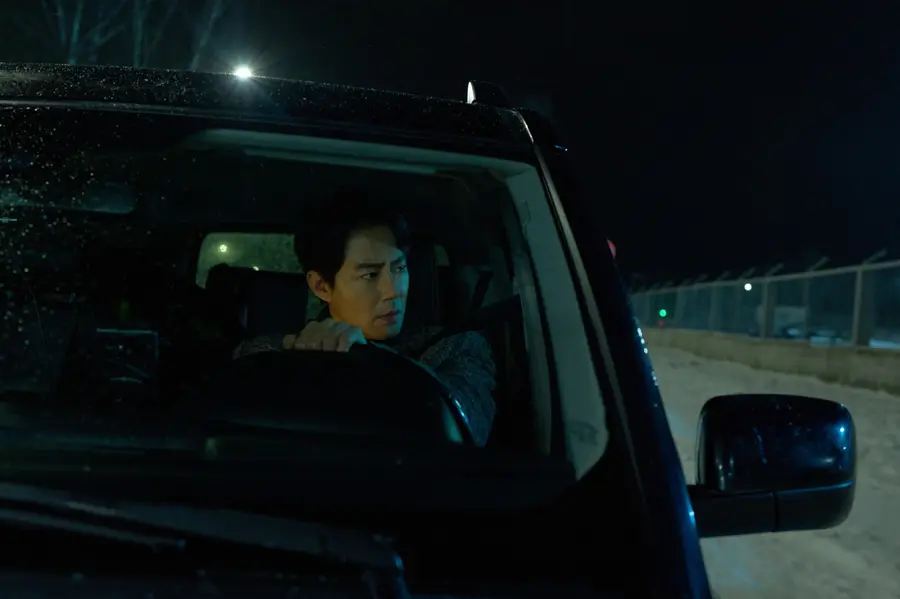
From what you’re saying, it seems that your attitude towards acting has changed over the decades you’ve been in film. What caused this change in your acting approach?
Since I often play the lead role, I tend to appear a lot. In recent works like 〈Smuggling〉 and 〈Moving〉, I have shorter appearances. However, in 〈The King〉, I was there from start to finish, and even then, I said I would relax, but I couldn’t help but have a lot of tension in my body. Writer Noh Hee-kyung, who worked on 〈That Winter, the Wind Blows〉, 〈It’s Okay, That’s Love〉, and 〈Dear My Friends〉, once told me, "The script already follows you. You don’t need to express everything because it’s built layer by layer like bricks, so it’s better to focus on letting go." For example, if there are this many lines, I thought I had to put in strength from the beginning and deliver the lines. But the writer said, "These are all lines to be discarded. I laid the groundwork to write this one line at the end, but you’re putting in strength from there, which makes it excessive." At that time, I was young, and since the lines were good, I thought I had to express everything. But it turns out you have to let go of everything. The writer said, "I wrote all the lines in front to write the last line, so just let it go. Just put a dot on it." Of course, that might be the writer's style. It’s not necessarily the right way. Now, I value letting go. So, I’ve gradually moved towards ‘I shouldn’t do anything.’ I already have a strong presence. If I try to do something, it becomes really burdensome. (laughs) Especially while working with director Lee Chang-dong recently, I confirmed that going in this direction is right for me. So, I’m learning to act less, keeping the feelings but not necessarily expressing them, practicing restrained acting.
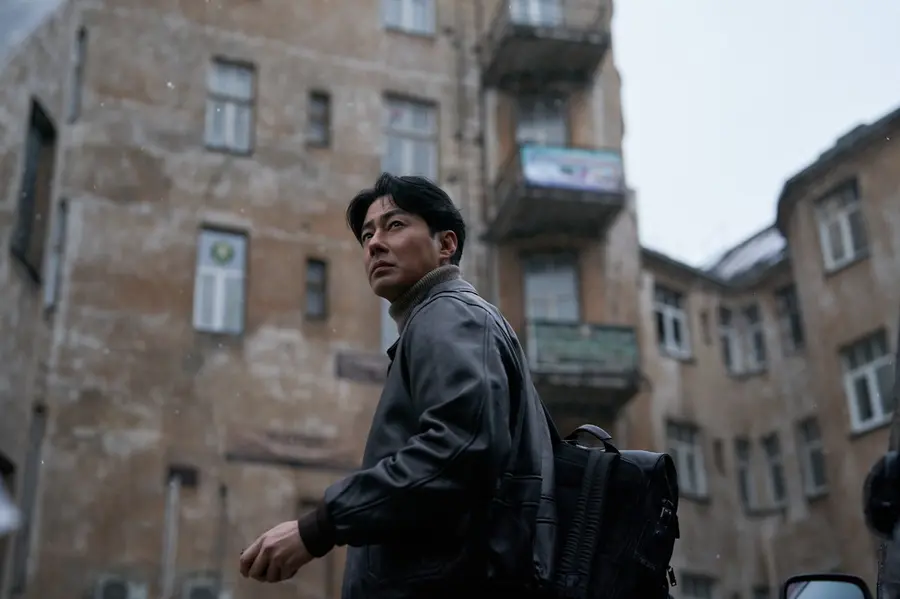
When comparing your previous work with director Ryu Seung-wan to this one, it feels like the way director Ryu uses Jo In-sung has changed. In 〈Smuggling〉, you had a short role but played a protagonist in that scene, while here you portray a character observing the love between Park Geon and Choi Seon-ah. Why do you think this change in usage has occurred?
The director feels more comfortable when the most trustworthy actors are in the lead roles. Just like how (Hwang) Jung-min did in 〈Hope〉, a safe presence that supports the play is like the base in food; without this base, no matter how much seasoning you pour, it won’t work. In that sense, I think director Ryu Seung-wan placed me as the base this time, managing other characters and seasoning them well to create a delicious dish. Some might say the importance of the base is less, but just like you realize its importance when the air is gone, I think the base is like air. You don’t notice it when it’s there because you’re always breathing. But when the air runs out, the driving force disappears. Stability doesn’t stand out. So, I took on this project to find that ‘base’ role.
In reality, was it more challenging to take on the role of an observer, stepping back and watching, compared to before?
It was more difficult, required more thought, and was also fun. Being in the position of an observer, there are times when you see the situation as if it’s someone else’s business. When your own house is on fire, you panic. But when someone else’s house is on fire, you can see the bigger picture, thinking, 'They could move like this, or like that.' I’m not a producer, but I think the director felt reassured. So, I think he listened to my opinions.
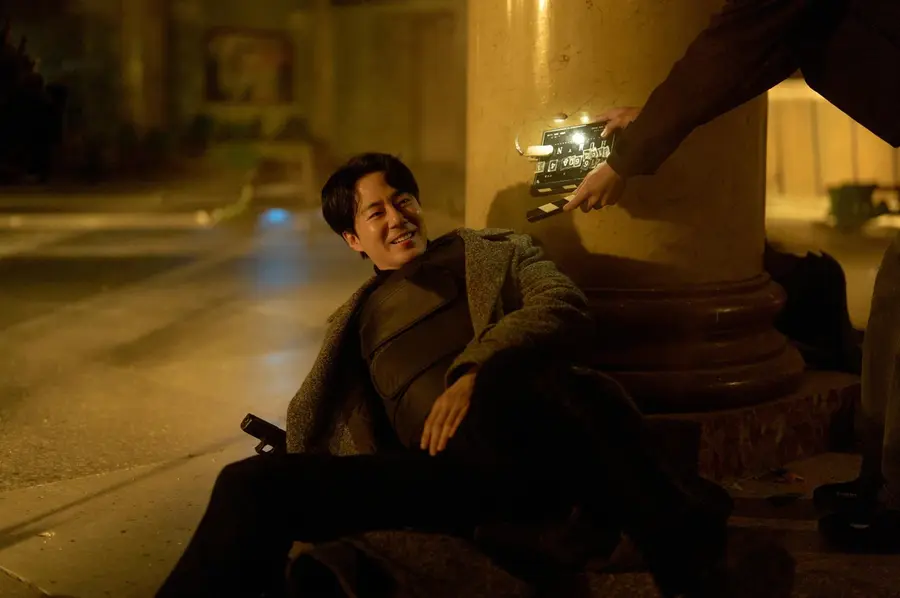
From 〈Mogadishu〉 to 〈Smuggling〉, and now 〈Humint〉, do you feel there are any unique characteristics of director Ryu Seung-wan's set?
Every director's set is the same; it’s sharp and persistent. That’s director Ryu Seung-wan. And the director really knows nothing but movies. Even casual conversations are only about movies.
The action scenes in the latter half of 〈Humint〉 felt like emotions and actions bursting like fireworks. The action sequences are long, but there are many new visuals. What was your impression of the action in 〈Humint〉? If you were to promote the action to the audience, what would you say?
These days, I feel like there needs to be a reason to come to the cinema. We need to provide a cinematic experience that can’t be seen on OTT or TV screens. Recently, 〈F1: The Movie〉 was like that; it seems like dopamine needs to burst. I think 〈Humint〉 can provide that in the current Korean films. Especially in special theaters, I think you can feel even more of that. Fortunately, from 〈If We〉 to the recent 〈The Divine Move〉, it seems like spring is coming to the theaters. Just like how new sprouts emerge in spring, it feels like the spring vegetables are breaking through the ground. I think the issue will be how much the pie grows compared to last year, and I hope that 〈The King’s Affection〉 and 〈Number One〉 will serve as a signal for welcoming spring.
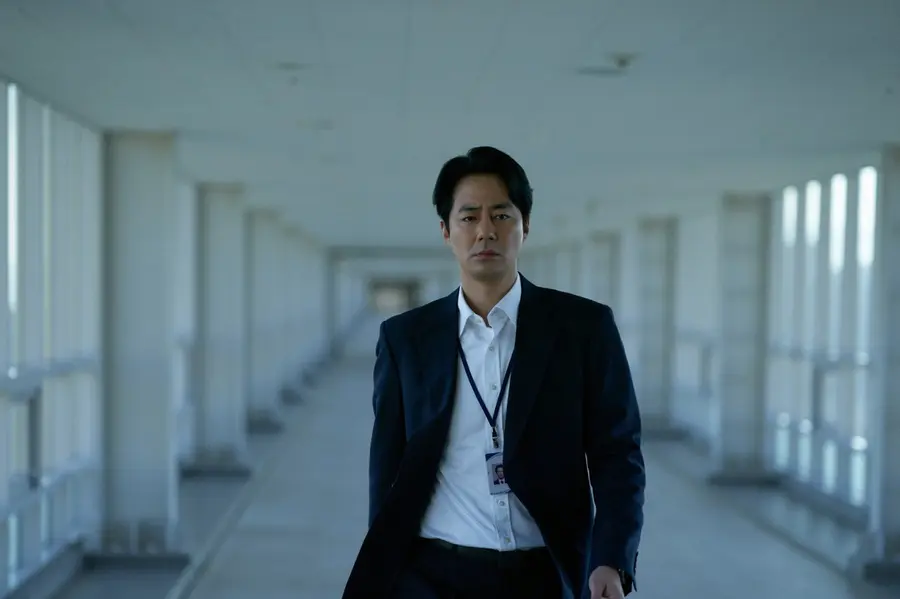
At the end of 〈Humint〉, there’s an ending that hints at a sequel. If a sequel is made, would you be willing to participate?
That’s true. I saw in the comments, "If the National Intelligence Service and Section Chief Jo are alive, isn’t a sequel possible?" But I don’t know why they don’t consider that I’m aging. (laughs) These things need to be filmed right away, but you know my age, right? I could be 50 years old.
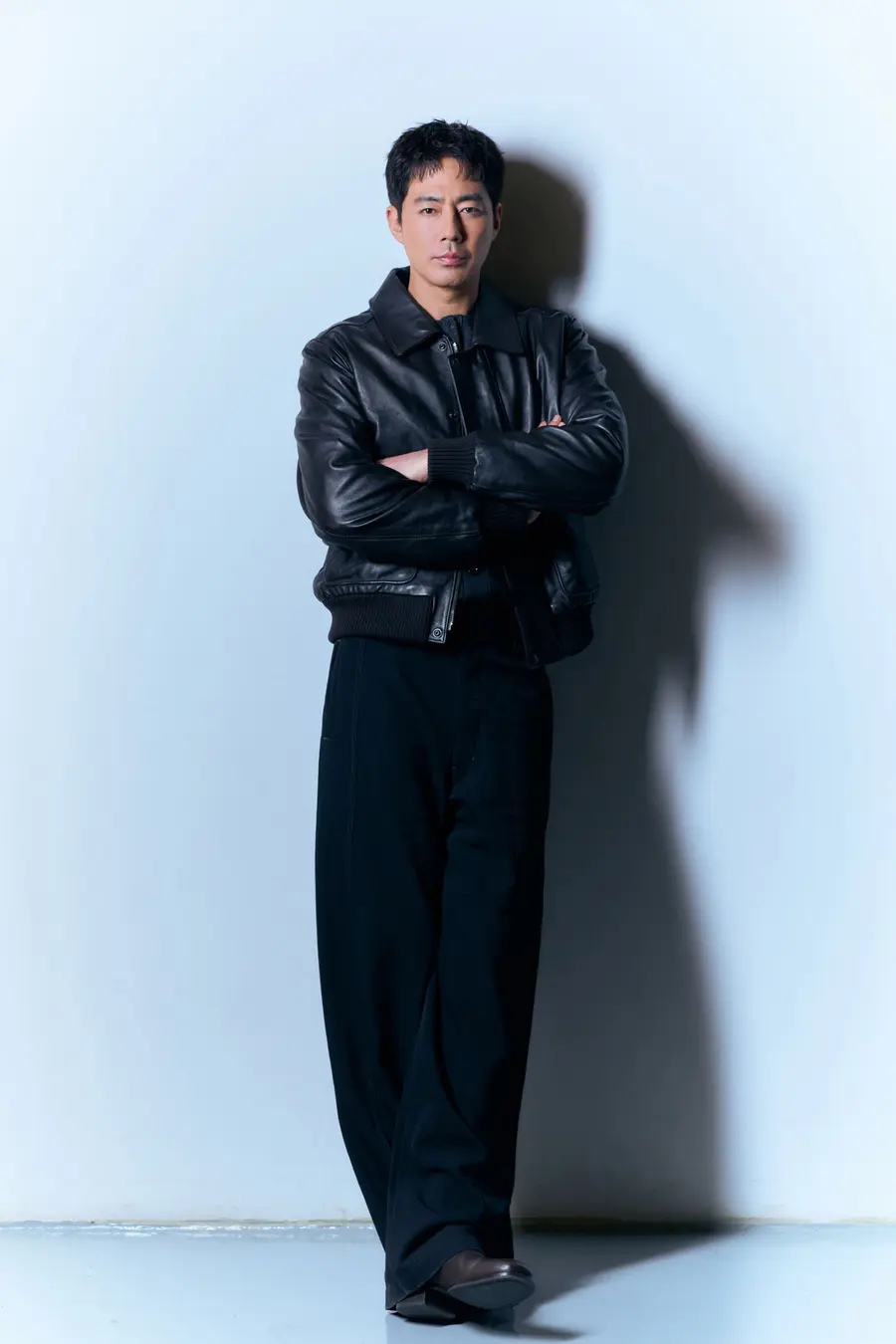
It seems that actor Jo In-sung has become a more sought-after actor in his 40s. From the Disney+ series 〈Moving〉 to the upcoming release of 〈Hope〉 (directed by Na Hong-jin) and 〈Possible Love〉 (directed by Lee Chang-dong), if there’s a reason for this prolific output, what would it be?
It’s not so much about being prolific, but rather about the issue of 'usage' I mentioned earlier. The concept of a star needs to change a lot. Before COVID-19, there was a mystique star system, but after COVID-19, it seems that the new atmosphere of a star is how close they can get to the audience. If you can’t get close, you’ll be forgotten. You have to get close in some way. So, even if the role is small, let’s be useful; if I can be useful, I’ll participate, which is why my frequency of work has increased recently. Also, the recent calls from good directors are a reason I can’t avoid working. So, whether the role is big or small, I hope to be useful. That’s why I thought that even without reading the script for director Ryu’s work, the smaller the role, the better. I found that stepping away from roles that put a lot of pressure and stress on me, the ones that come first in the credits, actually helped me. I could focus solely on acting, and all those experiences became a great asset for me. I think starting with the mindset of wanting to be useful, even in a small way, has led to this increased frequency of work.
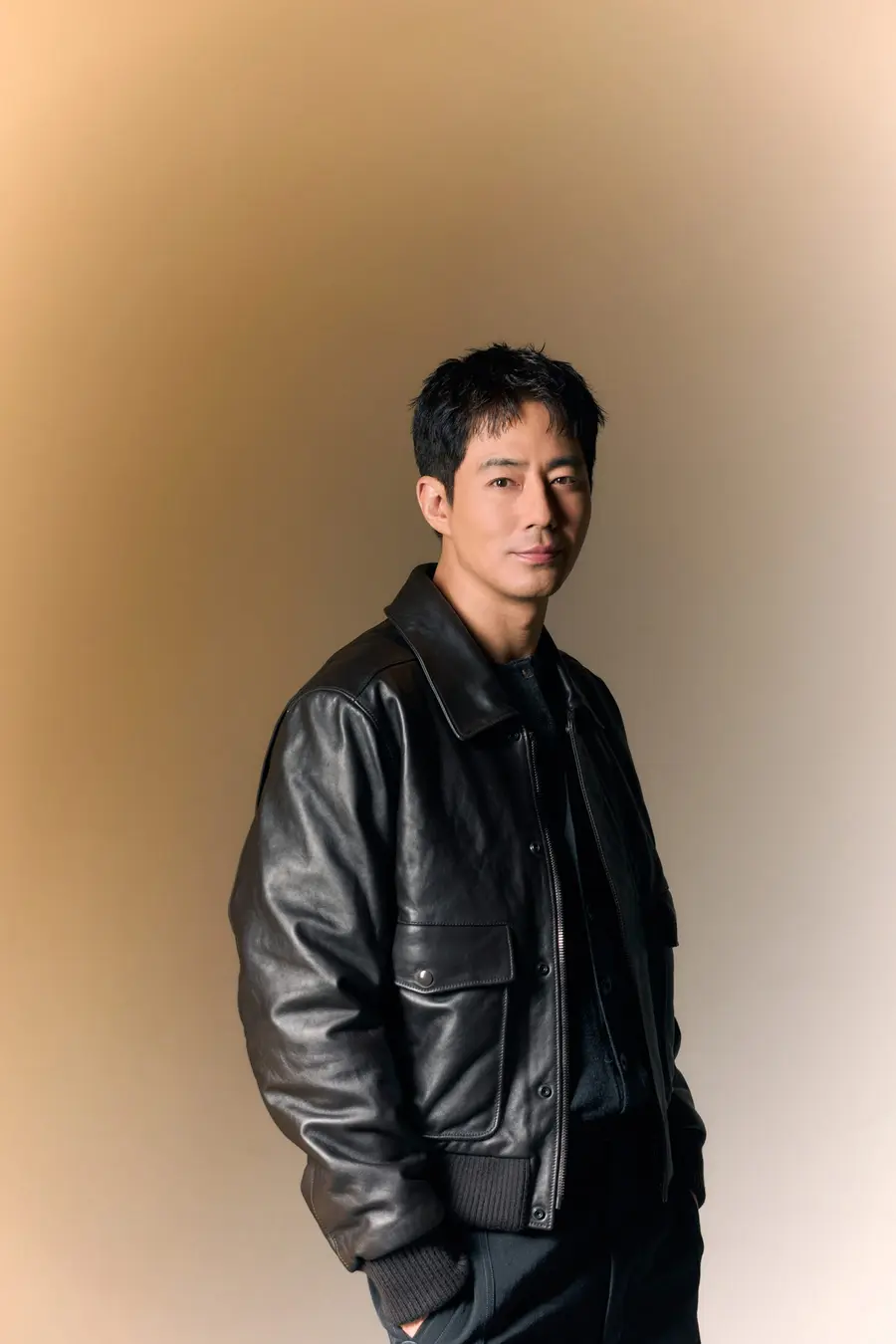
Looking at actor Jo In-sung's recent activities, including this work and the upcoming project 〈Hope〉, you have been accumulating experiences working with global actors in global shoots. I’m curious about your feelings about handling such projects and how this global work has stimulated you as an actor.
I’m glad it ended well. (laughs) I’m not sure if it’s a global project to that extent, but I just did it. Anyway, 〈Hope〉 has foreign actors, and in 〈Possible Love〉, I got to work with really great actors like Seol Kyung-gu, Jeon Do-yeon, and Jo Yeo-jung. Honestly, I don’t think anything will change for me. The position of having to do well is still the same. If a lot of money is invested, it has to be well made, so that pressure is the same. How can I become a global star? The possibility is… I can confidently say it’s very slim. (laughs) This time, I approached it with a mindset of learning. Working with directors Ryu Seung-wan, Na Hong-jin, and Lee Chang-dong, I thought I would learn something. So, I treated it as an opportunity.
This year, you’ve become the lead in three highly anticipated films: director Ryu Seung-wan's 〈Humint〉, director Na Hong-jin's 〈Hope〉, and director Lee Chang-dong's 〈Possible Love〉. It seems like you must be feeling something special about this.
I didn’t do it alone, so I think that’s a bit arrogant. (laughs) That’s also a kind of attention-seeking behavior. Isn’t it? There’s (Hwang) Jung-min, (Seol) Kyung-gu, and (Jeon) Do-yeon. And 〈Humint〉 (Park) Jung-min is at the top these days. Who can beat Jung-min? So, I don’t think it’s necessary to feel that way just because I’m the lead in major films. That’s also attention-seeking behavior. (laughs)
![[Chuseok Holiday Box Office] Yoo Hae-jin and Park Hae-il's 'Assassins' and 'Tazza 4' knock out 'The Odyssey,' draw 130,000 on opening day for No. 1](https://cdn.www.cineplay.co.kr/w300/q75/article-images/2026-09-26/9f21ef55-2288-4c72-b030-b8b00587e464.jpg)
![[First Reactions] 'Humint' Cineplay Reporter Star Rating](https://cdn.www.cineplay.co.kr/w160/q75/article-images/2026-02-05/88e543a0-faba-4cb6-9f45-1c63b694682b.jpg)
![[Kim Ji-yeon's Jewelry Box] Expanding into Action Acting, 'Humint' Assistant Manager Im Jung-yoon](https://cdn.www.cineplay.co.kr/w160/q75/article-images/2026-02-10/4ccd78f5-012b-49b7-9297-dc089545dee8.jpg)
댓글 (0)
댓글 작성
댓글을 작성하려면 로그인이 필요합니다.
로그인하기