


▶ This article on Kore-eda Hirokazu's 〈The Sheep in the Box〉 continues from Part 1.
Recovery of an animistic sensibility
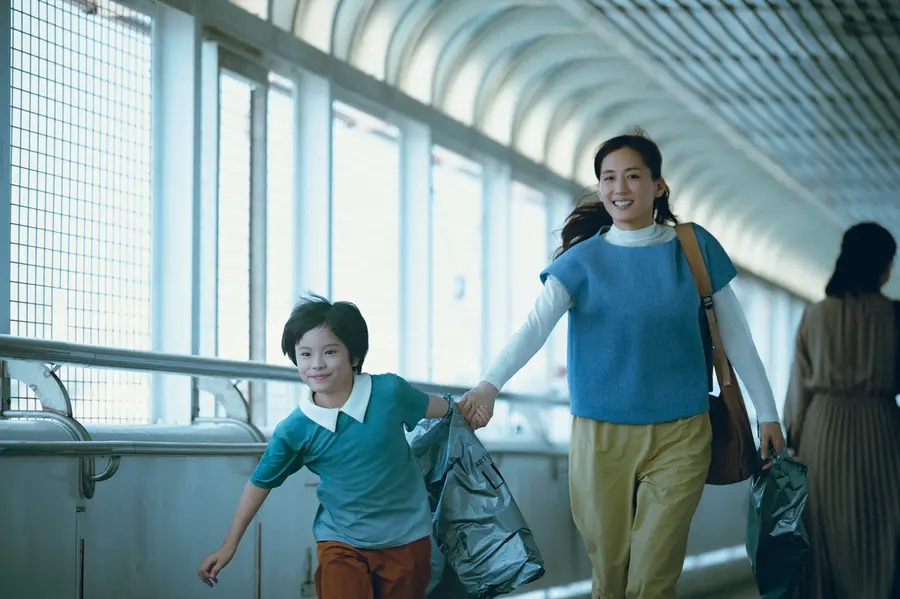
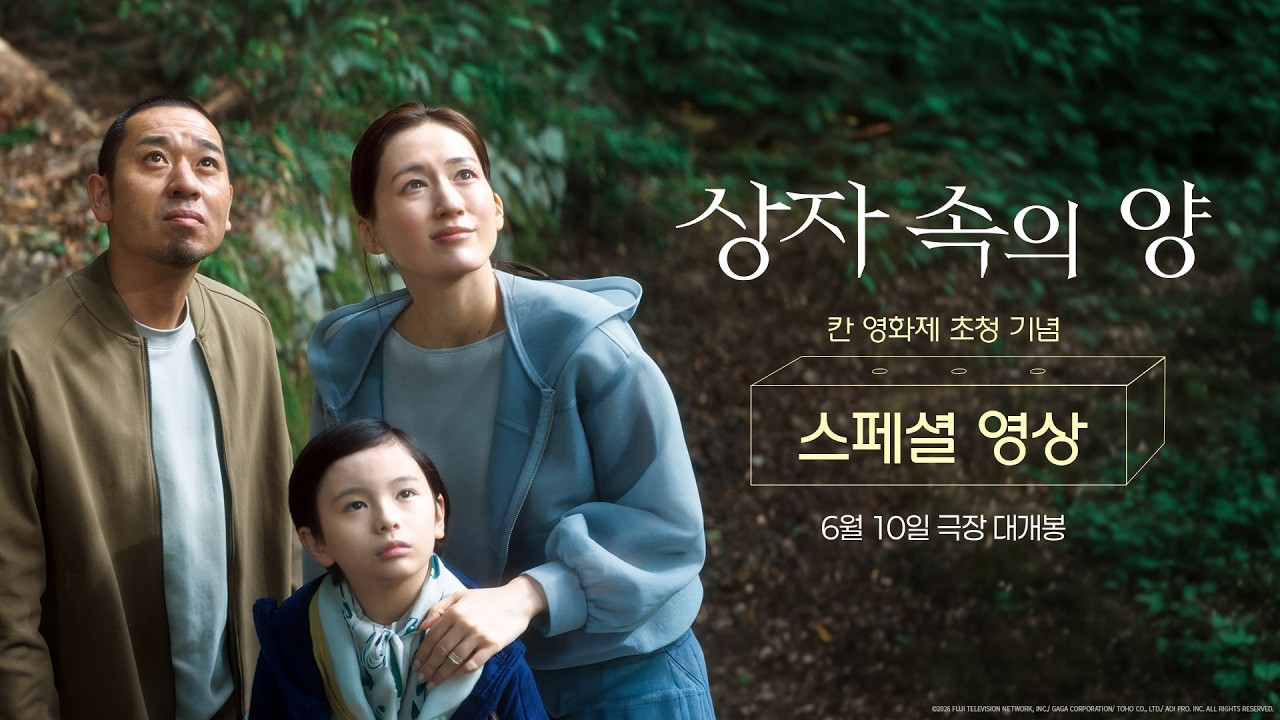
The willingness to believe in the unseen connects directly to Japan's traditional animism, which holds that natural objects and phenomena are inhabited by spirits or invisible presences. In this film, Kore-eda builds on animism to move between life and death and to explore connections with unseen realms. That connection presupposes a relationship and circulation with nature. In the film, death is not simple annihilation. Even when the body disappears, the spirit remains alive within nature's connections and cycles; the dead remain presences that can still resonate within the flow of life and nature. Drawing on the imagination that an AI network resembles the network of trees and the broader natural system, the film links AI—moving along currents of data invisible to human eyes—with trees communicating through the wood-wide web (the organic network by which forest trees exchange nutrients and information via fungal mycelia). In the film, Kakeru, an abandoned humanoid, and a group of abused human children create a new place to live in the forest. That ending stems from an animism grounded in nature's cycles. Kakeru does not enter an invisible realm of death; he dissolves into and exists as part of nature.
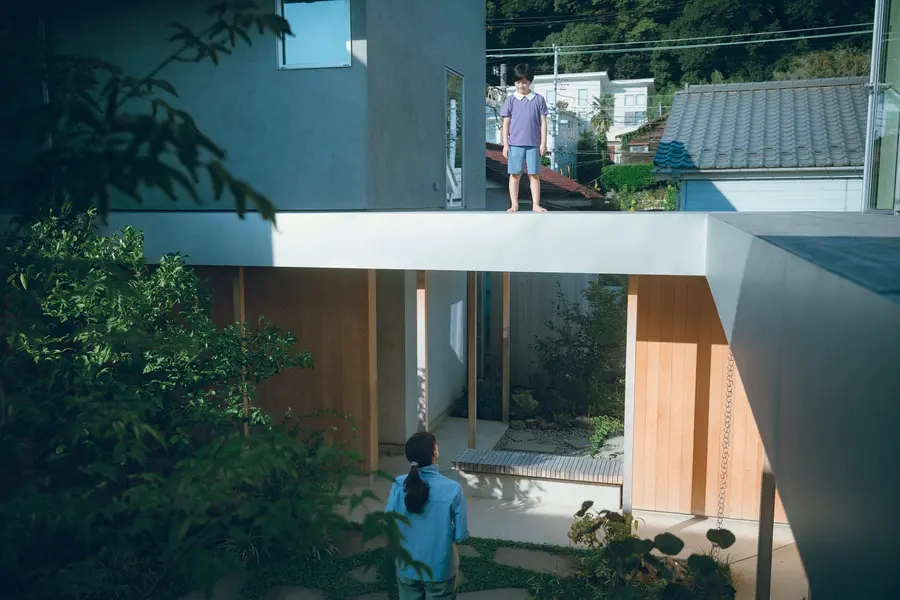
But Kore-eda also argues that modern rationalism has caused contemporary people to lose spirituality and the ability to imagine the unseen. Kore-eda said in an interview, "People once had the ability to imagine for themselves what might be inside a box; now I feel that ability is gradually disappearing." In the film, Otone tells Kakeru about "The Sheep in the Box," saying, "What is unseen is more important." She also carries forward the working methods of Ryue Nishizawa, who seeks harmony with nature. Yet, when it comes to her son's death, she remains trapped in a binary view that separates life and death. Kensuke, too, once believed in the spirits of dead trees and thought in animistic terms. Over time, seeing Kakeru try to avoid remaining confined in the boxes they built and instead seek freedom through nature's connections, they reawaken their sense of nature and recover their spirituality. 〈The Sheep in the Box〉 argues that true mourning is not about clinging to an absent presence or erasing it, but about restoring an animistic sensibility that intuitively recognizes unseen beings in every moment.
From sea to forest
Kore-eda Hirokazu's perspective
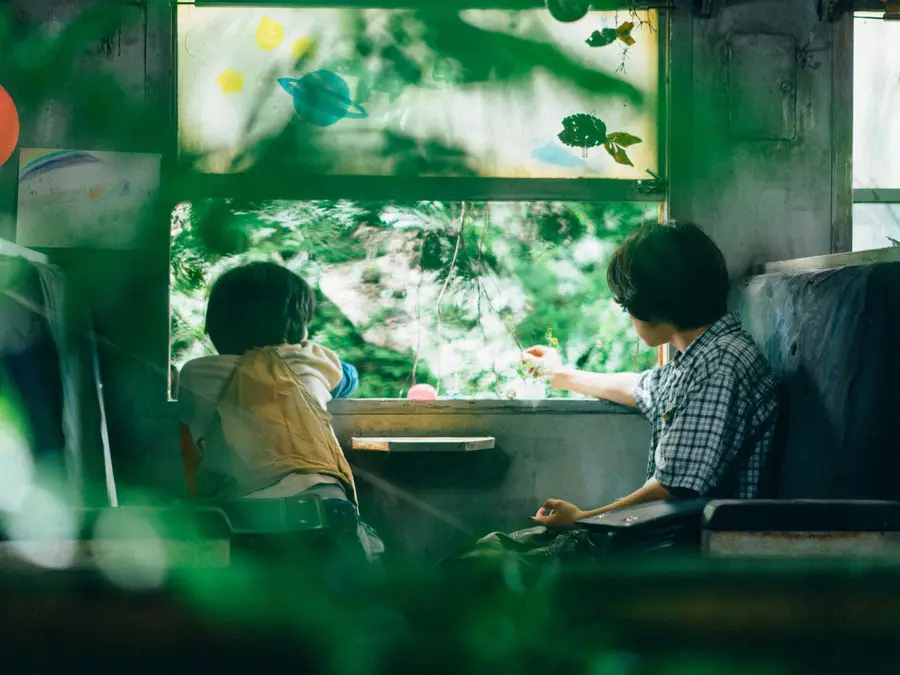
Beginning with the film 〈Monster〉 (2023), Kore-eda Hirokazu started sending children into forests. His cinematic world was originally set mainly by the sea—in films such as 〈Maborosi〉 (1995), 〈Still Walking〉 (2008), 〈Our Little Sister〉 (2015) and 〈Shoplifters〉 (2018) (in 〈Shoplifters〉 the characters who form an alternative family briefly experience a moment of complete bonding). In Kore-eda's films the sea has functioned as a space where life and death touch on a horizontal plane, a reflective place that remembers absent beings, and a site of mourning where those left behind process their grief. The sea ultimately becomes an emotional cleansing space where wounds and trauma from loss are washed away. As such, the sea has long been a principal setting that reflects his thematic concerns. Kore-eda's move from sea to forest signals more than a simple change of backdrop: it indicates a shift in how he approaches loss and in the way he seeks redemption for those lives. In his recent work the forest is portrayed as an ecological refuge where beings are liberated and regenerated, a place to escape an oppressive society. In 〈Monster〉, the forest hideout built around a discarded car becomes the place children reach when they flee oppressive environments—school or home—and it functions as a utopian site where they are not branded as 'monsters' but can exist whole. That utopia in 〈Monster〉 is, however, closer to a hidden sanctuary temporarily granted outside adult misunderstanding and social norms. The meaning of the forest expands further in 〈The Sheep in the Box〉, where Kore-eda combines science-fiction imagination with historical significance.
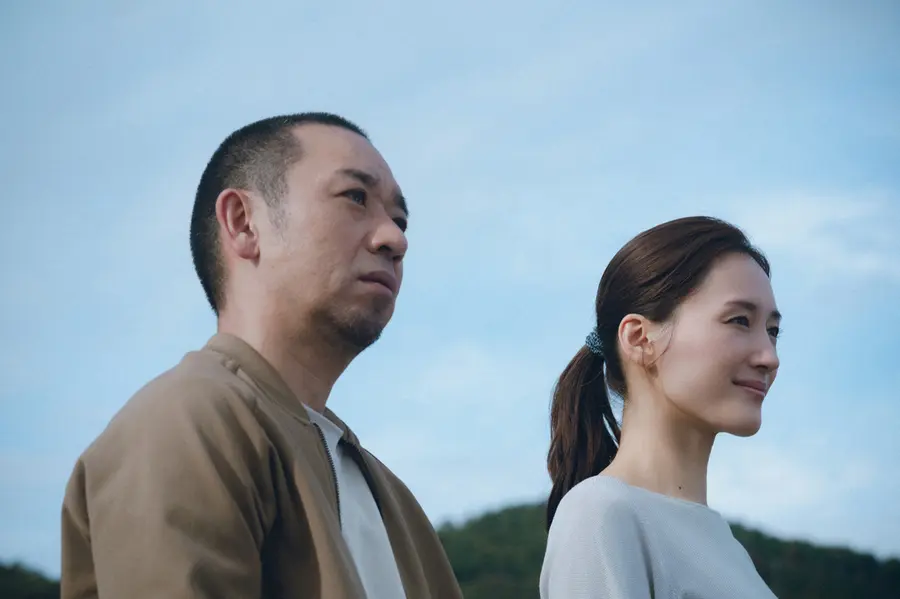
In 〈The Sheep in the Box〉, the forest's location in Hiroshima evokes Japan's historical traumas. The film carries memories of major Japanese disasters—the Hiroshima atomic bombing and the Great East Japan Earthquake—like an underground water vein. By sending children to that place, the director contemplates post-disaster communities and future generations. At the same time he insists that people living after such tragedies should let memories of catastrophe and victims enter the cyclical realm of nature rather than keep them bound in place. In doing so, he frames the humanoid children not as devices for reflecting on past disasters but as beings with a future of their own. The humanoid boy who leads the group tells Kakeru, "You are not humanity's past, but its future." That line marks the moment the director defines them not as vessels for replaying disaster memory but as beings who will live beyond it. It is also a declaration that these children are no longer the residual traces of loss or shadows of catastrophe in society. Here, the film moves beyond a world governed by urban institutions and language, reordering relationships between nature and machines, and between human and nonhuman. Freed there, the children relearn how to form relationships and live through connection with nature. The forest is not a place that erases tragic memory; it is a place where one can carry that memory and still move forward. The director uses the forest as a space of hope where children who will live in the future can open new ways of life. This tendency in Kore-eda's recent work hints at his deepening ecological awareness and his turn toward degrowth thinking. At the same time, the forest is depicted as more isolated from society than the sea, revealing the director's increasingly bitter view of modern social systems.



![[Photo&] “AI That Replaces a Dead Son” Hirokazu Kore-eda’s New Work ‘A Sheep in a Box’ Unveiled at the Cannes Film Festival](https://cdn.www.cineplay.co.kr/w160/q75/article-images/2026-05-18/c298c0ef-4fad-4f85-84b4-f5275dfd7b67.jpg)
![[Photo] Three Japanese Masterpieces Enter the Cannes Competition for the First Time in 25 Years...Japanese Directors Chasing the Palme d’Or](https://cdn.www.cineplay.co.kr/w160/q75/article-images/2026-05-21/1f7fefad-5ad2-40d9-af02-2621617e7b16.jpg)

댓글 (0)
댓글 작성
댓글을 작성하려면 로그인이 필요합니다.
로그인하기