



※ 〈Shadow Child〉 director Yu Eun-jeong interview continues from Part 1.
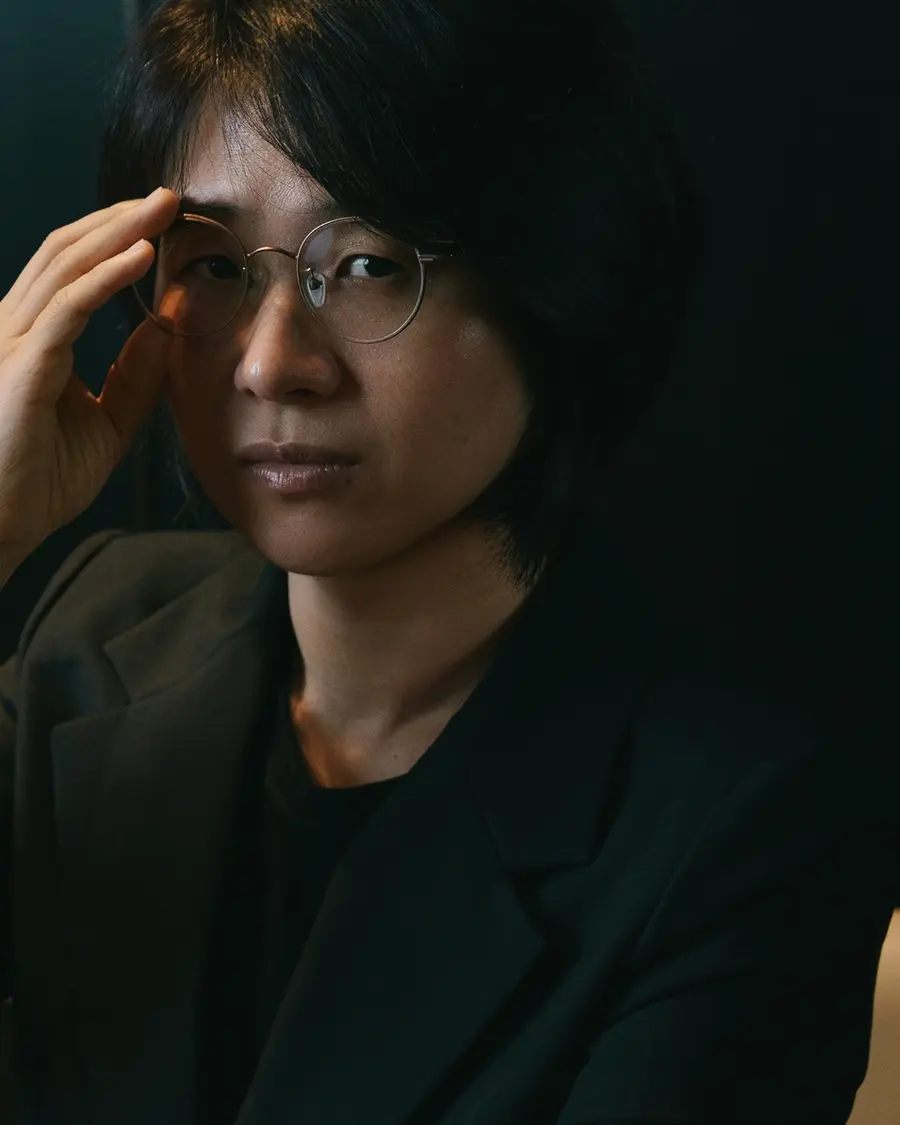
〈Shadow Child〉 recalls your earlier film 〈The Night's Door Opens〉. Both films depict death as a dark realm, yet each also takes a fundamentally affirmative view of existence — I saw similar imagery running through both. Do you feel there’s a connection?
I think the world of death is, in a way, like a world behind closed eyes, a dream world, even like a kind of universe. I drew from many works for that influence. The phrase "the world beyond the eyelid" appears in 〈Mushishi〉, a manga by Yuki Urushibara; there’s a scene in which, after closing the eyes, you cross into a nonphysical sensation. There’s also a manga called 〈The Country of Tanabata〉 by Hitoshi Iwaaki, known for 〈Parasyte〉, which contains scenes imagining unknown beings. Those settings resonated with me. I felt 〈Under the Skin〉 (2013) realized similar ideas cinematically. That’s how I described it to the crew when we made 〈The Night's Door Opens〉. Of course, in 〈Under the Skin〉 the space is where aliens prey on humans, but I thought you could portray a death-like space in that manner — so there’s a thread between them.
Your ideas are distinctive. Do concepts usually come to you first, or do they arise after you study references?
They usually come first, and then I look at references while developing them. I think my childhood love of comics had a big influence.
Still, translating those ideas into images must be difficult. Were there scenes in the script you couldn’t put on screen?
There were many. This was my first time working seriously with VFX, so I didn’t have the experience to know what was feasible cinematically and what wasn’t. In the first draft of the script, the picture-storybook images were like ink on hanji paper spreading and seeping up and down. I imagined that kind of connected world — the black door forming, shadows popping out, the world in the story having a liquid quality. But when I discussed it with the VFX supervisor, they said, “Making liquid look realistic to the human eye is the hardest thing.” So when we revisited those storybooks, we thought about how, as children, we often drew with pastels or crayons. We decided to bring in the textures of pastel or charcoal rather than making it liquid, so the material quality changed a bit.
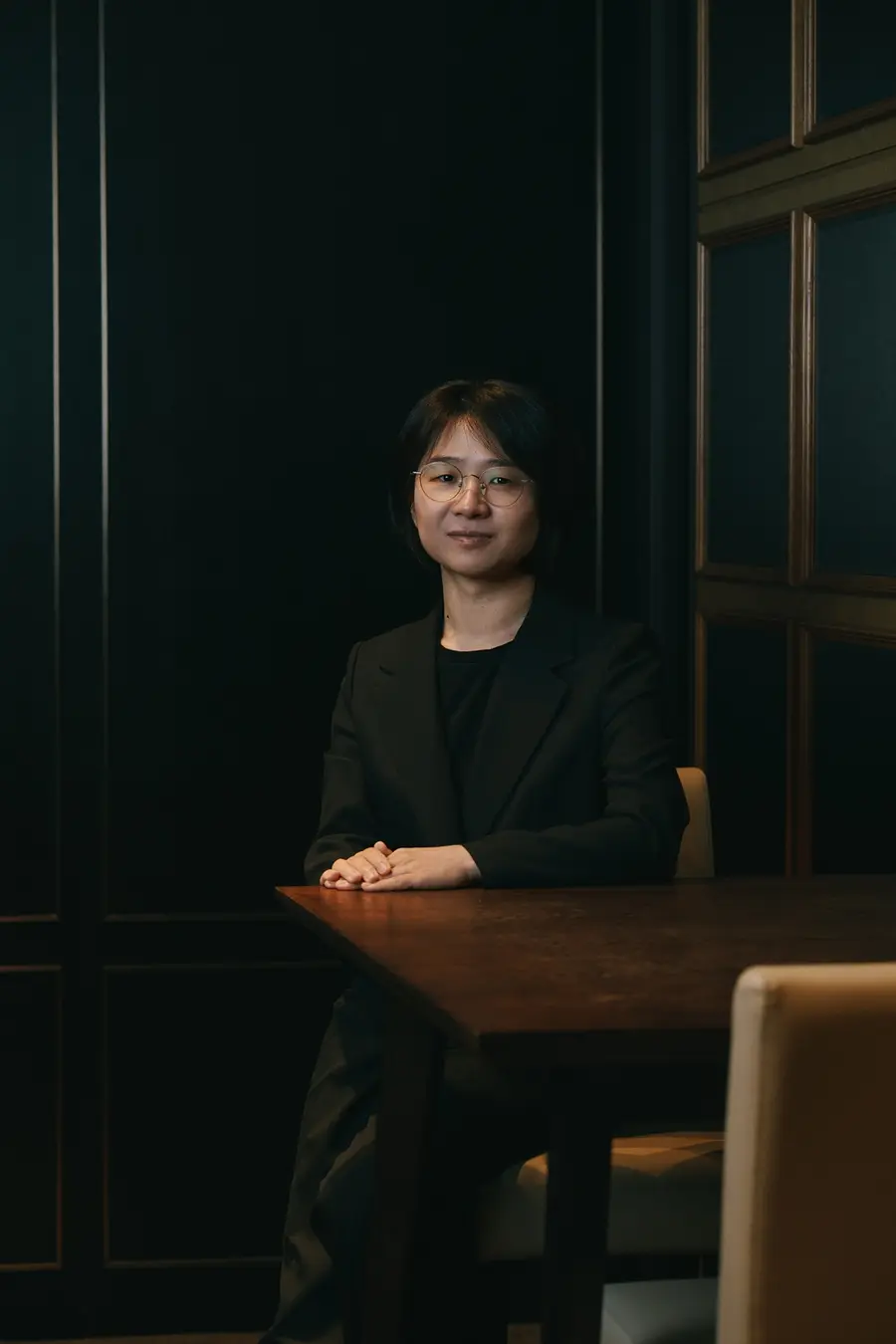
In a previous interview you said this film holds your feelings for your older sister. Is there a single unforgettable memory you have with her?
There isn’t a single concrete episode. My sister and I were very close, so the idea of an older sister often enters my work as material. Also, when sisters appear in film — like Brian De Palma’s 〈Sisters〉 (1972) — they’re used as a kind of doppelgänger motif: similar to each other but very different. In 〈The Night's Door Opens〉, for example, the characters Hye-jung, played by Han Hae-in, and Hyo-yeon, played by Jeon So-ni, were meant to be two-sided characters who look alike yet are different. I realized that motif carried into this film as well.
The doppelgänger motif reads like folklore. You also use shadow folklore in the film. Do you research ghost stories, fairy tales and folktales often?
Yes — I love them. I bought whole collections of world folktales as e-books. I also like Korean folktales, but the ones that felt most fantastical to me as a child were Russian folktales: Prince Ivan, the Firebird, especially tales about Foolish Ivan. They’re full of wizards, riding gray wolves to find princesses — the kind of stories I enjoyed as a kid. There are stories of brothers searching for the youngest, in which the oldest and second-oldest brothers kill the youngest after he finds everything, and then the youngest is revived — that stuck with me. I also loved the 〈Indiana Jones〉 series when I was young. There were games too, so I used to play them (laughs).
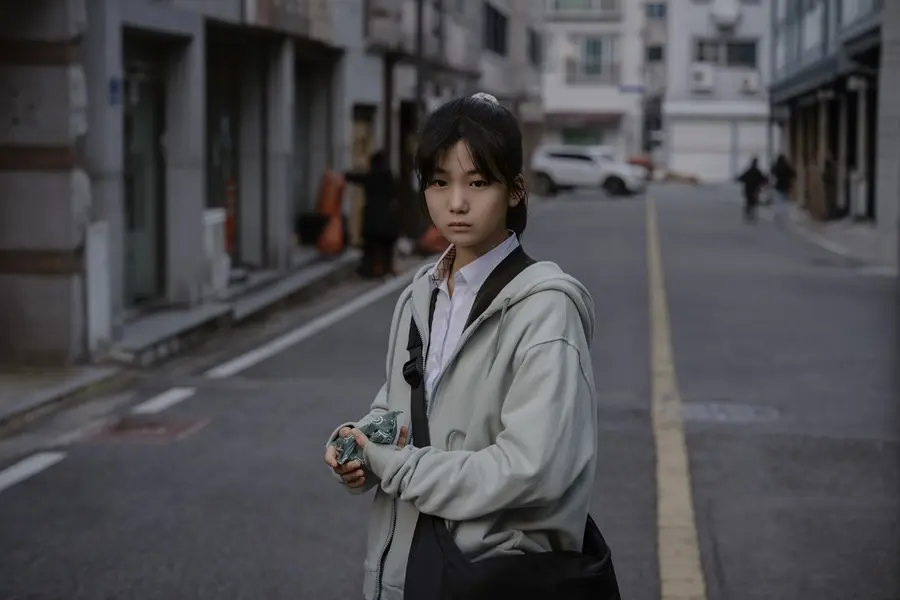
One of the film’s stranger moments is the scene with the helper. It really stands out. Why did you insist on keeping it?
I see this film as a kind of adventure carried out by girls. Jae-in doesn’t receive adult care, while Su-an is overprotected. When an unprotected child is wandering the streets, I wondered what the most dangerous element would be — the helper came to mind. They can appear as an adult with a pleasant face but be a threatening presence to Jae-in. I also wanted Geum-ok to appear like an adult Jae-in admires; contrasting the two makes Geum-ok seem that way. I wanted viewers to think, “I wish I had a mother like that.” But then, as it turns out… (laughs)
This film centers on the house, whereas your previous film opened with landscape shots. How did you find the house used in 〈Shadow Child〉?
We wanted Geum-ok’s family to be a long-established, middle-class household that never left Seoul’s inner gates — a lineage that stayed within the city. So I looked for photos of middle-class homes from the 1970s and 1980s. Most of those homes are gone, and it turned out many were commissioned from architects. We shortlisted architects’ houses still standing and the art director and I, along with the head of the production company, went to see them in person. There was even a famous architect in the production company head’s family, so we checked that — but those houses were still occupied and unavailable for shooting. The house we used is the Park Si-woo residence in Sajik-dong, designed by Kim Chung-up. It was one of the first options the art director and production team showed us. It nearly went to auction and then it didn’t — thankfully, the Seoul Housing & Communities Corporation took over management and we were able to use it as a location. If someone had been living there, we wouldn’t have been able to film. The art director and our production team were amazed: “How can a house be exactly like the script? How can it have a second floor, a third floor, an attic, and even a roof garden?” We were genuinely astonished.
From the short film 〈Locked Room〉 and your feature debut 〈When the Night's Door Opens〉, to now 〈Shadow Child〉, you’ve worked consistently with cinematographer Lee Joo-hwan.
We entered film academy together in 2014, so we’re classmates. After graduating, I, a friend who majored in animation, and the cinematographer shared a studio where we talked about films and learned each other’s tastes. Then we naturally worked together on the short 〈Locked Room〉. The cinematographer respects the director and works with care, so he helped me a great deal on my first feature, 〈When the Night's Door Opens〉. It was my first feature, but he already had a lot of experience with camera teams — he had just finished shooting 〈The Room Where Silkworms Were Raised〉. While I was preparing my second feature, he shot various other films too. I received a lot of help from him.
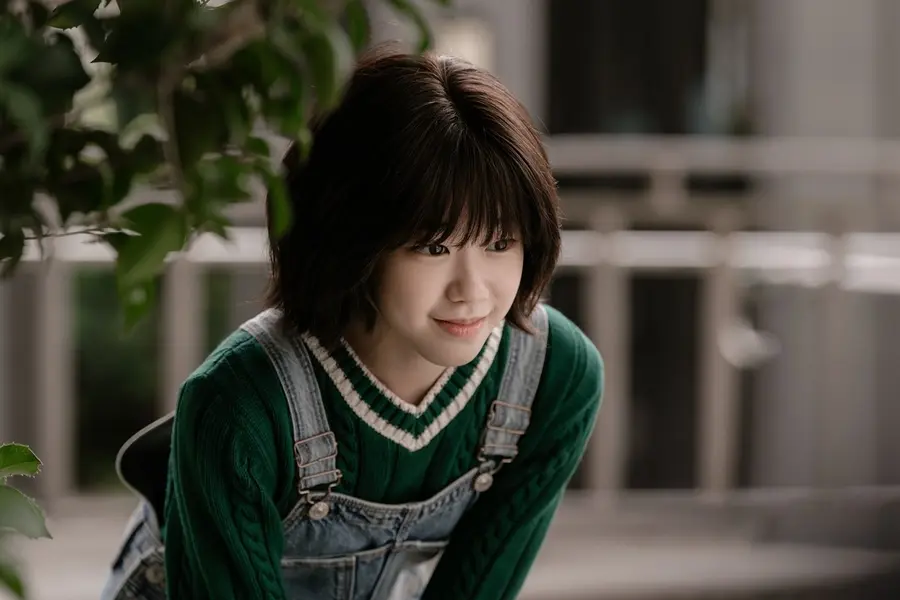
It’s been a long time since your first feature. What have you learned working for so long?
Looking back, I feel that long time was necessary. At the same time, completing the film felt like a miracle — like being lucky or blessed. So many things had to line up in timing and luck for this to happen. 〈When the Night's Door Opens〉 wasn’t an easy project either, but compared with this film it was extremely low-budget: my directing team consisted of me, an assistant director and a script supervisor — we shot it almost like friends making a film. Now that the scale has grown, managing that is a very different task, and I realized that a lot.
You mentioned a difficult period surviving as a filmmaker. Aside from that, do you feel the film industry itself has changed?
It changed dramatically. The COVID period happened in between, and after that OTT platforms completely reshaped the landscape. Many of my peers and seniors have moved to OTT and are debuting in series. I’ve heard a lot about the crisis facing movie theaters and I feel it deeply. At the same time, I feel the field of moving-image creation — from short-form to OTT series — has opened up a lot. Before COVID, there were crew members who worked across film and OTT, but not to this extent. Now the boundaries around film and video have opened without barriers, so I want to experience and try many different forms.
What do you hope audiences remember most after seeing 〈Shadow Child〉?
I’d like them to think a lot about the final scene and the narration.
Your last film also favored a final scene and narration — it seems to be your preferred approach.
So I’m going to avoid that in my next film. (laughs)

![[4K] Remade after 23 years💕 The Scandal production presentation photo call📸 | Son Ye-jin, Ji Chang-wook, Nana, Director Jung Ji-woo](https://cdn.www.cineplay.co.kr/w300/q75/article-images/2026-09-29/1062be1a-04f6-43b0-99c9-f699be058f50.jpg)
댓글 (0)
댓글 작성
댓글을 작성하려면 로그인이 필요합니다.
로그인하기