


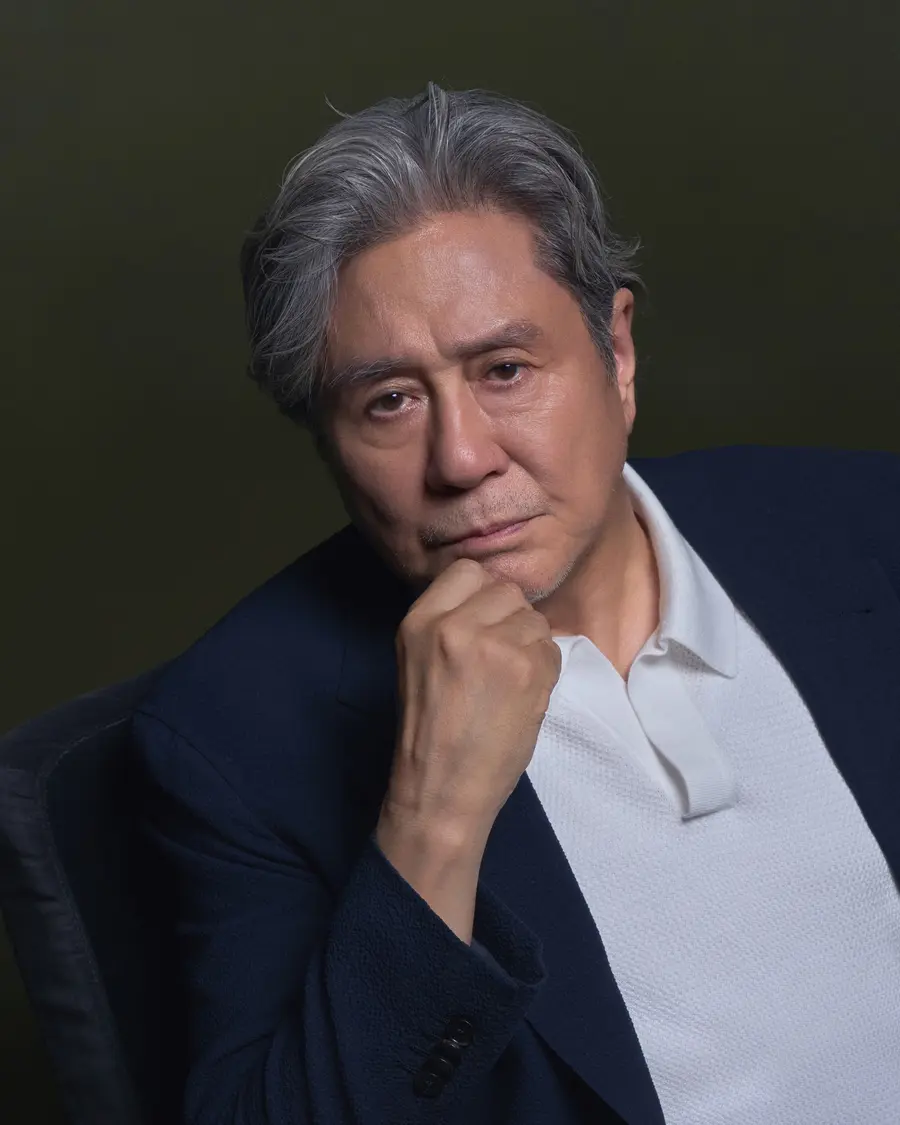
Forty-five years into his career, Choi Min-sik can still reveal a new side. In Netflix’s 〈Notes from the Last Row〉, he trades his usual untouchable charisma for the exposed, raw face of an intellectual consumed by an inferiority complex — a petty man trapped in his own world and steeped in a sense of defeat.
Choi Min-sik returns in one of his most vulnerable roles as Heo Mun-oh, a man mired in humiliation and desire, in the Netflix series 〈Notes from the Last Row〉, which was released on the 26th. In 〈Notes from the Last Row〉, a failed writer turned Korean literature professor named Heo Mun-oh (Choi Min-sik) discovers the genius of a student who sits in the classroom’s last row, Lee Kang (Choi Hyun-wook), becomes obsessed with his writing, and the suspense drama follows what happens as that obsession deepens. As a failed author working as a Korean literature professor, Heo Mun-oh spends his days harshly criticizing students’ disappointing writing assignments until he becomes captivated by the work of Lee Kang, the student in the back row. Heo proposes private literature lessons for Lee, and as the lessons continue, Heo grows increasingly obsessed with Lee’s writing.
It’s striking to recall that Choi Min-sik showed a brutal, intense climax of revenge in the film 〈Oldboy〉 (2003), while in 〈Notes from the Last Row〉 he is, in effect, perfectly avenged. The methods of revenge, of course, are poles apart. Where 〈Oldboy〉 depicted physical violence and savage combat, 〈Notes from the Last Row〉 stages a revenge that unfolds slowly, leading to ruin before its protagonist even realizes it.
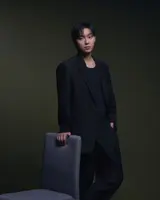
We met actor Choi Min-sik, who, after 45 years since his debut, still prefers projects that explore what it means to be human and who wants to meet good stories so he can portray a wider range of characters, on the 2nd at a location in Jongno-gu, Seoul. Below is the full text of our conversation.
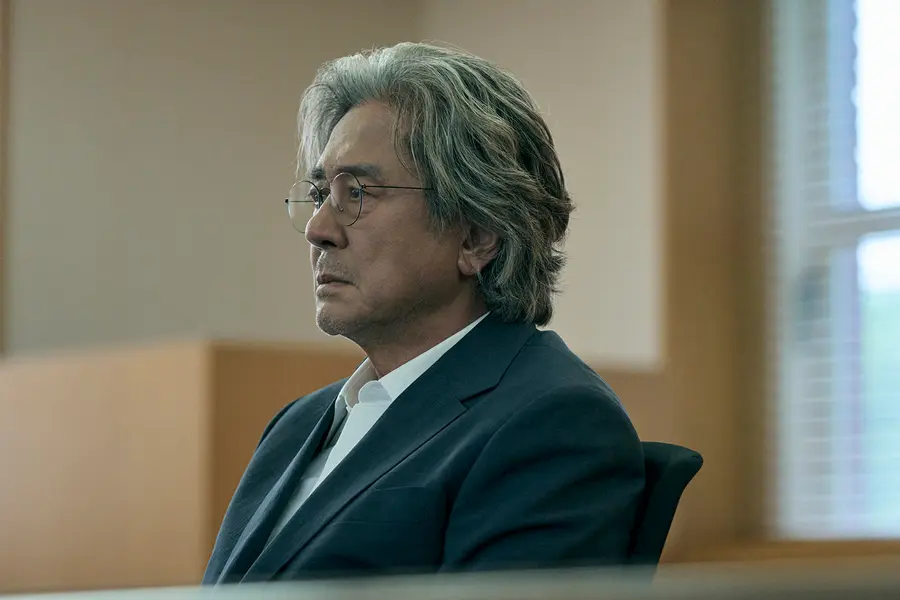
Since 〈Notes from the Last Row〉 was released, it has received widespread praise from viewers. How does it feel to have brought 〈Notes from the Last Row〉 to the public?
At first I didn’t have high expectations. The series came out in the summer. Dramas like 〈Chamgyoyuk〉 or 〈Kim Bu-jang〉 are the kind of shows you enjoy watching in summer—good, cool revenge stories where the bad guys get dealt with. But the story of a boy sitting in the back row is stifling. There are many uncomfortable aspects to the story, so it would be a lie to say I didn’t have doubts about whether people would like it. Still, the power this work holds—the uncomfortable truth it exposes, the bare-faced desires, the fractured longings and broken people—offered a lot to think about. It’s not physical violence but harm brought on through words that also carries meaning.
As you said, 〈Notes from the Last Row〉 shows a form of revenge different from conventional revenge stories. It’s not the kind of revenge that simply delivers catharsis. At the same time, it reminded some viewers of your earlier masterpiece, 〈Oldboy〉.
Honestly, when I read the script and decided to appear, I had completely forgotten 〈Oldboy〉. But after seeing this work, I found some similarities. With 〈Oldboy〉 I caused such an uproar once by letting my tongue run wild, and this time, because a cuckoo sang at the wrong moment and set things off, everything unravels — so I found the comparisons to 〈Oldboy〉 pretty amusing. (laughs)
Compared with the original play 「Notes from the Last Row」 and François Ozon’s film 〈In the House〉, which was adapted from that play, 〈Notes from the Last Row〉 strengthens the theme of 'revenge' and the show's genre elements. What point in the adaptation most captivated you?
I deliberately avoided watching the original play and François Ozon’s film 〈In the House〉. If I had seen them, I couldn’t have avoided being influenced while making 〈Notes from the Last Row〉. From what I understand, the original is more literary. The play and the film dug deeper into the creator’s ethics and voyeurism; we added a Korean-style suspense and a stronger sense of causality. So our adaptation focuses on ruin brought on by one’s past harmful words. I agreed with that approach. It tightened the story and added tension. If we had simply said from start to finish ‘this is art, and this is what a creator’s ethics should be,’ it would get tedious. I read the script in one sitting and was very excited. Whether viewers like this kind of work is a secondary question; I liked it first and foremost.
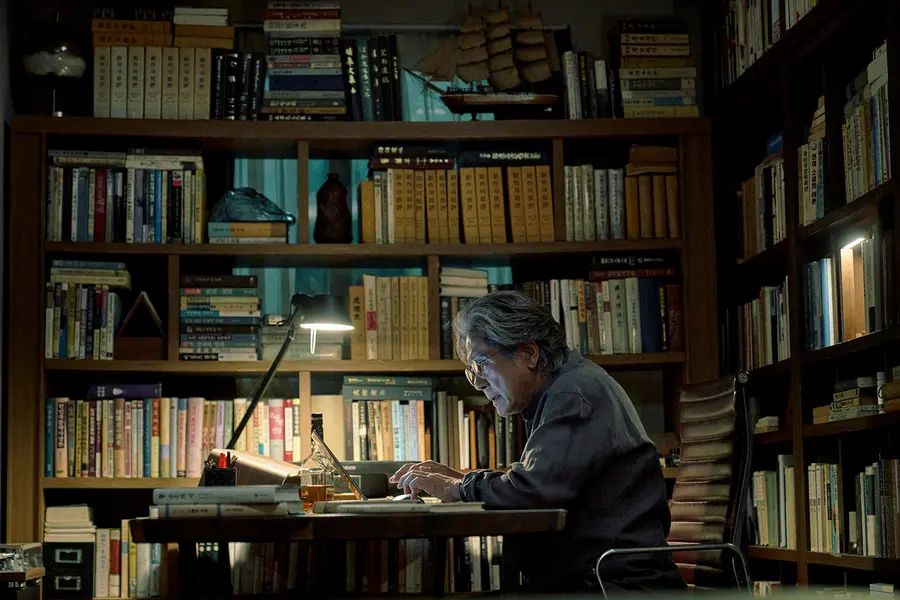
After reading the script, how did you interpret the character Heo Mun-oh, and how did you approach the acting choices for him?
I thought I had to strip him down—like a slab of meat hanging in a butcher shop. He’s an intellectual who contradicts common sense. He’s supposed to be a writer. Being educated may lead someone to guide the world, but being educated doesn’t automatically make someone a good person. I decided to peel away that mass of desire—the raw human face consumed by defeatism and longing.
At the production press conference you said, “This is a story you need to binge through to episode 6 to feel its full effect.” Put another way, the seeds planted in the first half build tightly and burst in episode 6. How did you adjust your tone in the early episodes to keep viewers engaged through that buildup?
I didn’t feel the need to force the pace. The script itself already had that power. I thought of the text as a musical score: if you play the notes faithfully, without adding dissonance, the piece will hold. I didn’t make any artificial effort to build more. As always, but especially this time, I tried to remain faithful to the script because the text itself left nothing to criticize.
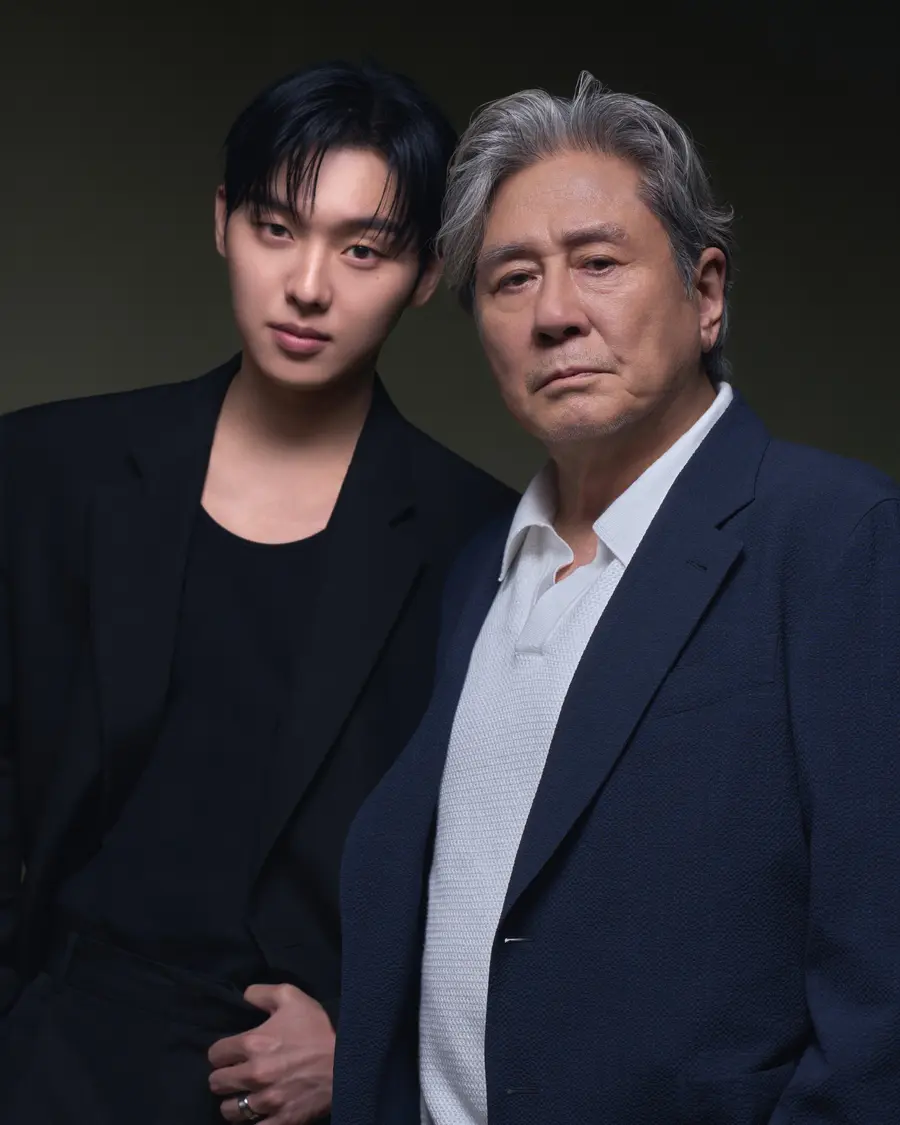
I heard you attended auditions for the role of Lee Kang. What was it like acting alongside Choi Hyun-wook?
I must have sat through the auditions for two or three days. Many actors of Hyun-wook’s age came in. Jokingly, someone asked whether the boy in the last row could instead be a girl. But Hyun-wook caught my eye. And as you can see, he did a superb job. As I said at the production press conference, I felt my job was to respond well: if I could match his performance, then the drama would run smoothly. After all, I’m playing on the stage laid out by Lee Kang. With one line, I’m tossed around by this kid, so I knew I had to be tossed well.
What kind of strengths did you see in Choi Hyun-wook during the auditions and on set?
He understands directions well. His ability to grasp the director’s guidance and interpret the piece is strong. But interpretation is meaningless if an actor can’t express it physically. Hyun-wook commits boldly to physical expression and shows no hesitation; you can tell he prepared and thought deeply about the role. That was both impressive and reassuring, and it made me think I’d better stay sharp. He’s a blessing. Regardless of age, recognizing one’s role, the message of the work, and one’s objectives—and then embodying and expressing them—is a remarkable talent. That’s what an actor should do. When an actor delivers that so directly across from you, it makes you sit up straight.
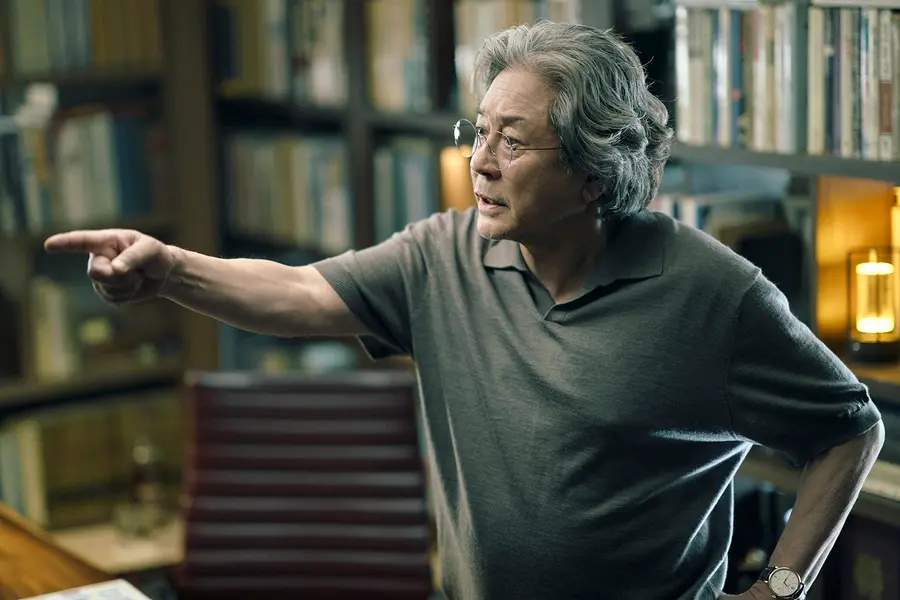
According to Choi Hyun-wook, you dominated the screen in the ending sequence with a single upper-body shot of a face worn down by time collapsing inward. How did you prepare for that moment?
Mun-oh would never have dreamed Lee Kang would reappear before his eyes. Explaining how I made that face isn’t something I can put into logical terms. But I did add one detail: after enduring cruel events—his wife leaving, being fired from the university, being publicly branded ‘trash’—he still sits in a bookstore, scribbling away. I asked the props team to bring tuna, anchovies, and soju. So he’s eating and scribbling as he goes.
In that scene, what Mun-oh is writing isn’t explicitly revealed. Personally, I thought Mun-oh might be writing the story of everything he experienced with Lee Kang as a novel, which would allow for an interpretation that 〈Notes from the Last Row〉 itself is a novel Mun-oh wrote.
That’s unlikely. I think it’s left open. We discussed this: the final scene isn’t set in some distant future. It’s short—six months at the briefest, maybe up to a year. Even so, the fact that Mun-oh keeps scribbling means he does it because, for him, writing is what keeps him alive. Actually, we shot a scene where, after receiving Lee Kang’s final assignment, Mun-oh puts a knife to his wrist. In any case, Mun-oh is addicted to story; sitting and telling stories is his lifelong obsession.
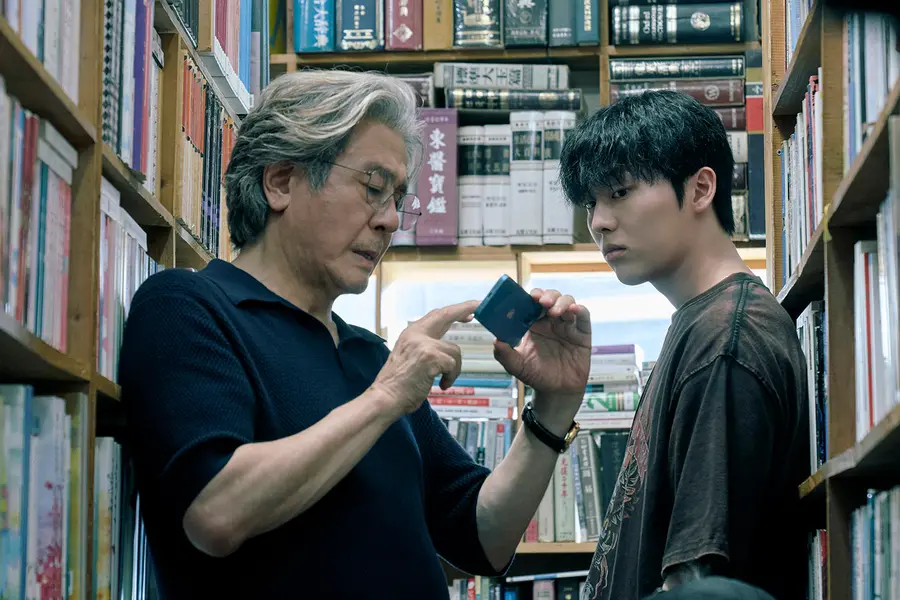
The scene where Mun-oh steals Lee Kang’s test paper at his request and then, as if tasting liberation, runs off with a bright, carefree expression was also striking.
We filmed at Keimyung University in Daegu, and it was scorching. I thought I was going to die. (laughs) Thankfully, I used to run a bit back in the day, so I got it in two takes. (laughs) It’s a highly layered moment for Mun-oh. Our drama highlights many of Mun-oh’s negative traits. Because the series is set on a campus, we jokingly called director Kim Kyu-tae the ‘university president,’ and when the director and I talked, we decided to lean into the black-comedy beats that elicit a wry laugh. Mun-oh isn’t purely evil, but he’s more obsessed with admiration for famous authors and rivalry than with the inner work required to become a truly great writer. There’s a childlike side to him, and he feels a sense of liberation in that act of transgression.
※ The interview with actor Choi Min-sik about 〈Notes from the Last Row〉 continues in Part 2.
![[OTT Ratings] Cineplay Reporters Review Netflix's 'Notes from the Last Row'](https://cdn.www.cineplay.co.kr/w160/q75/article-images/2026-06-29/b9f39822-feb8-4c9c-8454-bd9d172b1af8.jpg)
댓글 (0)
댓글 작성
댓글을 작성하려면 로그인이 필요합니다.
로그인하기