



Choi Hyun-wook, born in 2002, squares off with Choi Min-sik, born in 1962, in Netflix's 〈Notes from the Last Row〉 — and, furthermore, few expected he'd end up literally playing on top of the veteran; still, he never gives ground.
Choi Hyun-wook has shed the fresh-faced look of youth and returned with a cool, inscrutable expression that keeps his motives unreadable. Unlike his previous work, where he burst with raw energy, this time he suppresses emotional highs and lows and raises tension with subtle glances and restrained physicality.
The Netflix original series 〈Notes from the Last Row〉, released on June 26, tells the story of Heo Mun-oh (Choi Min-sik), a failed writer and professor of Korean literature who becomes obsessed with the brilliant writing of Lee Kang (Choi Hyun-wook), an engineering student who sits in the last row of his lecture hall. Choi Hyun-wook plays Lee Kang, who observes and destabilizes the ugly figure hiding behind the mask of an intellectual, and he holds his own even in one-on-one confrontations with Choi Min-sik.
On the afternoon of the 2nd, Cineplay met Choi Hyun-wook at a location in Jongno-gu, Seoul. Below is the full interview with the actor, who said he pushed himself to be more rigorously self-aware than ever in building a character where good and evil, innocence and madness coexist in unsettling ways.
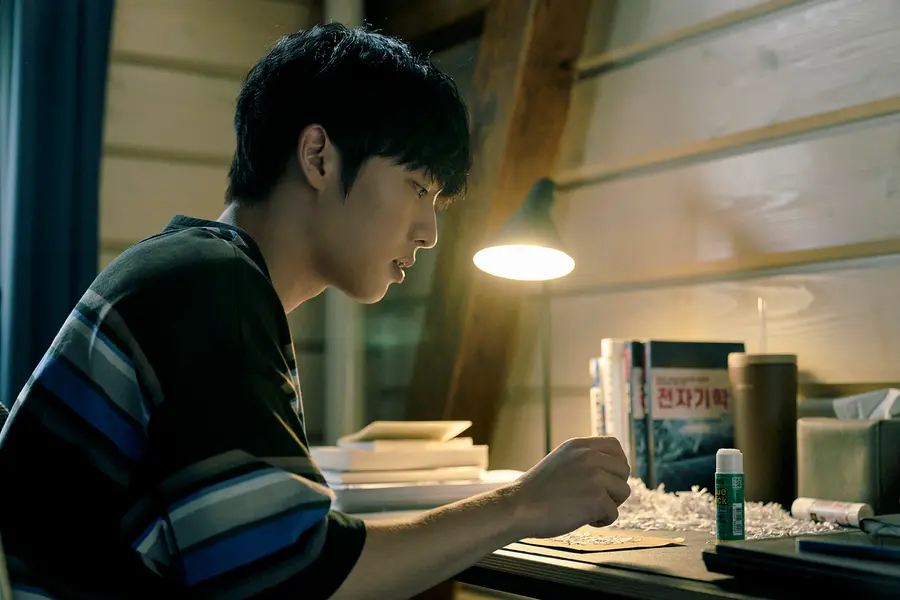
Since the series was released worldwide on the 26th, viewers have been responding enthusiastically. Have any viewer reactions stood out to you?
The interpretations have varied widely from viewer to viewer, which I found fascinating. It’s the kind of work that invites many different imaginations. For that reason, I think it’s the kind of project that’s more enjoyable on a second or third viewing rather than just once.
Notes from the Last Row was already a hot topic during casting. You were chosen to work opposite veteran actor Choi Min-sik, which raised expectations. Choi Min-sik was at the audition, too. What was that like?
At the audition I performed one scene. I remember discussing that single scene at length with veteran actor Choi Min-sik and trying things together. I got there first, and when Min-sik came in later, I started sweating profusely. I was really nervous. We spent a few hours just getting to know each other. He made an effort to put me at ease so I could be natural, and then we did the reading. (What did you talk about?) We talked about our hometowns and even which branch of the Choi family we were from. (laughs) It turned out we weren’t from the same branch.
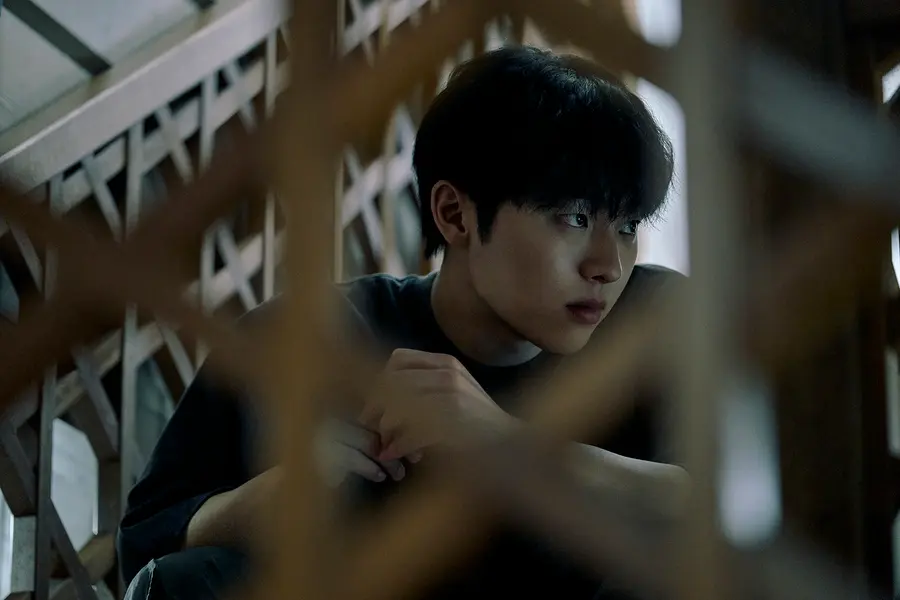
In the series, Lee Kang is a difficult character who gives a chill by holding back emotional extremes rather than exploding outward. That must have been hard to play. How did you approach it as an actor?
I worked hard to make the audience question Kang. For example, Kang in the scenes at Se-yun’s (Lee Jin-woo) house is an observing character, so I discussed facial expressions and other nonverbal details a lot with the director rather than relying on lines. And when he’s with Mun-oh, I aimed to show points where their relationship gradually forms and he becomes more relaxed. I tried to build the character up that way.
You left behind the raw energy you showed in previous projects like 〈Weak Hero Class 1〉 and transformed into a character who hides a lot. To convey Lee Kang’s strange, inscrutable air, what details did you set for voice tone and physical gestures?
Lee is definitely different from my earlier characters. I researched Kang’s restrained quirks and worked on the details. The fictional Kang in Mun-oh’s imagination is an engineering student who writes, so I didn’t imagine him moving like a robust, athletic young man. Thinking of a writing student, I pictured someone curled in on himself, with tics when observing, biting his nails, or bouncing a leg — that’s where I started. Because there’s a lot of narration, we also experimented with different tones and I did multiple versions of ADR (post-recording). I discussed those details with the director and paid close attention to them.
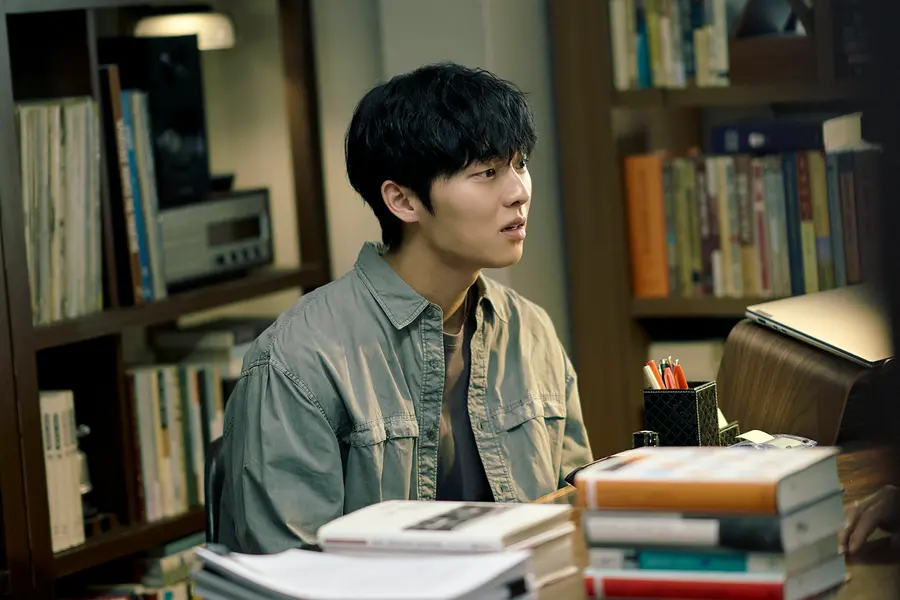
You mentioned the narration. When Lee Kang reads the final assignment, his voice felt like the real Kang rather than the fictional one. How did you vary your performance tone?
At the start I tried to read more brightly, almost like reading a storybook or a novel, with more liveliness. For the final assignment I made many versions during ADR: a calm, emotionally restrained tone and then a version one or two steps lower in pitch. I experimented with those options.
In the early part of the series, Lee Kang remains an observer. Yet his gaze on screen often felt chilling, even hinting at strange mania or slyness. What is the secret to that strange performance? Did you use any particular references?
Ultimately it’s an abnormal kind of observation. He plans to enter someone else’s home and their parents’ room and eavesdrop on their conversations, so I asked myself how I would secretly watch in that situation, and that naturally shaped the way I observed. I didn’t have a single reference, but I did watch the film 〈In the House〉, which is based on the same play. The film features a high school student rather than a college student, so I only used it as a reference. It made me think there can be a kind of creepiness that comes from innocence. I also thought this character might not realize his behavior is abnormal, so I tried to look at him as purely as possible.
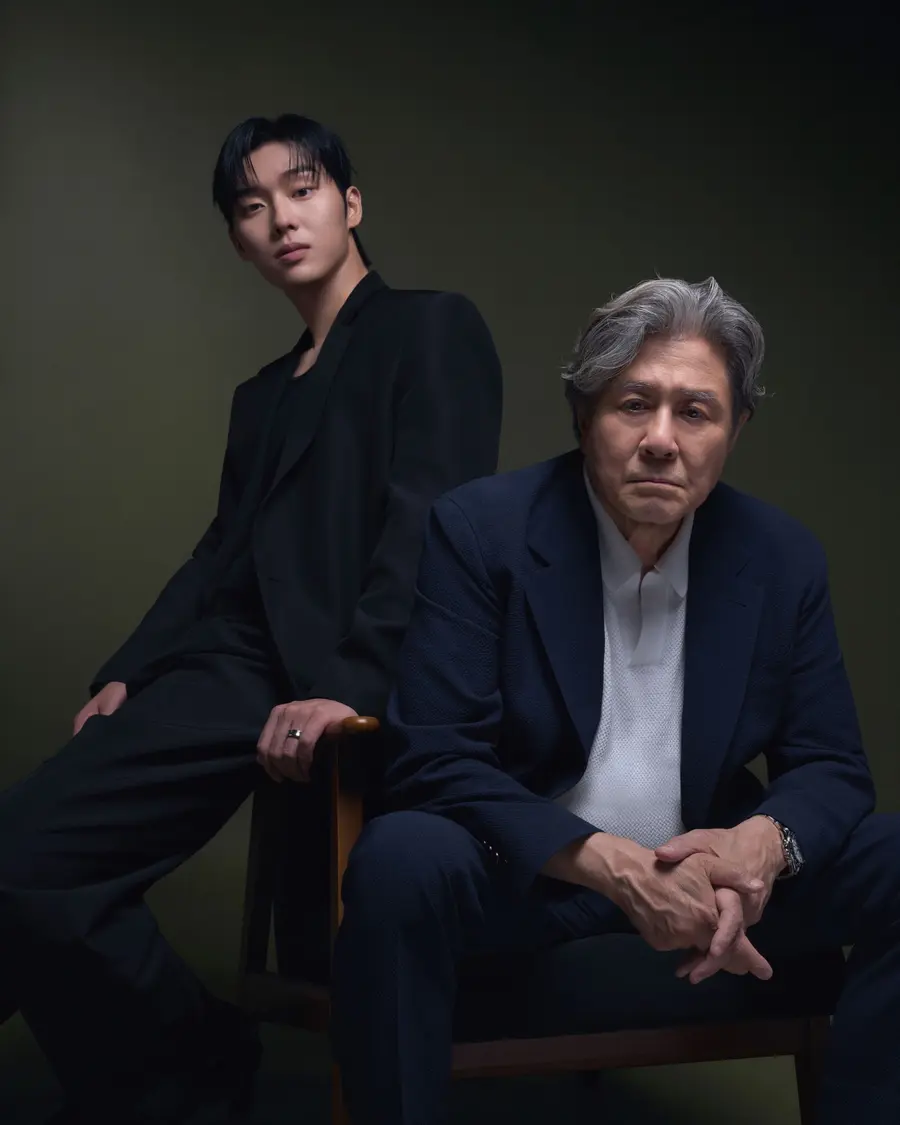
At its heart, this is a one-on-one piece pitting you against the "tiger-like" actor Choi Min-sik. When the camera rolled and you were facing a legendary actor head-on, what was going through your mind?
I had watched Choi Min-sik on screen as a viewer and often found myself just transfixed watching him. But on set I wasn’t overwhelmed by the burden of it; we rehearsed a lot and prepared, so it ended up being a fun set. If it hadn’t been for Choi Min-sik, there would have been limits to how I could express Kang. He led things so well from the front, and I’m very thankful to him.
Until now you mostly worked with peers your own age. In Notes from the Last Row you worked primarily with veteran actors rather than contemporaries. How was it to work with veterans like Heo Jun-ho?
It was a place of learning. I admired the seasoned energy and the distinct colors each veteran actor brought. One scene that really impressed me was the lecture-style talk between Mun-oh and Su-hun (Heo Jun-ho). It gave me goosebumps. I remember thinking, How do they do that? Jun-ho’s rhythm and Min-sik’s delivery made me feel tense just watching.
Mun-oh’s nightmare sequence, the so-called "axe scene," drew a lot of attention. Given the manic intensity you showed in your previous work 〈D.P.〉 season 2, you might have found that sequence cathartic and fun to shoot. How was it for you?
Rather than fun, it was actually quite tough. It’s Mun-oh’s dream, so I felt I had to make it frightening enough that Mun-oh would wake from the nightmare scared. I remember really pushing myself to perform it so that Mun-oh would feel afraid.
※〈Notes from the Last Row〉 interview with Choi Hyun-wook continues in Part 2.


![[OTT Ratings] Cineplay Reporters Review Netflix's 'Notes from the Last Row'](https://cdn.www.cineplay.co.kr/w160/q75/article-images/2026-06-29/b9f39822-feb8-4c9c-8454-bd9d172b1af8.jpg)
댓글 (0)
댓글 작성
댓글을 작성하려면 로그인이 필요합니다.
로그인하기