



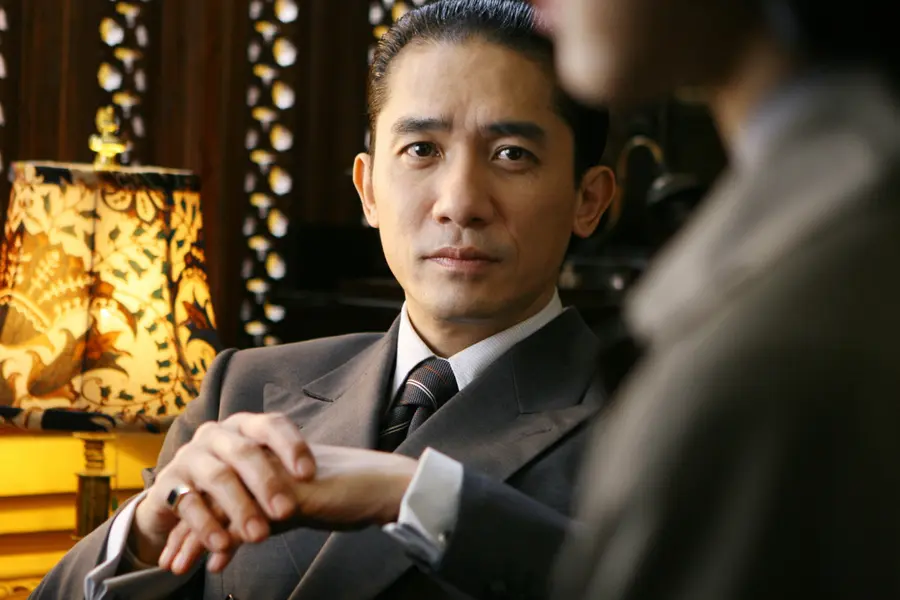
This spring, Tony Leung visited South Korea. After all this time, it’s been 18 years since the first European foray of Leung—who is now past his 60th birthday—came to Seoul to promote director Ildikó Enyedi’s 〈〈Friend of Silence〉〉, the director’s first film in which Leung stars, and to promote his own film of his own since 〈〈Battle of Red Cliffs: The Beginning of the Great War〉〉 (2008. 〉〈〈Friend of Silence〉〉 follows the lives and academic pursuits of characters from three different eras—university students in 1908, young people in 1972, and neuroscientists in 2020—centered around a single ginkgo tree. Leung plays ‘Tony,’ a Hong Kong–born neuroscientist who was invited to a German university in 2020. The title itself—‘Friend of Silence’—puts on display the Tony Leung that meets audiences not through words but through his deep, steady gaze. So the director used Leung’s English name, ‘Tony,’ 그대로 as it appears in the film.
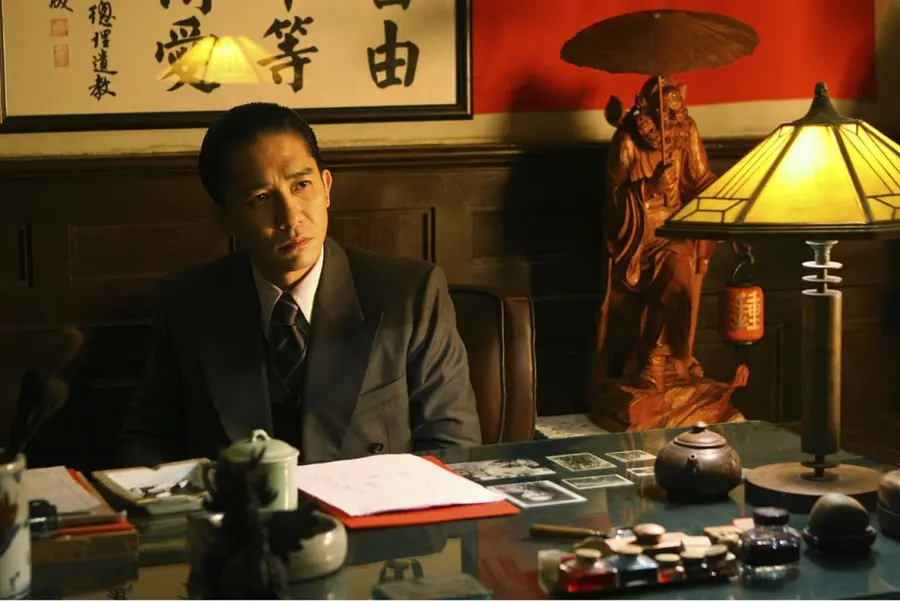
In the 2020s, Tony Leung has kept talking about ‘change.’ Of course, he has played villains in the past. But starting with his portrayal of the villain ‘Wenwu’ in 〈〈Shang-Chi and the Legend of the Ten Rings〉〉 (2021), he has shown expressions completely unlike his earlier ones in 〈〈The Handmaiden〉〉 (2022), 〈〈The Assassin〉〉 (2023), and 〈〈Goldfinger〉〉 (2023). Perhaps the work most directly tied to his current outlook is none other than director Ang Lee’s 〈〈Lust, Caution〉〉 (2007). After Ang Lee released 〈〈Brokeback Mountain〉〉 (2005), he was suddenly captivated by 〈〈Lust, Caution〉〉 (2007). The main common thread between the two is that both are based on original novels by two female writers—by adapting a period-and-space setting different from the other, and in the case of ‘Angie and Zhang Ailing.’ Titles are connected by ‘Se’ (色), meaning ‘desire,’ and ‘Jie’ (戒), meaning ‘taboo.’ On the surface, 〈〈Color, Cain〉〉 suggests a fierce yearning for forbidden love. In the grim air of an era that forces ‘Jie’ to overwhelm everything, it depicts the inevitable suffering of two protagonists who indulge in ‘Se.’
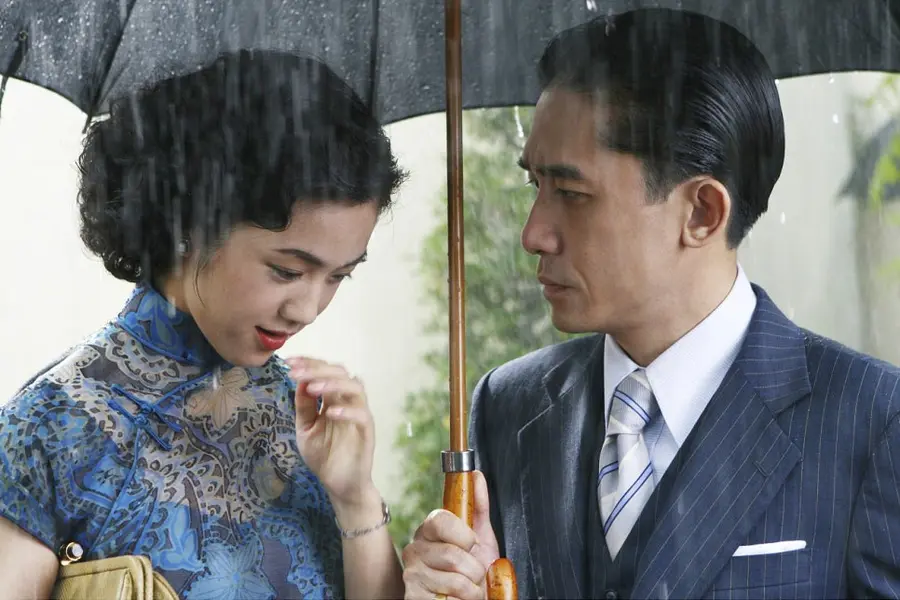
As World War II breaks out and Wang Qiaozhi (Tang Wei) heads to Hong Kong, she joins the drama department at the University of Hong Kong. Through theater, she becomes captivated by the radical Guang Yumin (Wang Lihong), who aims to stir up patriotism, and naturally finds herself working with the anti-Japanese organization he leads. They plan an assassination plot to kill Yi (Tony Leung), a key figure among collaborators with the Japanese. Wang Qiaozhi disguises her identity and, taking on a new role as the “Mrs. Mo,” becomes a friend of Yi’s wife (Joan Chen) and gets close to Yi through her. One day, Yi—who had been carefully considering and keeping wary watch over someone who suddenly appears—slowly starts to get pulled in by temptation. Wang Qiaozhi, too, forgets that she is playing the part as if she were falling in love with him. Meanwhile, Yi, who has always lived under the threat of being killed, even suspects that Wang Qiaozhi is the one targeting him, but she can’t bring herself to reject him.
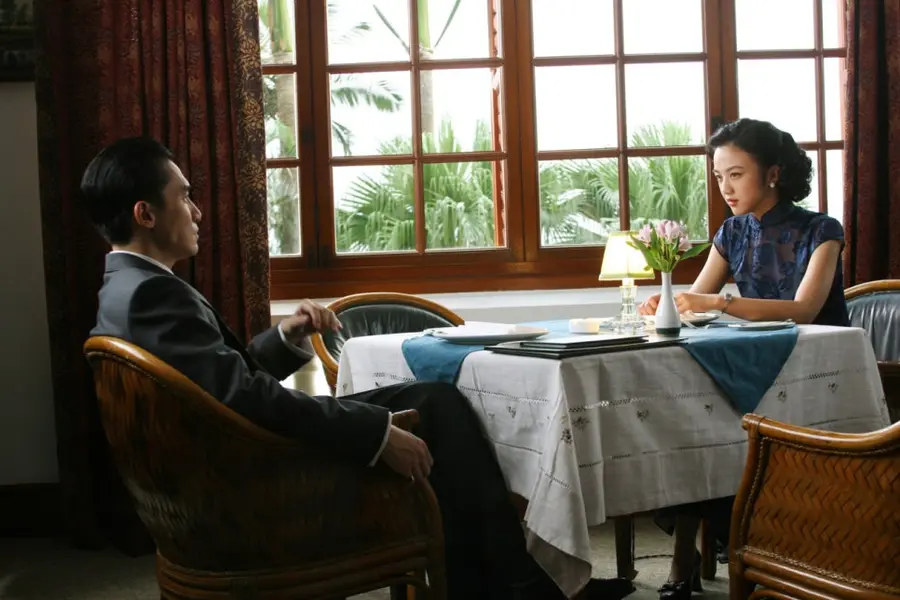
One of the biggest differences from the original is the depiction of the villain ‘Yi’—again. In the original, Yi is described as a man with an unimpressive, shabby appearance. That setup—where a spy who falls in love with such a man ends up forgetting her mission—carries its own significance. Still, it also hinges entirely on Tony Leung as an actor. Put simply, the heart of Ang Lee’s film 〈〈Color, Cain〉〉 is that Leung is a character you could fall for at first glance, just like the real Tony Leung in life. After all, even if it’s a short film, it has to shake Wang Qiaozhi’s feelings in an instant. In that sense, Tony Leung’s first appearance in 〈〈Color, Cain〉〉 begins by signaling his overwhelming gaze. When Wang Qiaozhi, in her false identity as “Mrs. Mo,” approaches Yi’s wife and steps into Yi’s household whenever he comes and goes, Yi appears only with his lower face visible beyond the window of a car. Even if nobody in the audience could miss that it’s Tony Leung playing the role, Ang Lee places the audience in the position of Wang Qiaozhi, who can only hear Yi’s voice. And that becomes an important driving force that keeps the tension of 〈〈Color, Cain〉〉 intact. Coincidentally, this is the exact opposite of the way Tony Leung first appears in Ang Lee’s other film 〈〈Chungking Express〉〉 (1994). In that earlier work, the camera shows Leung’s face straight on as he walks slowly across the street in front of a wall of the building opposite, after doing police work, then heading to a fast-food shop to buy something to eat. When he comes closer, it’s a big close-up—he even removes his hat and lifts his face toward the viewer. That, too, is a way of placing the audience in the position of Fei (Faye Wong), someone Leung’s gaze cannot possibly avoid. 〈〈Color, Cain〉〉 and 〈〈Chungking Express〉〉 both deliver a moment that tests audiences who already know what Tony Leung is. In any case, there’s no way to escape what happens there.
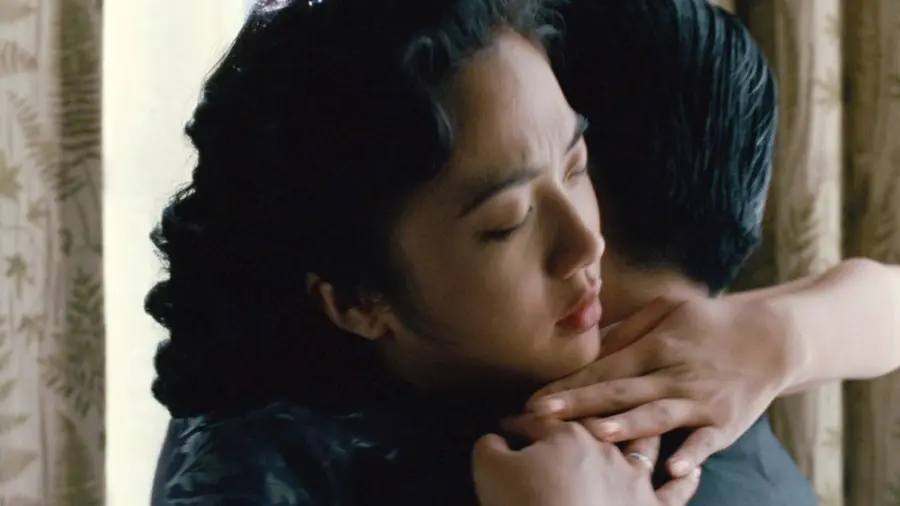
Interestingly, the explicit sex scenes in the film—scenes that are not found anywhere in the original novel—can be divided into three main parts. The first sex scene plays out in an intensely sadistic manner. It shows that Yi has power over the relationship between the two, and it also makes sure Wang Qiaozhi cannot see him clearly in order to maintain her suspicion. So when their eyes end up meeting by chance later, she becomes extremely flustered. Wang Qiaozhi’s reaction also matters. After the relationship ends, she lets out a small smile; it likely isn’t about pleasure at all. It’s probably a smile of satisfaction, the kind a “Mrs. Mo”—not Wang Qiaozhi—would have after successfully carrying out the mission, fooling him through acting. Then from the second sex scene onward, they begin exchanging emotions with each other, unfolding like a real lover’s relationship. If people say that in the end, 〈〈Color, Cain〉〉 is a film where ‘Se’ overtakes ‘Jie,’ then the sex scene where ‘Se’ and ‘Jie’ finally end up on the same level can be seen as the film’s turning point. This is why the third sex scene is crucial. From this point, it feels as if they truly love each other. That’s why the key moment is when Wang Qiaozhi glances sideways at the pistol hanging nearby. Even though this is the moment where she could shoot and kill him to finish the mission, she hesitates. So after the relationship ends, she ends up crying—not because her mission failed mechanically, but because she succeeded at playing the part perfectly as “Mrs. Mo,” yet Wang Qiaozhi ends up loving him anyway.
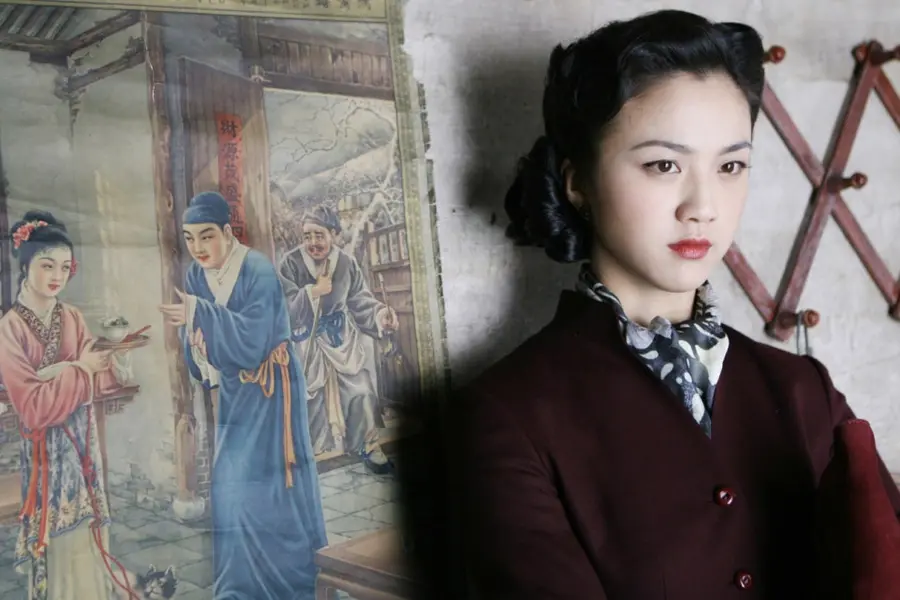
Those depictions of emotion connect to the issue of theatricality and create a strange flow. It also contains director Ang Lee’s own autobiographical experience. In the past, when he attended an art academy in Taipei in the 1970s, he once felt electrified by a fierce burst of energy that, after he first stepped onto the stage, refused to leave his body long afterward. Acting as imitation of life, and then the question of how entirely—and how clearly—human behavior can be separated from performance. Even the original novel by Zhang Ailing describes Wang Qiaozhi’s feelings right after she finishes performing on stage as “an intensity as violent as a storm that simply will not subside.” So 〈〈Color, Cain〉〉 is also a story about amateur performer Wang Qiaozhi—who experiences that stormlike intensity—meeting an even bigger stage, and the massive wall that is “Jie,” and blooming into her performance. In that way, 〈〈Color, Cain〉〉 goes further than simply portraying a woman caught up in an anti-Japanese movement and forgetting her situation as she falls into bed with her enemy. Her pride as an actor—“this is acting, only ever acting,” in other words, the ‘Jie’ rationality that will allow her to carry out the mission flawlessly through her acting—eventually flares into the fire of ‘Se’s’ instinct.
▶ Articles about 〈〈Color, Cain〉〉 and Tony Leung continue with the second installment.
※ Orfeo Hannam will begin screenings on April 26 with 〈〈Happy Together Special Edition〉〉, followed by 〈〈Happy Together〉〉 on May 23, 〈〈Chungking Express〉〉 on June 13, and the final Hong Kong actor Tony Leung publication commemorative ‘Tony Leung Special Exhibition,’ which is scheduled to wrap up with a screening of 〈〈Color, Cain〉〉 on Aug. 1.

![[Interview] A Love Letter to Life, Humanity and Korea: ‘Journey There’ Star Justin H. Min, Part 2](https://cdn.www.cineplay.co.kr/w300/q75/article-images/2026-10-22/f97b0baf-32b0-4b5c-983b-df3166e84990.jpg)


![[Joo Seong-cheol's Locker] Tony Leung Sometimes Wants to Hold an Ashtray.](https://cdn.www.cineplay.co.kr/w160/q75/article-images/2026-02-09/07564a08-8660-45c9-902d-bad2226672b3.jpg)
댓글 (0)
댓글 작성
댓글을 작성하려면 로그인이 필요합니다.
로그인하기