




〈In Chace and Rage〉’s Tang Wei, no one could have believed she was a newcomer. The turbulent years of Japanese colonial rule and the shadows of a restless desire are compressed entirely into Tang Wei’s expressions and gestures. From start to finish, she holds her face steady, quietly enduring the reality that has come for her. One year older than Zhang Ziyi, who had already emerged as a global star, Tang Wei worked as a model starting in her teens, built up her acting training at the Beijing Central Academy of Drama, and in 2004 even participated in the Miss Universe contest held in Beijing. After that, while she appeared in a handful of TV films and dramas, she won the top actress award presented by China’s CCTV Movie Channel for 〈Bamboo: Hard to Say〉(2006) — which in South Korea was introduced under the title 〈Tang Wei’s Two Cops〉 — and that became a springboard that allowed her to appear in 〈In the Color of Blood and Lust〉.
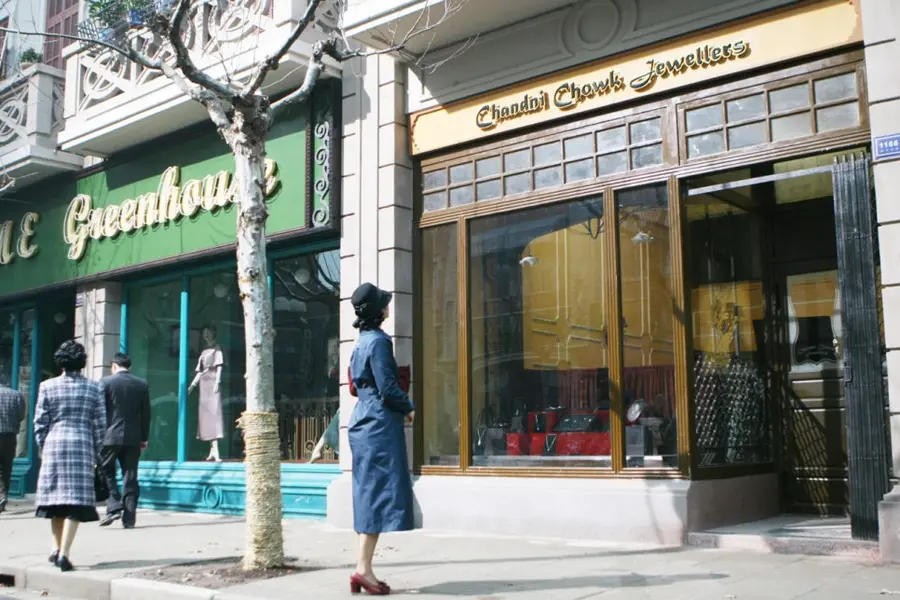
〈The audition for In the Mood for Love〉 was an opportunity you absolutely could not miss. She shuttled between Beijing and Hong Kong and took in five auditions in total. Then, with her mind emptied out, she went back to her hometown home in Hangzhou to stay. That’s when she got a call. “I was climbing a mountain with my father, and he told me to come back to Hong Kong quickly. I thought it was just about the sixth audition contact, so I went to Hong Kong thinking, ‘I’ve already been through five auditions—how can I not manage one more?’ But as I kept doing exactly what they told me, it started to cross my mind that maybe it wasn’t an audition. Director Wong Kar-wai asked me quietly to stand in front of the camera. I was really happy.” That’s how Tang Wei became Wang Qiaozhi. When you compare it with the original, it was a movie adaptation that felt exciting precisely because Tony Leung was so different from the original, while Tang Wei was so much like the original.
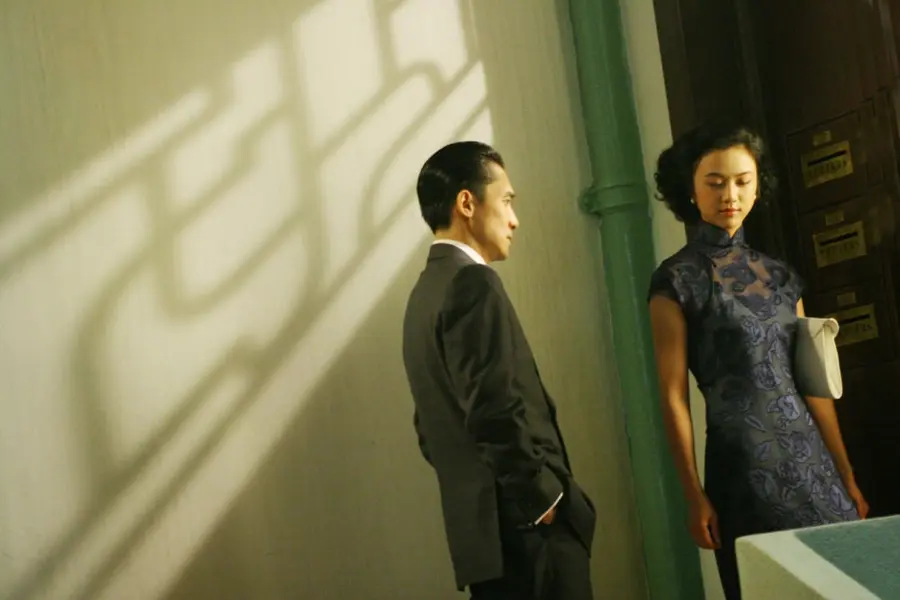
But with her trust in director Wong Kar-wai and the chance to meet a legendary senior like Tony Leung, she still couldn’t help but feel apprehensive about taking on how intense and explicit the sex scenes were—because Wang Qiaozhi and the character Tony Leung plays are people who show things you cannot express in words with their bodies. Wang Qiaozhi accepts a mission that tempts the man she’s after, thinking she may be able to win the heart of Guangyumin, whom she had admired. Yet in the process, she falls in love with him. In a world full of deprivation—no parents, and a lack of what she needed amid confusion—although the physical relationship came first, she quickly catches fire with the warmth of the man. The three explicit sex scenes were filmed over a total of 11 days, and before principal photography began, they finished all the shooting early on. Director Wong’s intention was to depict Wang Qiaozhi carrying out her mission with a heart that was not properly prepared and was thrown into turmoil—before she could truly sink deeply into her character.
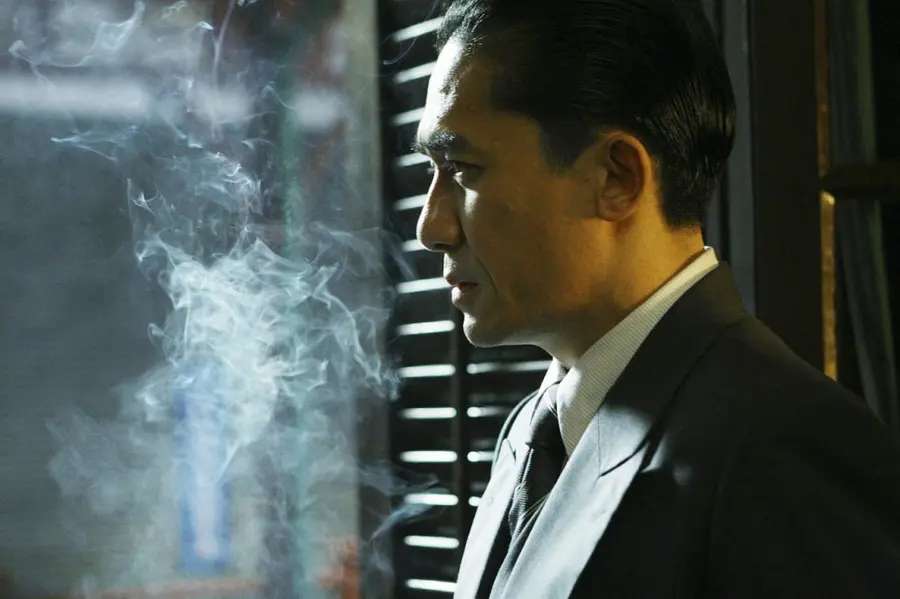
Amid that, having analyzed the character Wang Qiaozhi in her own way, Tang Wei said she wanted to cry in the first sex scene. She thought it was necessary because she felt the tragedy of her situation—having to carry out a mission she didn’t want. But tears didn’t come. She then had time to consult with her senior, Tony Leung. In response, Tony Leung told her, “In Chace and Rage〉’s Wang Qiaozhi and Tang Wei in real life, if you break it down, they’re the same person.” Since both of them are basically new actors in the same situation, if Wang Qiaozhi didn’t cry, then Tang Wei wouldn’t cry, too. And if Tang Wei didn’t cry, then Wang Qiaozhi wouldn’t cry either—so he said she didn’t have to care at all. Because it’s an issue where you can’t definitively say what is right or wrong as an actor, she didn’t have to be disappointed just because her tears didn’t fall the way they were intended.
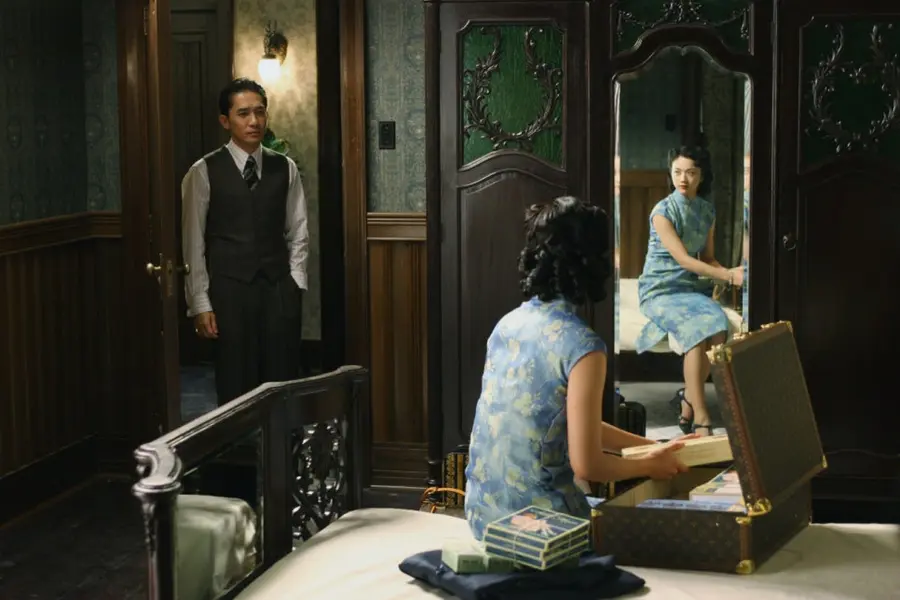
The film that allowed Tang Wei—whose acting work had effectively come to a stop due to restrictions imposed by the Chinese government after 〈In the Color of Blood and Lust〉—to resume her acting career after she acquired Hong Kong citizenship was 〈Crossing Hennessy〉(2010), which she appeared in in Hong Kong. As time passed, I’m told this connection led Tang Wei to recommend the husband, director Kim Tae-yong, for his film 〈Wonderland〉(2024). At the time, Pogijong had appeared as the character’s aunt, played by the woman who was Jang Hyeok-woo’s character’s aunt. In particular, Jang Hyeok-woo not only helped Tang Wei a great deal during her time in Hong Kong, but also really liked “Wang Qiaozhi’s Theme” among the 〈In the Color of Blood and Lust〉 OST, with music by Alexandre Desplat. That’s why, just as Sarah Brightman added lyrics to “Gabriel’s Oboe” from Ennio Morricone’s 〈Mission〉(1986) OST to sing “Nella Fantasia,” Jang Hyeok-woo also added lyrics to “Wang Qiaozhi’s Theme” and sang a song titled “Yummol” (淹沒). At the time, the story of how Sarah Brightman kept sending Ennio Morricone letters every two months for three years asking him to let her sing with lyrics to “Gabriel’s Oboe” was so well known that it has become famous. Even Ennio Morricone, who initially refused firmly, saying, “I can’t add lyrics to my song!” eventually had to grant permission to her persistence.
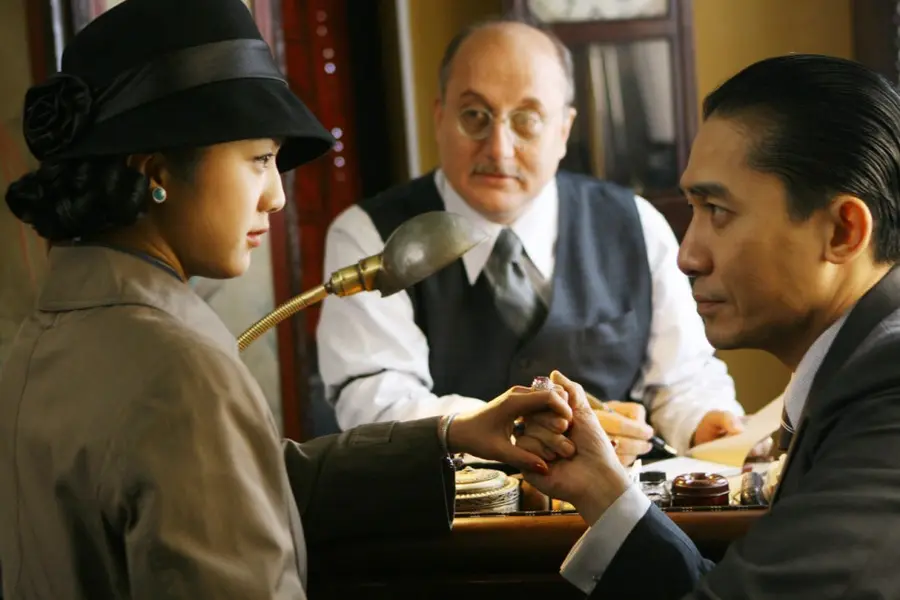
After leaving it behind at a jewelry shop, you could say Wang Qiaozhi’s empty heart—wandering down the road endlessly—is what the lyrics capture. The film includes songs without lyrics, but Jang Hyeok-woo describes that sentiment as “Yummol,” a word that conveys a state of sinking into the water. What’s more, the reasons Wang Qiaozhi fell in love are expressed as both “disaster” and “the will of heaven.” Also, the line “Come if you will” expresses Zhang Ailing’s feelings and intentions with remarkable precision. It’s probably also the same steadfast mindset that Zhang Ailing had long said, “I think when people fall in love, they are truer than when they wage war or revolution.” That’s because the short work 「In Chace and Rage」 is the first piece written after Zhang Ailing’s heyday passed and after 1972, when she began a full-fledged retirement in Los Angeles, United States, and up until she died in 1995. In other words, this was a work written long after the time when Hulanqing—an official bureaucrat who collaborated with the Japanese, and also a married man—secretly married a person in 1944 and then divorced in 1947, reflecting back on the past. I think the author put into the piece a firm resolve that she didn’t regret that decision back then, and that her thinking was unchanged then and now. In any case, because it’s a starring role for Tang Wei, I tried putting “Yummol” under the final seaside scene in the film 〈Decision to Leave〉(2023). The lyrics and melody, especially the line “Deep as the sea,” matched the scene quite well. It even made me think that if Zhang Ailing had watched 〈Decision to Leave〉 while still alive, she would have liked it a great deal.
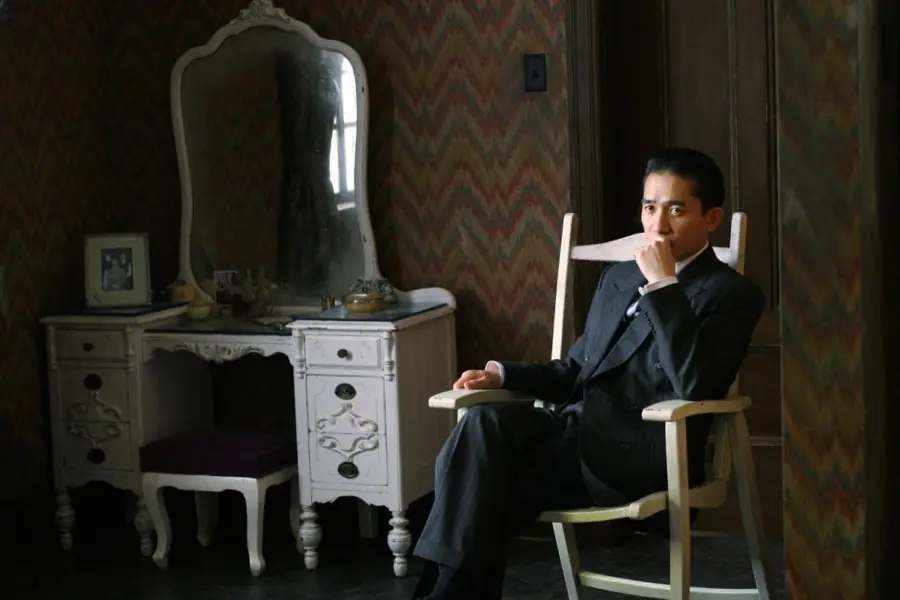
After it was sent away from the jeweler’s shop, you could say the empty feelings of Wang Qiaozhi, who then simply walked along the road endlessly, were rendered into lyrics. The movie plays a track without lyrics, but Jang Hyeok-woo depicts that heart with the word “Yummol,” describing the mental state of sinking into the water. He also describes the reason she falls in love as “a disaster” and “the will of heaven.” In addition, the lyrics “Come if you will” express Zhang Ailing’s mind and intentions far too accurately to be coincidence. They would also reflect Zhang Ailing’s unchanged mindset, since she would often say, “I think that when people are in love, they are more sincere than when they’re carrying out war or revolution.” That’s because the short piece 「In Chace and Rage」 was the first work she wrote after the peak of Zhang Ailing’s career had passed and after she began her full-fledged retirement in 1972, in Los Angeles, United States, and it continued until she quietly passed away in 1995. In other words, long after the period when, as the model for “him” in 〈In Chace and Rage〉, Hulanqing—a bureaucrat who collaborated with the Japanese and a married man—secretly married in 1944 and divorced in 1947, she looked back on those days and wrote this work. So I believe the piece contains the firm heart that she wouldn’t regret that decision, and that her thoughts were the same then as now. Anyway, for the reason that it’s Tang Wei’s starring work, I tried laying “Yummol” under the last seaside scene of the film 〈Decision to Leave〉(2023). The lyrics and melody, like “Deep as the sea,” fit the scene quite well—and it even made me think that if Zhang Ailing had watched 〈Decision to Leave〉 while still alive, she would have liked it a lot.
※ Orfeo Hannamwill begin screenings of the 〈In the Color of Blood and Lust Special Edition〉 on April 26, followed by 〈Happy Together〉 on May 23, and 〈Chungking Express〉 on June 13, with the 「Tony Leung, the Last Hong Kong Actor」 publication commemorative ‘Tony Leung Special Exhibition’ set to wrap up with a screening of 〈In Chace and Rage〉 on August 1.

![[Interview] A Love Letter to Life, Humanity and Korea: ‘Journey There’ Star Justin H. Min, Part 2](https://cdn.www.cineplay.co.kr/w300/q75/article-images/2026-10-22/f97b0baf-32b0-4b5c-983b-df3166e84990.jpg)

![[Joo Seong-cheol's Locker] Tony Leung Sometimes Wants to Hold an Ashtray.](https://cdn.www.cineplay.co.kr/w160/q75/article-images/2026-02-09/07564a08-8660-45c9-902d-bad2226672b3.jpg)

![Orfeo Hannam: Tony Leung Special Exhibition] Tony Leung’s Version of ‘Color, Cain’ That’s Almost Nothing Like the Original ①](https://cdn.www.cineplay.co.kr/w160/q75/article-images/2026-07-24/0805db1a-82ab-4014-841c-8fac94100bbc.jpg)
댓글 (0)
댓글 작성
댓글을 작성하려면 로그인이 필요합니다.
로그인하기