


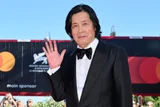
![Director Lee Chang-dong, winner of the Grand Jury Prize at the 83rd Venice Film Festival [Reuters-Yonhap News Agency]](https://cdn.www.cineplay.co.kr/w900/q75/article-images/2026-09-13/58ed42d6-3b32-4b94-8020-01d1bf000ac4.jpg)
Director Lee Chang-dong, 72, reaffirmed his stature as a global master by winning the Grand Jury Prize at the 83rd Venice International Film Festival for “Possible Love,” his first film in eight years.
After winning Best Director for “Oasis” in 2002, Lee added a new milestone to his international festival record 24 years later by taking home Venice’s second-highest prize, the Grand Jury Prize.
It was the first award for a South Korean film at the Venice Film Festival in 14 years, since the late director Kim Ki-duk’s “Pieta” won in 2012. It was also the first time a South Korean film has won the Grand Jury Prize.
South Korean film wins major Venice prize after 14 years, captivating festival
A former teacher, novelist, film director and minister of culture and tourism, Lee has spent nearly 30 years portraying South Korean society and ordinary people in his films since making his debut with “Green Fish” in 1997.
Born in Daegu in 1954, Lee graduated from Kyungpook National University with a degree in Korean language education and went on to teach Korean at a high school.
While working as a teacher in 1983, he entered the literary world when his novel “Jeolli” won the Dong-A Ilbo’s annual spring literary contest. He later published “About Fate” and “There Is a Lot of Shit in Nokcheon,” establishing himself as a novelist.
![Poster for the film “Peppermint Candy” [Provided by KOBIS. No resale or database use permitted]](https://cdn.www.cineplay.co.kr/w900/q75/article-images/2026-09-13/e813d1c6-c235-4716-b81a-7d7e64ca8bb8.jpg)
From novelist to global master: A 30-year gaze on society
Lee entered the film industry in 1993, shortly before turning 40, when he wrote the screenplay and served as assistant director on director Park Kwang-soo’s “To the Starry Island.”
Although he began his career as a film director relatively late in life, his longstanding interest in people and society, rooted in his novels, continued on the screen.
His directorial debut, “Green Fish,” portrayed the tragedy of Mak-dong, a young man played by Han Suk-kyu, who was displaced by urbanization in 1997. The film swept South Korea’s major film awards and won the Dragons and Tigers Award at the Vancouver International Film Festival.
The relationship between individuals and society, a recurring theme in Lee’s work, became even more pronounced in his second film, “Peppermint Candy” (2000).
The film traces a man’s life backward through time, linking the upheavals of modern South Korean history—including the Gwangju Democratic Uprising and military dictatorship—to his personal life. A line delivered by lead actor Sol Kyung-gu—“I want to go back”—left a deep impression on South Korean audiences. The film was also invited to the Directors’ Fortnight section at the Cannes Film Festival, where it reached audiences around the world.
In an interview with Yonhap News Agency at the time, Lee explained the film’s meaning, saying, “An individual can never be free from history or social reality. That’s because social reality does not leave individuals alone.”
At the same time, he stressed, “No political reality or destructive external force can completely destroy the sublime human spirit.”
![A scene from the film “Oasis” [Provided by KOBIS. No resale or database use permitted]](https://cdn.www.cineplay.co.kr/w900/q75/article-images/2026-09-13/b65d204c-e248-48b1-93e7-7cf2db8b12c0.jpg)
His third film, “Oasis” (2002), examined the lives of people marginalized by society through the love between Gong-ju, a woman with a disability played by Moon So-ri, and Jong-du, an ex-convict played by Sol Kyung-gu.
The film won Lee the Silver Lion for Best Director at the 59th Venice International Film Festival, while Moon So-ri took home the Best New Actor award.
At the time, he said, “Whether it is love or film, the meaning has become worn out, but I want to think together with audiences about the meaning hidden within it.”
As Lee was gaining recognition as a world-class director, he briefly left the film industry to work in cultural administration.
In 2003, he was appointed the first minister of culture and tourism under the Roh Moo-hyun administration and served in the post for one year and four months, through 2004.
After returning to filmmaking, Lee released “Secret Sunshine” (2007), which explored pain, forgiveness and faith through a woman who loses her son. The film earned its star, Jeon Do-yeon, the Best Actress award at the 60th Cannes International Film Festival.
Lee’s distinctive body of work, which draws social issues from the lives of ordinary individuals, continued afterward.
“Poetry” (2010) examined beauty and ethics through the story of an older woman who learns of her grandson’s crime, earning Lee the Best Screenplay award at the Cannes International Film Festival.
His next film, “Burning” (2018), released eight years later, depicted class disparities and anxiety among the younger generation through two young men from different backgrounds and returned to the Cannes competition.
Rather than presenting a specific message or answer in his films, Lee has emphasized posing questions to audiences.
At the Jeonju International Film Festival in 2022, he said, “I don’t make films to deliver a clear and simple message,” adding, “I want to leave audiences with questions and make them feel the connection between life and film.”
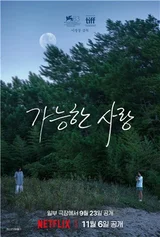
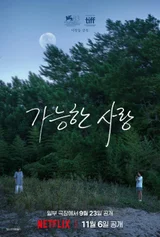
![Poster for the film “Possible Love” [Provided by Netflix. No resale or database use permitted]](https://cdn.www.cineplay.co.kr/w900/q75/article-images/2026-08-25/628bf356-ac9e-4e28-a604-4de703677bef.jpg)
“Possible Love,” Lee’s first film in eight years: “Salvation ultimately comes from love for humanity”
The same qualities carry into “Possible Love,” Lee’s first film in eight years since “Burning.”
Through the relationships between two couples from different social classes—a laid-off worker and his wife, and a documentary director and her wealthy husband—the film explores class, labor and desire while asking, “What kind of love is possible?”
In 1999, when discussing “Peppermint Candy,” Lee spoke about people grounded in reality. Twenty-seven years later, his new film likewise places the lives of a laid-off worker couple alongside those of a so-called “silver-spoon” couple, focusing on the social structures that shape individual lives.
This time, however, he speaks of “love” as the force that enables people to go on living within those structures.
Speaking with reporters recently in Venice, Lee said, “The world has been changing like this, and my life has become embedded in structures I cannot do anything about. I thought about what I should do.”
He added, “Even so, I think what saves the lives of ordinary people is love for another human being.”
Film critic Jeon Chan-il explained, “The central theme of Lee Chang-dong’s films was originally ‘conscience,’ but in this work he finally moves beyond conscience to speak of ‘love.’” He added, “The Grand Jury Prize reflects his ability to capture an extraordinary moment while addressing the commonplace subject of love.”
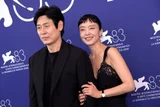
![Director Lee Chang-dong at the film “Possible Love” [Provided by Netflix. No resale or database use permitted]](https://cdn.www.cineplay.co.kr/w900/q75/article-images/2026-09-13/d9542088-5841-49d2-b903-bd2a326ca6dd.jpg)






댓글 (0)
댓글 작성
댓글을 작성하려면 로그인이 필요합니다.
로그인하기