



It seems that Noh Jae-won’s potential continues to grow through his work. I’m curious what his past was like. Given his deeply introverted personality, I imagine he was never the type to put himself forward.
That’s really true. I’m not good at putting myself forward, and I am shy. I was the same way in school, although there were times when I wanted to step up and times when I wanted attention. It was in middle school. I saw a blooper reel from a TV drama and thought, “That’s it!” It sparked my curiosity. It’s embarrassing because it was such a superficial thought, but it looked so much fun to me. Watching everyone laugh and joke around as they looked at scenes where people had made mistakes, I thought, “Acting must be such a fun profession. I want to try it, too.” (Laughs)
That was quite a misunderstanding. (Laughs) That was the moment you first became interested in acting. What had interested you before that?
Nothing in particular. I was an ordinary kid, but seeing that made me curious because it looked fun. I had also loved movies since I was little. Of course, even then I hadn’t made a major decision to become an actor. I don’t think I ever imagined that I would actually become one.
You went to Anyang Arts High School, which has produced many actors.
I never thought I would attend an arts high school, but my homeroom teacher recommended it to me when I was in ninth grade. He asked whether I might consider going to one. Fortunately, I persuaded my parents to let me attend an acting academy for about a month, and I found the experience fun. Up to that point, I didn’t have a serious dream of becoming an actor. I was carefree and confident. I think I started with a fairly casual attitude. The uniforms were attractive, the school was more free-spirited and seemed cool, and I thought I could have fun at school while acting. (Laughs)
You must have had talent. Between your teacher’s recommendation and the confidence that came from enjoying and doing well at the acting academy, you probably gained a lot of self-assurance.
There were fewer than 10 students at the acting academy I attended. It was extremely small, so I was very confident back then. It was my entire world. I was also considered a fairly good student at Anyang Arts High School. The teachers favored me, so I naturally assumed I would get into a good college. But contrary to my expectations, I was rejected by every college. That was when I learned about the world and tasted bitterness. At the same time, I think that was when I developed a firm dream. Before then, it had been vague. Until that point, I had simply thought, “Acting is fun, and I think I’m good at it.” But while preparing for the entrance exams, I began to think that I could become not merely an “actor,” but an actor capable of giving a good performance. I gained confidence without any real basis. The irony was that I arrived at that realization after failing the entrance exams.
Your way of thinking is rather unusual. Most people might have given up at that point, but it seems to have given you even more energy. (Laughs) I understand you took the entrance exam four times before being admitted to Chung-Ang University’s School of Performing Arts and Media. Your friends were already in college or working as actors, so you must have felt a deep sense of deprivation. How did you overcome that?
A junior from Anyang Arts High School got into Korea National University of Arts or Chung-Ang University while I was taking the exam for a second time, then a third time. You feel pretty small in moments like that. Fortunately, many older people also apply to theater and film departments, so I comforted myself by thinking, “Everyone does this. What’s the big deal?” I felt sorry toward my parents, but I shamelessly asked them to continue supporting me. More than anything, I loved acting and had faith in myself. I thought I just needed one more year. Of course, I failed again after that. (Laughs) Even after failing repeatedly, I loved acting, enjoyed it and believed in myself, so I was able to take the exam a fourth time. I realized I was actually doing it.
How did the Noh Jae-won of that time analyze “actor Noh Jae-won”? Your slightly trembling voice must have sounded different from the voices of male actors with deeper tones, and probably made you stand out. Did you ever think that what is now one of your strengths was, in some ways, a weakness?
I never thought at the time that I was different. I also tried to make my voice sound better because I had the task of preparing for the entrance exams. In fact, I wasn’t a particularly unusual student. As I continued working, I took on some very distinctive characters, and that unusual side of me became more pronounced. But the main reason I kept getting rejected back then was that I had a mistaken idea of what acting was. I wanted to appear a certain way. I wanted to show off my energy. Looking back, I’m embarrassed, but those feelings were strong. I don’t think I knew how to be honest at the time. I remember something one of my teachers told me. He said, “Some parts of your acting are good, and some are just so-so. But your greatest strength is that you truly love acting. That is your greatest strength. I’ve never seen anyone who loves acting more than you.” Those words were a real comfort and gave me strength. It’s still the same today. I don’t think I’m that good at acting. But I do think, “I really love acting.” That hasn’t changed since then.
Although you entered college relatively late, it seems the independent-film world discovered Noh Jae-won’s presence fairly quickly. I’m referring to the Seoul Independent Film Festival’s project for discovering actors. You won first prize at the fourth 60-Second Monologue Festival in 2021. You are both the biggest star the 60-Second Monologue has produced and an actor synonymous with it. I’m sure many more glorious moments await you, but I imagine the thrill of that moment must have been truly different.
That was probably the most exhilarating moment I’ve had, more than being cast in any of the projects I’ve worked on so far. I applied to the festival after watching actors such as Oh Kyung-hwa and Hong Kyung, who had appeared in earlier 60-Second Monologue festivals, and being amazed by their performances. I thought, “Their acting is so good. How does everyone act like this? They’re incredible.” I was 29 at the time, at the end of my 20s. I applied thinking, “Let’s tell the story I can tell. I hope I at least make it among the 24 finalists.” Winning first place was an outcome I truly never imagined. I couldn’t believe I had won first place at the monologue festival I had only dreamed about. It’s not that I was such an amazing actor; I think I was simply lucky. I later heard from the senior actors who served as judges that they didn’t give me the award because I was the most outstanding actor technically. In some ways, first place was also a message of encouragement. They wanted to recognize what was special about me and encourage me, I was told.
Our conversation has taken us all the way back to the moment of the 60-Second Monologue. (Laughs) After watching your videos, aspiring actors who are preparing for and dreaming about the 60-Second Monologue may find your advice useful. Is there anything you’d like to tell them?
Many of my friends and colleagues are among those pursuing that path. But when I think about it, I don’t have anything definitive to tell them. If I entered the 60-Second Monologue competition again now, I’d probably wonder what I should do, too. I might not be selected if I entered again. I don’t think there’s any particular formula or method.
Content is being created across a range of platforms. While the industry is clearly facing a crisis, those with a distinct style also have opportunities to demonstrate their abilities. That is one reason to look forward to what you will do in this new environment.
I hope there will be more variety. I’m eager and curious to keep seeing things I’ve never seen before. The industry’s logic clearly exists, but I also hope many unreasonable things happen alongside it. I wonder what it would be like to see more daring and more audacious projects.
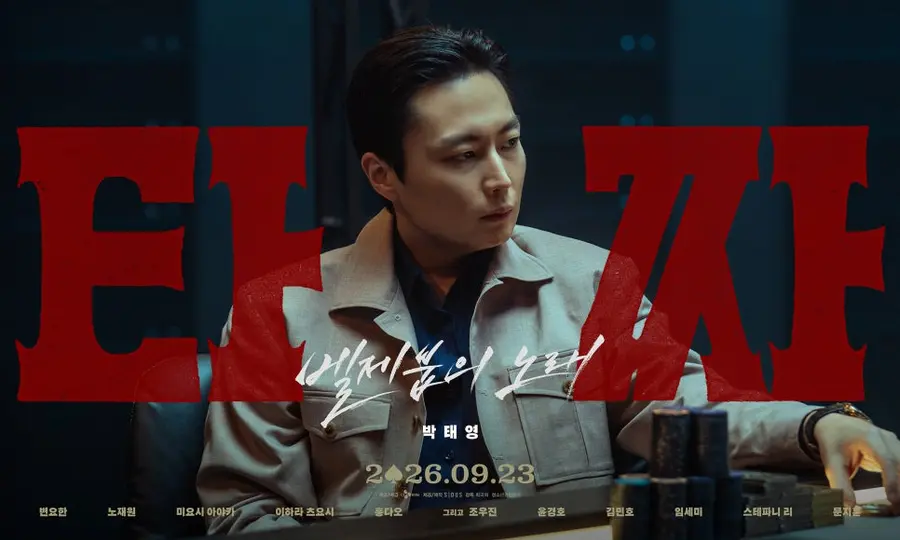
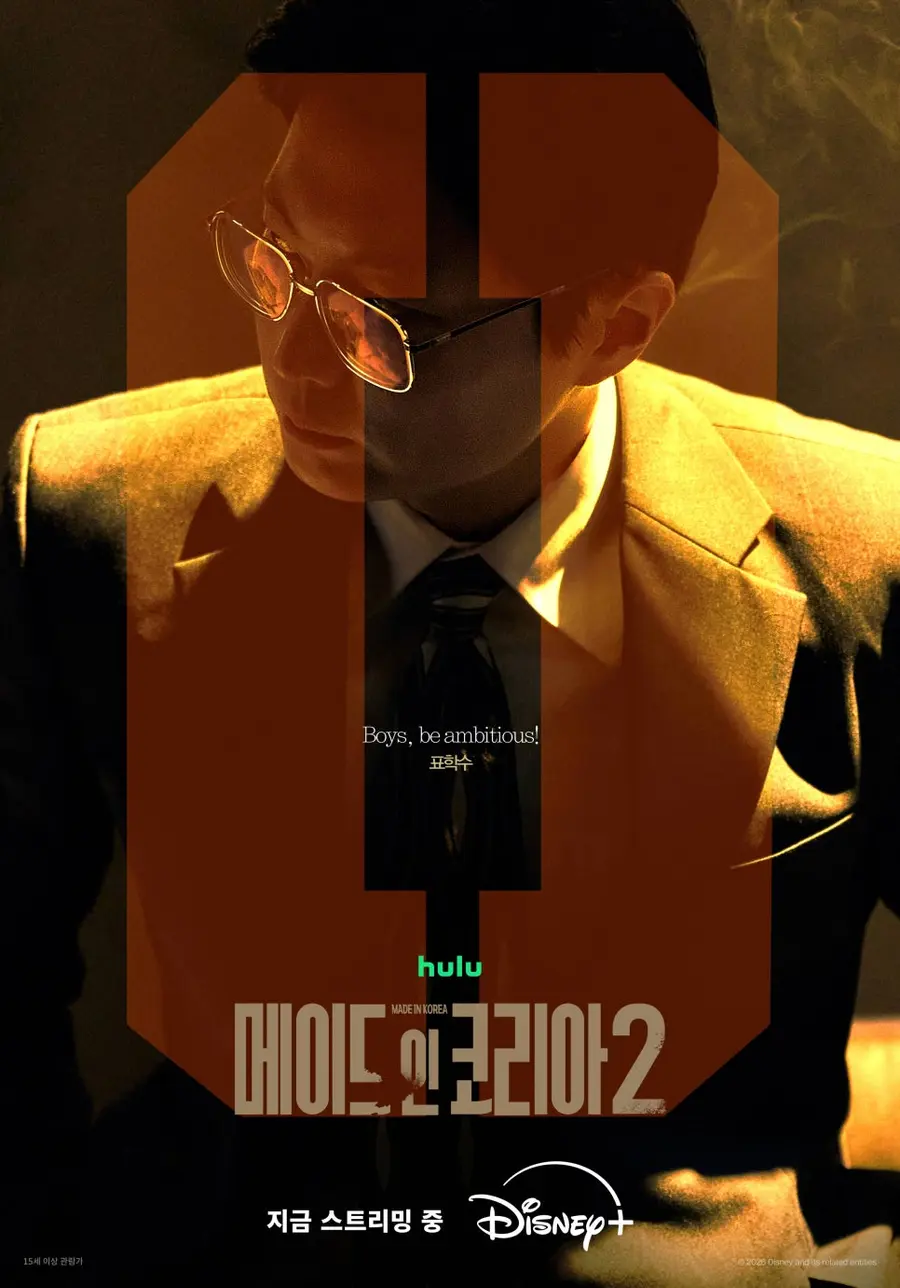
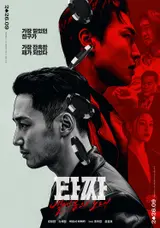
You are now at a point where you have to turn over the cards, with results pending for both 〈Made in Korea Season 2〉 and 〈Tazza: The Song of Belzebub〉.
Thinking about the results is scary. (Laughs) I did my best, and I hope many people enjoy watching them. It would be wonderful if they do well. For now, I want to focus more on the projects I’ll be working on next.
![[Lee Hwa-jung’s Deep Talk] “Even after taking the college entrance exam four times, I shamelessly made it this far.” Meeting Noh Jae-won, star of ‘Tazza: The Song of Belzebub’ and ‘Made in Korea Season 2’ ③](https://cdn.www.cineplay.co.kr/w300/q75/article-images/2026-09-18/6af3dd40-51a8-4940-8c6a-298c5e02d28a.jpg)
![[Lee Hwa-jung's Deep Talks] “Going head-to-head with Hyun Bin and Byun Yo-han. How do I survive?” Meeting Roh Jae-won, star of 〈Tazza: The Song of Belzebub〉 and 〈Made in Korea Season 2〉, Part 2](https://cdn.www.cineplay.co.kr/w300/q75/article-images/2026-09-18/0a6647ac-c9fe-4a41-bf45-78b8f9e305d0.jpg)




![[OTT Ratings] Disney+ Series 'Made in Korea' Season 2: Cineplay Reporters' Ratings](https://cdn.www.cineplay.co.kr/w160/q75/article-images/2026-09-17/c22496ba-84a0-465e-a749-4e01be83dd96.jpg)
![[Lee Hwa-jung’s Deep Talks] “Breaking Down the Line Between Good and Evil With Performances We’ve Never Seen Before” — A Conversation With Noh Jae-won, Actor in ‘Tazza: The Song of Belzebub’ and ‘Made in Korea Season 2’ ①](https://cdn.www.cineplay.co.kr/w160/q75/article-images/2026-09-18/1c31cb58-4164-4e2e-9d7a-9f8f27fa4403.jpg)
![[Lee Hwa-jung's Deep Talks] “Going head-to-head with Hyun Bin and Byun Yo-han. How do I survive?” Meeting Roh Jae-won, star of 〈Tazza: The Song of Belzebub〉 and 〈Made in Korea Season 2〉, Part 2](https://cdn.www.cineplay.co.kr/w160/q75/article-images/2026-09-18/a7926ce8-27fc-4961-8cbe-749d9e6ca72f.jpg)
댓글 (0)
댓글 작성
댓글을 작성하려면 로그인이 필요합니다.
로그인하기