


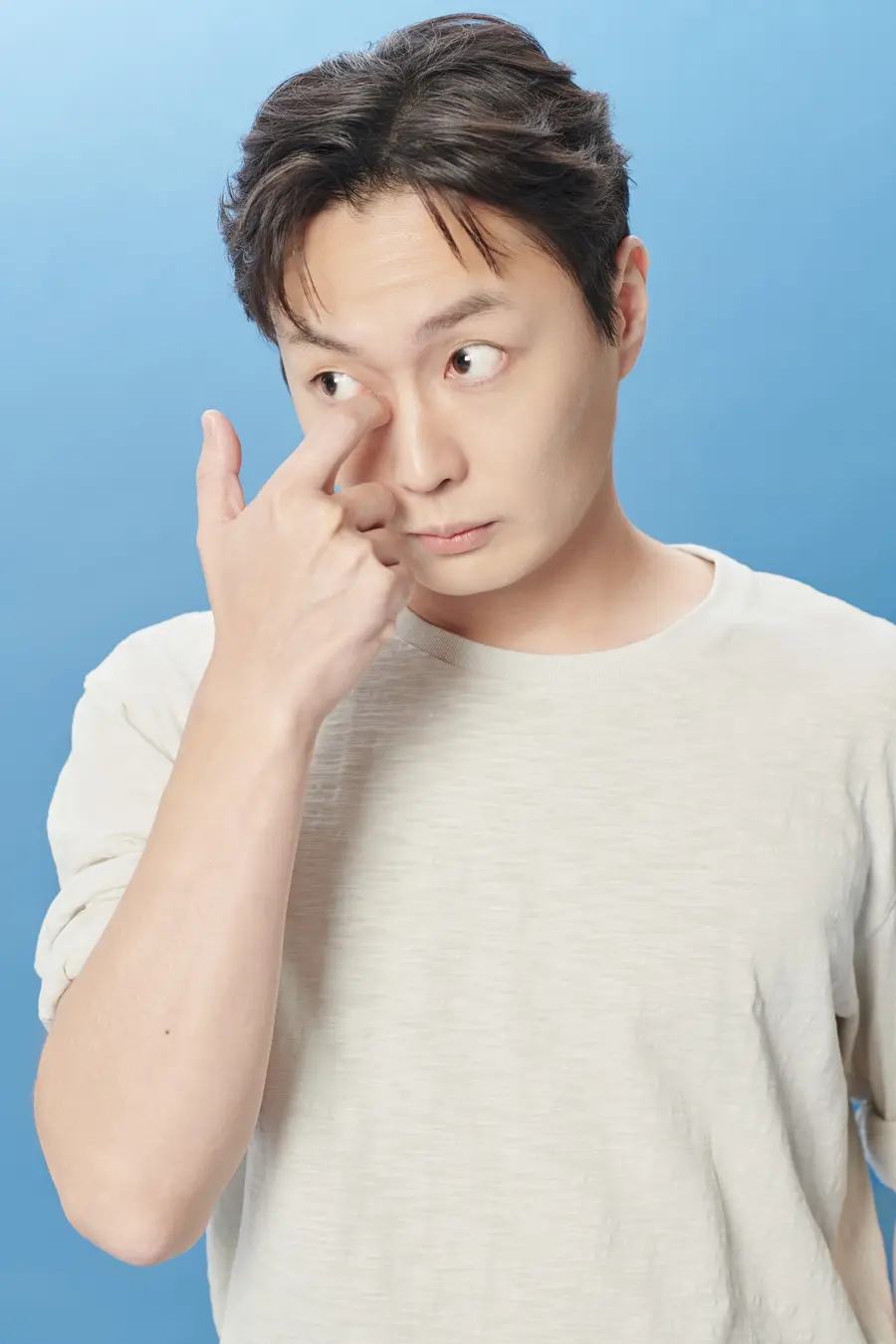
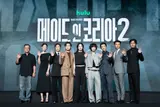
From the audience's perspective, it seems the new momentum actor Roh Jae-won is showing has already begun. Looking at the cast lineup for 〈Made in Korea〉, I found myself wondering whether an actor known for his freewheeling style could adapt to acting within a demanding format — in other words, whether Roh could fit naturally into a strongly genre-driven work. You have answered that question through your performance and are now entering Season 2.
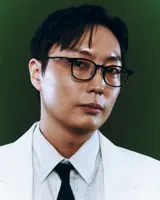
I didn't think about it to that extent. I don't think I saw it as a tightly structured genre drama, a series that demanded a straightforward approach. Looking back, 〈Made in Korea〉 began with me wondering how I had landed the role. After seeing 〈Daily Dose of Sunshine〉, how did director Woo Min-ho decide to cast me as Section Chief Pyo? No matter how many times I read the script, I couldn't resolve that question. If I asked the director, he would give me an answer, but I worried that once I got it, I would become too conscious of it and draw too much attention to that point. So I did what I have always done: I started by understanding the character. I thought about what it meant to understand Pyo Hak-soo.
Your performance captures attention by bringing the atmosphere of a realistic film into a genre production. That made me think you might rely heavily on improvised acting. But when I looked at the script book, there was something of a twist. You actually seem to be the kind of actor who faithfully performs without straying from the script.
It seems some of my ad-libs were included in the script book, too. But when I act, I don't change my lines or improvise for the sake of improvising. Sometimes a line simply comes out because it has to, and when that happens, I go with it. The performance then moves somewhere new rather than following what I anticipated and calculated. It can feel unfamiliar, but sometimes that moment suddenly makes the performance convincing and believable. I like when those moments arrive. I carry my own direction as I interpret a character, but I generally don't plan out its exact form. I think that gives me more freedom on set. At the same time, there are moments when I shouldn't work that way. Recognizing and controlling that is ultimately my assignment. I learned and felt a lot while acting with Hyun Bin in this project. He prepared and calculated so much, then created a definite sense of weight through a highly polished performance. It made me want to try a kind of acting different from what I had done before.
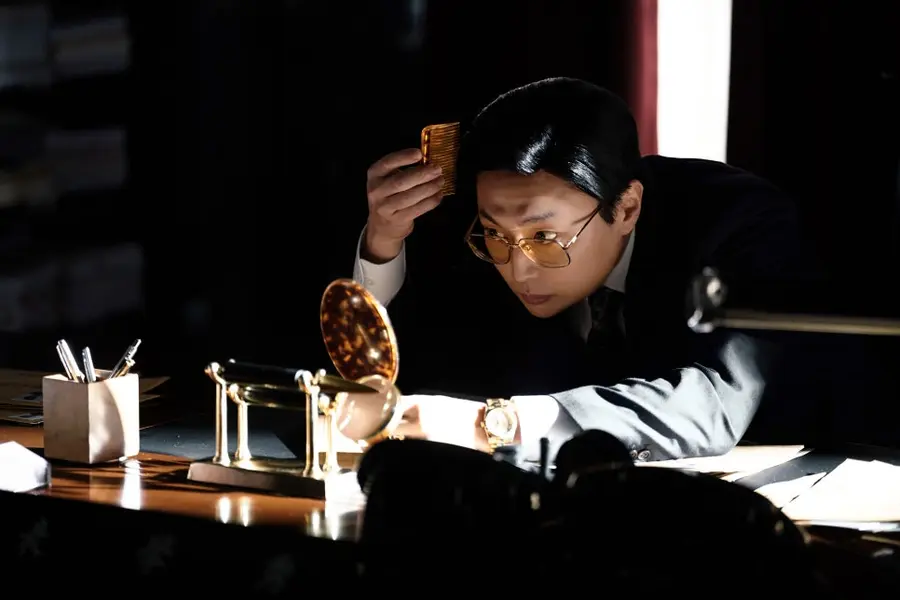
I thought Roh Jae-won used a different set of tools when acting. Beyond the freedom with which you handle dialogue, what catches the eye is the detail in your movements. The everyday hand and foot gestures that are easy to overlook are added to your characters to create people who feel real. For example, in 〈Made in Korea〉, when you were in the interrogation room, I saw you brush back your hair and thought, “This is a rhythm Roh Jae-won created.” I was glad to see it.
Honestly, I didn't calculate it. When I try to calculate it, it actually becomes awkward. Pyo Hak-soo's movements came naturally. If you wear that kind of suit and slick your hair back, you naturally start behaving that way. The costume helped me a lot. Physical movement definitely comes more from practice than planning. For example, I internalize a person's walk and distinctive physical traits through rehearsal. When I was doing theater, I played a range of characters with strong characteristics, including old men and women, so I did a lot of work finding each character's physical traits. I think that process became ingrained in my body. When I watch the edited version, I sometimes marvel and think, “I did that?” That's where the fun of acting comes from. In front of the camera, though, I also seem to restrain myself so those elements don't become too prominent. If I approach a role thinking only about its outward appearance, the acting starts to look like acting. I'm curious how viewers will assess me in Season 2.
While bringing your own color to Roh Jae-won, you also had to blend into the ensemble of many characters in 〈Made in Korea〉. 〈Squid Game〉 was also built through chemistry with various characters. What was different about the two productions?
There were many senior actors on the set of 〈Made in Korea〉, and the period setting and the tension created by the Central Intelligence Department added to the pressure. I was nervous on 〈Squid Game〉, too, but perhaps I was able to hide behind others a little then. Close friends and colleagues were there, so I had somewhere to turn emotionally. Here, my scene partner was Hyun Bin. (Laughs.) When I did a test shoot wearing the same hairstyle and the same suit as him, I couldn't help feeling intimidated and tense. The more I thought about having to play a peer and scene partner of a similar age, the more complicated my thoughts became. I wasn't thinking about how to do well; I was thinking only about how to survive. I told myself, “I'm Pyo Hak-soo. Pyo Hak-soo is me. Pyo Hak-soo might do this.” So on set, I decided I should barely talk with him and just act. Once filming started, I simply did my own thing. Director Woo Min-ho respected that and gave me room to act freely. The director is very charismatic and seems like he might be intimidating, but (laughs) one day he encouraged me, saying, “You set me free. You let me do anything.” He cared about every actor that much. I realized that he wanted every actor he cast to come alive in front of and within the camera, no matter what. I'm truly grateful to him, and it is an honor to have worked with him through Season 2 of 〈Made in Korea〉. (Laughs)
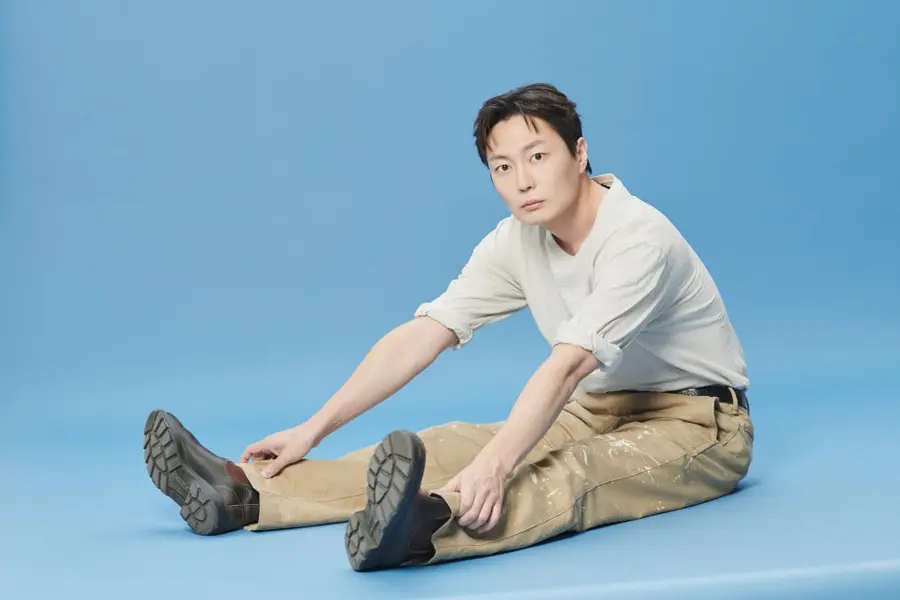
The project that made the name “actor Roh Jae-won” known was undoubtedly 〈Squid Game Season 2〉. You were part of a cast lineup that audiences around the world were curious about and eagerly awaiting. Then you joined the Disney+ blockbuster series 〈Made in Korea〉, building on that momentum.
It still feels surreal. I also keep wondering how I ended up playing this role in 〈Made in Korea〉. In terms of how it felt, of course 〈Squid Game〉 had a huge impact before that. At the time, I hadn't appeared in a commercial production, and hardly anyone recognized me. When the casting news came out, even people around me were puzzled. I woke up one morning to find that the casting announcement had been published, and my follower count grew by several thousand that day, so the notifications kept coming. I was scared at first. (Laughs.) I couldn't process what was happening and wondered what it meant. I realized, “So this is the impact of 〈Squid Game〉.” It was incredible, but it was frightening, too. I wasn't thinking much about how I should perform in such a blockbuster. More than that, I loved the character Nam-gyu. I rehearsed a lot while preparing and tried all kinds of creative behavior. It was a difficult but fun time.
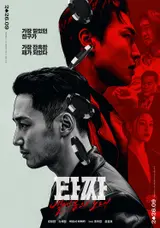
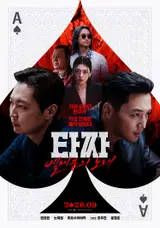
Your territory on screen is also expanding. If your distinctive performances had already brought you attention in 〈Yoon Si-nae Is Missing〉 and 〈End of the Century Love〉, it is significant that your role has clearly grown in 〈Tazza: The Song of Belzebub〉, which opens during this year's Chuseok holiday, with you and Byun Yo-han sharing top billing.
It feels like a dream. I'm really happy. For one thing, seeing my face appear so often on the poster and in the trailer — and hearing so much of my voice — feels so unfamiliar that I can hardly believe it. (Laughs.) The 〈Tazza〉 series is an important one in Korean cinema. Part of me thought, “I'm the lead?” while another part wondered, “What on earth am I going to do?” But as soon as I read the screenplay, it wasn't simply that I thought, “I can do this,” or “The role is big, so I have to take it.” The character was so appealing that it made me want to try.
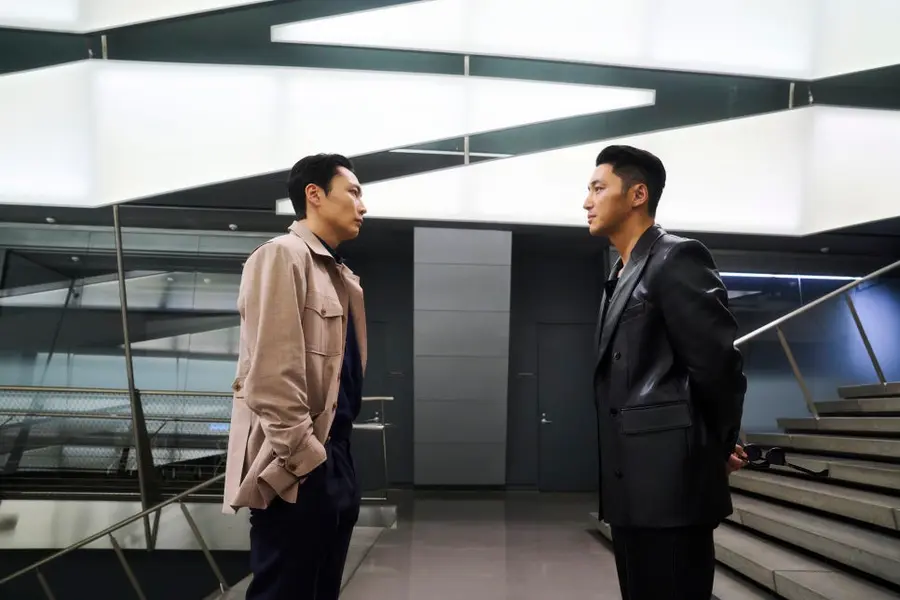
In 〈Tazza: The Song of Belzebub〉, the complex that drives Park Tae-young is important enough to become one of the story's central forces. He is intelligent and works just as hard, but he cannot overcome his inferiority complex and envy toward his best friend, Jang Tae-young (Byun Yo-han). It was a character with enough to unpack to make any actor eager to play it. What appeal did you see in Park Tae-young?
This installment is different from the earlier 〈Tazza〉 films. It takes place in a casino, but the real story centers on the relationship between two friends. When I read the original work, I thought, “This is a story about friendship.” It is a story about Mozart and Salieri, and about an unavoidable inferiority complex. It was a dilemma I could relate to as someone whose profession is acting, and I found it fascinating. I don't empathize with Park Tae-young's actions, but I deeply understood how he felt. Maybe you could call it compassion. I wanted to show the jealousy, inferiority complex and love that I could express. Rather than define him by saying, “This is what Park Tae-young would do,” I wanted to express something only I could bring to the role. I wanted to reveal what lies inside his vile or ugly side. There are many emotionally intense scenes. It was also nerve-racking because this was my first time presenting this kind of long-form performance. I wonder how people will see it. I hope audiences won't reduce it to, “Roh Jae-won always plays villains.” (Laughs.)
Even within the category of villains, Park Tae-young seems to have so much going on that psychoanalysts could study him. I think that complexity is the result of the intricate, subtle performances you gave in earlier works. When I watched the sunny Kim Seo-wan in 〈Daily Dose of Sunshine〉, or that wonderful “Bang-ul” in 〈The Gori〉, I didn't think of Nam-gyu in the Season 2 bathroom scene of 〈Squid Game〉. If those characters overlapped, it would be difficult for viewers. (Laughs.) Instead, Roh Jae-won seems like an actor who keeps creating new definitions at the boundary between good and evil. Even within a single work, your expressions shift so quickly that viewers stay tense, wondering what the character will reveal and what his intentions are.
When I act with a specific intention, it tends to become strange. If I tell myself, “He's a villain, so I have to act like a villain,” it doesn't work. If I tell myself, “He's a warmhearted guy,” that doesn't work either. So I have never approached a role by thinking of it as a villain. When I play a villain, I first remove the villain's frame and look at the person. Then I can see things such as how deeply wronged he felt. I look back at my own frustration, anger and darker inner self. Once I fully understand the character as a person, as Roh Jae-won, I no longer question what kind of behavior it is. I think, “Of course I would have no choice but to act this way.” I think that's what I tried to do.
Your range of expression is broad, particularly in the way you draw out a vivid variety of qualities beyond good and evil. Looking at how you work, it seems impossible to discount your talent as an actor.
I think it comes less from talent than from the failures I've experienced. I have to fail — fail painfully and regret it deeply — before I understand something. Because I tried too hard to adorn myself, I learned how not to. Because I once loved expressing everything too much, I also developed a desire not to express. I think it comes from things like that. But I still don't really know. I never did. Acting is very difficult.
I wonder how intense the thrill must be when a character you've expressed after all that deliberation leaves audiences' heads spinning. On a basic level, it must also be exhilarating to encounter a side of yourself you didn't know existed.
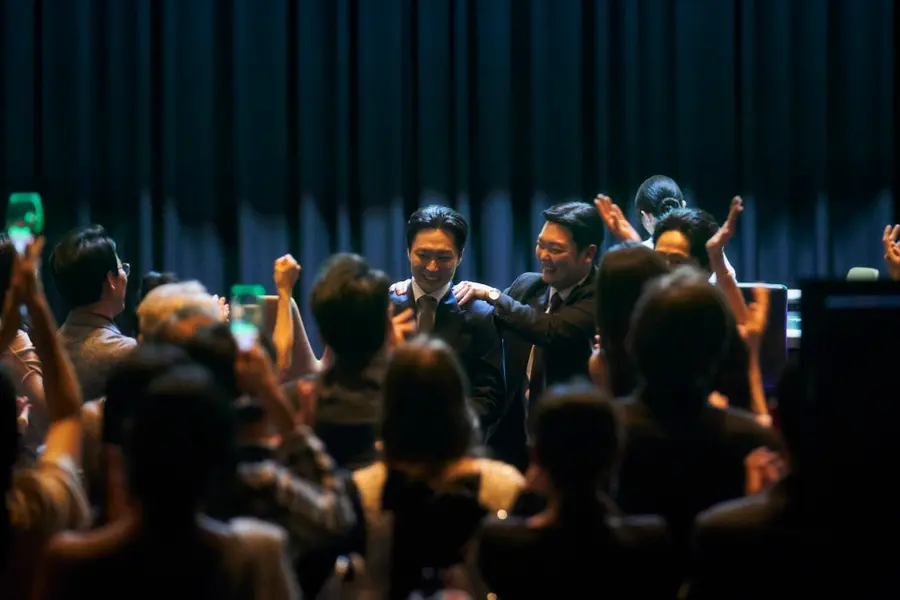
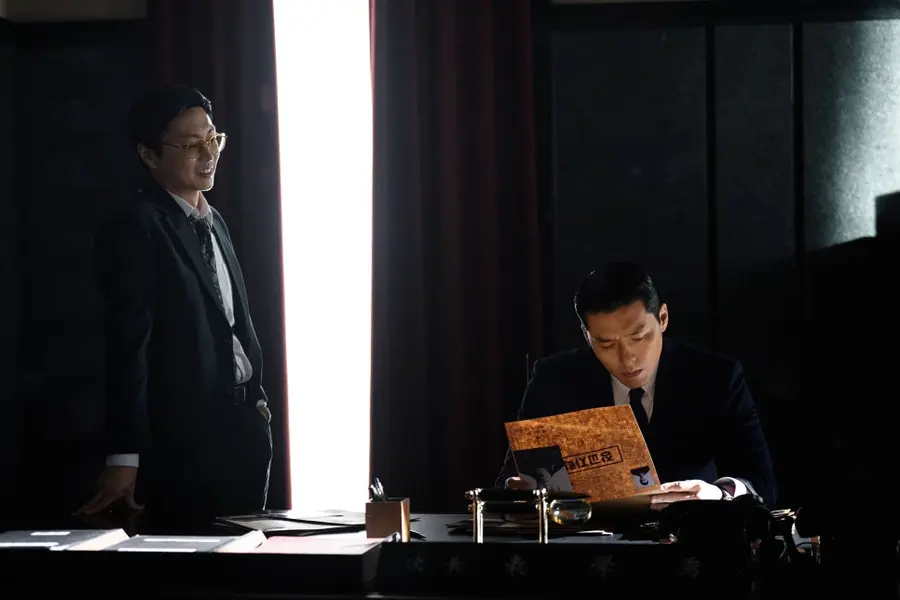
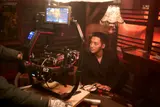
It is. It really is. For example, I'll be acting, hear “Cut,” go to the monitor and watch my OK take, and it looks so strange. I think, “How did I make that expression?” or “Why am I doing that?” Sometimes it looks bad enough that I think we need to shoot it again. But then I realize, “So that was a side of me I didn't know.” You can't make it happen every time, but those moments feel like real magic. For example, in 〈Made in Korea〉, when Baek Ki-tae (Hyun Bin) appears and says, “Section Chief Pyo, they want you to come in,” there is a scene in which I spring up and enter to meet Director Hwang (Park Yong-woo). The stage direction simply said, “Pyo Hak-soo is sitting and enters the director's office.” I had no idea what to do, so I just focused on Pyo Hak-soo. I started with thoughts like, “What am I doing right now?” and “Why am I sitting here?” As I wondered, “When do I go in?” my mind became armed with the thought: “I'm smarter, cooler and better than Baek Ki-tae. That's right, I'm quick and sharp. I'm smart.” That led to the behavior. I found it fascinating, too. I thought, “So I have this razor-sharp side as well.” I think I became completely immersed in that moment.
I understand that you draw on a lot of real-life experiences to bring out those sides. Looking back, there must have been many moments when you thought, “I've gone this far.”
There have been. A lot of them. (Laughs.) But I still don't really know my own techniques or methods. Honestly, when things aren't working, I just plow ahead.
At the time of 〈Squid Game〉, it became widely discussed that you went to clubs in Hongdae to learn the vibe of Nam-gyu, a former club marketing director.
I don't usually go to clubs. When I play club music and dance alone in a rehearsal room, I can't really capture the feeling. I went to clubs in Hongdae, but many had age restrictions. So I went to places like pubs with only three or four people in them. I went several times and practiced as if I were Nam-gyu.
Do you also tend to look for a lot of references?
These days, I don't make much of an effort to look for references. But if I need to find something useful, I try to look as widely as possible. If I only pick at a few things here and there, the acting can become even more formulaic. I think the best approach is to find and watch a lot, then throw it all away. And I end up looking in places no one else knows about. When I was doing 〈Squid Game〉, I watched a Polish film called 〈Corpus Christi〉 (2019). There is a scene that lasts only a second or two in which the protagonist, Daniel (Bartosz Bielenia), dances with his eyes wide open, as if he had taken drugs at a club after being released from prison. I saw that one shot and thought, “I want to do that!” References help in moments like that. But using something as a reference isn't the end of the process. Finding my own sensibility from it is more important.
Watching your performances, I actually found it difficult to look for references. Your work doesn't seem to overlap much with the performance patterns of other actors or roles. Were there actors who influenced you?
When I dreamed of becoming an actor, I watched and admired Song Kang-ho's performances. Then I met him in person on the Disney+ series 〈Uncle Samsik〉 (2024). He is such an extraordinary actor. I told myself, “I can't follow him. I shouldn't try to follow him. I have to accept that I'm different.” I did not want to choose someone as a role model and follow that path. But I do quietly admire Hollywood actors and feel a desire to emulate them. You saw director Chloé Zhao's 〈Hamnet〉, which opened this year, right? Watching actors such as Jessie Buckley is astonishing. I thought, “I want to devote myself to a role like that.” I draw inspiration from those actors and gain courage all over again.
So you take it in, forget it and express it as something uniquely Roh Jae-won?
Exactly. I don't think actors can be compared with one another. Every actor has an individual humanity. I think about that when I watch other actors. It seems actors are truly incomparable. I also think I have to live well in order to express things that way. I believe my own distinct acting will emerge only if I live fully and sincerely, filling my heart to the brim.
▶ The conversation with actor Roh Jae-won continues in Part 3.
![[Lee Hwa-jung’s Deep Talk] “Even after taking the college entrance exam four times, I shamelessly made it this far.” Meeting Noh Jae-won, star of ‘Tazza: The Song of Belzebub’ and ‘Made in Korea Season 2’ ③](https://cdn.www.cineplay.co.kr/w300/q75/article-images/2026-09-18/6af3dd40-51a8-4940-8c6a-298c5e02d28a.jpg)
![[Lee Hwa-jung's Deep Talks] “Going head-to-head with Hyun Bin and Byun Yo-han. How do I survive?” Meeting Roh Jae-won, star of 〈Tazza: The Song of Belzebub〉 and 〈Made in Korea Season 2〉, Part 2](https://cdn.www.cineplay.co.kr/w300/q75/article-images/2026-09-18/0a6647ac-c9fe-4a41-bf45-78b8f9e305d0.jpg)
![[OTT Ratings] Disney+ Series 'Made in Korea' Season 2: Cineplay Reporters' Ratings](https://cdn.www.cineplay.co.kr/w160/q75/article-images/2026-09-17/c22496ba-84a0-465e-a749-4e01be83dd96.jpg)
![[Lee Hwa-jung’s Deep Talks] “Breaking Down the Line Between Good and Evil With Performances We’ve Never Seen Before” — A Conversation With Noh Jae-won, Actor in ‘Tazza: The Song of Belzebub’ and ‘Made in Korea Season 2’ ①](https://cdn.www.cineplay.co.kr/w160/q75/article-images/2026-09-18/1c31cb58-4164-4e2e-9d7a-9f8f27fa4403.jpg)
![[Lee Hwa-jung’s Deep Talk] “Even after taking the college entrance exam four times, I shamelessly made it this far.” Meeting Noh Jae-won, star of ‘Tazza: The Song of Belzebub’ and ‘Made in Korea Season 2’ ③](https://cdn.www.cineplay.co.kr/w160/q75/article-images/2026-09-18/c5ec35fe-9487-4063-ac5b-5b1a52c5265b.jpg)
댓글 (0)
댓글 작성
댓글을 작성하려면 로그인이 필요합니다.
로그인하기