



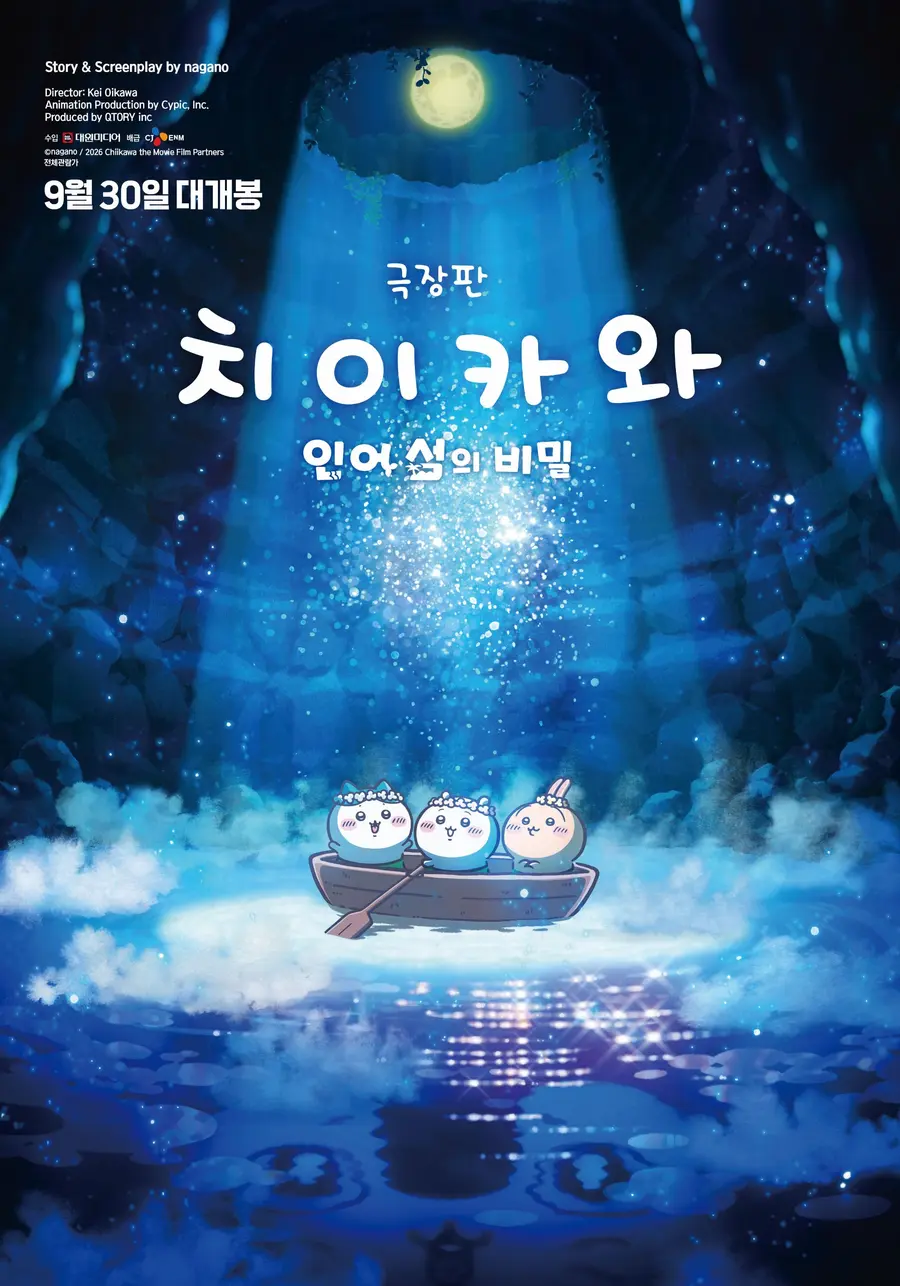
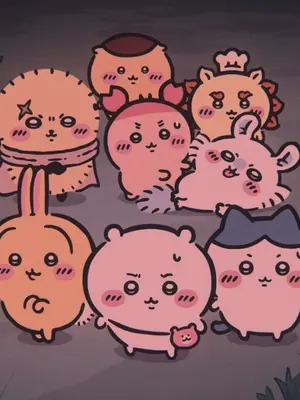
A Chiikawa frenzy has swept theaters. Since opening Sept. 30, 〈Chiikawa the Movie: The Secret of Mermaid Island〉 has drawn 1.41 million viewers through Oct. 14. For a reporter who had known Chiikawa only as a character brand — a self-described "Chiikawa novice" — the film was not exactly a must-see. What stirred my curiosity instead was a meme circulating in Japan: people posting "before and after watching Chiikawa the Movie" photos that made it seem as if they had seen something extraordinary.

Nagano, the original creator and screenwriter, has said the film is "accessible even if you don’t know Chiikawa," and the movie is perfectly enjoyable without prior familiarity with the 〈Chiikawa〉 series. The following notes reflect a novice viewer’s perspective; spoilers are minimized, though the film’s general tone is discussed.
〈Chiikawa the Movie〉 Is a Musical (note: the original Korean source used a variant spelling)
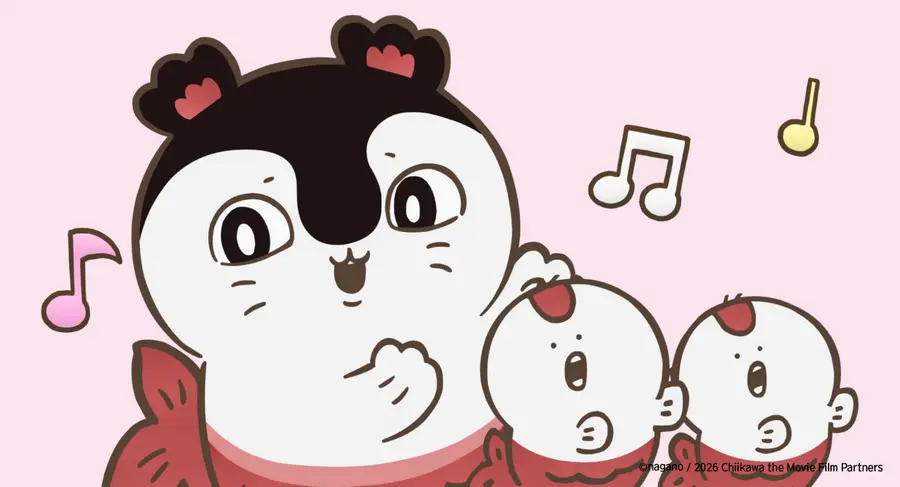
When the film opened, an unusual stage appeared in Korea: the series' leads — Chiikawa, Hachiware, and Usagi — performed a special stage on the music program 〈M Countdown〉. Before seeing the film, a Chiikawa novice might have assumed that was merely an event organized because the characters are popular. After watching, though, it becomes clear why the 〈M Countdown〉 stage had been arranged. 〈Chiikawa the Movie〉 functions as a musical — or at least a music-driven drama — in which music plays an essential role.

That said, it differs from a conventional musical. The songs don’t literally drive the plot, nor do they serve only to disclose characters’ inner thoughts. Still, 〈Chiikawa the Movie〉 uses character songs with impressive skill to build atmosphere and to plant foreshadowing across the film. It plays to the Sirens' traits, using song to build tension, and it employs the song "Kyou no Hi wa Sayonara," which often appears as a "graduation song" in many Japanese works, to create ambivalent emotions. The range of insert songs — from choral pieces to a hit song, even hip-hop (!) — is another element you shouldn’t miss.
〈Chiikawa the Movie〉 Is a 'Silent Film'
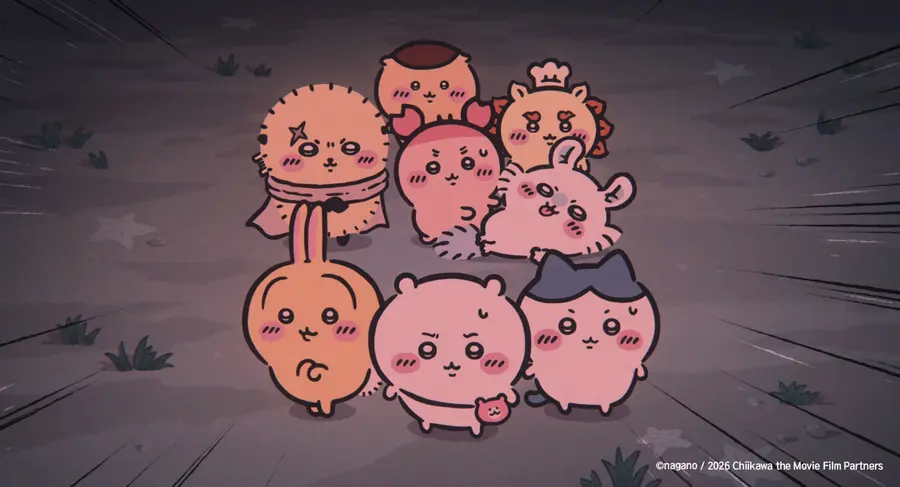
To be honest, that’s a bit of an exaggeration. It’s not a true silent film with intertitles showing full sentences. Still, many of the film’s central characters use their own forms of expression, so the movie can feel like a silent picture. Among the main trio — Chiikawa, Hachiware, and Usagi — only Hachiware speaks clearly. Chiikawa and Usagi’s vocalizations are not readily intelligible, and Hachiware often serves to interpret them. Beyond the trio, the guide from the island who helps the three also has relatively few lines that resemble standard dialogue.


The silent-film comparison also comes from the clean, precise way the movie stages action. 〈Chiikawa the Movie〉 doesn’t feature highly intricate or flashy animation, but it clearly captures the scale and directional flow of the action required in the story. The sense of speed and staging as characters crisscross during chases is simple yet effective, and it brings to mind the tightly framed action of classic silent films. Even the robustly straightforward vigor of the island man (Shimajiro) leaves an impression for its simplicity and earnestness.
※The following contains hints about the overall development of the plot; if you want to avoid even minor spoilers, please skip ahead.
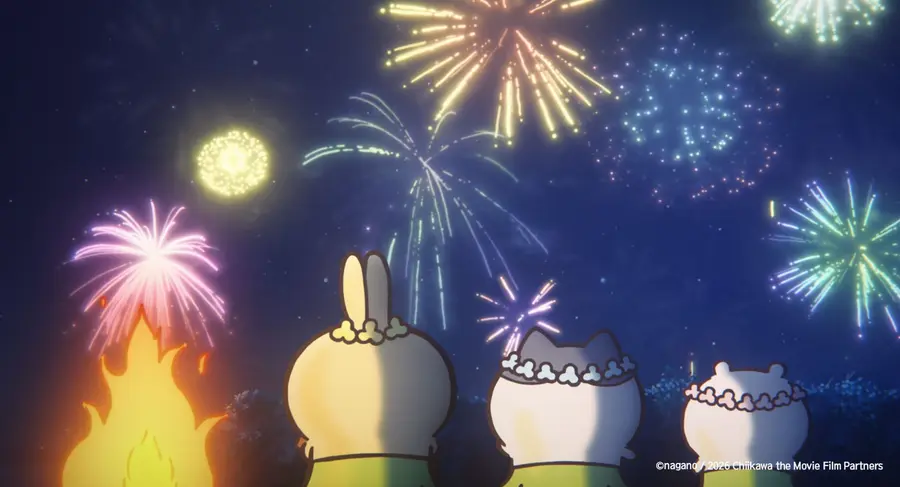
〈Chiikawa the Movie〉 Is a Greek Tragedy
As reactions in Japan indicated, 〈Chiikawa the Movie〉 is not merely a bright, cheerful adventure. The story begins with a conflict between two forces: the Sirens claim the townspeople ate a mermaid and vow to eat the villagers until the "culprit" is found. The villagers, unable to fend off the Sirens, resorted to luring people with a false promise of "100 times compensation." The Sirens’ relentless attacks push the villagers into such unscrupulous behavior.
After several crises, the film reveals the circumstances behind the incident, and it becomes clear that the tragedy stems from differences in each person’s emotional limits — something no one can easily lay full blame on. Since antiquity, as Aristotle analyzed in 「Poetics」, tragedy can be seen as the inevitable result of a character flaw (hamartia). In that respect, the events in 〈Chiikawa the Movie〉 might not have escalated so far if a single person had been able to reflect on themselves and those around them. I heard that the 〈Chiikawa〉 universe is essentially dark fantasy, and this single 〈Chiikawa the Movie〉 gave me at least a taste of that world.

![[2026 BIFF] Lee Chang-dong, Jeon Do-yeon, Seol Kyung-gu, Jo In-sung and Cho Yeo-jeong on 〈Possible Love〉: 'The Moon Shines Equally on Everyone'](https://cdn.www.cineplay.co.kr/w300/q75/article-images/2026-10-15/1da25e3b-e53c-4a23-ac23-cee5ac213feb.jpg)


![[Interview] Lee Joon-hyuk on the comfort of 〈Even the Lottery Winner Goes to Work〉 for office workers](https://cdn.www.cineplay.co.kr/w160/q75/article-images/2026-10-15/f7a9639d-8696-41bd-a83a-d73b88552026.jpg)

![[2026 BIFF] Lee Chang-dong, Jeon Do-yeon, Seol Kyung-gu, Jo In-sung and Cho Yeo-jeong on 〈Possible Love〉: 'The Moon Shines Equally on Everyone'](https://cdn.www.cineplay.co.kr/w160/q75/article-images/2026-10-15/b76f60ab-4a80-4436-9183-c37b1eb11fb2.jpg)
댓글 (0)
댓글 작성
댓글을 작성하려면 로그인이 필요합니다.
로그인하기