



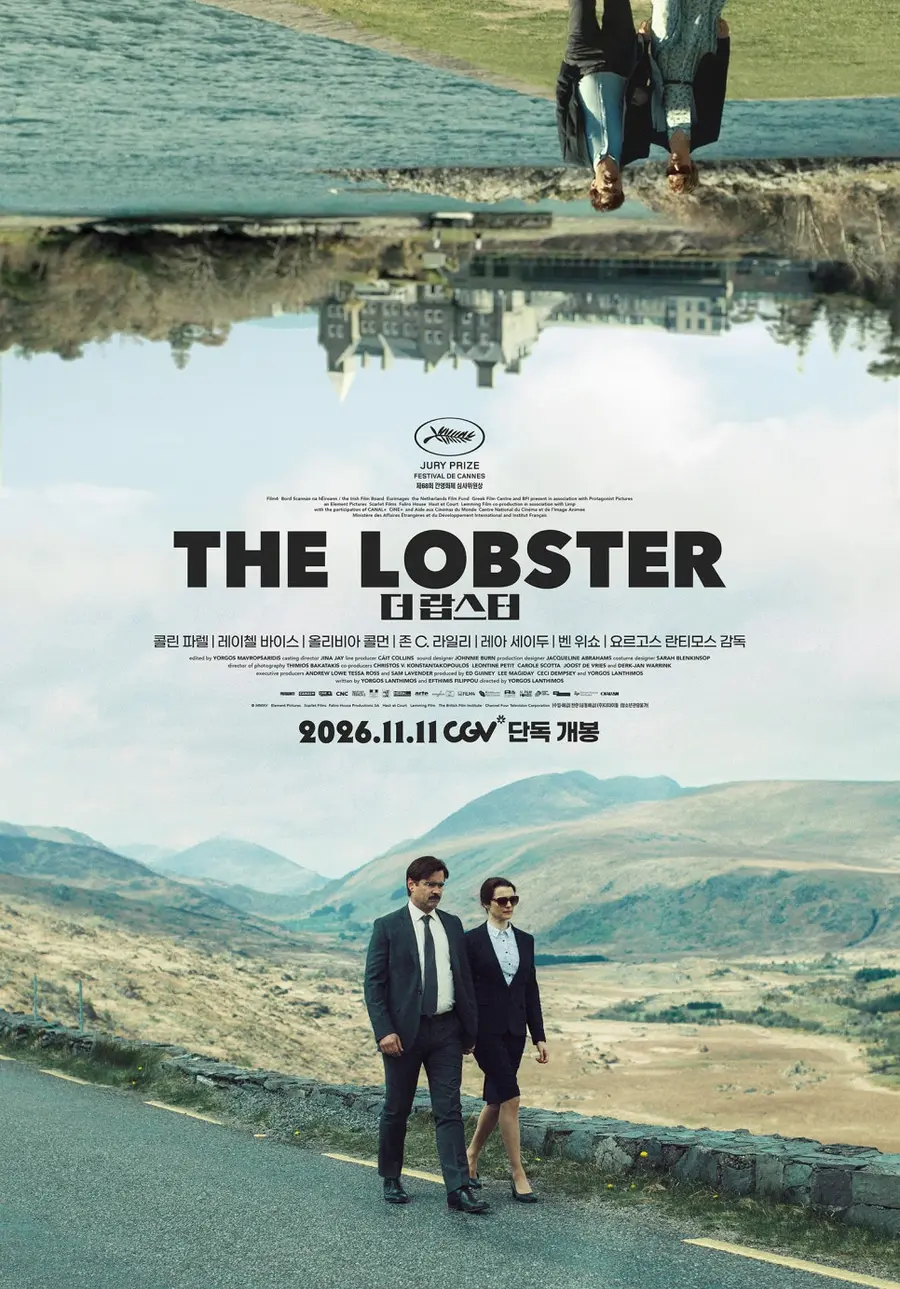
(1) 〈The Lobster〉,
the first Yorgos Lanthimos protagonist to finally have a name
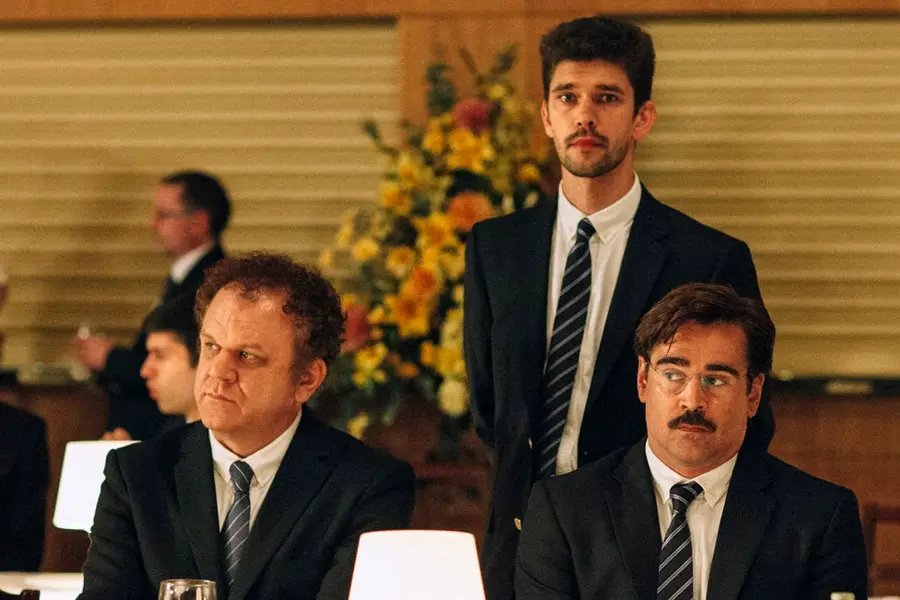
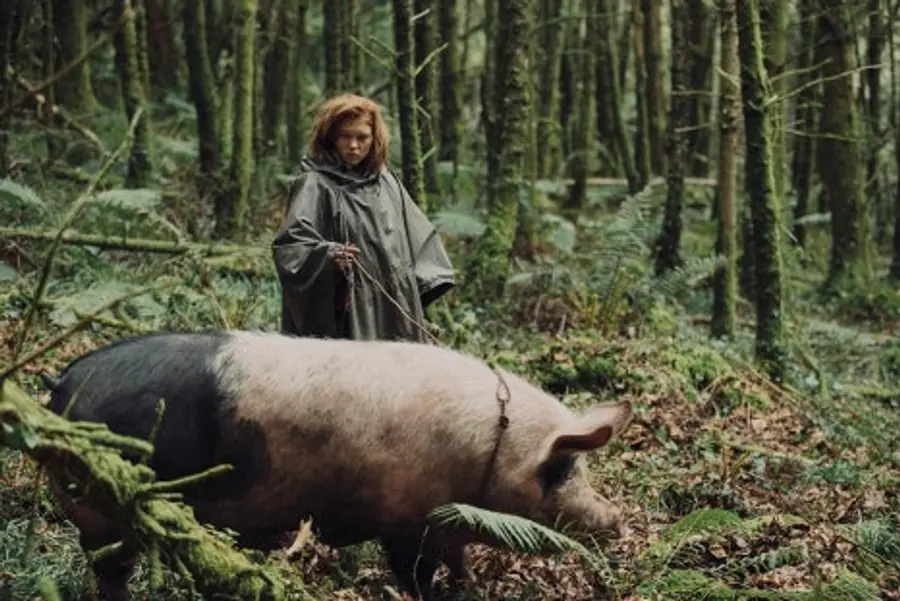
Before directing 〈The Killing of a Sacred Deer〉 (2017) and 〈The Favourite〉 (2018), Yorgos Lanthimos’s characters never had names. David, played by Colin Farrell in 〈The Lobster〉 (2015), is practically the first protagonist in one of his films to have a name. Rachel Weisz, who plays his love interest, appears as “the short-sighted woman,” while Léa Seydoux is “the leader of the loners.” Their fellow hotel guests, Ben Whishaw and John C. Reilly, are known as “the limping man” and “the lisping man.” The family in 〈Dogtooth〉 (2009), which brought Yorgos Lanthimos’s name to international attention, existed only as characters called the father, mother, daughter and son; they had no names either. In 〈Alps〉 (2011), his next film, the characters were simply called “the nurse” and “the coach.”

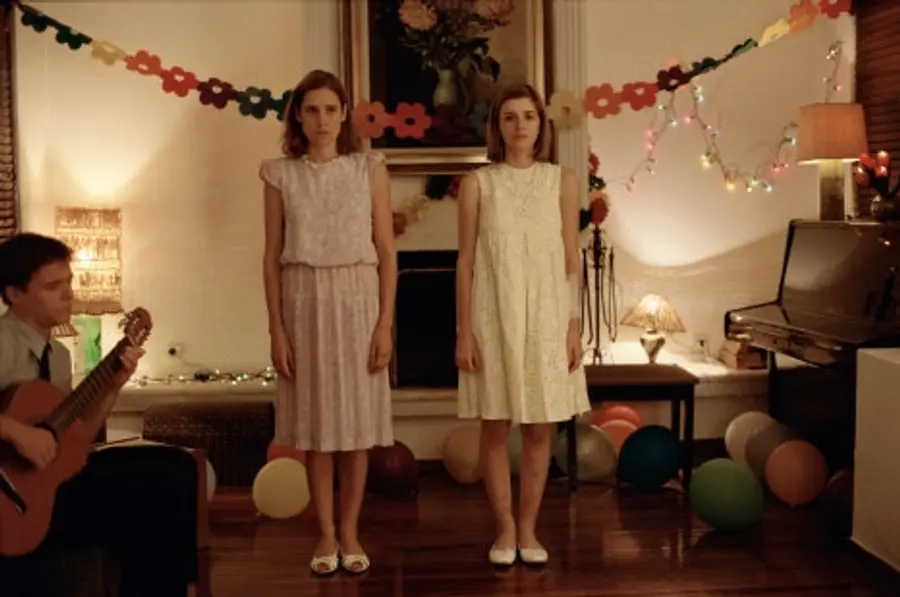
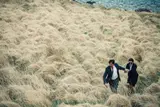
Of course, a woman named Christina does appear in 〈Dogtooth〉. A family lives almost entirely confined to their home, cut off from the outside world. The father, a dictator in all but name, occasionally brings Christina (Anna Kalaitzidou), a security guard at his company, to the house to satisfy his son’s sexual urges. Christina is one of the only people besides the father who can move freely between the house and the outside world, and she plays a crucial role in helping the eldest daughter (Angeliki Papoulia) begin to awaken. In other words, from Christina through to David in 〈The Lobster〉, only those with names in Lanthimos’s world could move between the inside and outside of a controlled system. David, too, escapes the unprecedented matchmaking hotel, where guests must find a partner within a 45-day grace period or be turned into animals, and flees into the woods.
(2) On the Greek New Wave
There’s a reason the characters in Yorgos Lanthimos’s films had no names. Inside those closed systems, people are nothing more than cogs; there’s no need to call them by names that set them apart. To understand his worlds, it’s worth talking about what’s known as the “Greek New Wave.” Before then, Theo Angelopoulos, who won the Palme d’Or at the Cannes Film Festival for 〈Eternity and a Day〉 (1998), was Greece’s leading director. In the late 2000s, the term “Greek New Wave” began to gain wider currency after Yorgos Lanthimos won the Un Certain Regard Prize at Cannes for 〈Dogtooth〉 and the Best Screenplay award at the Venice International Film Festival for 〈Alps〉, one after the other. (〈Dogtooth〉 beat out Bong Joon-ho’s 〈Mother〉, which was also invited to compete in that year’s Un Certain Regard section.) With a radical, unconventional style sharply different from the poetic, contemplative world of Theo Angelopoulos, these films began drawing attention as metaphors for Greek society at the time.
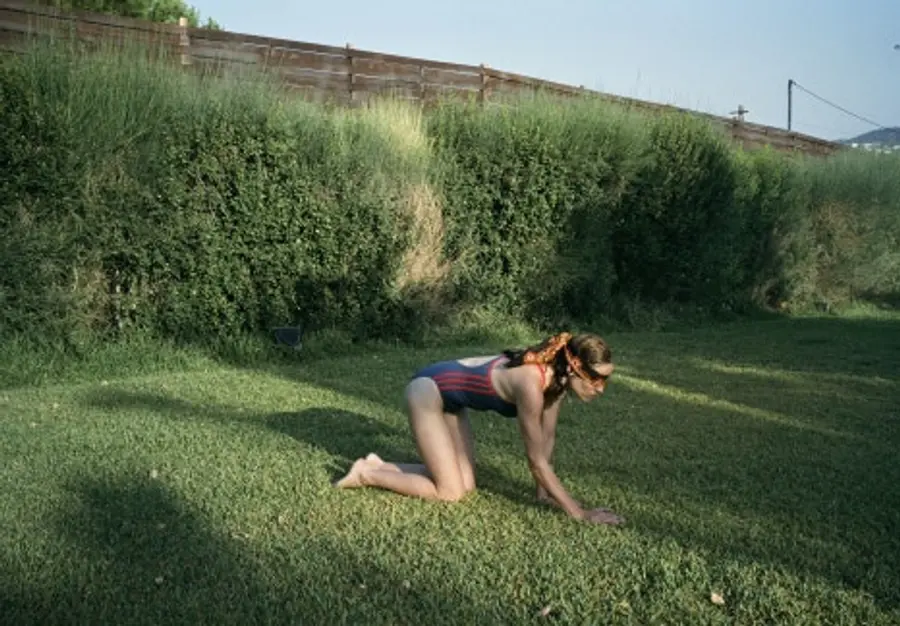
Athina Rachel Tsangari, producer of 〈Dogtooth〉 and 〈Alps〉 and a woman director who released 〈Attenberg〉 (2010) around the same time, is another name that must be mentioned. To understand the situation in Greece around 2010, when the country began seeking an IMF bailout, consider the following: Greece had spent enormous sums and taken on debt to host the 2004 Athens Olympics. Tax evasion and other forms of corruption piled on, leaving the country’s finances near collapse. Then the global financial crisis that began in the United States hit Greece hard. Rather than recovering, youth unemployment accelerated, and mass anti-government protests broke out in December 2008. Around that time, a 16-year-old boy was shot and killed by police in Athens. Deeply shocked by the incident, Athina Rachel Tsangari suddenly began writing the screenplay that became 〈Attenberg〉, which was selected for competition at the Venice International Film Festival. The striking poster shows two women facing forward in provocative poses. The film tells the story of Marina (Ariane Labed), a woman in her 20s caring for her father as he dies of cancer.

〈Attenberg〉 uses the dying father to portray Greece, sharply criticizing the country’s reality as it faced a severe socioeconomic crisis. Ariane Labed, who won the Best Actress award at the Venice International Film Festival for the film, also appears in 〈The Lobster〉 as the maid who helps David (Colin Farrell) escape. She is also Yorgos Lanthimos’s wife. Athina Rachel Tsangari’s later film 〈Chevalier〉 (2015) likewise turns a luxury yacht into a miniature version of Greek society. Six friends set off on a fishing trip aboard the yacht and decide to play an unusual game. As everything becomes a competition, their friendship disappears, and the yacht turns into a battleground of people hungry for victory. After returning from studying abroad, Tsangari founded the production company Haos Film in 2005, based in her hometown of Athens. It produced Yorgos Lanthimos’s films and became a launchpad for the Greek New Wave. The company also works on Hollywood films shot in Greece, providing co-production and location support for projects including 〈Before Midnight〉 (2013), filmed in the beautiful Greek seaside village of Kardamyli.


(3) Death from Within
Though 〈The Lobster〉 could fairly be called Yorgos Lanthimos’s first “Hollywood outing,” it was his first English-language film, and he chose an old song from his native Greece for its soundtrack. When the hotel guests go on a group human hunt in the woods, the scene is accompanied by extreme fast-motion cinematography and “Apo Mesa Pethamenos,” a Greek song from the 1920s. The title translates as “Dead from Within,” and the lyrics say, “Though alive on the outside, inside you’re dead.” Hunting others to prolong your own life is, in itself, a hypocritical, lifeless existence. And those lyrics—alive on the outside, dead inside—could apply to every character in a Yorgos Lanthimos film. To enter Lanthimos’s world, it matters how fully we can understand and accept, in cinematic terms, the satirical universe that challenges taboos by drawing on the bizarre rules and systems he creates, as well as the mythology of Greece, the land where he was born and raised. The difference lies in whether we dismiss that world as incomprehensible, as “making no sense” or “not adding up,” or embrace it as a “cinematically compelling manual.” When art’s value lies in showing us a world we couldn’t have imagined, his world is truly compelling.
※ Continues in Part 2 on the theatrical re-release of 〈The Lobster〉 and the world of Yorgos Lanthimos’s films.






댓글 (0)
댓글 작성
댓글을 작성하려면 로그인이 필요합니다.
로그인하기