



〈The Lobster〉
※ This article continues from the first installment on the re-release of 〈The Lobster〉 and the film world of Yorgos Lanthimos.
(4) 〈The Lobster〉 and the secret of its final scene
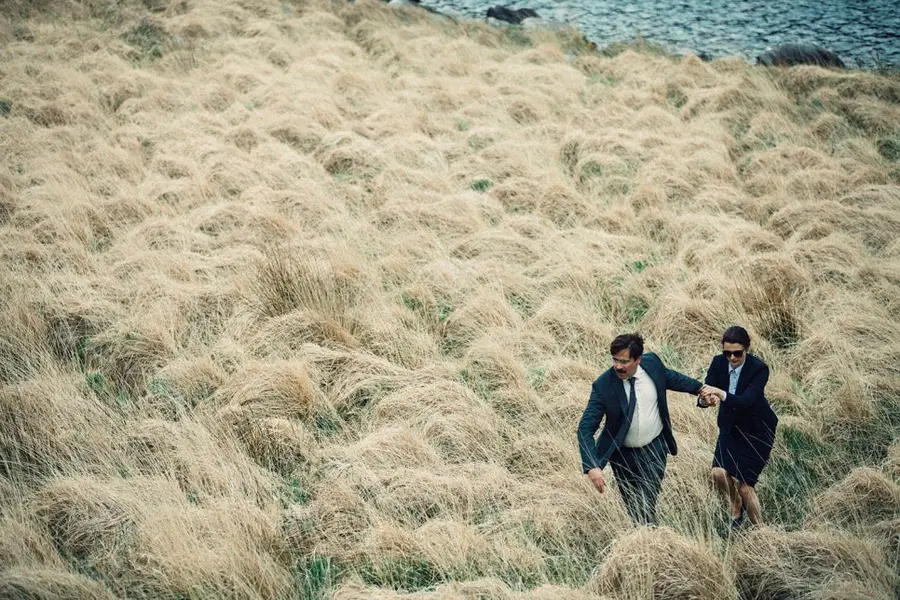
The most controversial aspect of 〈The Lobster〉 was its final scene: Did David run away and leave behind the short-sighted woman he had escaped with, or would he return to be with her? The film offers no answer, ending instead with the noise of the street. It was difficult to know what to make of the ending, but a clue may lie in the Greek song Yorgos Lanthimos chose for the scene. The song, “Ti ein' afto pouto lene agapi”—“What is this thing they call love?”—was sung by Sophia Loren in the 1950s film 〈Boy on a Dolphin〉 (1957), released in Korea under the title 〈The Mermaid〉. The film revolves around an ancient artifact discovered in the Greek sea—a boy riding a dolphin—and was also the first Hollywood film for Loren, then one of Italy’s biggest stars. Its lyrics ask, “What is this thing they call love? The end and beginning of our lives, something that gives you wings in a minute so you can fly away together.” Learning the words to the song—perhaps the most romantic musical choice in a Lanthimos film—makes it possible to imagine that David eventually returned and left with the short-sighted woman.
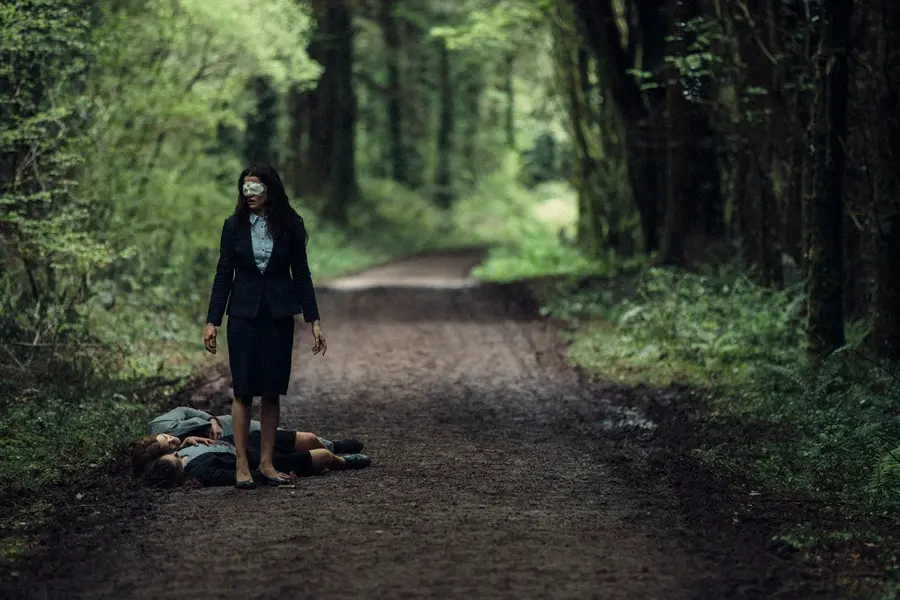
Of course, it could be part of the pleasure of interpretation to imagine David making a decision that runs counter to those lyrics in the harsh, merciless world of Yorgos Lanthimos. But it would seem excessively cruel for David to betray Sophia Loren’s heartrending voice as it plays over the short-sighted woman’s blindfold while she anxiously waits to see whether he will return. In any case, 〈The Lobster〉 was Lanthimos’ first English-language film, and he had left Greece, his home and the base of his filmmaking. Perhaps, within the metaphorical critique of Greek society that had long preoccupied him, he wanted to dedicate the theme of “love”—one he had long forgotten—to the Greek people he had left behind.
(5) The link between 〈The Lobster〉 and 〈The Killing of a Sacred Deer〉:
a test of love
There is a direct link between 〈The Lobster〉 and 〈The Killing of a Sacred Deer〉. It comes when the forest loners attack the hotel in 〈The Lobster〉. The leader of the forest group (Léa Seydoux) asks the hotel manager (Olivia Colman) and her husband to choose which of them will survive, as if testing their love. The manager’s husband says, “I can live alone, but she can’t,” and tries to shoot his wife—only for them to discover the gun is empty. Having shown the hotel’s matchmaking hopefuls in an instant how fragile love can be, the forest leader smiles enigmatically, almost as if she were a god. The situation recalls that of Steven in 〈The Killing of a Sacred Deer〉: Because of his medical mistake, Martin’s (Barry Keoghan) father died, and now Steven must kill one of his own children as a sacrifice. With a scenario that reflects Lanthimos’ characteristically perverse taste, he once again pries into the fragile bonds of family, beyond love, as if revisiting 〈Dogtooth〉.
(6) A world of myth turned upside down
It is essential to look for the shadows of Greek mythology in the world of “Greek-born” Yorgos Lanthimos. The original title of 〈The Killing of a Sacred Deer〉 is 〈The Killing of a Sacred Deer〉, and the film draws on the myth of Iphigenia. Agamemnon accidentally kills the deer most cherished by the goddess Artemis. To appease her, he must sacrifice his daughter, Iphigenia, but Artemis takes pity on her and substitutes a deer for the sacrifice. The myth is echoed in the film when Martin tells Steven, “You killed my family, so it would only be fair if someone in your family died, right?” and forces him to choose which of his wife and two children to kill. The idea in 〈The Lobster〉 that people can turn into animals is also a familiar premise in Greek mythology. Artemis, for example, turned a hunter named Actaeon into a deer simply because he accidentally saw her bathing in the woods, though he had no improper intentions; his own hunting dogs then savagely mauled him to death. And when Hera caught Zeus in the middle of an affair with Io, whom he had been seeing behind his wife’s back, Zeus hurriedly turned Io into a white heifer. Keeping such striking episodes from Greek mythology in mind can be a shortcut to understanding Lanthimos’ world.
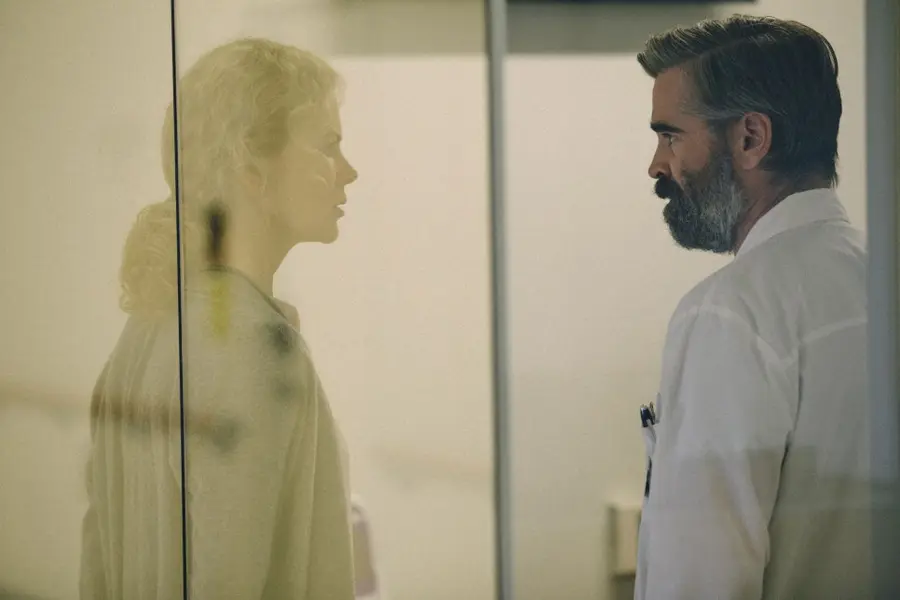
But the mythological world comes most sharply into view in 〈The Killing of a Sacred Deer〉. Above all, Martin himself seems like an embodiment of a god. Whereas Lanthimos’ earlier films had merely evoked a mythic mood, here he puts a god onscreen. One of the clearest examples comes when Steven visits Martin’s house and they watch Harold Ramis’ 〈Groundhog Day〉 (1993), which Martin calls his “(dead) father’s favorite movie.” 〈Groundhog Day〉 is a comic fantasy about Phil Connors (Bill Murray), who relives the same day over and over. No matter what happens, when he wakes up the next morning, it is not a new day; the same time and place from the day before repeat. The scene conveys the despair of time in Martin’s house failing to move forward after Steven caused his father’s death. It also displays Martin’s godlike power to control time for Steven’s family in the same way. Lanthimos’ pointed, precise use of a Hollywood commercial film that stands at the opposite pole from the world he has created also illustrates the inner conflicts among the many opposing elements in his cinema.
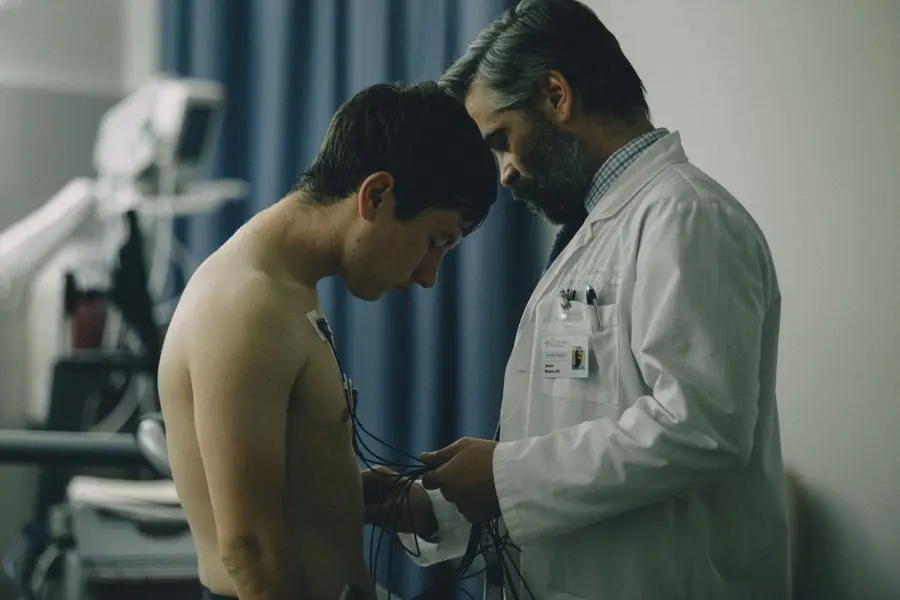
Through the world of myth and the arrival of a god, Lanthimos unfolds the mythic idea that “human destiny is ultimately decided by the gods.” Human beings can only follow the order the gods have laid out for them. Faced with that, Steven carries out the terrible decision to kill someone in his family. Late in the film, it is chilling to see him forced to accept Martin’s sophistry: “I don’t know if this is fair, but it’s the closest thing to justice.” Even as they struggle to survive by touting their strengths to their father and husband, the family members embody the utter helplessness of insignificant human beings. Steven’s job as a “cardiac surgeon” at the beginning of the film might seem to place him in a godlike position, but before Martin he is reduced to utter insignificance. In particular, the overhead shot of his son Bob (Sunny Suljic) collapsing in the hospital, paralyzed from the waist down after Steven ignores Martin’s warning, looks like a vision of divine punishment. Steven is driven into a game of Russian roulette in which he must personally shoot one of his family members to bring the ordeal to an end—a game in which he must destroy his family in order to keep it together.
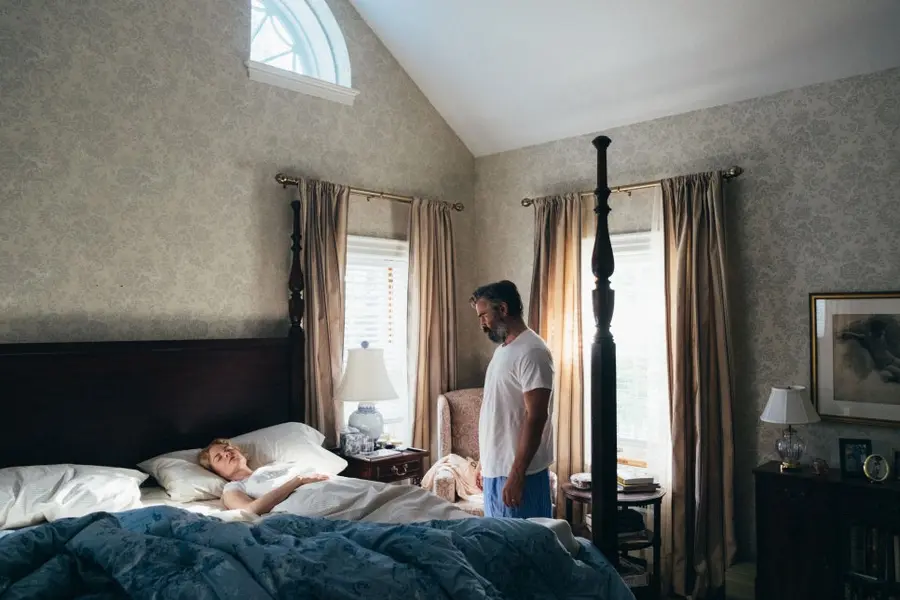
Yorgos Lanthimos shows us people who are original yet eccentric, violent yet comic, sacred yet base, and in doing so depicts the wreckage of our times. The question “Why do people act and choose as they do?” may never find an answer in this world, where there is no hope to be found. Yet that is also where the imagination of Lanthimos’ films moves us. Paradoxically, his films are full of characters with an overwhelming will to live. Perhaps, then, the defining feature of his cinema is not imagination but vitality.






댓글 (0)
댓글 작성
댓글을 작성하려면 로그인이 필요합니다.
로그인하기