


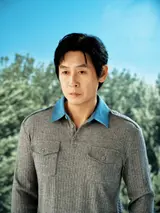
※This interview with 〈Possible Love〉 star Zo In-sung continues from Part 1.
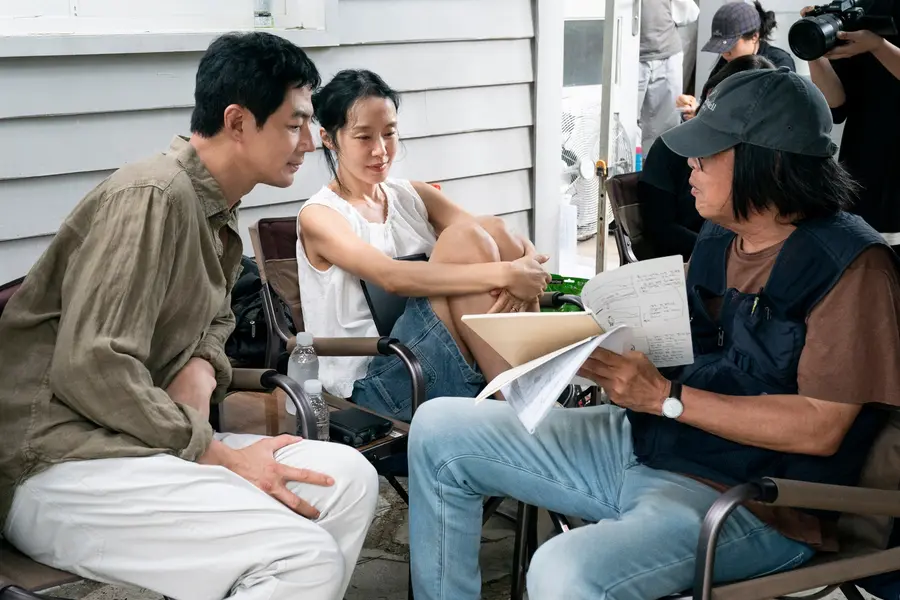
I was struck by how Sang-woo's gaze toward Mi-ok starts out guarded, turns to interest over time and eventually becomes desire. How did you interpret that emotional shift, and what do you think he ultimately feels for her?
Put simply, Sang-woo has no need to covet anything more. But as the line at the beginning of the film says, “Do not covet what belongs to others,” there is that covetousness of someone who already has things wanting even more. Without that, he might have come through without a scratch. He was perfect. But that scratch forces him to see his true face, and he even has sex with his wife to restore his sense of self. That's why, toward the end, he delivers that narcissistic line, “That's all me.” Rather than deciding how I would express that, I did my best in each moment. I was genuinely kind, and as those moments accumulated and the relationships collided, those details really helped build the character. If I had set out to express all that from the start, it wouldn't have registered as something unsettling. It would have become a spectacle instead. Just a guy striking a pose.
In that sense, the sex scene between Sang-woo and Ye-ji was interesting, too. It looked less like a loving relationship than a strictly hierarchical one. I even felt they might not be in love. There seems to be something else there that narcissism alone doesn't explain. How did you discuss that scene with the director and approach it?
I think viewers project all kinds of emotions onto it. I can't say those feelings are wrong, and I can't say my take is necessarily right. He's a very open-ended character. What's great about this film is that somewhere in these characters, you find yourself. Having some part of yourself in there makes you uncomfortable, and because it feels like those situations in your own life that have made you uncomfortable, you can interpret it in different ways. I think that's especially true of this director's work. If he had established a specific “evil,” we wouldn't be having this conversation at all. There is no right answer. I think it depends on the person watching. This guy simply is who he is. You can look at him and say, “That's how I see him,” or “I see him differently.” But he never says, “This is the kind of person I am.” Very few people truly know what kind of person they are. So did I understand everything about this character when I played him? You couldn't really say that, either. Everyone watching brings a different perspective.
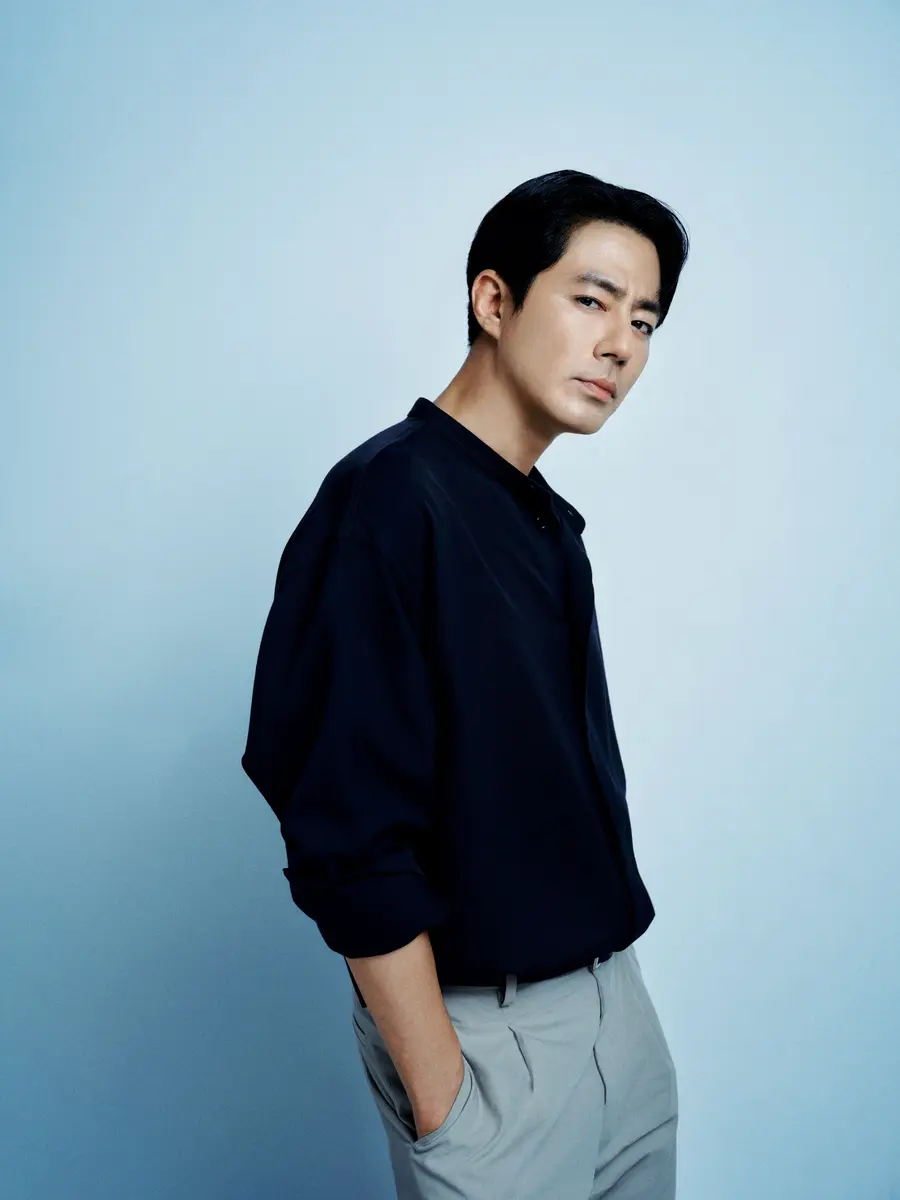
I heard you shot the vacation home scenes, which are important for Sang-woo, early in production. It must have been difficult to perform them before you had built up those emotions.
It probably was harder for Do-yeon [Jeon Do-yeon]. I don't appear much at the beginning of the film. My part only really begins when we get to the vacation home, and that's where my major scenes happen. But Do-yeon has to carry the story from the laid-off workers through meeting Ye-ji and Ho-seok's psychiatric treatment, building up all those emotions before she enters the vacation home. Having to shoot just those scenes without any of that would have been much more complicated for her. My character operates separately, apart from the other three, and that was my starting point, so I had a slight advantage over Do-yeon or Kyung-gu [Sul Kyung-gu].
The beach scene late in the film is its most mysterious passage for audiences. Mi-ok takes the lead with Sang-woo. You might call it seduction. But it doesn't end up going that way. How did you interpret their relationship?
I think a romantic ideal means confronting an illusion you've created yourself. Something simply was what it was, but once you attach a fantasy to it, it becomes a romantic ideal. I think it's a world of illusion you've created. She comes to admire a man she has fantasized about, and the various ways she interprets my actions unsettle her. Sang-woo may or may not have intended that. For instance, when he says in the car, “I like being with you,” it could be because he really likes being with her. Or when she asks, “Don't you like being with me?” he can't say he doesn't, so he might say, “I like being with you.” Isn't it like the idea that everything is created by the mind? It's a matter of who is interpreting it. I may or may not have an agenda. That's an extremely advantageous position. If she says, “You liked me,” all I have to say is, “No, I didn't,” and that's it. If she asks, “Then what did that mean?” I can say, “I didn't mean anything by it,” and I have a boundary I can retreat behind. This character always has that upper hand. Mi-ok's actions in that scene symbolize freedom. I think she wants the freedom she's been longing for, and tries to confront that capitalist with her whole body. But Sang-woo lacks self-awareness, so he takes it as seduction, and his dopamine is surging. Everything he wanted has come true. The project he wanted has succeeded, and he thinks he can have that woman, too. That mistaken perception leaves a major scratch on his everyday life. So I think the director staged Sang-woo, from Mi-ok's perspective, as a frightening presence like a shark prowling underwater, and then, once they come ashore, as a fight between a matador and a bull. I actually felt that way while swimming, too. As though I were exerting pressure on the situation and everything around me. But Mi-ok breaks free in such a satisfying way, and I think that becomes the turning point that puts the once-confident Sang-woo in a weakened position, taking her hand and pulling her back as if to say, “Don't do this.”
Were the shark and the matador and bull the director's descriptions?
The matador and bull were in the screenplay. The shark was an image I imagined for myself.
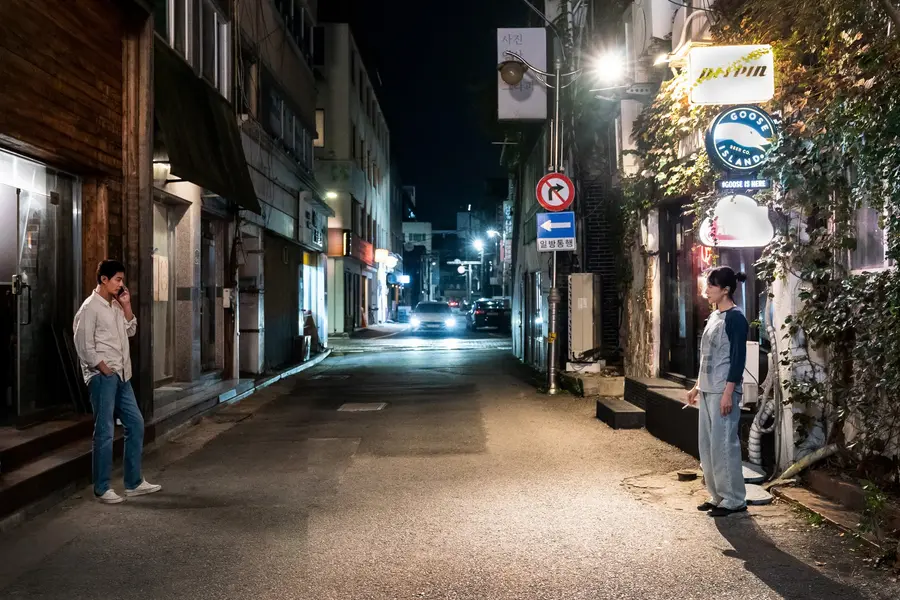
Sang-woo is particularly affectionate toward Mi-ok and Ho-seok's son, Cheol. He treats the boy very differently from Ho-seok. What do you think motivates his kindness toward Cheol?
Sang-woo is sincere with Cheol. He's simply sincere. He genuinely cares about that child. It's just that his way of treating a child is different. He expresses his sincerity differently from Ho-seok. Rather than there being some special meaning, you could say the boy reveals the difference between the way Ho-seok treats a child and the sincerity Sang-woo shows him.
In an interview, director Lee Chang-dong explained, “Sang-woo might genuinely be a good person. Everything might be sincere. It may simply be that audiences see him that way within situations involving capital.” You've ended up playing someone who makes everything ambiguous. How did you establish the broad outlines of Sang-woo?
That's a very important question. I didn't think Sang-woo was all that different from me. Looking too far afield made it complicated. It's not as though I've met every conglomerate chairman, and I haven't had the opportunity to observe their lives in detail, either. So I tried thinking of him as “me.” Compared with some people, I have a lot. That goes for money, and there are those so-called aspirational aspects, too. But there are definitely people who have more than I do. I have a lot compared with some people and less compared with others. Then I'm neither someone with little nor someone with a lot. I simply am who I am. Sang-woo is probably the same. Some people have more money than he does. Among them, he might be a minor figure. Still, he could be bigger than Zo In-sung is now. So I thought this character might not be so far removed from me. Perhaps having a lot of money only means having more relative to someone else, and that way of life is like the distance between actors and audiences. Even at a post-screening Q&A, there's that distance. A distance you have to maintain, where you can't get any closer. But that doesn't mean we look down on audiences. We treat them sincerely, but if we slip up in some way, someone might feel, “This person disrespected me,” even though that may not have been our intention. Our lives can be like that. So I didn't look far afield, and it's true that I didn't overcomplicate the character. I fit him to myself and asked, “What would I do?” Perhaps it could be the distance between me and someone else. A distance I don't deliberately try to create but can't help having. I thought that if we don't share the same frame of reference, I might say something about a subject I know far too little about. And there can be narcissism in the acting profession itself. Sometimes I don't like it when actors are too much the actor. They get trapped in their own artistic world and can't communicate well with the outside. That's frustrating. But you still have to be polite. Rather than looking far afield for all these things, I tried to find them in myself.
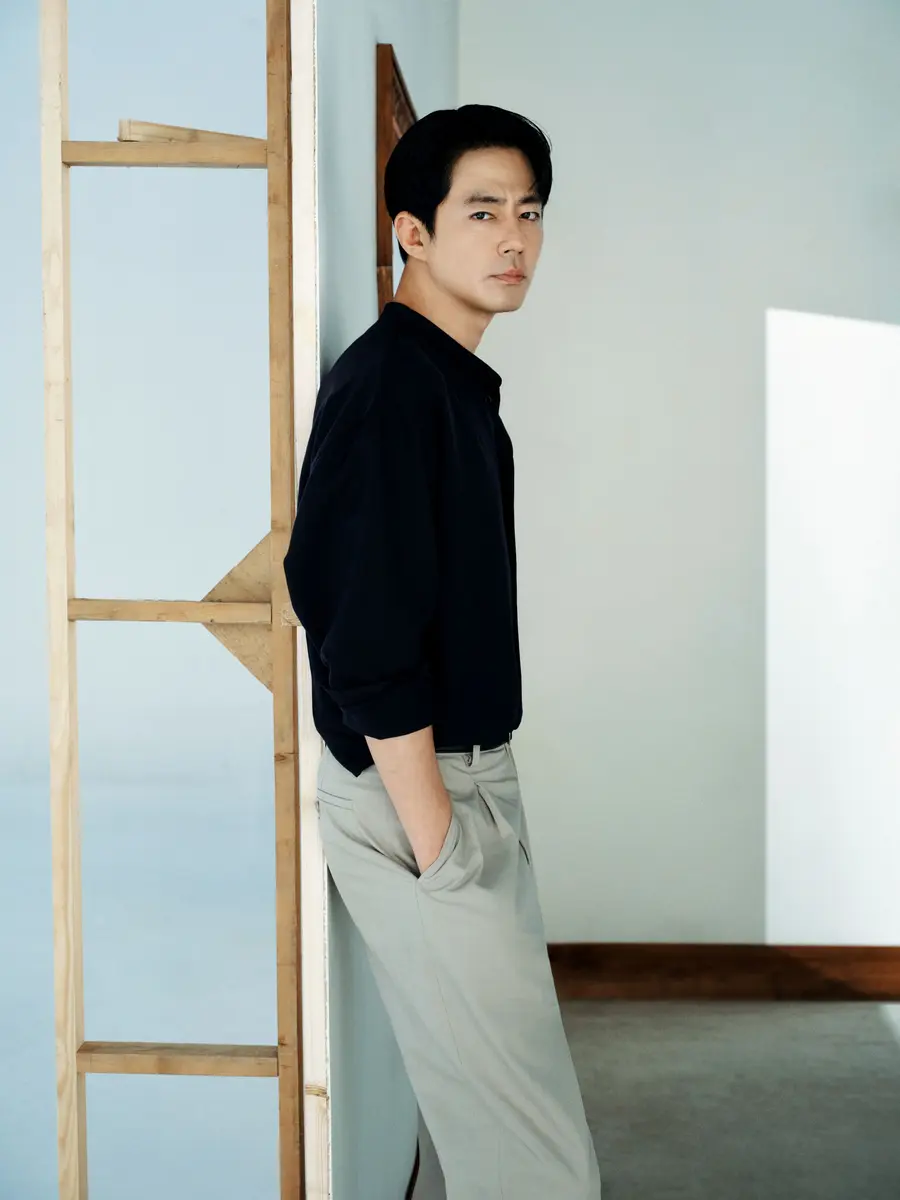
Director Lee Chang-dong said, “Zo In-sung's face is power.” (Laughs) Have you ever been kind to someone in real life, like Sang-woo, only to have them misunderstand?
I think that's why, like Sang-woo, I don't do much socially or publicly. Those things can happen. Experiences where I didn't mean it that way but was misunderstood. That's not because I'm a celebrity. In relationships, misunderstandings can happen in an instant and be cleared up in an instant, too. Aren't those misunderstandings an unavoidable part of life? I think it's something we all go through.
There's a scene in 〈Possible Love〉 where Sang-woo plays the clarinet. I heard you actually took clarinet lessons.
When I read the script, I missed the stage direction that said, “Sang-woo is playing the clarinet.” (Laughs) Then the cast got together for a meeting, and Yeo-jeong asked, “How's the clarinet practice coming along?” I thought, “What does she mean, clarinet?” I checked again, and there it was. From then on I felt pressed for time, so I called on everyone I knew to find a clarinet teacher. The production company could have found someone, but I wanted to cut down on travel if possible, so I looked for a teacher in my neighborhood. Luckily, there was someone who taught children in a choir, so I took lessons locally three times a week, two hours each time. After that, I had English lessons, and I had to work out, too. I was really busy.




댓글 (0)
댓글 작성
댓글을 작성하려면 로그인이 필요합니다.
로그인하기