


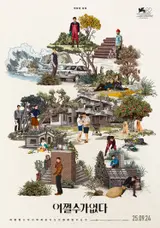
![Film 〈No Other Choice〉 Poster [CJ ENM·Moho Film Provided]](https://cdn.www.cineplay.co.kr/w900/q75/article-images/2025-09-08/27084290-5483-47ad-91d5-abb702369133.jpg)
I never expected it to be such an overtly funny slapstick comedy. Before watching the film 〈No Other Choice〉, I thought it would be similar to Park Chan-wook's 'Vengeance Trilogy'. But to my surprise, Director Park Chan-wook has come to the theaters with what he calls his 'most genuine comedy film' in his filmography.
While Park Chan-wook's previous works had a touch of comedy mixed into genre films, 〈No Other Choice〉 is a film that is purely 'comedy'. Instead of the subtle humor of his previous works, Director Park has placed overt humor and captured the irony of exaggerated situations as the overall sentiment of the piece. Based on the paradox that actions taken to protect the family ultimately lead to its collapse, 〈No Other Choice〉 unravels a heavy theme with humor.
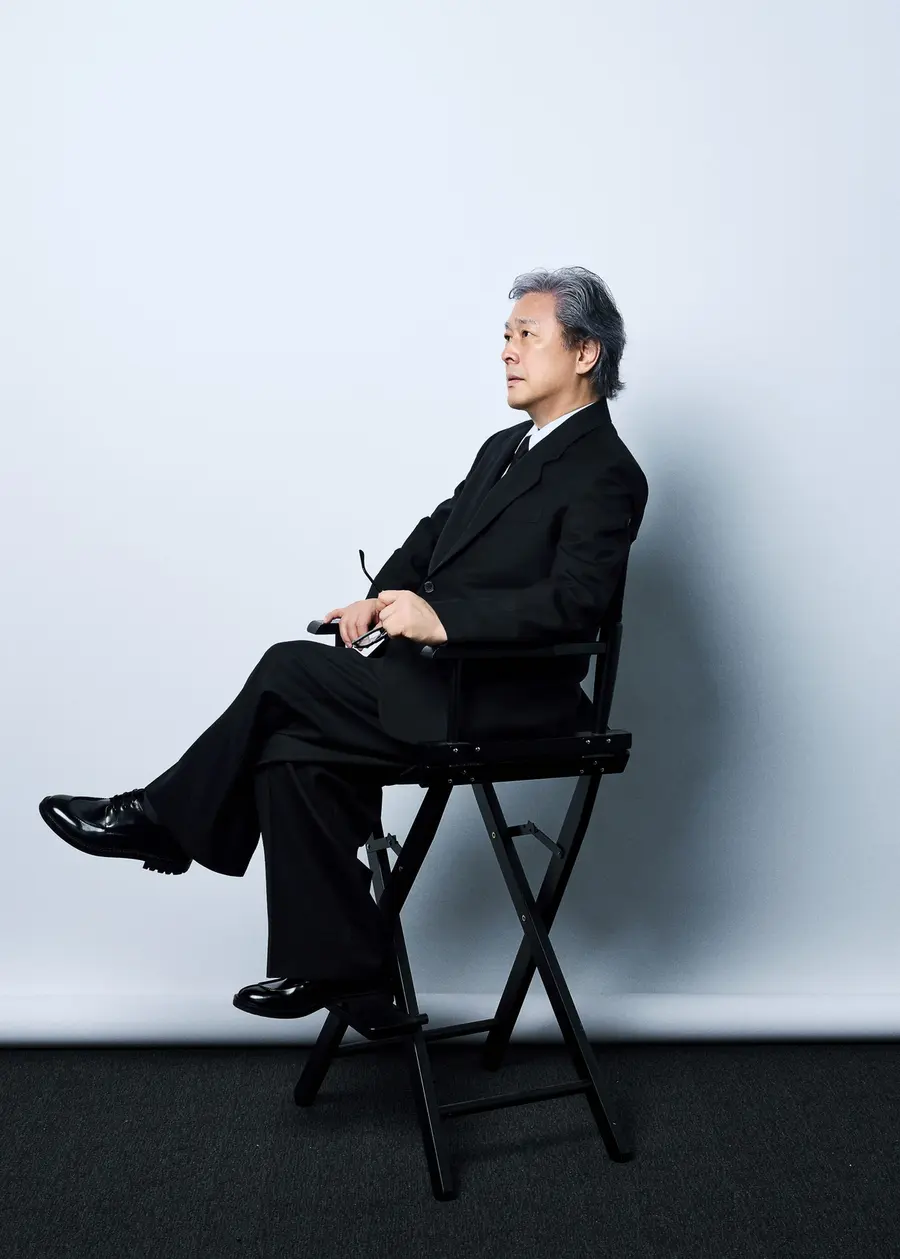
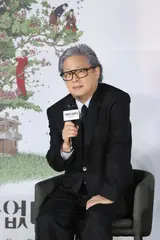
Director Park Chan-wook reinterpreted the story of workers collapsing within the social system with irony and physical comedy reminiscent of 〈Modern Times〉 (1936). Just like 〈Modern Times〉, which deals with factory workers becoming alienated in a capitalist society, 〈No Other Choice〉 is also a reflection on the reality of workers in declining industries. On the afternoon of the 23rd, Cineplay met with Director Park Chan-wook in Jongno-gu to hear the behind-the-scenes story of 〈No Other Choice〉 directly.
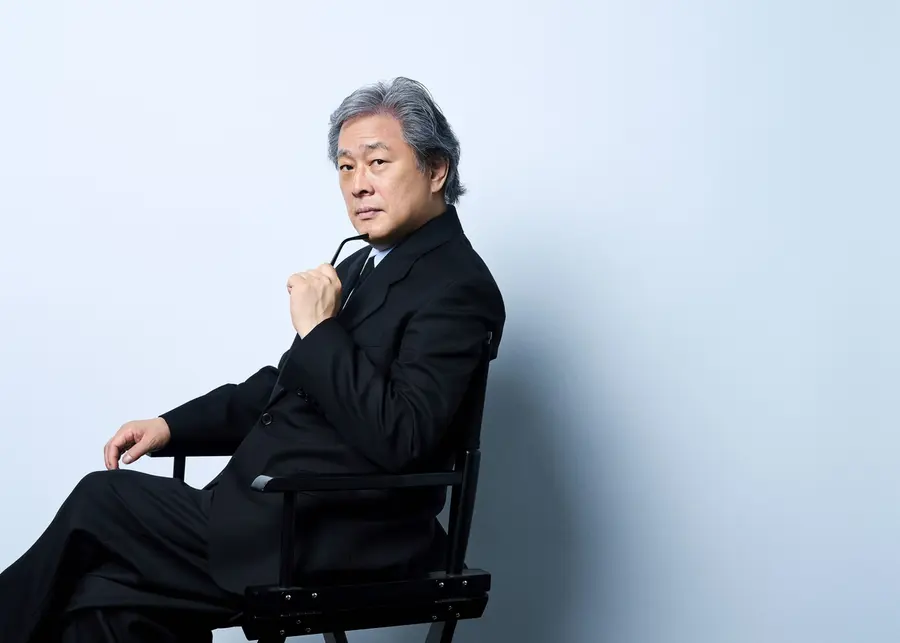
I just met actress Son Ye-jin, and she said about you, Director Park, that you are 'calm'. You don't seem to have emotional 'ups and downs'.
I think that's just my nature. I have never been very tense since I was young, and I tend to be a bit indifferent.
So, a person who is so indifferent made a film like 〈No Other Choice〉, which is 'overtly' funny. (laughs)
When I imagine characters, I am not myself, so I think about what that person would be like, and I believe I belong to the type of director who has little connection with the characters in my films. Among storytellers, I am the type of director who does not project myself much onto the characters.
So you boldly attempted humor that you wouldn't try in everyday life. If there was subtle humor in your previous works, this time you placed a more overt form of humor at the forefront. I'm curious about the reason for changing your approach to humor.
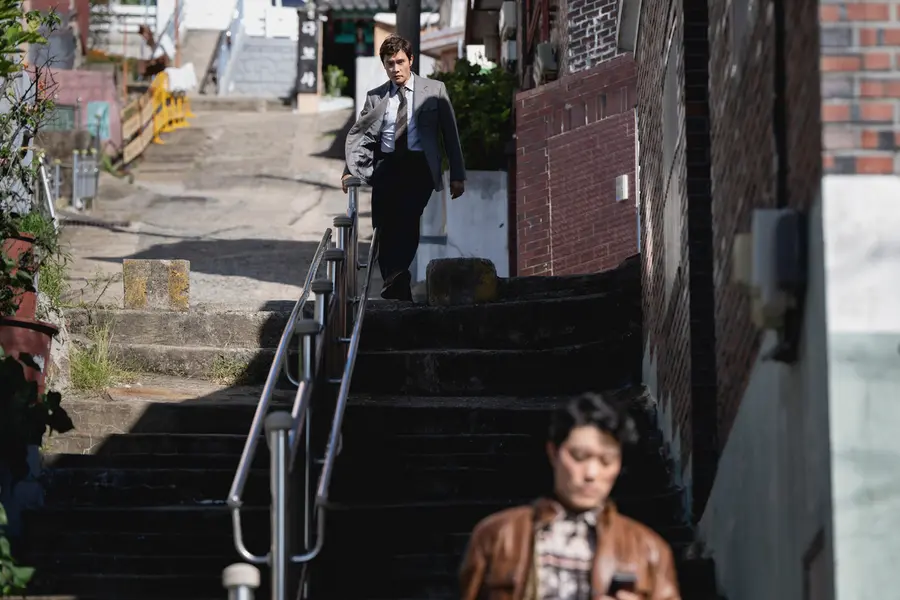
Indeed. Why did it turn out this way? It wasn't planned; it just happened as I followed the characters. For example, in the 'Dragonfly' sequence, it started with 'turning up the music loud'. In such a situation, you have no choice but to shout to have a conversation, and starting in an excited and heightened state leads to exaggeration and intensity. As I went along, I started thinking of Charlie Chaplin's era, and it became a comedy that uses that kind of physical humor. While writing the script, I felt that the characters were gradually going crazy, and I ended up feeling that way too. When I went to the back mountain of Beommo's (Lee Sung-min) house, the scene where Mansoo (Lee Byung-hun) slides down the slope came from the thought that it would be good if he slid here during location scouting. I kept thinking about Charlie Chaplin, and since 〈No Other Choice〉 tells the story of workers breaking down within the social system, I think of 〈Modern Times〉. Also, actor Byung-hun is serious, but he is good at being funny at unexpected moments. So I think I found that aspect more and more amusing. In the dance party scene, I didn't expect Byung-hun to act that way. Among the people who made our film, that scene made us laugh the most.
So you didn't plan for exaggerated comedy from the beginning.
Not at all. It just turned out this way as I wrote. However, when I read the original work 「Axe」 (published as 「Axe」), I saw the potential for it to be funnier than the original. So I really wanted to do this project, and I first told the co-writers to make it even funnier than the original. But I didn't expect it to develop into physical comedy; it just happened as we went along. Actor Lee Byung-hun also said the first thing after reading the script was, 'Is it okay to be funny?' He found it funny while reading it, but I guess he worried that he might have read it oddly. So I replied, 'You read it accurately. The funnier, the better.'
〈No Other Choice〉 is a black comedy, but it is also a sad and cruel story. You enjoyed inserting unexpected humor into heavy themes in your previous works as well. I'm particularly curious about why you like comedy.
It's a sad story, but if you only make it sad, it becomes boring, and I thought that like 〈Modern Times〉, comedy makes it even sadder. If there are criticisms about making fun of the story of a poor person, I think that's very one-dimensional. I believe humor is necessary to depict life as a whole, but that humor should be based on compassion; if not, it can easily fall into cynicism, and I think we should be wary of cynicism.
Then, what is the part that you changed the most from the original novel?
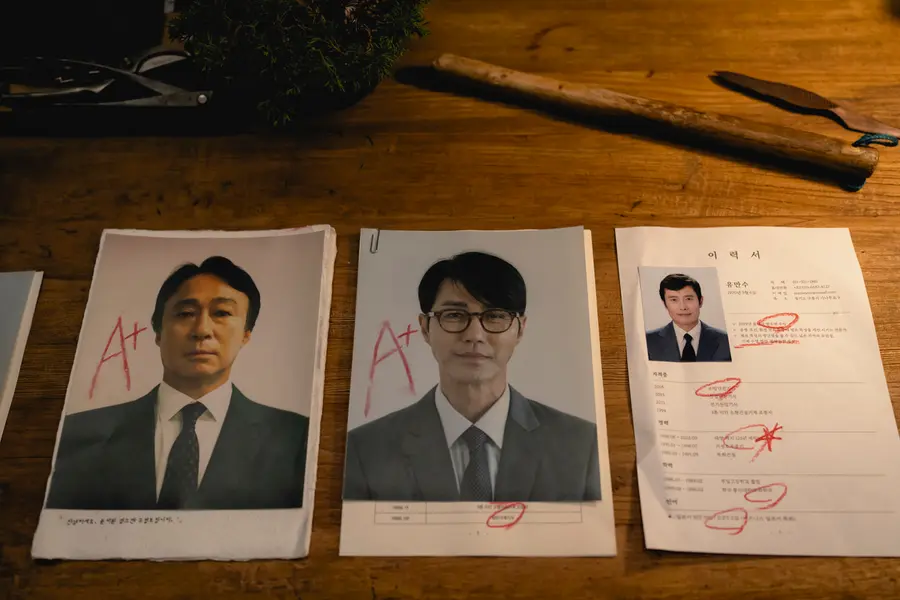
It's the point where the family learns about the crime. It's a change that creates a fundamental difference from the original. The fact that Mansoo's actions to protect his family lead to the collapse of that family, that huge paradox is the most important point in my film.
Similarly, the film by director Gabras based on the same original novel, 〈Axe: A Dangerous Guide to Employment〉 (2005), starts with murder from the beginning. In contrast, 〈No Other Choice〉 takes some time before the first crime begins. If there is a reason for following this approach...
I wanted to make a film where the audience follows Mansoo. It starts at the peak of happiness, then he becomes unemployed and suffers, makes a resolution, and plans. I wanted the audience to calmly observe this person in order, empathize, and sometimes critically observe from a distance. I wanted to create a film where the relationship between the audience and Mansoo keeps changing. Originally, actor Lee Byung-hun has the power to persuade just by looking into his eyes. I think he is the actor with the strongest appeal among all actors. So I wanted the audience to sometimes root for him, feel sorry when he makes mistakes or acts foolishly, and at some point, I hoped they would step back and think, 'What am I doing?' I also wanted them to think at some point that he should stop killing, and I hoped they would feel that the character Mansoo, whom they invested their emotions in, should not morally deteriorate any further, and that they would think that the family shouldn't find out. The line where Mansoo tells Beommo, 'If you can't make money, at least sell the house. Go to the mart and carry some stuff,' is actually what the audience wants to say to Mansoo. But Mansoo knows that too. The audience questions why Mansoo does such things while knowing that. 'Why are you doing this? Why are you killing three people?' So I wanted the audience to feel confused while watching the film, constantly asking moral questions about Mansoo while also wanting to take care of him.
※ To be continued in Part 2.
![[Interview] Son Ye-jin from 'No Other Choice' says,](https://cdn.www.cineplay.co.kr/w160/q75/article-images/2025-09-24/4de96fa6-95d2-4259-9870-160611d93b07.jpg)

![[Interview] Is It Not Possible for Four Victims? Director Park Chan-wook Talks About the Movie Behind the Scenes ②](https://cdn.www.cineplay.co.kr/w160/q75/article-images/2025-09-26/537f399b-5bec-49d6-9b15-83298d75c97d.jpg)
댓글 (0)
댓글 작성
댓글을 작성하려면 로그인이 필요합니다.
로그인하기