


※ Continued from Part 1
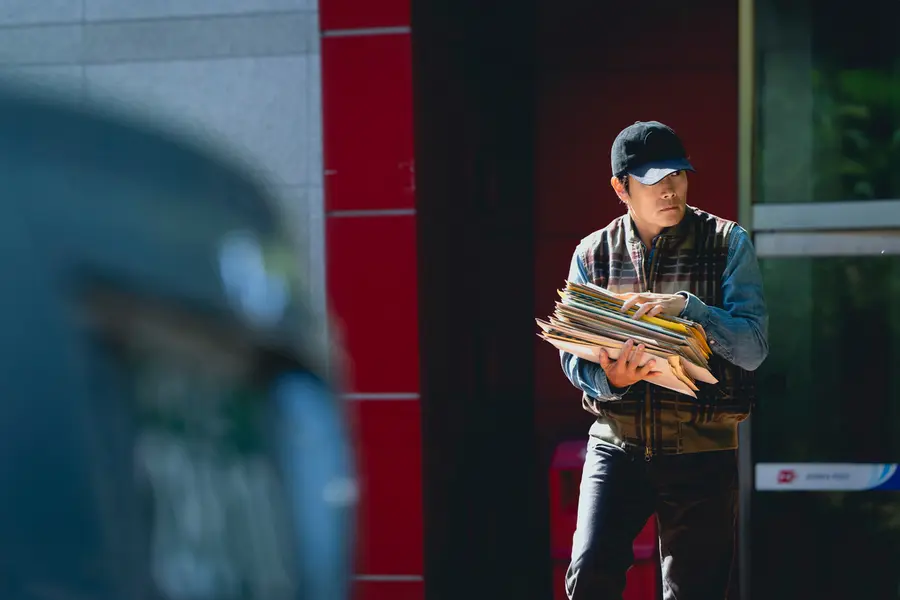
The original novel, Donald E. Westlake's 「Axe」, has been out for about 30 years. The original novel is set against the backdrop of the layoffs in the late 1990s in America, and Director Park Chan-wook modernized it to fit the situation of 2025. This is evident in the inclusion of AI in the final scene.
The element of AI that appears at the end was introduced at the very last stage of production and was continuously modified and added. In the final scene, when Mansu is being interviewed, the interviewers say, "You need to manage the 'test operation.'" Then, the question arises about how long the test operation will last; it seems unlikely to last forever and could really end in just a few months, which poses a problem. Additionally, during the interview, they mention a 'power-off system,' as AI does not require light. So, when Mansu enters the factory, he artificially turns on the lights one by one, as if to say, 'A human has come; I will control you.' As he walks around the factory, he taps the paper with a stick, saying, 'Nothing can match the human sense,' but it is a meaningless action since machines are already tapping above his head. Those robots were all drawn in with VFX. The last idea I came up with was that when Mansu exits, the lights go out one by one from a distance. When I thought of that idea, I called in the middle of the night and said, 'Is this possible? We must do this.' So, the version sent for consideration at the Venice Film Festival did not include that scene. (The lights going out scene) is based on AI's judgment, saying, 'The human has done all he needs to do, so go.' The darkness that fills the empty space pushes the person away. It means humans should now turn off.
However, I am curious about why you maintained the 'paper factory' setting in 〈No Other Choice〉 like in the original.
I also considered stepping away from the paper industry. Paper factories have difficulty obtaining filming permits because they run machines without stopping. However, in the end, I couldn't find anything that matched this. It is important that paper is closely related to our lives, and industries like chemicals, oil, and arms, which do not directly involve us, are not something we touch ourselves. Also, while paper is close to us, we often do not think about who makes it and how, and it is sometimes regarded as trivial. However, for some people, it is incredibly precious, and they savor the tactile experience with their hands as they do with food. Moreover, while paper seems to be a declining industry in the digital age, it is not entirely so. Due to the increase in packaging and delivery, there is a high demand for boxes, which makes it thrive in that aspect. Additionally, the character Sijoo (Cha Seung-won) uses the expression 'people like us who make white paper,' and those who work with high-quality specialty paper also have their own pride.
As you mentioned in the press conference, Mansu's murders are also a process of self-destruction. The victims all have an attachment to the space of home.
Mansu's victims are all like his doppelgangers, sharing something with him in different ways. Therefore, in the sense of being Mansu's doppelganger, both Mansu and Seon-chul (Park Hee-soon) are obsessed with their homes. Beommo does not have such an obsession with the house since he lives in a craftsman's house, but he has a music appreciation room that he is attached to. As a paper expert, he also used sound-absorbing materials like cardboard, which I hope you notice.
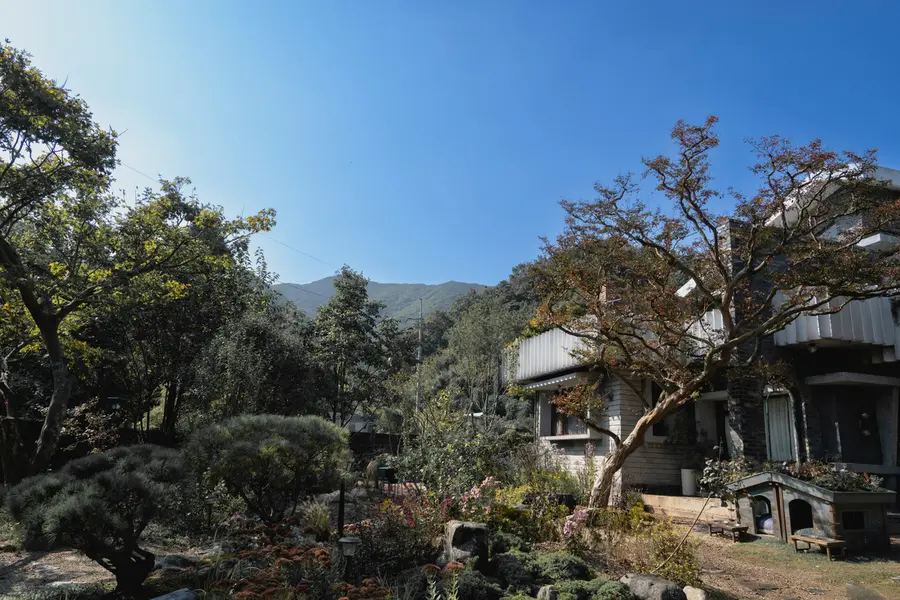
As you mentioned, all of Mansu's victims live in suburban houses. Because of that, this work beautifully captures the natural environment. What was the reason for setting all the characters to live in houses?
When Ryu Seong-hee joined this project, the first thing he said was, "This work must capture the autumn leaves." So, the visual aspect of the film was centered around the natural environment and the changes of the seasons. Thus, the film starts at the peak of summer when the leaves are lush, then the leaves fall, the cold wind blows, it rains, and it ends with a hint of winter. I wanted to continuously convey the feeling of seasonal change, so I wanted to shoot houses surrounded by nature. Since it is a Korean film, there should be people living in apartments, but in reality, I had planned for a victim living in an apartment, but the feeling of Mansu killing three people versus four people is different, and I thought the audience would not be able to feel any affection for Mansu at all, so I reduced it by one person. Thus, the apartment resident was removed.
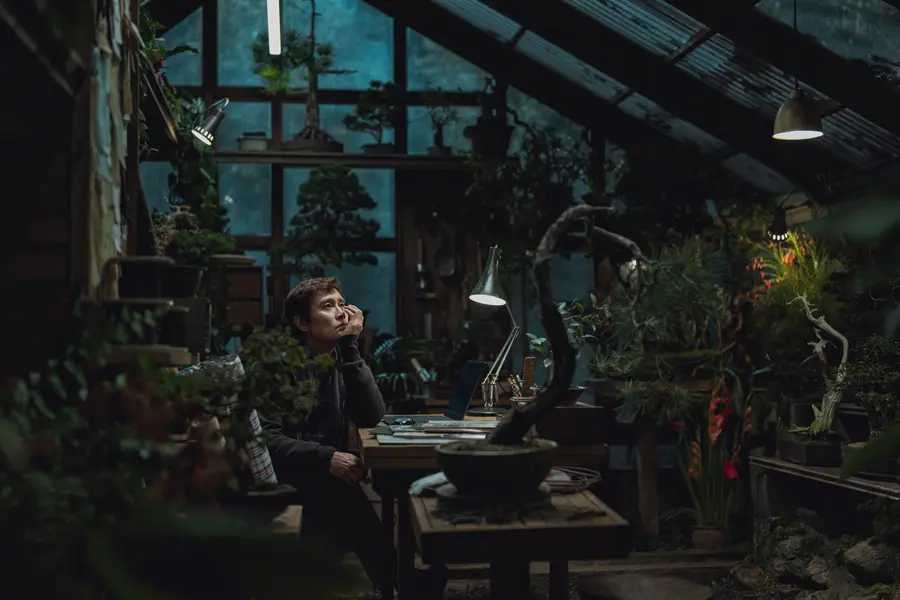
The visual theme of 〈No Other Choice〉 is the natural environment and bonsai. I am particularly curious about why you used the motif of bonsai.
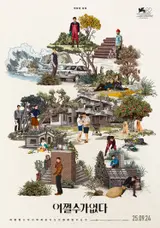
I wrote things like 'vegetative human,' 'greenhouse,' and 'garden' in the script, but Ryu Seong-hee, the art director, suggested we take bonsai as a theme. When I said, 'Wouldn't that be too Japanese?' he replied that bonsai is not solely a Japanese culture, and I looked into the world of bonsai. It is truly fascinating, and what I loved about bonsai is that it is a miniature version of the universe. To create bonsai, an enormous amount of violence is required, meaning the work of bending it artificially to create the desired shape, which can feel violent. However, on the other hand, it is about changing a plant that could be discarded and die, providing it with nutrients and allowing it to live longer. I found that duality very appealing, and thus, when processing the body of the high-class poem, a beautiful appearance similar to bonsai emerges, and I wanted to make that into a poster. It is much better than cutting it with a chainsaw. After all, it is a body that needs to be disposed of. Ryu Seong-hee is always an inspiring staff member.
At the end of the work, Mansu ultimately pulls out his own teeth. The act of Mansu pulling out his teeth is a motif connected to uprooting a rotten tree and removing the victims. What specific intention did you have regarding Mansu's teeth?
There are various sources, including Director Yoo Hyun-mok's 〈Obaltan〉 (1960). The starting point was to show Mansu's 'stubbornness.' There are several characteristics that form Mansu, such as always trying to make jokes that do not work and his foolish stubbornness, and I wanted to show that. Before he pulls out his teeth at the end, drinking bomb shots out of necessity raises the question of what kind of emotion it brings to Mansu; it could be 'I am now ruined' or 'I am happy.' On the other hand, I thought he could feel an immense sense of liberation. So, to express his liberation better, I made him pull out his teeth brutally along with baroque-style intense music and rinse his mouth with vodka. It is like uprooting a sick tree. When a ladybug eats bamboo leaves, it also dissolves with Mansu's face, and it connects with Ri-won (Choi Soo-yul) saying at the end, 'The bug got in, and everyone is dying.'
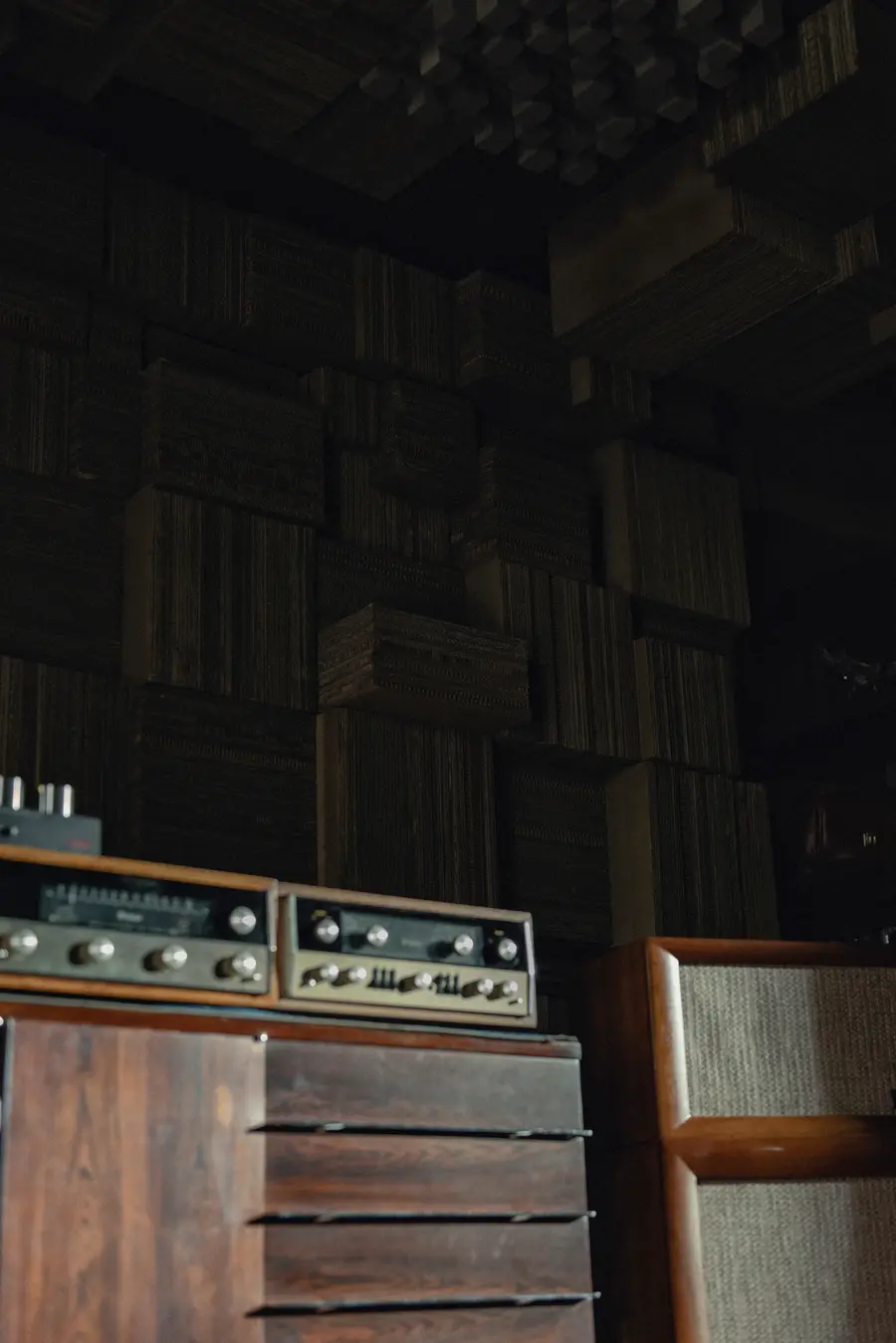
Watching 〈No Other Choice〉, one can feel the director's nostalgia for analog. Using 80s music as inserted tracks and setting Beommo as a character who has affection for LPs and typewriters also reflects this. Do you have a particular nostalgia for analog?
I wanted to shoot the film on film. So, I did all the film tests this time, but due to the stability issues of the developing lab, I couldn't do it, but I received great help. I compared the same lighting and the same subject shot with a digital camera and a film camera. So, I learned what the 'film look' I had been vaguely thinking about was, and even though the film was shot digitally, I worked a bit closer to the film look during the DI process. So, I believe that anyone who sees it without information will be misled.
〈No Other Choice〉 was supposed to be produced in Hollywood. If you had made the film in Hollywood, what actor would Mansu have been?
At that time, when the studio people asked me, I said that if I could cast anyone, living or dead, my ideal Howard (Mansu from 〈No Other Choice〉) would be Jack Lemmon. However, I think Lee Byung-hun also shows those qualities. Among the works of the Gabras couple, whom I directed and produced 〈Axe, A Dangerous Guide to Employment〉, my favorite is 〈Missing〉 (1982, also introduced in Korea as 〈The Mysterious Disappearance〉), where the protagonist is also Jack Lemmon.
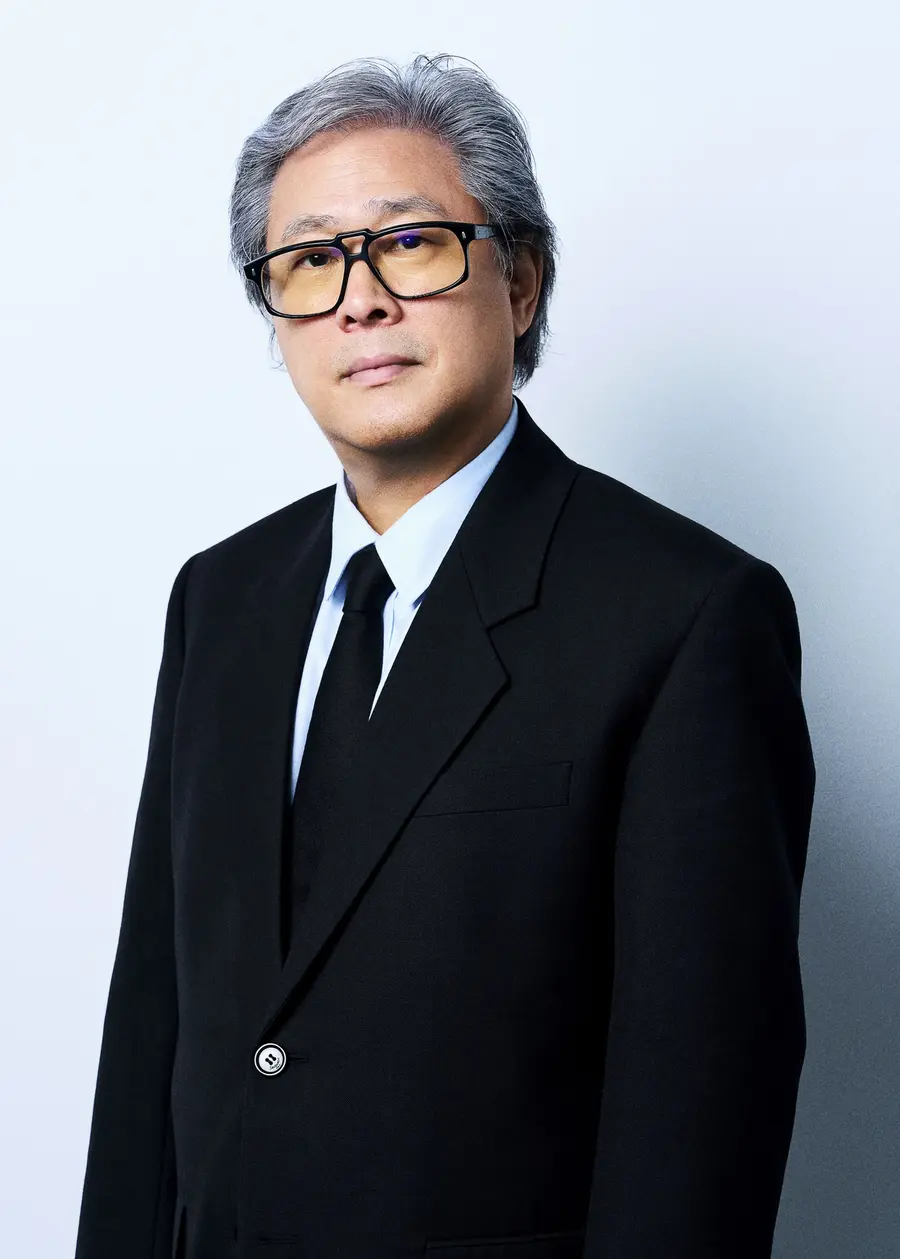
While filming 〈No Other Choice〉, there must have been moments when you truly felt that 'there is no other choice.'
It took a long time for 〈No Other Choice〉 to come out, so it was certainly painful. Originally, I had scouted locations in Canada and New England. I visited countless paper factories and houses, and I made the storyboard from the beginning. However, it fell through, and after finishing one project, I would work on 〈No Other Choice〉. In that way, I spent over ten years.
![[Interview] Son Ye-jin from 'No Other Choice' says,](https://cdn.www.cineplay.co.kr/w160/q75/article-images/2025-09-24/4de96fa6-95d2-4259-9870-160611d93b07.jpg)
![[Interview] Park Chan-wook's Reinterpretation of 'Modern Times' in the AI Era! Director Park Chan-wook Talks About the Behind-the-Scenes of the Film 'No Other Choice'](https://cdn.www.cineplay.co.kr/w160/q75/article-images/2025-09-26/83df9a10-5cfe-4a1b-bbfc-d530703d4eee.jpg)

![[Korean Box Office] Park Chan-wook's 'NO OTHER CHOICE' Dominates Box Office in Opening Weekend](https://cdn.www.cineplay.co.kr/w160/q75/article-images/2025-09-29/57801cf1-08eb-4c94-a16c-bebdd1f1753e.jpg)
![[Interview] 'No Other Choice' Lee Byung-hun① What is Lee Byung-hun's favorite scene from Mansoo?](https://cdn.www.cineplay.co.kr/w160/q75/article-images/2025-09-29/ce87c7cb-f80c-41ce-a070-d25fcf0cfbdb.jpg)
![[Interview] 'No Other Choice' Lee Byung-hun② “Feeling a sense of crisis with AI videos, I also watch videos featuring Lee Jung-jae”](https://cdn.www.cineplay.co.kr/w160/q75/article-images/2025-09-29/2e8a044a-1846-4fde-a5ed-9ec0415052bc.jpg)
댓글 (0)
댓글 작성
댓글을 작성하려면 로그인이 필요합니다.
로그인하기