


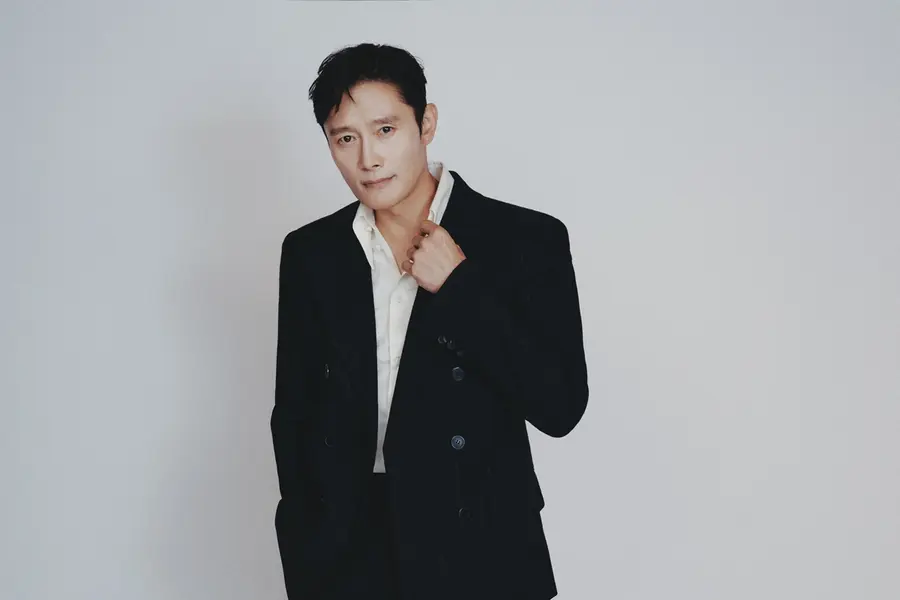
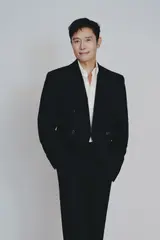
Indeed, there is no other choice. 〈No Other Choice〉 makes it impossible not to be amazed by Lee Byung-hun's performance. Released on September 24, the new film by director Park Chan-wook, 〈No Other Choice〉, marks the reunion of Park Chan-wook and Lee Byung-hun after a staggering 25 years since 〈Joint Security Area JSA〉, generating much buzz. In this film, Lee Byung-hun plays the role of Mansoo, expressing the weight of a breadwinner who 'eliminates competitors for re-employment.' With a troubled face, Lee Byung-hun showcases a 'comedy all-in-one' featuring wordplay, slapstick, and black comedy, delivering laughter to the audience while penetrating the film's emotional core. This year, Lee Byung-hun has appeared in 〈The Battle〉, 〈K-Pop Demon Hunters〉, 〈King of Kings〉, and 〈Squid Game〉, and has been invited to prestigious events like the Venice International Film Festival and the Toronto International Film Festival, showcasing his status as a representative Korean actor. On the day of the film's release, September 24, I met him in a certain place in Jongno-gu, Seoul, to discuss 〈No Other Choice〉.
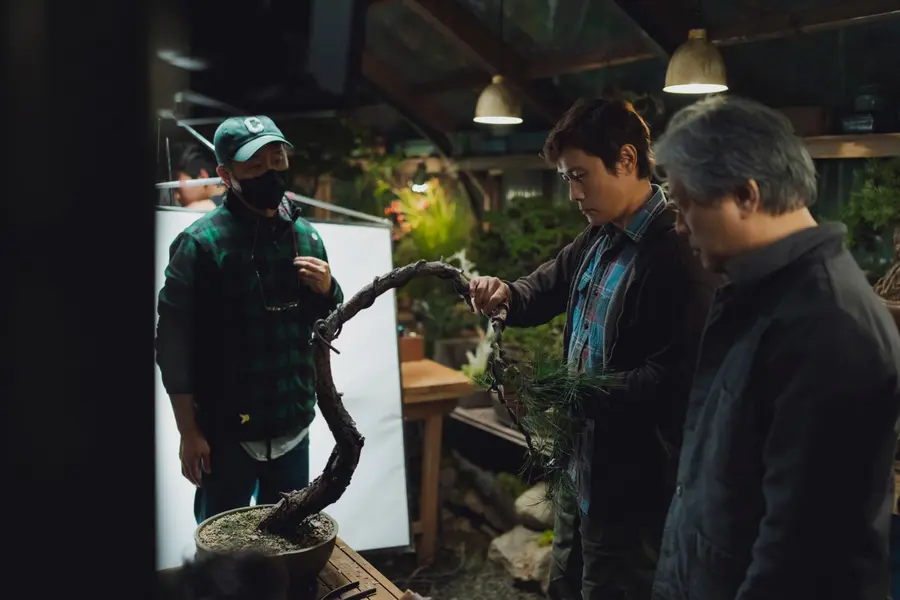
It’s been a while since you worked with director Park Chan-wook. Have you noticed any changes in him?
Director and I have maintained our human relationship even between projects, so it was a familiar and comfortable relationship. The work itself has been a while, but there aren’t any significant differences. The director is always open to conversation and shares his thoughts. He sometimes catches new ideas while talking with staff or actors. That’s why he enjoys conversing, and if he finds an idea better than what he thought, he is open to accepting it. He remains consistent. He is gentle on set but stubborn about what he requires, and his persistence to keep going until it’s right is still there.
I heard you asked, 'Is it okay to be funny?' when you received the script. Was there a reason for that question?
I asked if it was okay to be funny because I was unsure if I was reading it correctly. I laughed a lot while reading it, and I wanted to know if it was intentional or if I was just misreading it. In comedies or black comedies, if humor is forced, it often backfires. Actors need to be cautious about trying too hard to be funny or showing it. I never approached it with that intention. If the situation is funny, I welcome it anytime.
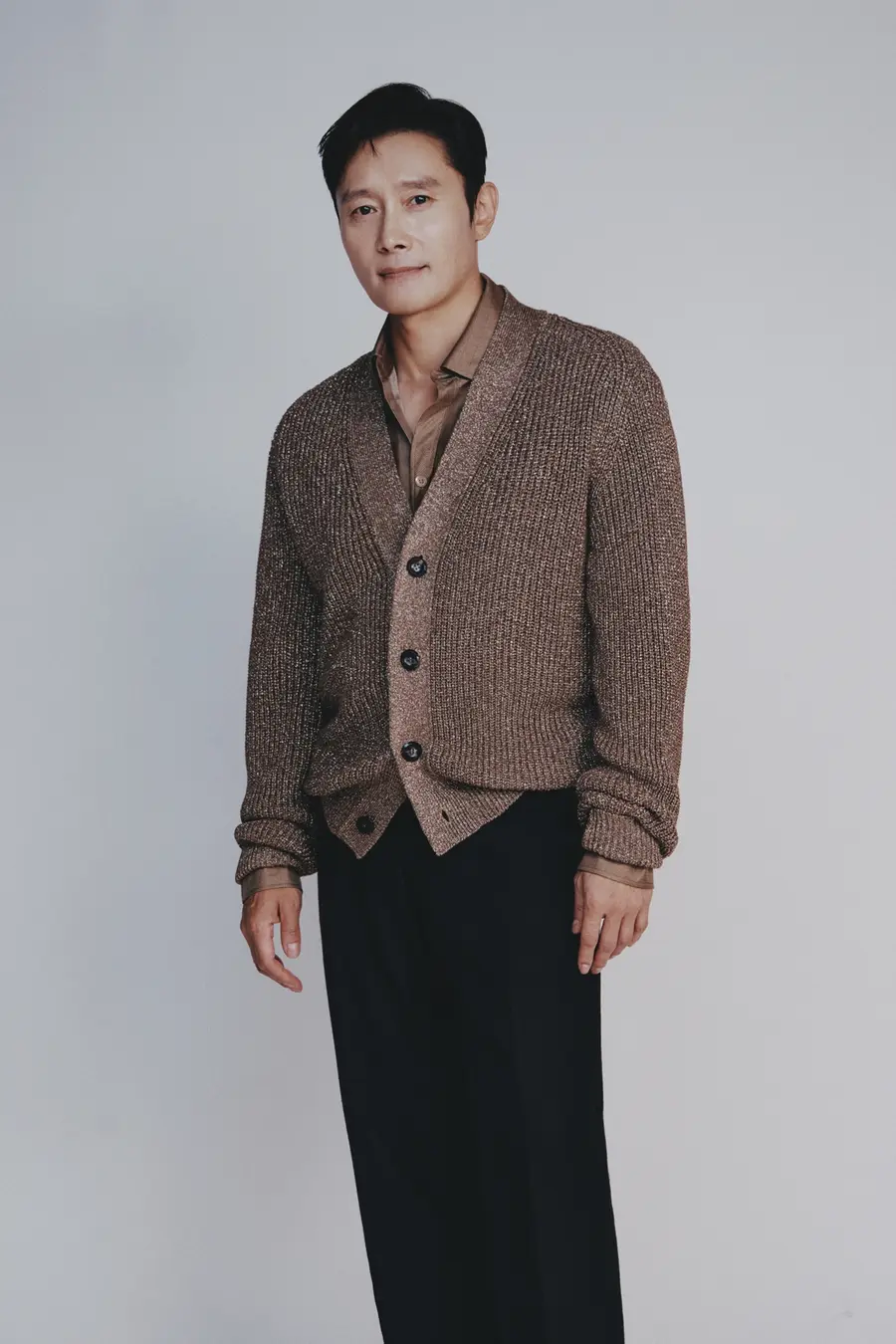
Were there any scenes where you suggested ideas that satisfied director Park Chan-wook?
There were various ideas. I applied many, and I thought, 'The director is not someone who usually accepts all my ideas' (laughs), but I was also a bit scared. I was worried that if I kept joking around, I might end up taking all the responsibility (laughs). One of the funnier moments was when I was digging to ask about Sijo (Cha Seung-won) and ended up lying on the sofa when Miri (Son Ye-jin) came in and said, 'The police are here.' I raised my hands in front of the police, thinking I would go and tell them, which was a misunderstanding. When I told the director about that scene, he said, 'That’s funny.' I was glad many audience members laughed. The part where Ara (Yeom Hye-ran) and Beommo (Lee Sung-min) were fighting in the music room and the gun went under the wardrobe. I suggested, 'What if we drop the gun?' and that changed the scene.
Even though it’s a situation very different from your own life, Mansoo's anxiety was really well portrayed.
It’s surprisingly rare for an actor to perform based on their own experiences or emotions. If you think about it, the character I played in 〈K-Pop Demon Hunters〉 might have had some experiences, right? (Everyone laughs) There are hundreds of emotions fluctuating in a day, or sometimes due to work, emotions can swing dramatically. You can think of it as maximizing or minimizing similar emotions. For example, if I faced a gun, I haven’t had that experience, but I might have felt a similar kind of fear. I think trying to maximize those similar experiences is my method.
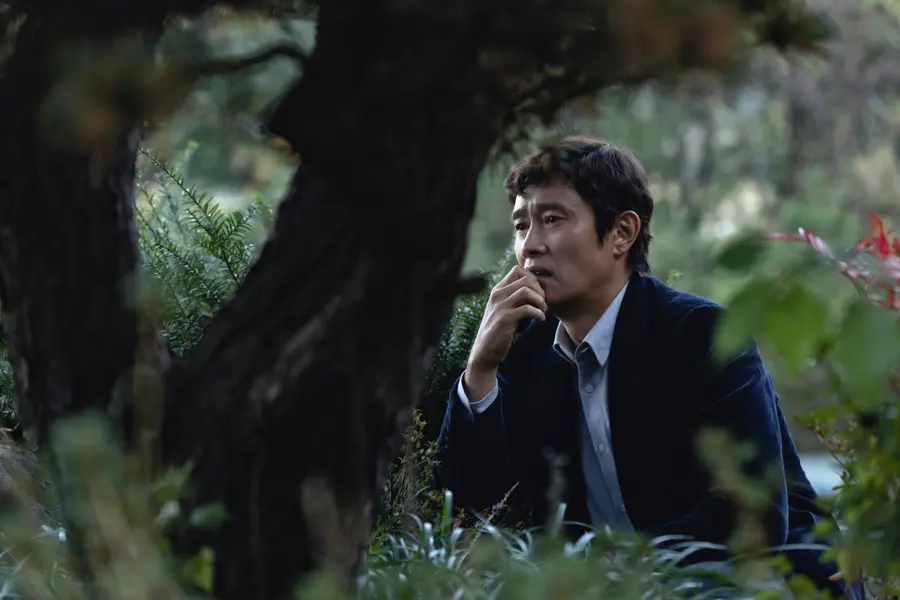
There were many scenes where you had to run or roll in this movie. Did you sustain any injuries?
Fortunately, I didn’t get hurt. When I arrived on set, I checked the movement and during rehearsals, I would feel tense if I thought I might fall or get hurt. I need to be okay…. If I feel like I might get hurt or fall, I ask for more padding on my chest or butt. Otherwise, it can be seen that the actor hesitates before doing the action. To make it look like an accident that happens spontaneously, the actor has to do it without thinking, and for that, I need to be free of anxiety. So, I make sure to eliminate that anxiety with more careful arrangements.
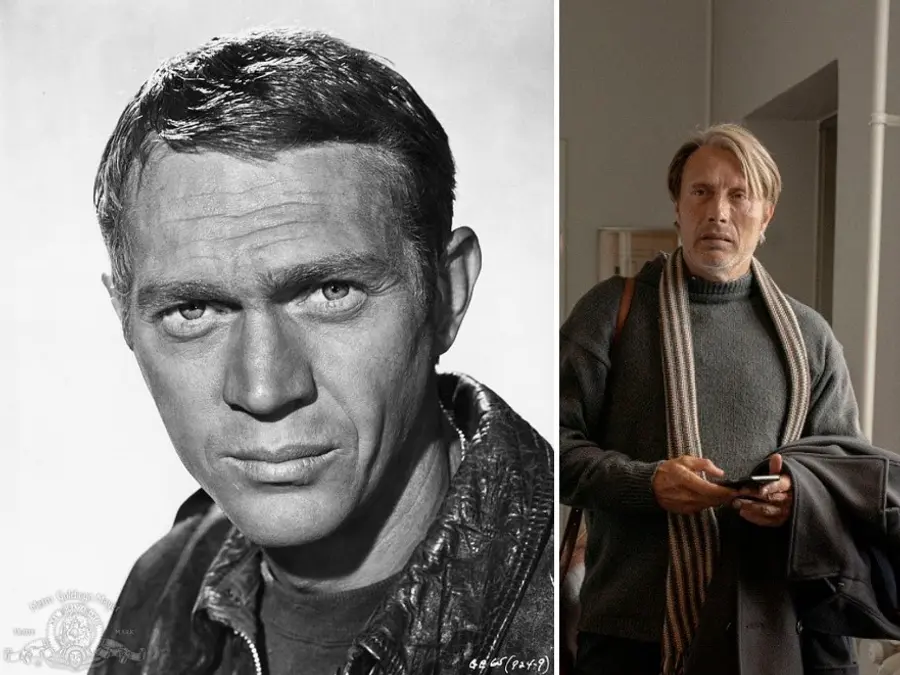
The concept of the mustache and such is impressive.
When it wasn’t decided what the look would be, there were two options during the camera test. One was Steve McQueen, and the other was Mads Mikkelsen. They had completely different hairstyles. Mads Mikkelsen had long hair with bangs, while McQueen had short, curly hair that was close to the head. The McQueen version was chosen. Then I added a mustache and wore a Hawaiian shirt for the opening barbecue party, and when I saw that photo, I thought I looked like a South American cartel member. (Everyone laughs) Like a South American drug lord. I was confused. It was a style I hadn’t tried before, and I worried it might be too strong and distract from the story. I was concerned, but after making that decision and filming, there were reviews in Venice saying there were many scenes reminiscent of 〈Modern Times〉 by Charlie Chaplin, and they felt a connection between that story and this one. The feeling of slapstick comedy in the uniform factory of 〈Modern Times〉 overlapped with Mansoo's expression of being unable to adapt to the AI system and losing his way in the last scene of 〈No Other Choice〉. Hearing that, I wondered if the director had styled me that way for that reason, but when I asked, he said it wasn’t. (laughs)
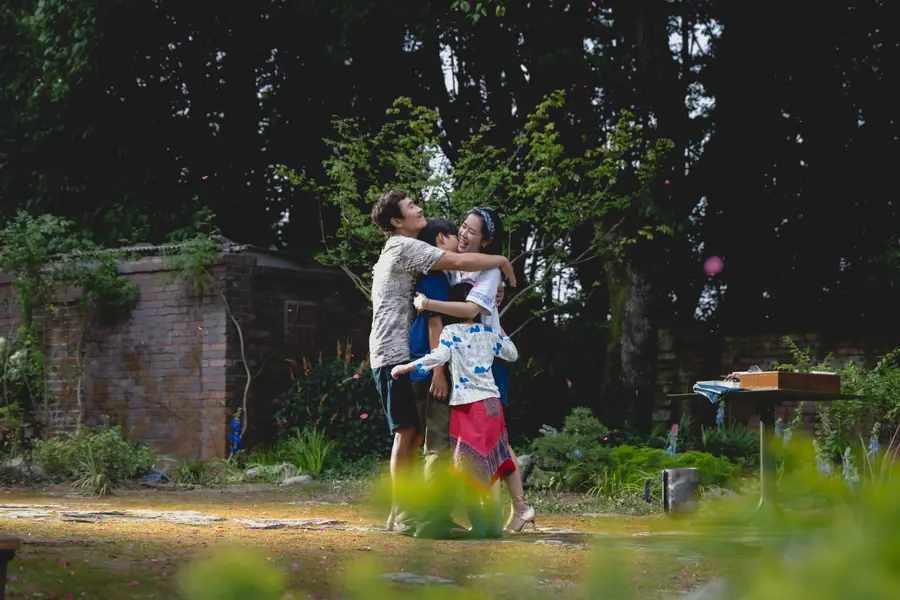
The lines in the opening scene are quite literary, yet they sounded comfortable coming from actor Lee Byung-hun. How was it for you while filming that part?
During post-production, it became more artificial and unreal in terms of color and composition, almost fairy-tale-like. I thought that first-time viewers might think that way. The nuance of the lines, before Mansoo falls into despair, has a bit of self-satisfaction or machismo, like Seon-chul (Park Hee-soon) feeling happy and thinking, 'Now I can say I’m happy.' I thought it conveyed a sense of having achieved everything. On the other hand, some might think that someone should face justice, questioning why it seems like nothing has been cleaned up, but I think it’s a tremendous tragedy. Each individual’s soul is already broken. The first line is 'I have achieved everything,' but Mansoo's last words, while he doesn’t actually say it, might be 'I have lost everything.' The director didn’t say that, but I think he sufficiently conveyed that feeling.
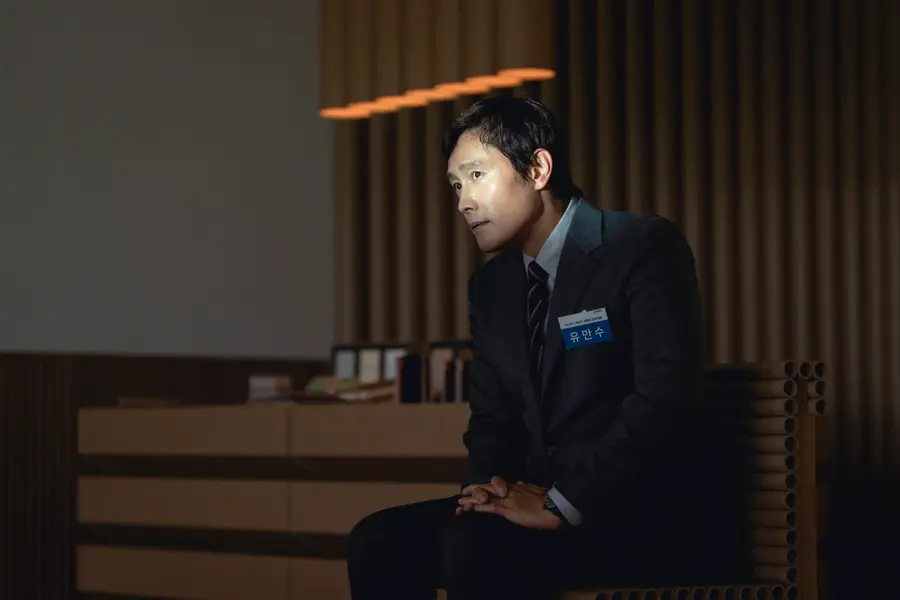
If you had to pick the funniest scene personally?
The scene that made me laugh a lot on set was when Mansoo had his first interview. The scene required so much from the script. The sunlight was shining on the building, making it uncomfortable, and I was trying to dodge it while feeling the pain of a cavity, and my legs were shaking, but I couldn’t stop. All these actions were required at once, but I had to keep delivering lines, which was a challenge for me. I was wondering how to do it. When I actually did it, I finished it in two takes, which was easier than I thought. Mansoo’s appearance, being uncomfortable and in pain but trying to humorously convey it to the interviewers, looked pitiful yet funny to me. I personally liked it. Also, the scene where I was chased by Ara and got into a car, yelling alone, made me laugh for days. I asked the editing staff on set to show it to me again. (Everyone laughs) After facing such a situation, I thought that sound could naturally come out, which made it even funnier.
Many actors want to work with director Park Chan-wook, but was there anything else that attracted you to this film?
I mentioned this during 〈Concrete Utopia〉, but I basically prefer black comedies. I liked that there is an important and heavy theme behind the humor, whether it elicits chuckles or big laughs. I also enjoy films that follow the psychology and thoughts of a single person, like 〈Single Rider〉 or 〈A Bittersweet Life〉.
※ To be continued in Part 2
![[Interview] Son Ye-jin from 'No Other Choice' says,](https://cdn.www.cineplay.co.kr/w160/q75/article-images/2025-09-24/4de96fa6-95d2-4259-9870-160611d93b07.jpg)
![[Interview] Park Chan-wook's Reinterpretation of 'Modern Times' in the AI Era! Director Park Chan-wook Talks About the Behind-the-Scenes of the Film 'No Other Choice'](https://cdn.www.cineplay.co.kr/w160/q75/article-images/2025-09-26/83df9a10-5cfe-4a1b-bbfc-d530703d4eee.jpg)
![[Interview] Is It Not Possible for Four Victims? Director Park Chan-wook Talks About the Movie Behind the Scenes ②](https://cdn.www.cineplay.co.kr/w160/q75/article-images/2025-09-26/537f399b-5bec-49d6-9b15-83298d75c97d.jpg)
![[Interview] 'No Other Choice' Lee Byung-hun② “Feeling a sense of crisis with AI videos, I also watch videos featuring Lee Jung-jae”](https://cdn.www.cineplay.co.kr/w160/q75/article-images/2025-09-29/2e8a044a-1846-4fde-a5ed-9ec0415052bc.jpg)
댓글 (0)
댓글 작성
댓글을 작성하려면 로그인이 필요합니다.
로그인하기