



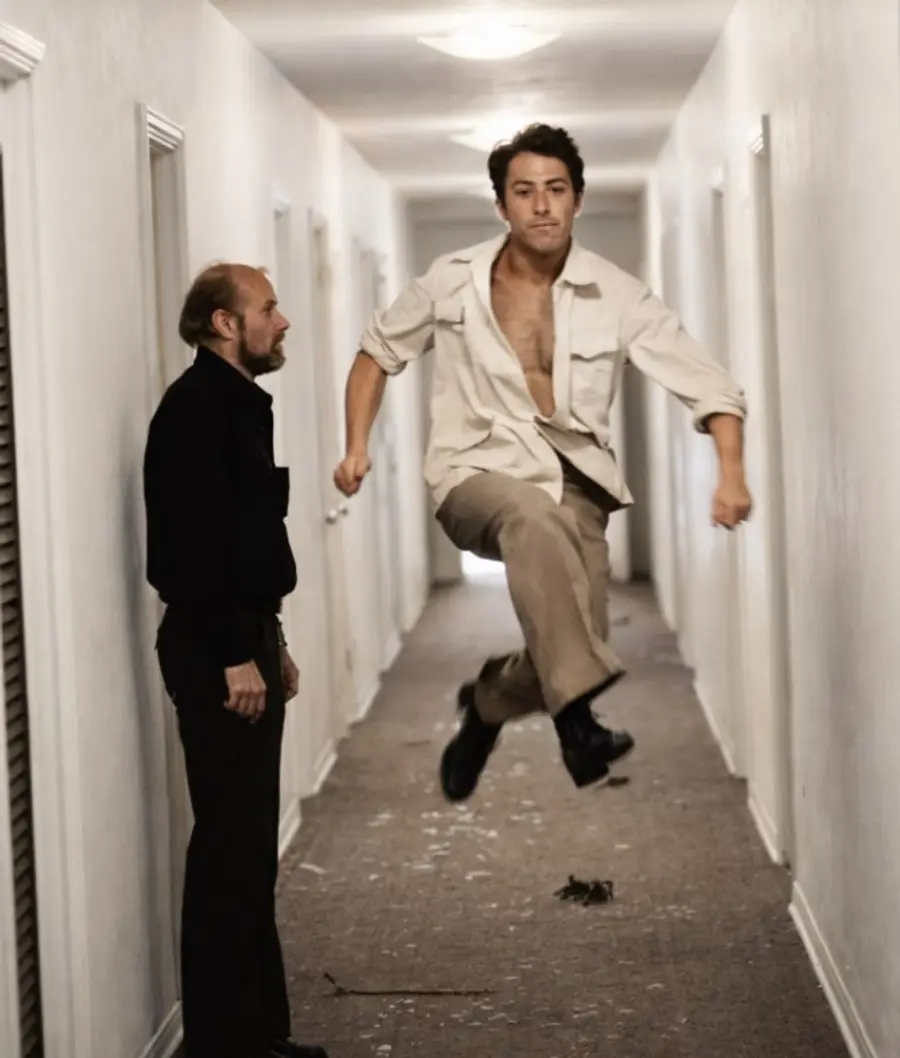
Bob Fosse is a choreographer and director with the unprecedented record of winning the Tony Award for choreography eight times. But as a film director, he was nominated for Best Director at the Academy Awards three times and failed to win a single trophy. In particular, his third film, 〈Reni〉, was nominated in six categories at the 1975 Academy Awards, returning empty-handed. Still, the same year he was invited to the Cannes Film Festival’s competition section for the first time, where he won Best Actress (Valerie Perrine) to ease that disappointment. At the time, 〈Reni〉—chosen as Dustin Hoffman’s follow-up to 〈Papillon〉 (1973)—was the film he picked. Hoffman, who was already emerging as Hollywood’s top actor through films such as 〈Graduation〉 (1967), 〈Midnight Cowboy〉 (1969), and 〈The Little Giant〉 (1970), turned to 〈Reni〉. In addition, since Julian Barry, who also wrote an episode of the TV series 〈Mission: Impossible〉 (1966), participated as both the original creator and screenwriter, 〈Reni〉 was a black-and-white film in the drama genre, not the musical genre. In many ways, it was a work bursting with Bob Fosse’s artistic ambition.
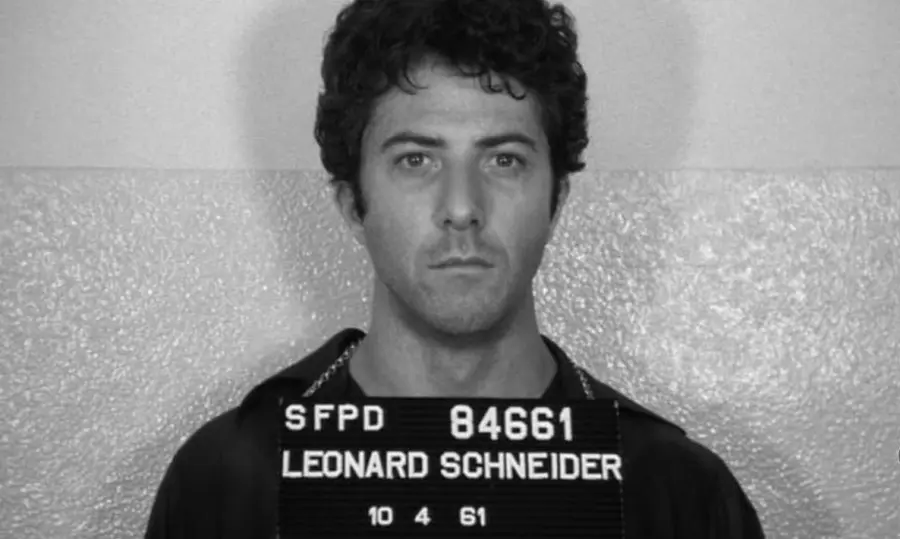
Renny Bruce (Dustin Hoffman) was a stand-up comedian who worked in the 1960s. His comedic style, which broached social issues without regard for boundaries or genre, often landed with the public as crude and obscene, and it drew major controversy. In the film, people who knew him begin to recall him one by one. The people Renny valued most in his life—after always feeling lonely—were his wife Honey (Valerie Perrine), his mother Sally (Jan Miner), and his manager Artie Silver (Stanley Beck). Whenever Renny’s comedy ideas struck him, he would test them in front of his family in real life. When he showcased a comedy in which he lowered his pants zipper and compared his genitals, the family liked his quirks and energy so much that they would fall into fits of laughter. From the outset, Renny performed stand-up in traditional forms, but as time passed he boldly abandoned the old conventions and transformed into a comedian who based his act on sharp satire of America and Americans. As a result, his repertoire also began to include blunt depictions of sex, which led him to face legal restrictions.
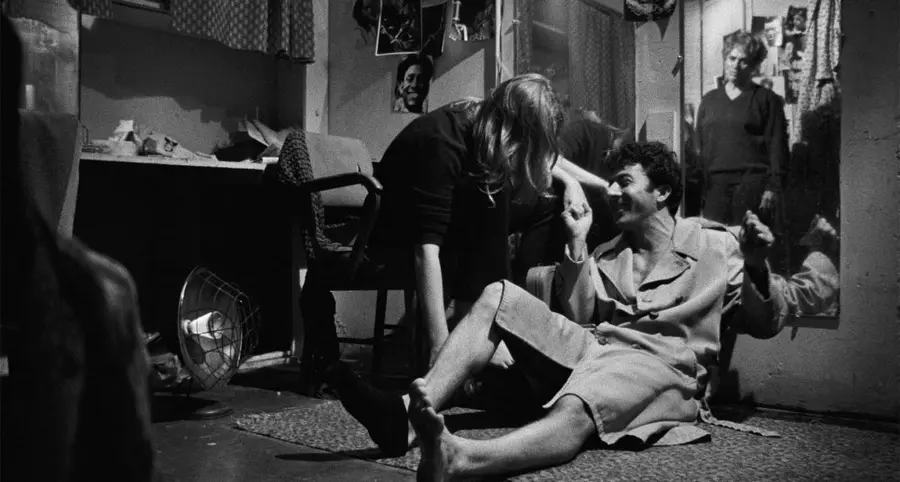
In particular, his wife Honey was a former stripper, and as she steadily lost self-control, Renny—who ended up using drugs and having a deviant sex life—was something she had to keep watch over. Also, his inner circle were people who helped him with his work, but at the same time they also clashed with him. Renny, who had a freewheeling style and disliked interference, even went so far as to unilaterally break appointments with his manager at times. That became even more true once he started to believe that his manager was getting closer to Honey than necessary. In short, Renny always pushed his own style forward without compromising with those around him. As a result, legal disputes involving Renny kept increasing, and they tried to interfere deep into his private life. He couldn’t get everyone’s consent for his comedy, and once problems from outside the comedy world got tangled up as well, Renny suffered from a serious compulsion. Eventually, his comedy began to lose its spark, and the audience started to get disappointed in him, too. In the months before his death, he was actually going out of his mind.
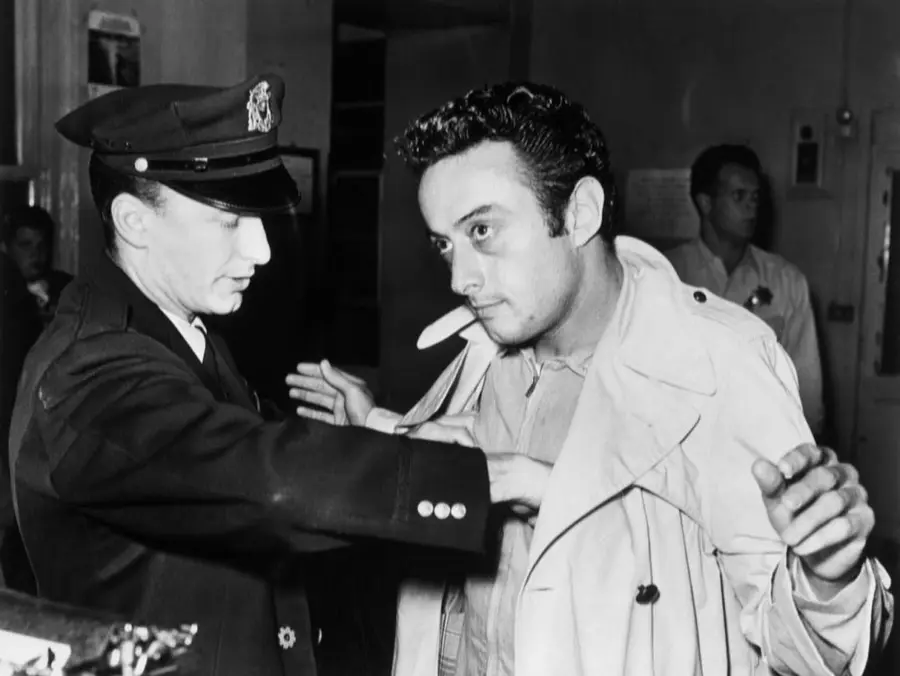
〈Reni〉 is a film based on the true story of Renny Bruce, a 1960s stand-up comedian who died from a real drug addiction. The movie unfolds in the form of people who knew Renny recalling him. Those memories turn into small pieces that build up the “entity” called “Renny,” whether they are good stories or bad ones. As those recollections move forward, the story of Renny, played by Dustin Hoffman, unfolds through cold black-and-white footage. That black-and-white material itself, which evokes wistful nostalgia and the feeling of a recollection, plays a big role in approaching the character of Renny emotionally and strengthening the film’s theme. Bob Fosse, for his part, does not particularly try to pour in his own distinct viewpoint. Instead, through the recollections of various people and Renny’s everyday life captured like a black-and-white documentary, he allows the message to rise naturally. It’s about how a freewheeling comedian who tried to live by his own colors and his own head could only end up getting worn down amid the world’s compromises and the ruthless rulebook of the business world.
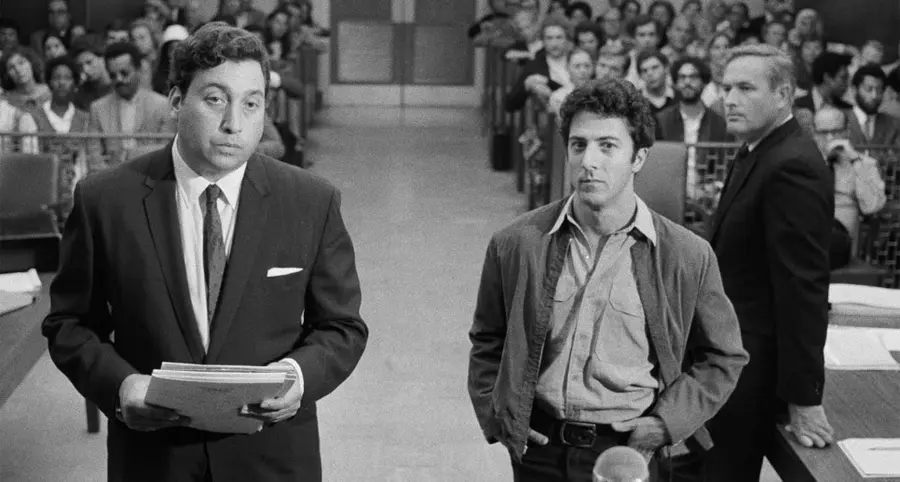
Moreover, the wounds ran deeper because the comedy Renny pursued crossed all kinds of sacred zones and taboos, bringing explicit discourse about sex into the conversation, while the walls of the world only kept getting higher. There are quite a few films that put comedians at the center and tackle similarly themed material. They include Martin Scorsese’s 〈The King of Comedy〉 (1983), which depicts the hard times of aspiring comedian Rupert Pupkin (Robert De Niro); 〈Untouchable Guy〉 by Betty Thomas, which tells the story of Howard Stern, a comedian who ran a sex-shameless talk show much like Renny’s (original title: Private Parts, 1997); and Milos Forman’s 〈Man on the Moon〉 (1999), a biographical film starring Jim Carrey about late comedian Andy Kaufman. In that it pursues a controversial protagonist and calmly reflects on his life, 〈Reni〉 is arguably the closest to 〈Man on the Moon〉.
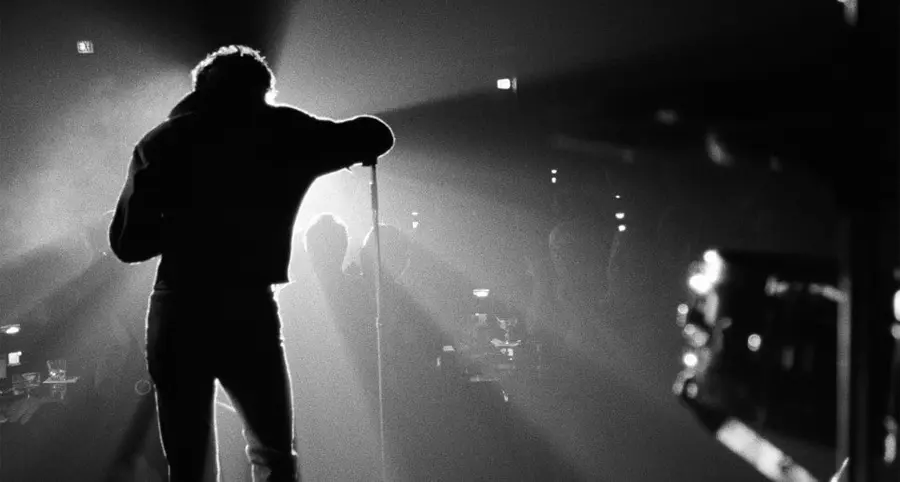
Dustin Hoffman’s expressions and performance as tragic comedian Renny Bruce are outstanding. He had risen to stardom after the actual 〈Graduation〉 (1967), and people had spotlighted him for carrying both a humorous side and a side full of sorrow—so casting him as Renny was a perfect match. His presence shines so much that there’s even a joke saying he was “the smallest of the 1980s superstars after ET.” And especially the works of the 1970s, including 〈Reni〉, are top-notch. 〈Reni〉 was nominated in a total of six categories, including Best Actor, at the 1975 Academy Awards, yet Dustin Hoffman also skipped the ceremony because he said his performance wasn’t good enough. Keeping in mind that at the Golden Globe Awards—often called a dress rehearsal for the Oscars—Hoffman won Best Actor, it’s still hard to understand. In any case, among the six categories, 〈Reni〉 did not win a single award. But 〈Reni〉 did place in the Cannes Film Festival’s competition section and gave Best Actress to Valerie Perrine, who played Renny’s wife. The next year’s musical 〈Chicago〉 (1975) also enjoys a long run on Broadway and achieves major success. That was very fortunate. Bob Fosse was dealing with serious health problems—including a heart attack caused by overwork and stress—while preparing the musical 〈Chicago〉 and editing 〈Reni〉. In the end, he underwent heart surgery, and he returns to the film world for the first time in five years with the film 〈All That Jazz〉 (1979), which brought the musical genre back.




![[Weekend Box Office] ‘Michael’ Takes #1 at the Weekend Theater… ‘Salmogji’ Sets a New Record for Korean Horror Box Office Hits](https://cdn.www.cineplay.co.kr/w160/q85/article-images/2026-04-23/54d7e202-2f61-4168-818d-9c05c569fd0c.jpg)
![[Joo Seong-cheol’s Lockers] The Great Dancer Turned Film Director Summoned by “Michael”: Bob Fosse’s “All That Jazz”](https://cdn.www.cineplay.co.kr/w160/q85/article-images/2026-05-18/3a98b606-b896-4edb-87a4-a91d1e4f9b95.jpg)
![[Chu Ah-young's Music Box] Michael Jackson's 'Thriller' and 'Heal the World' That Tried to Turn Dreams into Reality](https://cdn.www.cineplay.co.kr/w160/q85/article-images/2026-05-21/1d25aa5b-22b9-4726-a711-46af213e6dbd.jpg)
댓글 (0)
댓글 작성
댓글을 작성하려면 로그인이 필요합니다.
로그인하기