



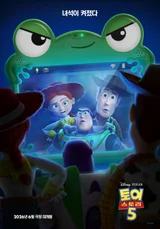
No longer just Andy’s or Bonnie’s toys, the 〈Toy Story〉 gang has become a companion across generations. Opening June 17, 〈Toy Story 5〉 brings Woody and Buzz back together after their earlier parting and follows Jessie’s struggles after becoming a leader. Each 〈Toy Story〉 installment has returned with a story suited to its era, and this time the series spotlights toys thrown into crisis by smart devices such as the ‘LilyPad.’ For the toys, the shift is an existential threat, but for audiences it offers the joy of meeting new chapters in Woody, Buzz and Jessie’s story. Ahead of 〈Toy Story 5〉, Cineplay reporters share their favorite characters and scenes. Join us in remembering the series that has run from 1995 to the present.
I Like You Because You’re Flawed
〈Toy Story 4〉 Gabby Gabby - Ju Seong-cheol
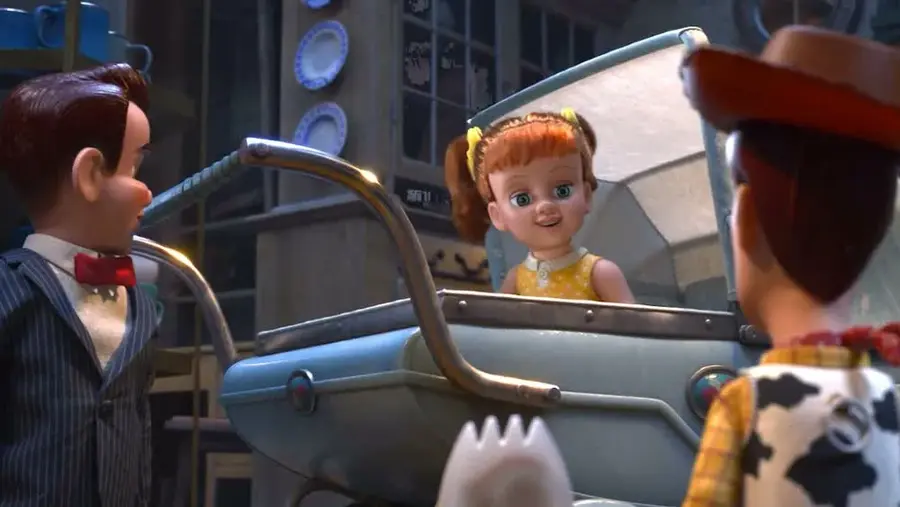
〈Toy Story 4〉 (2019) introduced a host of memorable personalities. Perhaps compensating for the nine-year gap between the third and fourth films, it summoned up memories from past installments in a satisfying rush. From the handmade toy Forky, who rejects his fate and makes a break for the trash, to Duke Caboom, the swaggering stunt rider voiced by Keanu Reeves, nearly every new face was a scene-stealer. But if I had to pick a single favorite across the whole franchise, it would be Gabby Gabby: the longtime fixture of Second Chance Antique Store, where she has spent 60 years, and the defective doll obsessed with Woody. Christina Hendricks, best known for the TV series 〈Good Girls〉 and strikingly similar in some ways to Gabby Gabby’s character, provides her voice. Born a defective toy whose sound box was broken at the factory, Gabby Gabby displays a frightening possessiveness and fixation toward Woody; she even sends her ventriloquist dummy Benson, almost like her right arm, to spy on him as part of her scheme. As a villain in the lineage of 〈Toy Story 3〉’s Lotso—and arguably the franchise’s first female villain—Gabby Gabby’s interest in Woody stems from being a defective toy whose own voice mechanism never worked.
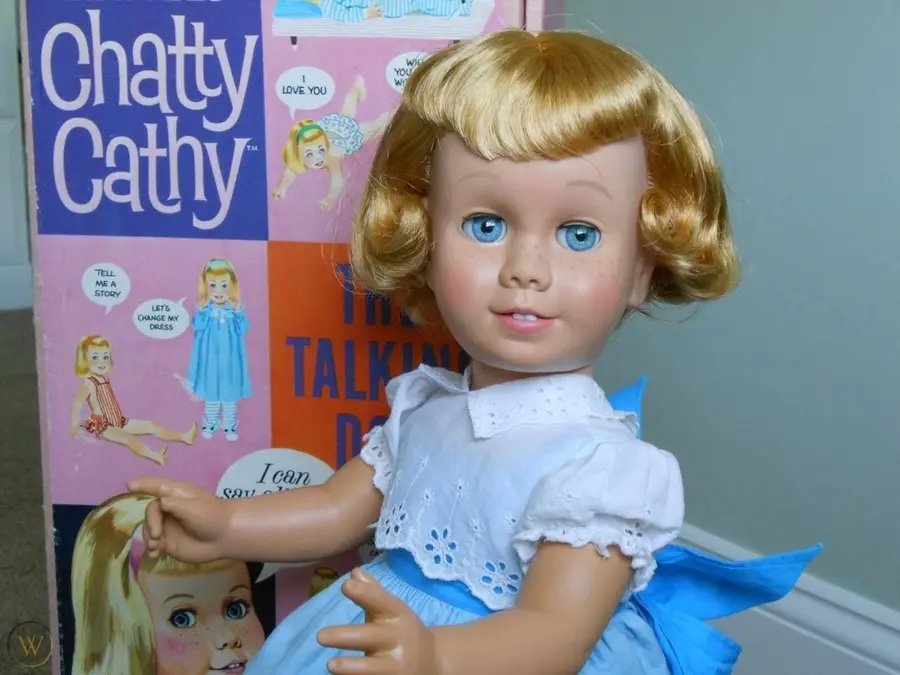
Gabby Gabby is written as a doll from the 1950s, and the real-life doll that inspired her, ‘Chatty Cathy,’ was actually produced starting in 1959. As the original pull-string talking doll, Chatty Cathy was quite popular in Korea too, and I remember being fascinated by it as a child. Its feel was amazing and at the same time a little eerie—its expression was frightening too, almost as if the light had been erased from its eyes. When I first saw the killer doll Chucky from the 〈Child's Play〉 series, Chatty Cathy was the first doll that came to mind. In 〈Toy Story 4〉, though, Gabby Gabby’s mix of resentment over being born with a broken sound box and longing for an owner gives her a complex emotional contour that isn’t purely villainous. You might even feel sympathy for the warped heart created by that lack. In the film, she believed she would end up with the shop owner’s granddaughter, but because her sound box was broken she was always forced to hesitate—and that backstory is deeply sad. Unlike many other toys in the 〈Toy Story〉 series, she faces the tragedy of thinking she can’t give a human friend a happy memory.
“This isn’t flying—it's falling with style.”
Buzz Lightyear - Kim Ji-yeon
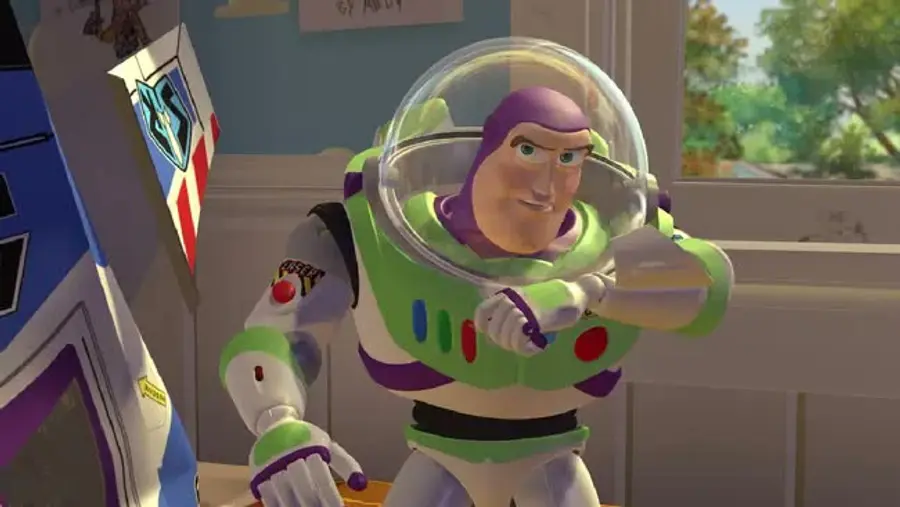
It’s obvious, but you can’t talk about the 〈Toy Story〉 franchise without mentioning Buzz Lightyear. Visually, the Pizza Planet aliens or Bullseye might be the most appealing, but the reasons Buzz is great mirror exactly why the franchise works, so he had to be included.
Buzz is Pixar’s reinvention of Don Quixote. Pixar revives that archetype but doesn’t follow the original’s tragic ending. Instead, Pixar breathes new imagination into a familiar tale. “What if Don Quixote, even after recognizing reality, never lost his recklessness?” Pixar answers that question through Buzz.
Buzz believes he is a space ranger until he accepts that he is only a toy. In 「Don Quixote」, the story would end there, but for Buzz that realization is the beginning of a new story. He keeps shouting “To infinity, and beyond,” but he may dimly understand that infinity and beyond might not actually exist. Nevertheless, he refuses to abandon recklessness and courage. Even knowing he is a toy, he continues to act like a space ranger. He tells Woody, “An old toy once taught me that what matters is being loved by a child. I believed that, and I came all the way here to save a toy.”
Buzz’s newly defined mission as a toy may seem trivial compared with saving the universe. Yet 〈Toy Story〉 treats that smallness with the utmost seriousness. 〈Toy Story〉 is a film about ideals and the value of childlike innocence, and about the continual persistence of “despite everything.” Abandoned things, items that look useless, impractical or outdated—are they still valuable despite it all?
As we grow, we become less reckless. Recklessness increasingly becomes something to laugh at; we start demanding efficiency and realism in everything. But children are, by nature, reckless. They believe they can fly, they believe they can save the world, and they take small, immediate tasks as if they were cosmic missions. Just like Buzz. That very recklessness is the most childlike quality, and preserving it even after becoming an adult and facing reality is a toy’s mission—and the mission of the 〈Toy Story〉 franchise. That’s why I love Buzz.
A Scene-Stealing Presence and a Flirtation Dance
〈Toy Story 3〉’s Spanish Buzz - Seong Chan-eol

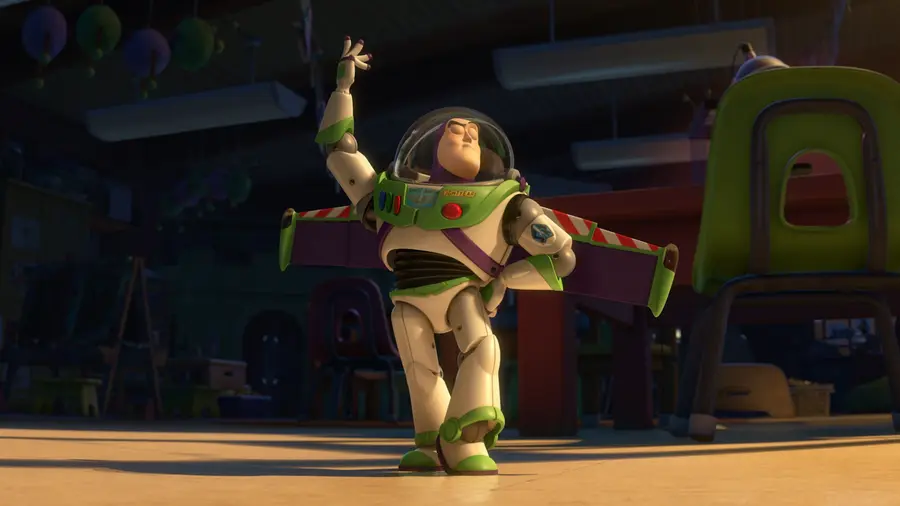
Personally, I think the 〈Toy Story〉 series is Woody’s chronicle. Still, when I think or speak the words ‘Toy Story,’ Buzz is honestly the first image that comes to my mind. As the only character in the series with a theatrical spin-off—even if it did not perform especially well—Buzz is, to me, the best character in the 〈Toy Story〉 series and one of its most frequently parodied across media. Watching comedian Lee Sun-min’s “childhood-destroying” Buzz impression made the character even more unforgettable to me.
Part of why Buzz stands out as the franchise’s signature character is his versatility. While Woody anchors the central narrative, Buzz does romance, comedy and leadership. If Woody is the missing link to our memories of toys, Buzz embodies the series’ imaginative premise that toys move. His strengths shine in the franchise high-water mark, 〈Toy Story 3〉.
In that film, Buzz is tricked by Lotso into going into “demo mode,” and a friend’s clumsy attempt to restore him results in “Spanish Buzz.” With Buzz’s already forceful features, Spanish Buzz is pure Casanova. He then falls for Jessie at first sight and launches into an ardent dance of courtship, and I laugh every time I see that sequence. When I think of Toy Story, that scene is one of the first great moments that comes to mind. It may be funny to pick a comic moment as a favorite, but because the entire 〈Toy Story〉 series is emotionally resonant for me, that’s exactly why this comic scene is the one that stands out most to me. In any case, that bold dance of wooing did not immediately lead to results, but it serves as a bridge to Buzz and Jessie’s arc in the fourth and fifth films. If you ever fall for someone, consider asking them out with this dance!



![[Interview] 'Ignore the Number 5': Four 'Toy Story 5' Stars on the New Film](https://cdn.www.cineplay.co.kr/w160/q85/article-images/2026-06-12/1245fc0b-2750-43a9-9e55-3b82b12e4be6.jpg)
![[Joo Seong-cheol’s Locker] Do You Know the Origin of Woody in “Toy Story”?](https://cdn.www.cineplay.co.kr/w160/q85/article-images/2026-06-16/dab26609-a71b-403b-917e-b99ff185949c.jpg)
댓글 (0)
댓글 작성
댓글을 작성하려면 로그인이 필요합니다.
로그인하기