



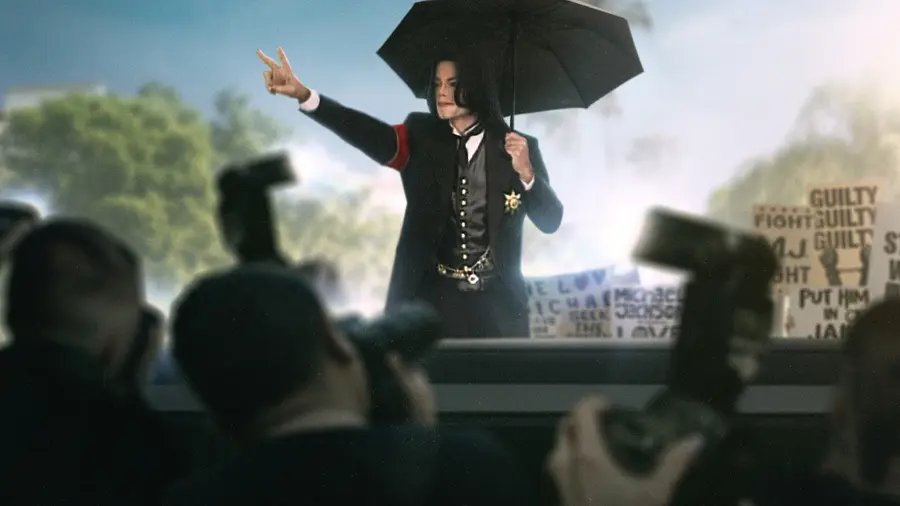
As the film 〈Michael〉 has become a global box-office hit, Netflix has also announced it will join the craze. On June 3, Netflix will release the documentary 〈The Michael Jackson Trial: Verdict〉. As you likely already guessed from the title, the documentary covers a trial that followed false accusations surrounding Michael Jackson, along with the public’s reaction. With its rapid capture of the moment—announcing the June 3 release on May 20—Netflix’s 〈The Michael Jackson Trial: Verdict〉 stands out. What remains to be seen is how the documentary will depict the hardships Michael Jackson endured.
Reconstructing a trial long shrouded in secrecy
〈The Michael Jackson Trial: Verdict〉 traces how Michael Jackson ended up standing trial in 2003 on charges of child sexual abuse, along with the sequence of the court proceedings and the atmosphere around them. It’s not as if there were no works covering the case at all. Before the allegations surfaced, BBC journalist Martin Bashir aired a program titled 〈Living with Michael Jackson〉, reporting on Jackson’s private life (Bashir later admitted in 2009 that he had distorted the material for the program). After Michael Jackson’s death, a program called 〈Leaving Neverland〉(2019), which included testimony from James Safechuck and Wade Robson—who claimed in 2013 that Jackson abused them—was also released via HBO.

There were multiple documentaries like this, but ironically, Michael Jackson’s trial proceedings have never been fully exposed to the public. That’s because camera filming inside the courtroom was banned at the time, limiting what information could reach viewers. 〈The Michael Jackson Trial: Verdict〉 revisits the controversy centered on the trial itself. Consisting of three episodes, the documentary reconstructs the case from the perspectives of both the prosecution and the defense by featuring interviews with courtroom figures such as jurors, witnesses, attorneys, and the accusers who were on the scene at the time. Director Nick Green, who helmed the documentary, said it is an era that calls for close analysis of the entire trial and that he would “present the facts revealed in court as they are from the perspective of historical records.”
Objective reconstruction vs. defaming the deceased after his death
However, unlike the aspirations described by director Nick Green, 〈The Michael Jackson Trial: Verdict〉 has split Netflix users into sharply differing camps since its announcement and release. Those leaning favorable argue that, in a situation where only the viewpoint claiming victimhood in that controversy had been overly highlighted, the documentary captures the circumstances at the time and interviews with the parties involved, allowing the case to be revisited more broadly. There are also expectations that the documentary will provide an opportunity to correct parts that had been reported inaccurately. With the production involvement of David Herman, who has made a range of documentaries, serving as showrunner, there is a mood of expecting a certain level of quality, at least to some extent.
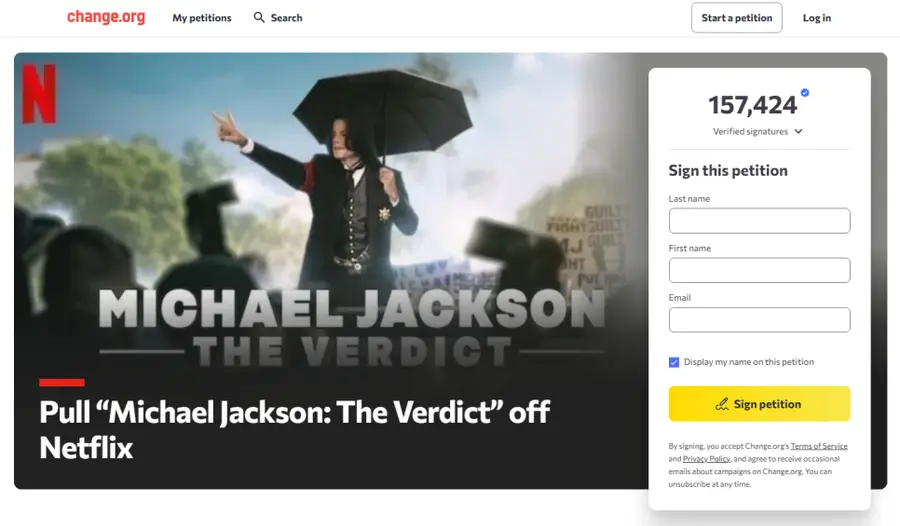
Meanwhile, most viewers criticized Netflix, the streaming service publishing the program, rather than 〈The Michael Jackson Trial: Verdict〉. The prevailing view is that after the release of the film 〈Michael〉, Netflix quickly announced the airing of the program, focusing only on the so-called “content sequel” synergy. In particular, 〈Michael〉 was reported to have discarded footage because, although it aimed to depict Michael Jackson, who suffered from the case, a settlement agreement included a clause—requested by the plaintiff side at the time of the incident—that stated “there will be no filming of the incident in connection with the case.” Yet some reacted by saying that immediately releasing a documentary covering the incident is an insult to the deceased.
Even with the clear fact that the sexual abuse allegations brought in 2003 were resolved with an acquittal in 2005, doubts still linger. Even though the U.S. prosecutors and the FBI were involved in the investigation, an acquittal was issued. Still, some corners do not accept Michael Jackson’s acquittal, using the line “where there’s smoke, there must be fire.” Against that backdrop, 〈The Michael Jackson Trial: Verdict〉 can only become a trigger that further amplifies suspicion if it does not translate the accurate facts properly. On June 3, Netflix will exclusively release 〈The Michael Jackson Trial: Verdict〉, and it is now time to see whether it reconstructs the case from the “perspective of historical records,” as the director said.





![[Chu Ah-young's Music Box] Michael Jackson's 'Thriller' and 'Heal the World' That Tried to Turn Dreams into Reality](https://cdn.www.cineplay.co.kr/w160/q75/article-images/2026-05-21/1d25aa5b-22b9-4726-a711-46af213e6dbd.jpg)


댓글 (0)
댓글 작성
댓글을 작성하려면 로그인이 필요합니다.
로그인하기