




Along with the box-office success of 〈Michael〉 , the most welcome thing it brought was Bob Fosse, a dancer and director who has said he was inspired by Michael Jackson's childhood memories. After introducing 〈All That Jazz〉 (1979) at ‘Jo Seong-cheol’s Locker’, a piece that won the Palme d'Or in 1980 at the Cannes Film Festival jointly with Akira Kurosawa's 〈Kagemusha〉, I also want to introduce two more of Bob Fosse's works, 〈Cabaret〉 (1972) and 〈Lenny〉 (1974). The 〈Cabaret〉 that won the Golden Globe Award for Best Motion Picture (Musical or Comedy) at the 1973 ceremony won the Academy Awards for Best Director (Bob Fosse) and Best Actress (Liza Minnelli) at the 1973 awards as well. 〈Lenny〉, which was nominated for six categories at the 1975 Academy Awards, including Best Director and acting categories, but won not a single award, was invited to the Cannes Film Festival the same year in the competition category and won Best Actress (Valerie Perrine). The connection between Bob Fosse and the Cannes Film Festival, which closed after 〈Fiord〉 by director Cristian Mungiu won the Palme d'Or not long ago, is every bit as deep as that.
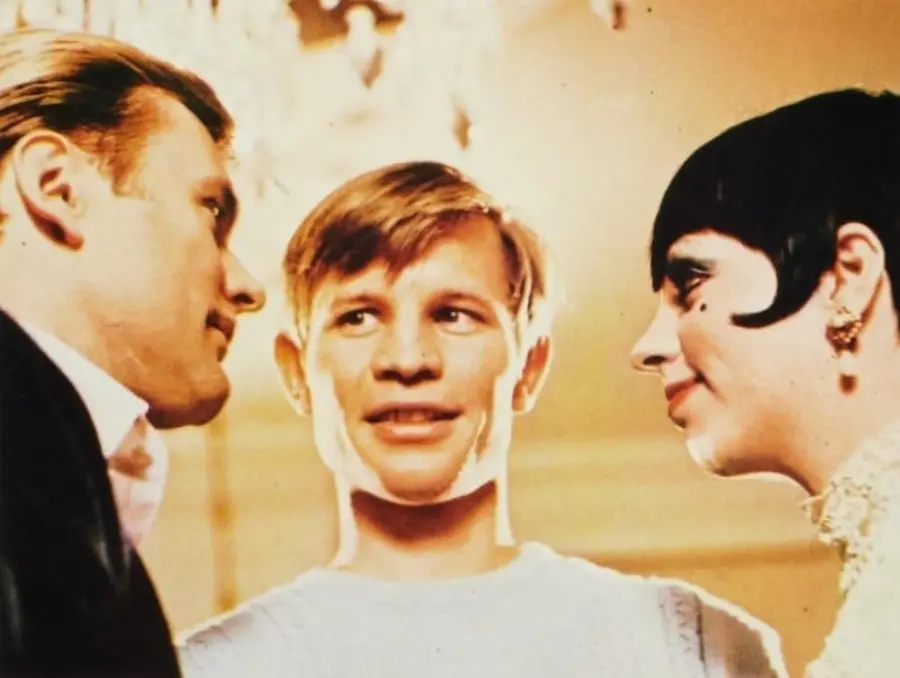
The period setting of 〈Cabaret〉 is Berlin, Germany, in 1931—just as World War II is about to begin. In society after the Nazis seize power, things feel grim, and the streets are crowded with the unemployed. Sally (Liza Minnelli), an American, works as a dancer at the Kit Kat Club in downtown Berlin. She is also the daughter of a diplomat, meaning she is a young woman from the upper class living with dreams of becoming an actress. You could say she is the kind of woman who believes nothing in the world can be truly scary, fueled by youthful bravado. In such a rowdy club, you do not find the darkness of the outside world. Meanwhile, Sally falls in love with Brian (Michael York), a British man who works as an English teacher. But Sally soon learns that Brian is bisexual, and with Max Miller—an affluent young count (Helmut Griem)—tempting her to cheat with him, a love triangle forms among the three. She, too, has no reservations. After that, Sally becomes pregnant with Brian's child, but she continues to get an abortion so she can keep working as a dancer. Even though it is unclear whether that child is truly her own or the count's, Brian decides he wants to take responsibility for the baby. Once he learns the truth, he leaves Sally and returns to London. Perhaps he ran away because he could not handle Sally. Even amid that heartbreak, Sally still steps onto the stage with an upbeat face.
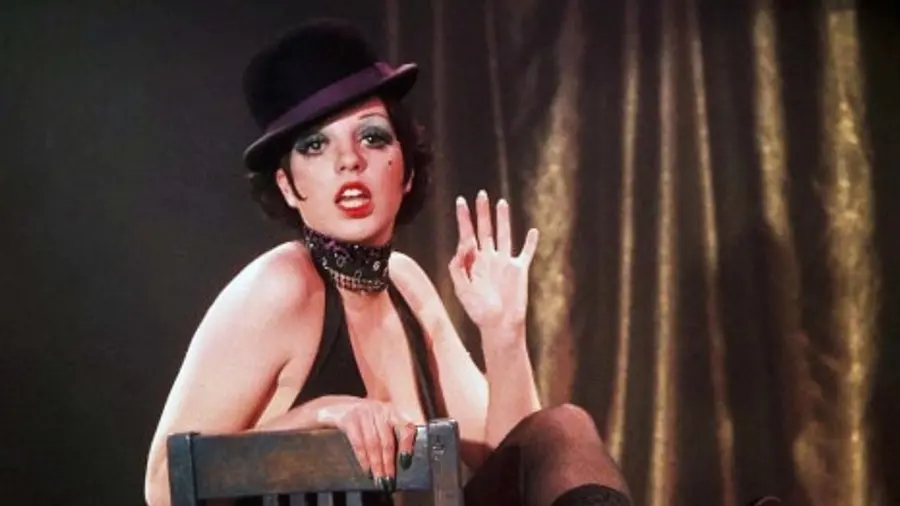
〈Cabaret〉 is an adaptation of the novel 「The Berlin Stories」 by Christopher Isherwood. This novel—adapted not only for film but also for theater and musical—has also long been celebrated on Broadway as a permanent love story. In the film, the Kit Kat Club is practically a paradise compared with the bleak social atmosphere of the 1930s. So it seems like the place offers a lifelong refuge cut off from the harsh outside world. But the pain of love Sally endures and the wounds from her abortion bring her a grief and suffering that are no different from the realities of the outside world. 〈Cabaret〉 takes on, for its time, bold portrayals of bisexuality and homosexuality, showing cultural chaos and an agonizing struggle over identity that erupted amid political upheaval. As a result, it is also often cited as one of the darkest works in the history of musical films. The film's dazzling decadence is, frankly, unbeatable. As with director Bob Fosse's other masterpiece, 〈All That Jazz〉 (1979), the most valuable life for him was the show onstage. He lived his real life as if it were a show—joyfully and wildly free. 〈Cabaret〉 also reflects his unwavering artistic view that “the show must go on.”
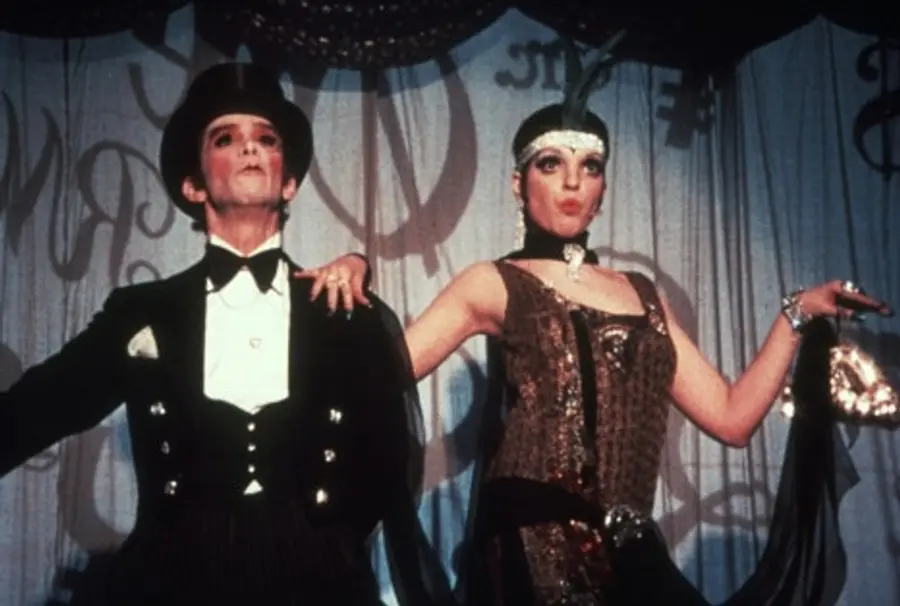
If there is one standout highlight of 〈Cabaret〉, it is Liza Minnelli herself. These days, the phrase “boyish charm” is no longer a particularly fresh descriptor, but the boylike charm she shows radiates a powerful pull. In the film, the performance in which Liza Minnelli wears a fedora, black stockings, and a garter belt, and uses a chair to put on a show—by itself, it looks like a fully realized original performance even apart from the movie. Of course, the comedic character-driven act she performs alongside the dancer master is also not to be missed. 〈Cabaret〉 is also known as a film that went head-to-head with Francis Ford Coppola's masterpiece 〈The Godfather〉 at the 1973 Academy Awards and came out on top. It brought Bob Fosse and Liza Minnelli the honors of Best Director and Best Actress, respectively. In addition, it won Academy Awards in eight categories, including Best Supporting Actor and Best Music. As a result, 〈The Godfather〉 drew nominations in nine categories but won only three, including Marlon Brando's Best Actor award.
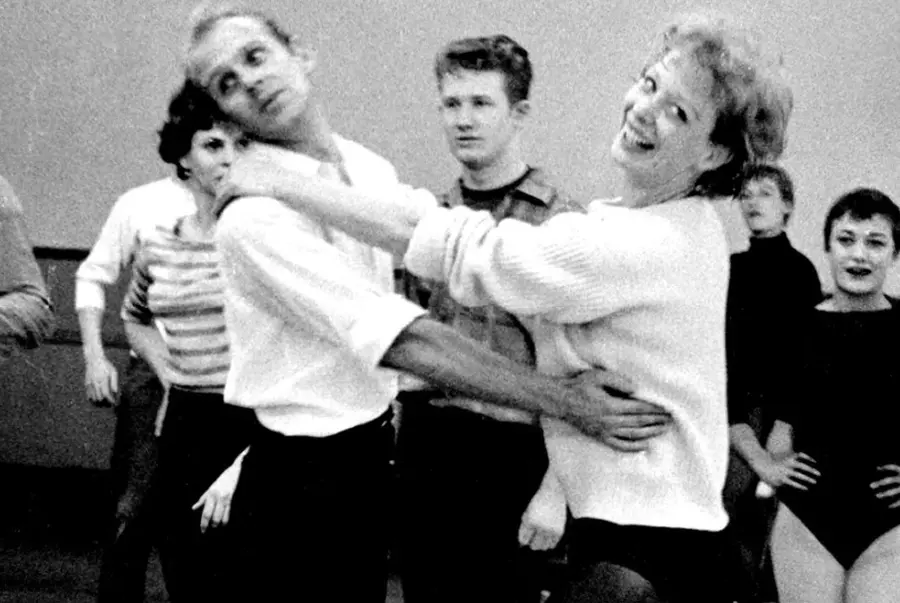
When talking about Bob Fosse around this time, you cannot leave out the person closest to him: his wife and also a great dancer, Gwen Verdon. Bob Fosse would win his second Tony Award for the musical 〈Damn Yankees!〉 (1958). Through that work, he met his third wife, Gwen Verdon. After that, his career took off. A documentary called 〈Gwen Verdon: The Hollywood Dancing Queen〉 (2020) was also made, showing—among other things—how Gwen Verdon's influence on him and the 40 years that followed demonstrated how she led Broadway choreography into a new phase. From a fragile childhood marked by what looked like arthritis to getting pregnant at 16 with a child out of wedlock, Gwen's success story is the tale of a woman who never gave up, faced adversity head-on, and became the best dancer on Broadway. The musical 〈Sweet Charity〉—which Bob Fosse and Gwen Verdon made together—was adapted into a film in 1969, and through that, Bob Fosse was able to debut as a film director. But it did not perform particularly well at the box office. After that, he went on to find success as a film director with 〈Cabaret〉, which starred Liza Minnelli and Joel Grey, among others. Starting in 1972, his best days in life unfolded. He was not only recognized with an Academy Award through 〈Cabaret〉, but also earned two Tony Awards, and—through the first drama film that was not a musical genre, 〈Lenny〉—he was finally invited to the Cannes Film Festival's competition category.
▶ The article about Bob Fosse continues in Part 2.


![[First Reactions] 'Michael' Cineplay reporters' star ratings](https://cdn.www.cineplay.co.kr/w160/q85/article-images/2026-04-30/e7e00cea-2a5c-4393-8612-daad8cba0e42.jpg)


![[Weekend Box Office] ‘Michael’ Takes #1 at the Weekend Theater… ‘Salmogji’ Sets a New Record for Korean Horror Box Office Hits](https://cdn.www.cineplay.co.kr/w160/q85/article-images/2026-04-23/54d7e202-2f61-4168-818d-9c05c569fd0c.jpg)
![[Joo Seong-cheol’s Lockers] The Great Dancer Turned Film Director Summoned by “Michael”: Bob Fosse’s “All That Jazz”](https://cdn.www.cineplay.co.kr/w160/q85/article-images/2026-05-18/3a98b606-b896-4edb-87a4-a91d1e4f9b95.jpg)
![[Chu Ah-young's Music Box] Michael Jackson's 'Thriller' and 'Heal the World' That Tried to Turn Dreams into Reality](https://cdn.www.cineplay.co.kr/w160/q85/article-images/2026-05-21/1d25aa5b-22b9-4726-a711-46af213e6dbd.jpg)
댓글 (0)
댓글 작성
댓글을 작성하려면 로그인이 필요합니다.
로그인하기