


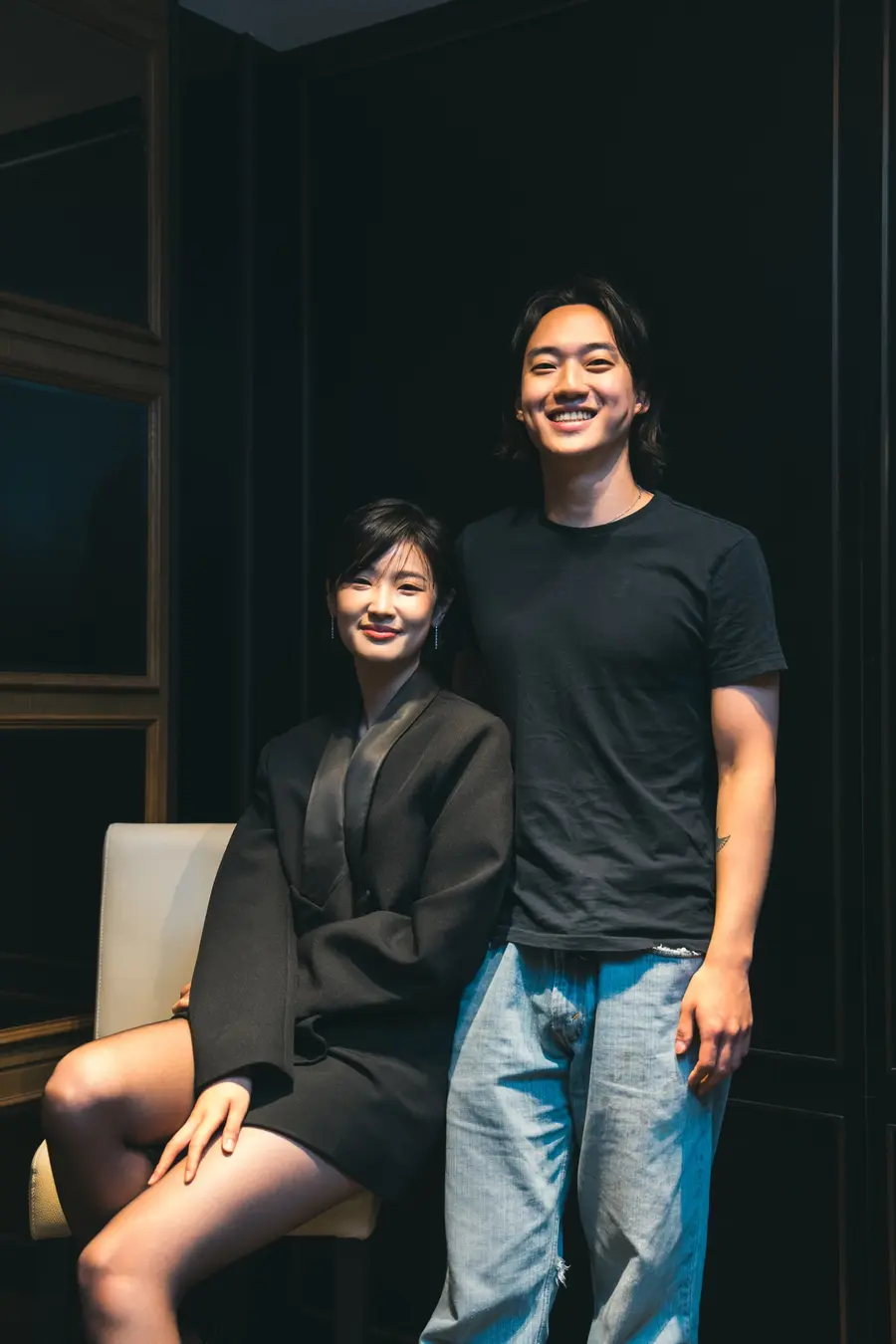
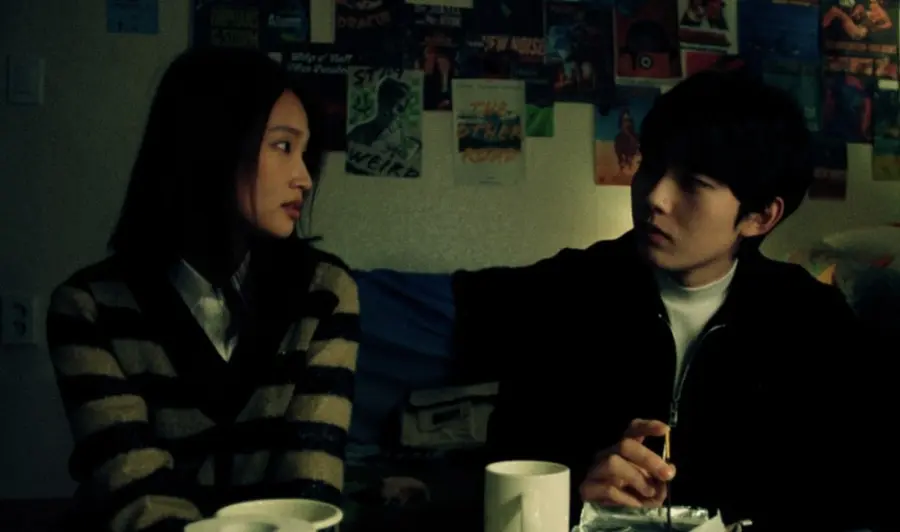
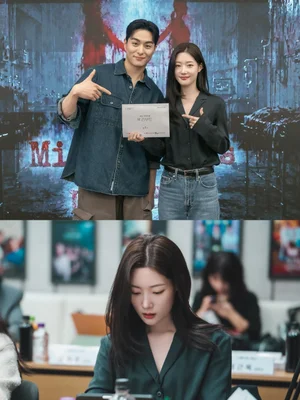
How did the two of you interpret and approach your respective characters? The name “Courage” suggests an energy that’s overflowing, but the character is also a “pathetic” youth who doesn’t have real, powerful force. And for Jisuk, courage is like air; in return, Jisuk is an object of awe for courage, right? I’m also curious what the two of you sounded like together on set.
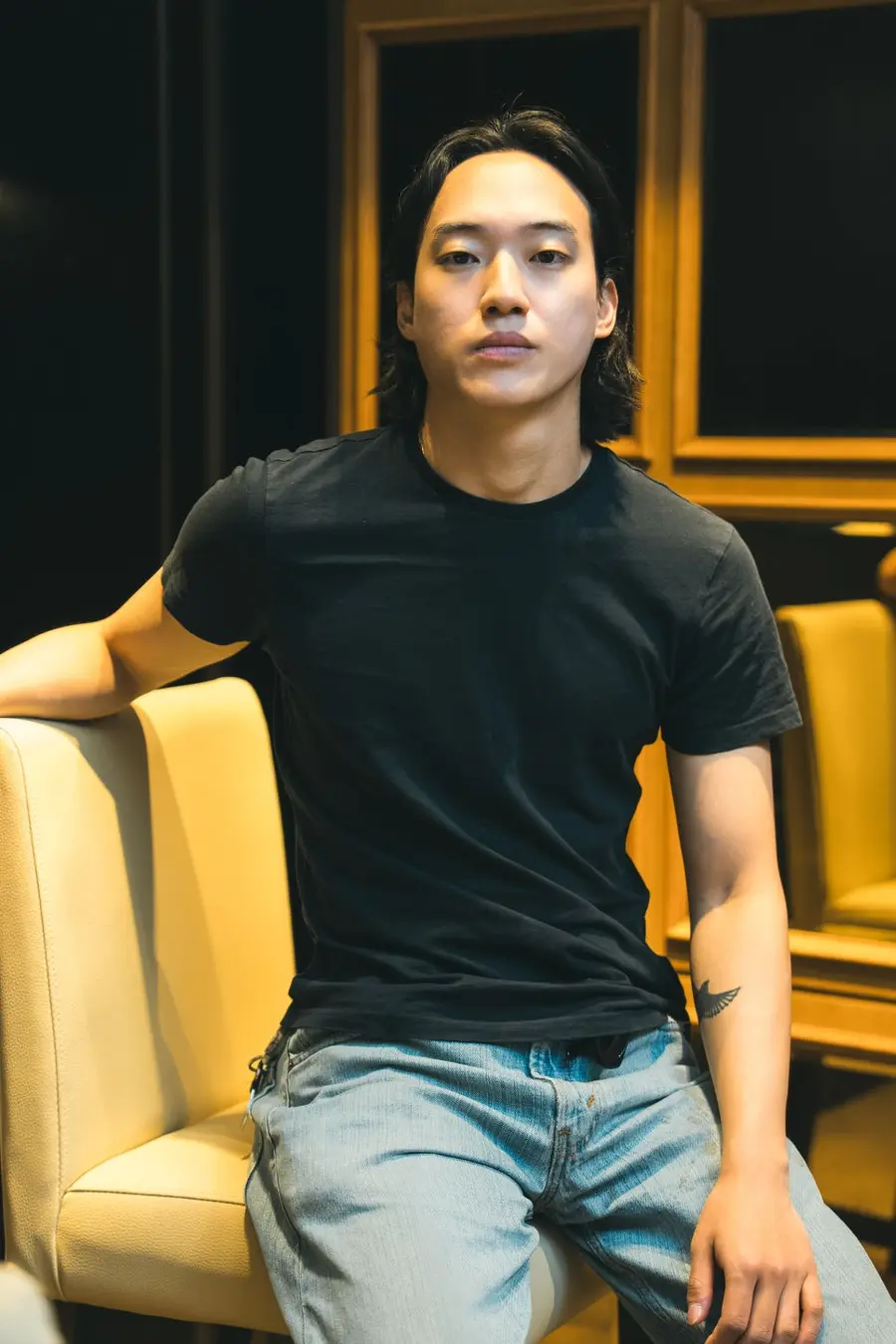
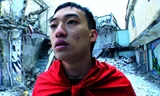
Joo Min-hyeong Courage thinks a lot, but the character is the kind of person whose thoughts turn into action. I looked for a lot of characters like that. For example, someone like Arthur, the protagonist of 〈strong〉Joker〈/strong〉 (played by Joaquin Phoenix). I wondered what would happen if the traits of those characters went inside Courage. The truth is, I’m quite similar to Courage in many ways. I got a lot of hints from within myself. Also, the director recommended 〈strong〉The Foxcatcher〈/strong〉, so I watched it. By recommending not just a specific person but the film itself, we ended up sharing a lot of thoughts about how we should view the movie. The director also told me to refer to director Lee Chang-dong’s 〈strong〉Oasis〈/strong〉. Watching Senior Seol Kyung-gu’s stride, posture, and movement, I thought it would be good to find Courage’s own unique walk and posture.
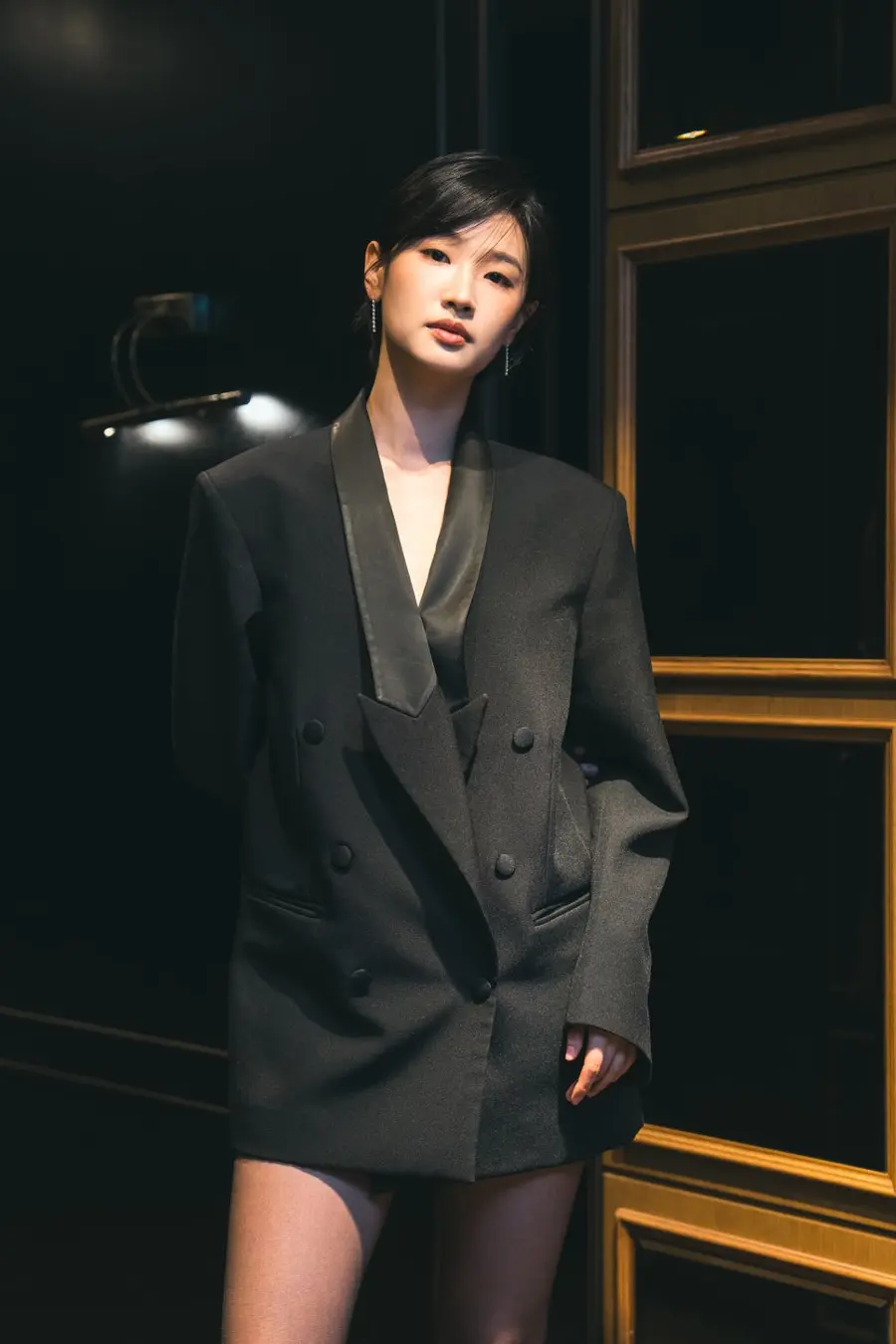
Baek Ji-hye The actor Min-hyeong was there on set like Courage was, too. Even when we weren’t filming, he stayed on site, checked what was needed, and helped set a good mood. For my part, I wanted to stay in the character of Jisuk. I was in that state of “I have to be alone” and “Don’t cross this line.” Naturally, Courage existed like air, and I think we built a relationship in which I kept taking that presence for granted. Thanks to Min-hyeong, I think that chemistry could happen.
Joo Min-hyeong When I was with Ji-hye, I think I tried not to talk about “Courage,” but to talk as Joo Min-hyeong instead. Like asking everyday-life questions. I thought it might be hard if I kept being in the state of Jisuk. So I decided to talk about more realistic things—stories about family, or stories about romance from the time—things like that. I thought it would be good if we could rest, even if only for a moment.
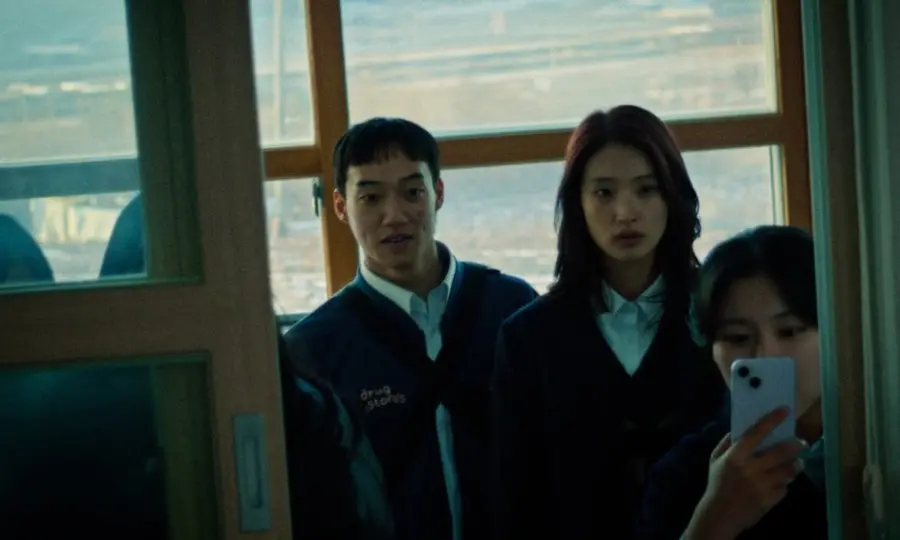
The title 〈strong〉Chungchungchung〈/strong〉 has a strong feel. Through the “insect image” in the intro scene, it also gives the impression that it’s describing teenagers with the meaning of “chung”—an internet meme—along with the shock.
Han Changrok At first, I wanted to name it 〈strong〉Insect〈/strong〉. The reason it became 〈strong〉Chungchungchung〈/strong〉 was when I kept revising the screenplay in 2023. At that time, knife attack cases kept happening in Korean society. On the internet, posts like “Where I’ll do it” went up, and fear spread nationwide. When I looked into it, I found that the character “chung” wasn’t just referring to insects “swarming with insects”—there was also “chung” (衝), meaning “to collide” or “to surge.” Words derived from that include impulse (충동), collision (충돌), and impact (충격). As I thought about it, I felt that this film could be, in some ways, a story about the “desire to stab” that Korean teenagers have. The targets could be oneself, or they could be other people. Once I had that clear in my head, I went with the title we have now.
In the film, the truly chilling point is that even though what happens centers on school and takes place inside the school, there are no adults to be seen. In the process of the kids’ violence intensifying in the second half, you also don’t introduce adults and leave that space empty. I’m curious why you pushed that strong pessimism all the way through.
Han Changrok I think the relationship between the older generation and the younger generation has changed a great deal. Even for me, I grew up being disciplined at school. But that culture has disappeared. And lately, there’s also been a lot of talk that teachers can’t guide their students as easily as before. In fact, there was also a role in the film for a homeroom teacher—a new teacher, to be specific. The difficulties that a teacher faces were included, too. But if we add even that story, the film would get a bit scattered. I decided it would be better to stay inside the bewildered feelings the kids experience.
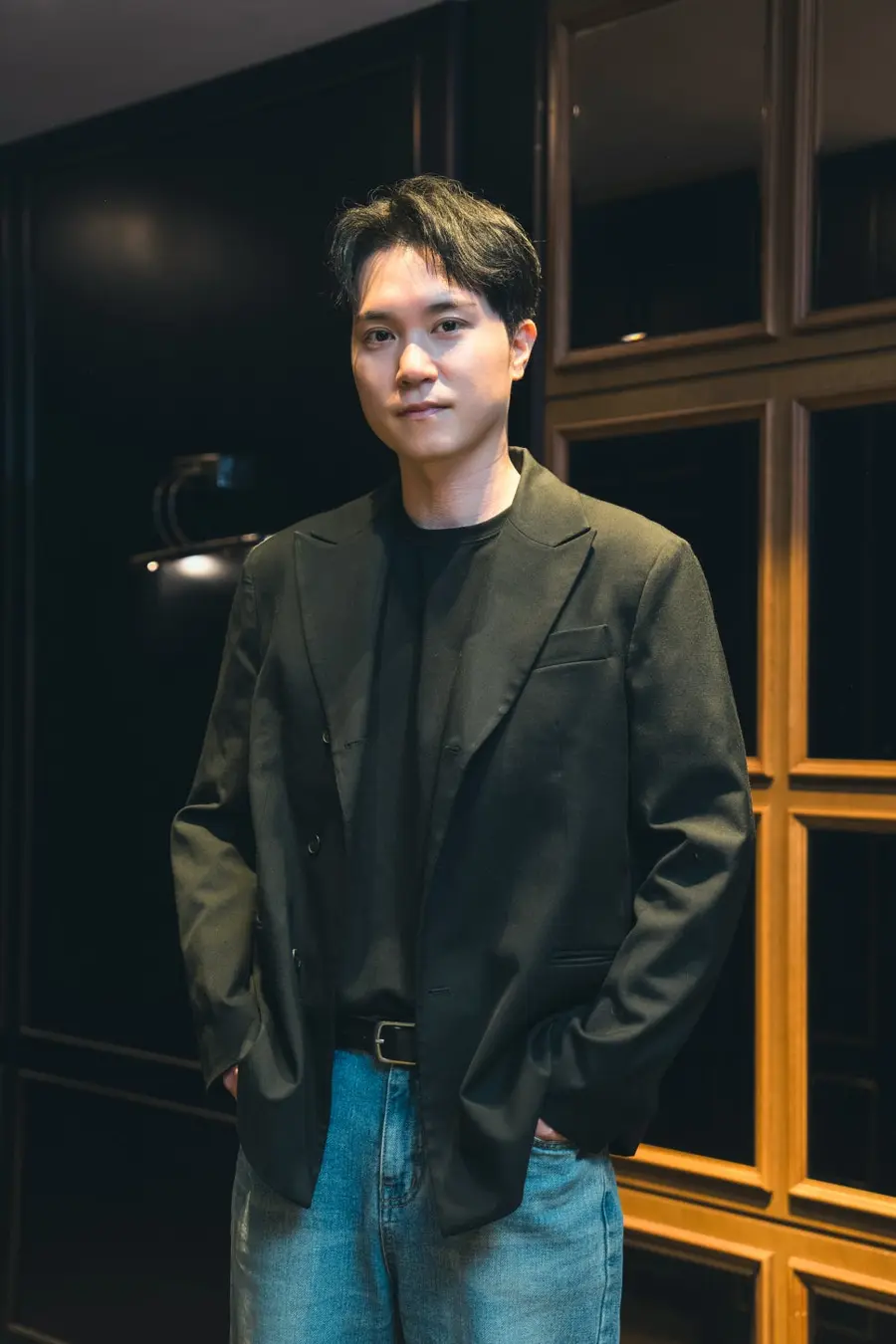
I used handheld filming and created a rough, MTV-style look—how did you work out the camera look?
Han Changrok Right from the start, the camera talk was heavy on the idea of a vintage mood. We discussed whether to shoot with a camcorder or with a movie camera. We also debated whether to realize it in post-production or to realize it at the shooting stage. Then the cinematographer said, “Let’s do both.” So we carried out tests, and in the end we ended up mixing the two approaches. We used an ARRI Alexa Mini and vintage lenses, and about a third of the total runtime was shot with an HVX200, a digital camcorder from the early 2000s. In the color correction process, we proceeded by matching the overall tone to a certain extent. The result, I think, is the unique texture that this film has now.
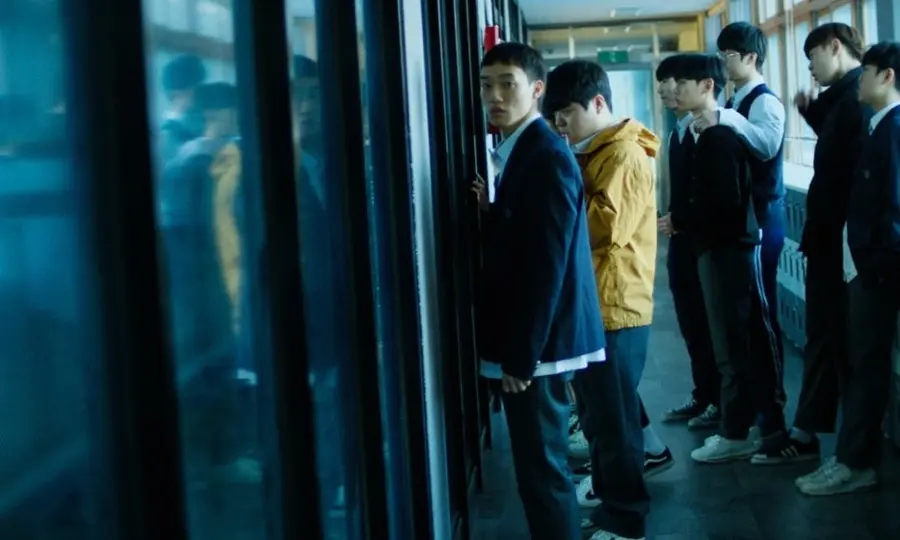
Especially in the opening scene, the insect imagery is intense. At the same time, it also symbolizes the situation today’s teenagers are in.
Han Changrok The opening starts with a birthday party, and then it begins with an image of eggs hatching. I wanted to talk about this generation from the beginning, and I also wanted to show why this film’s title is 〈strong〉Chungchungchung〈/strong〉. It was like a kind of declaration. “Yes, this is a bug story. It might be a little uncomfortable, but come watch it once.” I wanted to throw that feeling at the audience.
You summon images from past films while also not missing something very present. In particular, the shock of the scene where YouTube videos are shown later on is huge. You probably had a lot of thoughts about whether to include that scene.
Han Changrok I thought about it a great deal. In 2023, when we were receiving investment for film production, a similar incident actually happened. And then, just a day later, another knife attack incident involving a middle school student also occurred. Those two incidents had a big impact on the process of revising the screenplay. I really agonized over whether it was right to include this scene and how far the level of expression should go—but even now, I don’t know the right answer. Still, as 2023 passed, I strongly felt one thing: that too many tragedies get forgotten too quickly. Even if huge events happen, after a few days, everyone goes back to their own lives again. So I thought that through this scene, if people could talk about this issue even once—if they hated it, too—there was still value in trying. That’s how I came to include it with that mindset.
With 〈strong〉Chungchungchung〈/strong〉, I got the strong impression that you pressed forward with the story and style that the director himself pulled out without hesitation. It also overlaps with Courage in the film. (laughter) In the end, it might be the kind of form of film that the director is pursuing.
Han Changrok People misunderstand a lot just from watching the film. I also really like the films of director Hirokazu Kore-eda. (laughter) But strangely, when I try to make a movie, I end up paying attention to uncomfortable situations, uncomfortable incidents, and uncomfortable characters. If I think about why, I guess I’m the kind of person who is naturally timid. So I wanted to know why something like this happens. I wanted to understand it, and I thought that if I could, I’d be able to prepare, at least a little, for what might come. That’s why I think I get fixated on those kinds of material. And I don’t want to go around them. I want to look at them directly. If there’s a wound, it should touch the air and heal; rather than hiding it tightly, I want to face it head-on. That seems to be my attitude when making films.
I also want to hear what 〈strong〉Chungchungchung〈/strong〉 meant to both of you.
Baek Ji-hye The filming environment wasn’t easy, but maybe that’s why everyone’s vitality became even stronger. (laughter) It’s also the most joyful project I’ve filmed in among the works I’ve participated in. As I received good energy, I want to keep doing projects that let someone ask questions—going forward, too.
Joo Min-hyeong By playing the character Courage, I was able to sharpen a bit more the direction I want to pursue as an actor. I think it’s the same mindset for not only me, but also for the director and all the actors who worked with us. Right now, I just hope the film reaches even more viewers. (laughter)
![[Interview] Catching This Year’s Debut, a Y2K-Era Sensibility: Director Han Chang-rok, Actors Joo Min-hyung and Baek Ji-hye, Part 1](https://cdn.www.cineplay.co.kr/w160/q85/article-images/2026-06-17/6fb4219d-24b8-4b46-b04c-e804d9821c7d.jpg)
댓글 (0)
댓글 작성
댓글을 작성하려면 로그인이 필요합니다.
로그인하기