


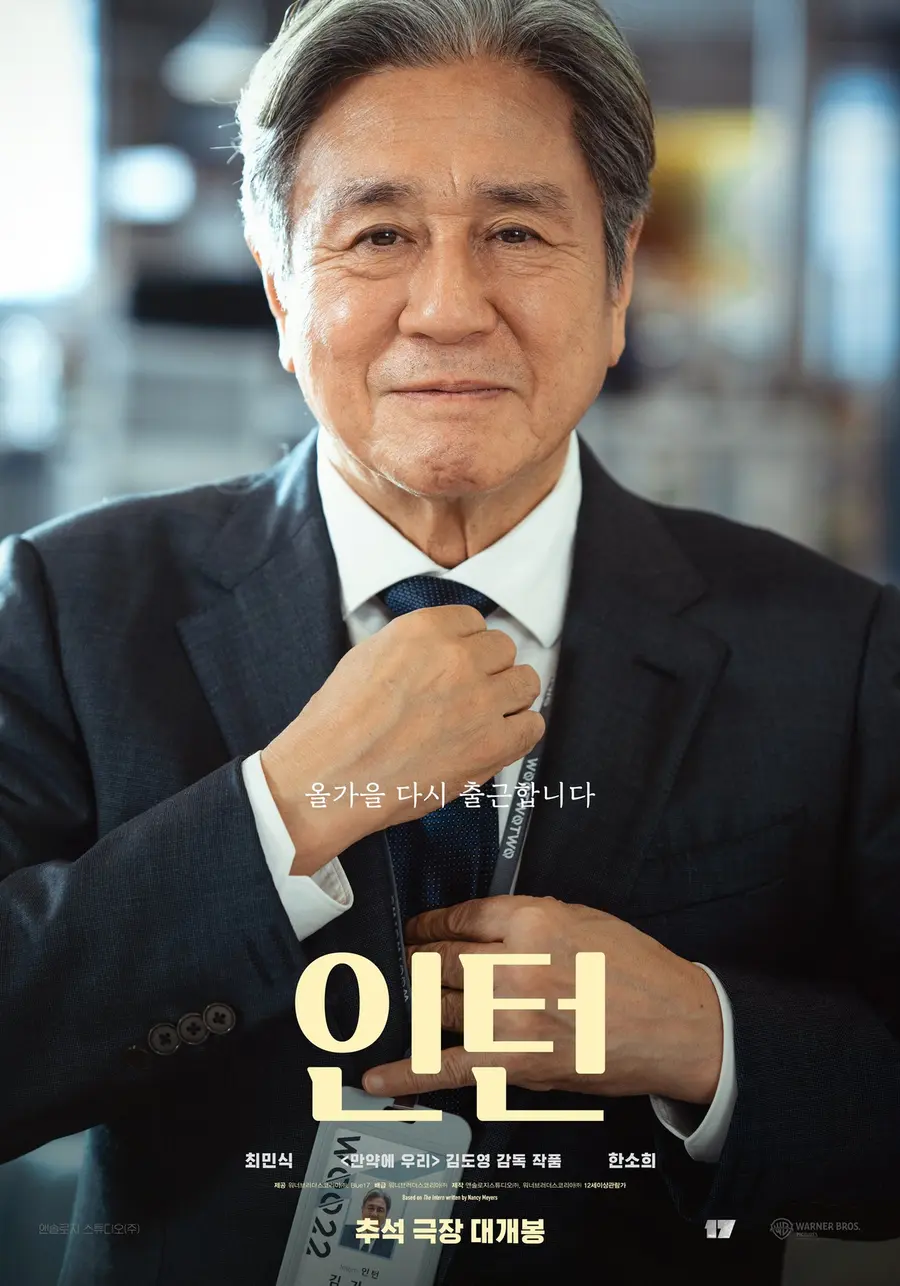
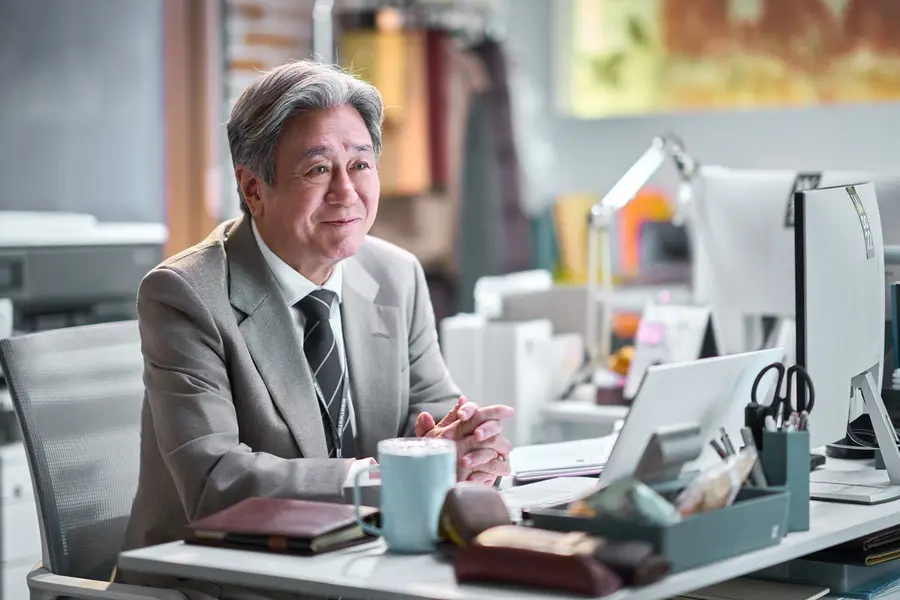
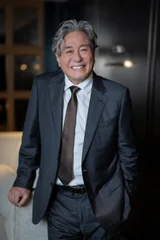
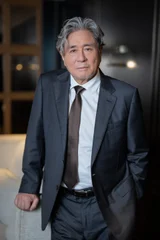
After 46 years in the profession, Choi Min-sik brings a lifetime of nuance to the Korean remake of 〈The Intern〉, which opens on the 16th. The lines on his face carry the ease and depth that only a long life can produce. As Kim Ki-ho (Choi Min-sik) sits quietly and listens in 〈The Intern〉, those marks speak before any dramatic expression does; his presence alone offers a quiet, weighty comfort.
The film 〈The Intern〉, which opens on the 16th, tells an office-life story that transcends generations and rank. It begins when a 37-year veteran senior intern, Ki-ho, joins the company of Seon-woo (Han So-hee), who rose to prominence in the fashion world as a dark horse three years after its launch. This film is based on the Hollywood movie of the same name.
His approach—trying to blend in with younger colleagues, like water seeping into every crack—was as deliberate as the lines at the corners of Ki-ho’s eyes. "Because I’m an actor, getting older is something I really enjoy," Choi Min-sik said, breaking into a boyish laugh. On and off camera, he seemed to embody the dignity of an elder. On the 7th, to mark the release of 〈The Intern〉, I met Choi Min-sik at a location in Jongno-gu, Seoul, and recorded an engaging, earnest conversation with him.
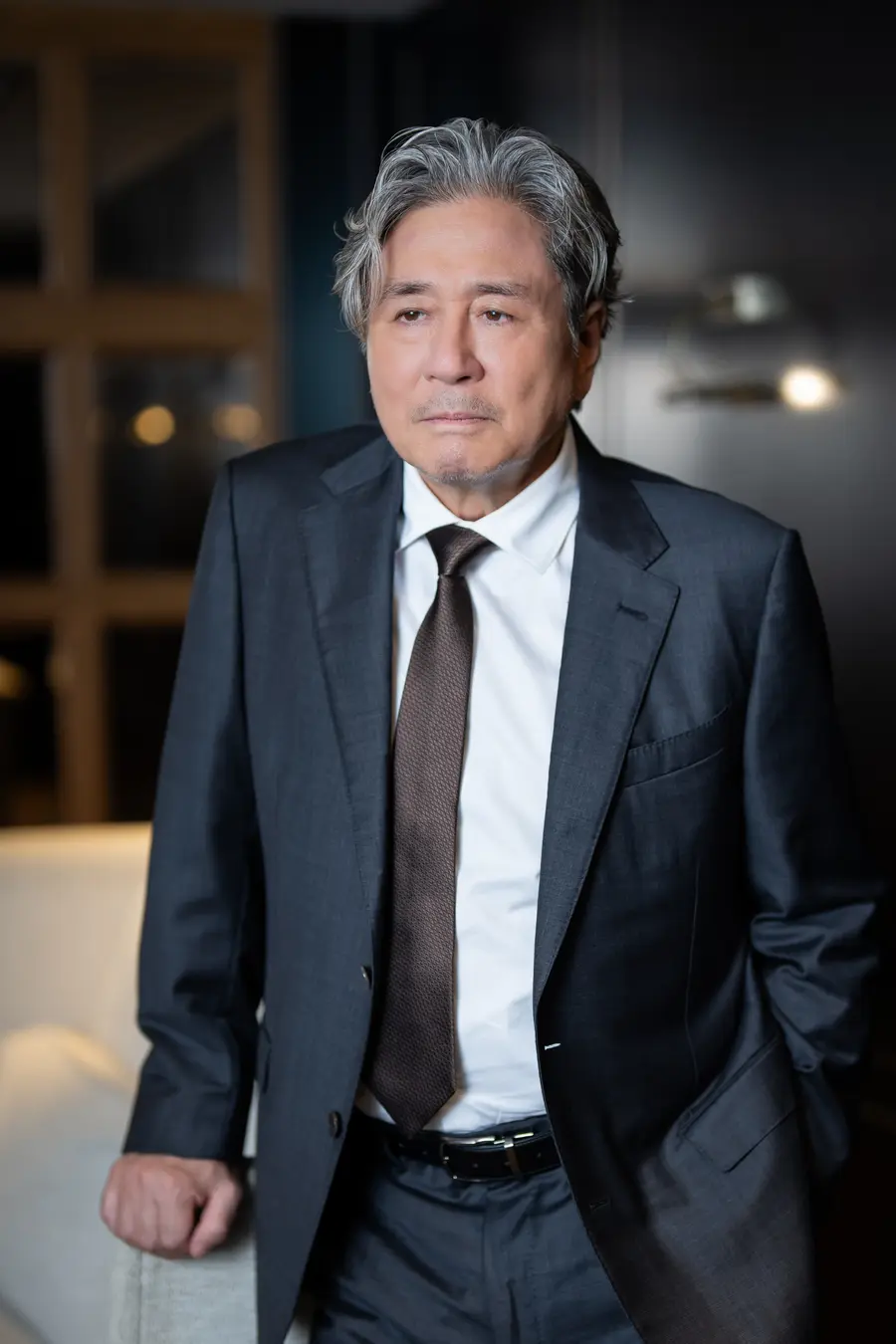
At the press screening for 〈The Intern〉, I was struck by how many actors who watched the film together were moved to tears. How are you feeling as you await the release?
Every time a new project comes out, I feel both anticipation and excitement. After all, we are people who communicate with the public through our work. We’re storytellers who deliver not only entertainment but the messages contained in a piece, so I’m very curious to see how audiences react. That said, I’m not tense or worried about people looking at it oddly. Having done so many projects over the years, I simply wait calmly for the response.
Then, as an actor who performed in it, what was your impression of the finished film?
I always feel there’s room for improvement. I think that about my own performance and the film as a whole — at moments I felt the narrative or the build-up could have been tightened. Part of me wishes you could put everything into a single basket, but a film has a fixed running time. Compressing a story into that limited time meant Director Kim Do-young had a lot to think about and put a lot of effort into the work. Having seen his effort up close, we tried to give the best possible expression within the circumstances we were given.
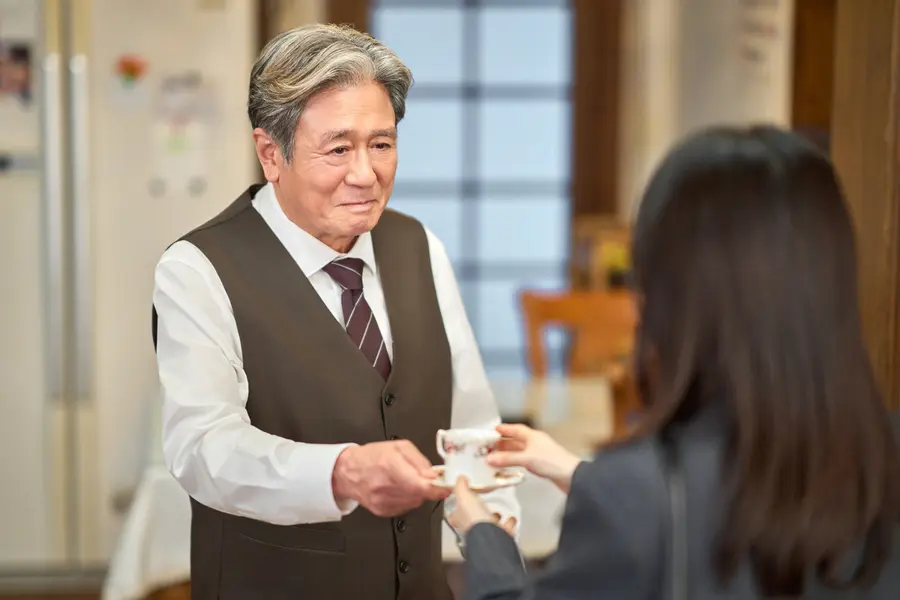
I heard you were the first actor cast for the remake of 〈The Intern〉, and then the director and Han So-hee joined. What led you to sign on to this project?
The backstory is a bit long. The idea goes back to before the Disney+ original series Casino. During COVID, Warner Bros. Korea once shut down its Korean operations and the project fell through. At that time I suggested, "If we adapt 〈The Intern〉 to a Korean style, it could work well." Time passed, Warner Bros. restarted its business and the offer came back to me first. There was no director attached yet, so I thought someone would need to step up as director before we could move forward. When Director Kim Do-young came on board, the project began in earnest. I’m a fan of the original, which was elegant yet refreshingly light.
How did you view the difference between the character Robert De Niro played in the original and the Korean version, Kim Ki-ho?
I tried to preserve the original’s light, refreshing tone, but I thought it would be pointless to simply copy the original performance. The Kim Ki-ho I play had to be unmistakably a Korean middle-aged man. Rather than aiming for a dignified, stylish elder gentleman like De Niro, I wanted to show the warm, rough-edged Korean everyman we see around us. From the perspective of a father, he approaches Seon-woo thinking, "If I were Seon-woo’s father, this is what I might say," and I worked to express the character differently from the original in that spirit.
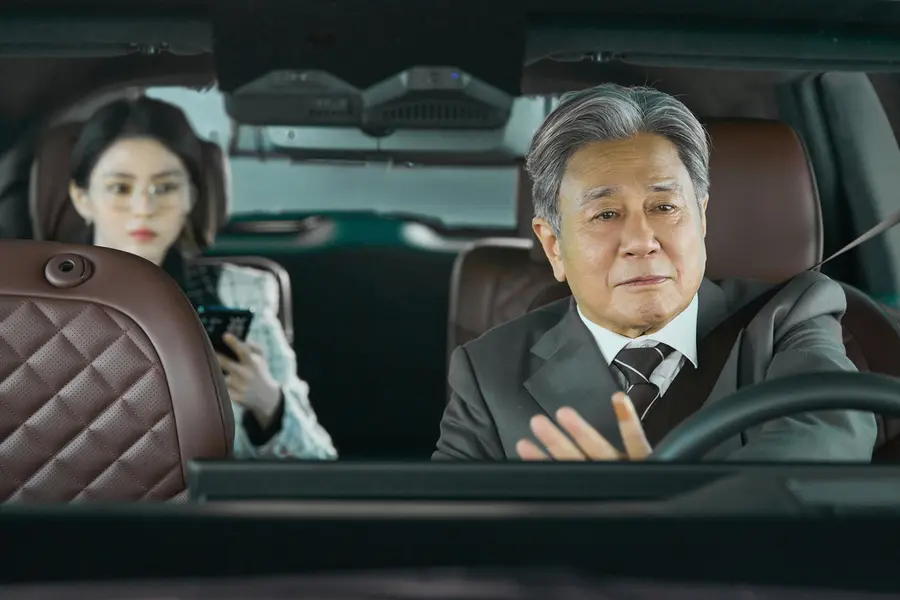
In this film, Ki-ho is someone who quietly listens to Seon-woo. Listening on camera can be harder than delivering lines, couldn’t it?
You really have to listen — not pretend to. The camera doesn’t lie, so if an actor fakes listening, it shows on screen. I remember when I filmed Failan (2001) with Director Song Hae-sung; I asked him to postpone the scene where Kang Jae reads the letter on the breakwater until as late as possible. Films aren’t shot in sequence, but I wanted to live as Kang Jae for two or three months and then genuinely face that letter, because I didn’t know what feelings would come up inside me. The same applied to 〈The Intern〉. In the film, Ki-ho spends three months as an intern and watches Seon-woo’s pain and dilemma through his eyes. If a bond hadn’t formed, he would have offered a perfunctory, "Better days are coming; be strong," but because she felt like his own daughter and reminded him of his real daughter in the U.S., he listened with genuine attention and those warm emotions surfaced.
How was it working with Han So-hee?
Several actresses were considered for Seon-woo, but Han So-hee was the one who passionately expressed she wanted the role more than anyone. From a producer’s point of view, casting someone who is that desperate to play a role makes sense. Her commitment was extraordinary. Also, when I looked at Han So-hee, many aspects of her seemed to overlap with the character of Seon-woo. The distinctive tendencies she developed through a fierce acting life and the slightly unsettled facets of her seemed to align closely with Seon-woo. You might say she found a role that fit her like a well-made garment. Her pacing and technical aspects might not be flawless yet, but she strove to convey Seon-woo’s authenticity, and I was pleased with the result.
What do you think is the greatest strength of both the original 〈The Intern〉 and this remake?
They portray intergenerational harmony and good relationships in which people help and comfort one another. Of course, in reality that can feel like a fantasy or a dream. But the fact that people around the world were deeply moved by the original means we long for warm elders and strong ties in our lives. When we falter, we hope someone will quietly listen to our story. We are fragile creatures who want that. If this film’s warm fantasy can offer even a small comfort to tired viewers, then to me it’s a very good film. We tried hard to capture Ki-ho’s particular brand of Korean affection and warmth.
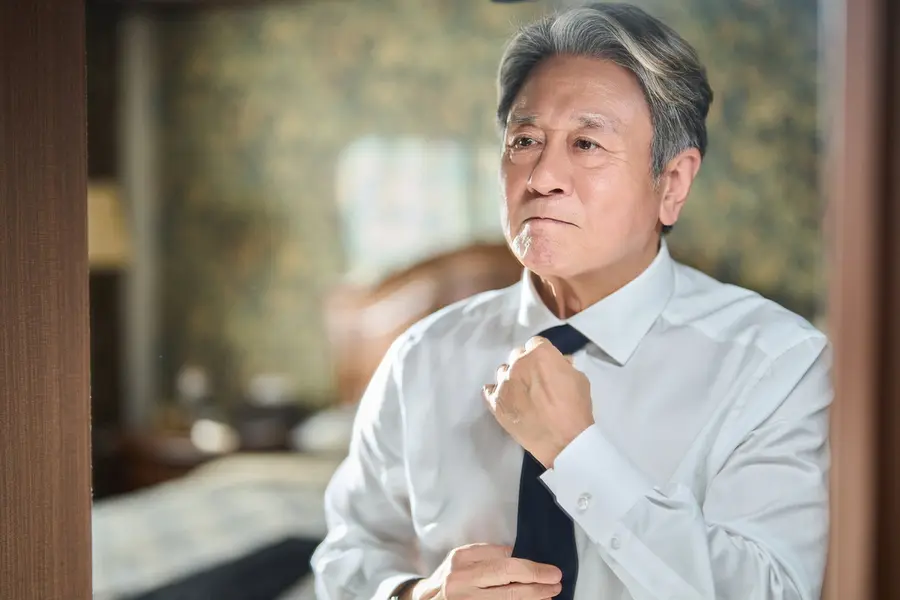
Ki-ho adapts flexibly to a bold office culture, communicates well with Gen Z colleagues, and sincerely connects with Seon-woo. That makes him an unusually idealized character compared with real people. As an actor, how did you try to make that role convincing?
That’s precisely the composure Ki-ho carries in his heart. It’s not riches but the ease of someone who has lived a full life. When he sees "Ututu," the new company that moved into the old publishing-house site where he spent 37 years of his youth, he applies to be a senior intern with the lightheartedness of someone visiting his childhood home. Once he starts work, the lack of strict hierarchy and the free-spirited youth culture must have felt foreign, but because he has composure, he reacts with curiosity rather than rejection. He thinks, "These bold kids reached 100 eok in sales in three years? (10 billion won) What might the CEO be thinking in running the company?" and chooses to observe. That calm curiosity, rather than immediate anger at what irks him, forms Ki-ho’s foundation. (If I, Choi Min-sik, were really in that situation?) I would have handed in my resignation immediately! (everyone burst out laughing)
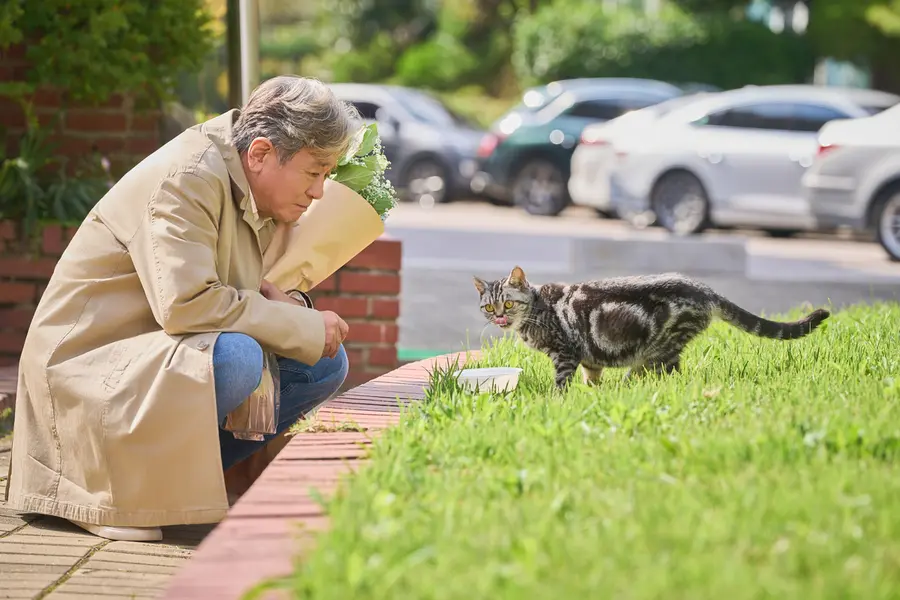
As you said, Ki-ho’s ease seems to come from his refinement: he once worked at a publishing house, keeps books close, drinks drip coffee in the morning, and enjoys arranging flowers. Did you help create those details for Ki-ho?
Like Ki-ho’s line, "This place was full of the smell of paper," he’s a character who spent 37 years in publishing and naturally accumulated a certain cultural refinement from being close to books. I think that habit of living with books gave him that composure. We gathered such details during the script work. The idea of him placing flowers in front of his wife’s photo every morning was my suggestion. Later in the film Ki-ho mentions that his wife, who passed away earlier, loved flowers. It might be a little sentimental, but we wanted to connect that emotion. There was also a scene—ultimately cut—where Ki-ho always feeds a stray cat before going inside; the cat was such a natural performer that we finished the shot in a single take. (laughs)
※〈The Intern〉 Choi Min-sik’s interview continues in Part 2.
![[Interview] In 〈Intern〉, Choi Min-sik’s moving wrinkles reflect 46 years in the making: Part 2](https://cdn.www.cineplay.co.kr/w300/q85/article-images/2026-09-14/5899ac63-63a4-495b-87d9-71c1068e8378.jpg)


![[Kim Ji-yeon’s Jewel Box] Yun Sang-jung, a Defining Face for Gen Z](https://cdn.www.cineplay.co.kr/w160/q85/article-images/2026-09-09/5ba5c679-c665-4e98-9170-69d86a560292.jpg)
댓글 (0)
댓글 작성
댓글을 작성하려면 로그인이 필요합니다.
로그인하기