


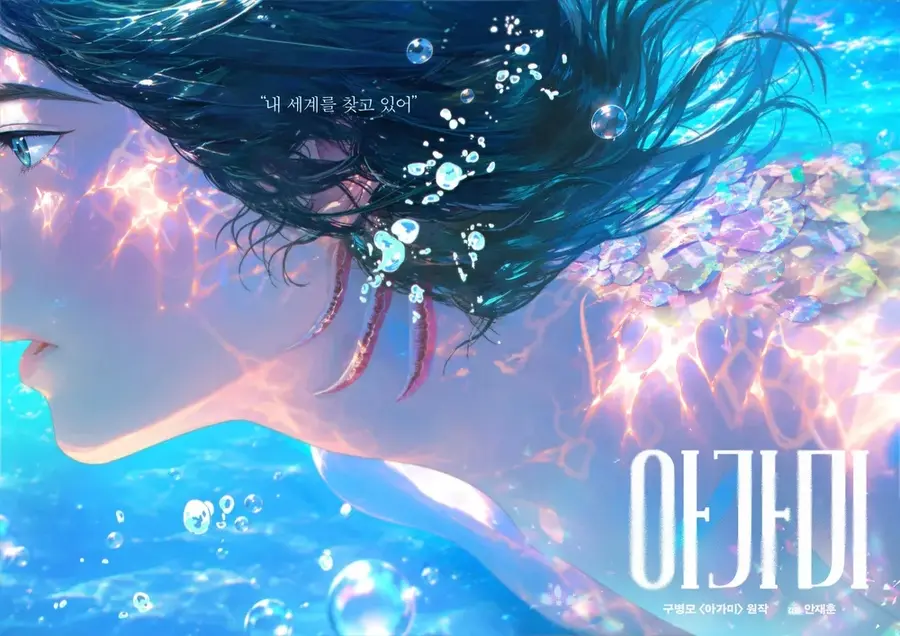
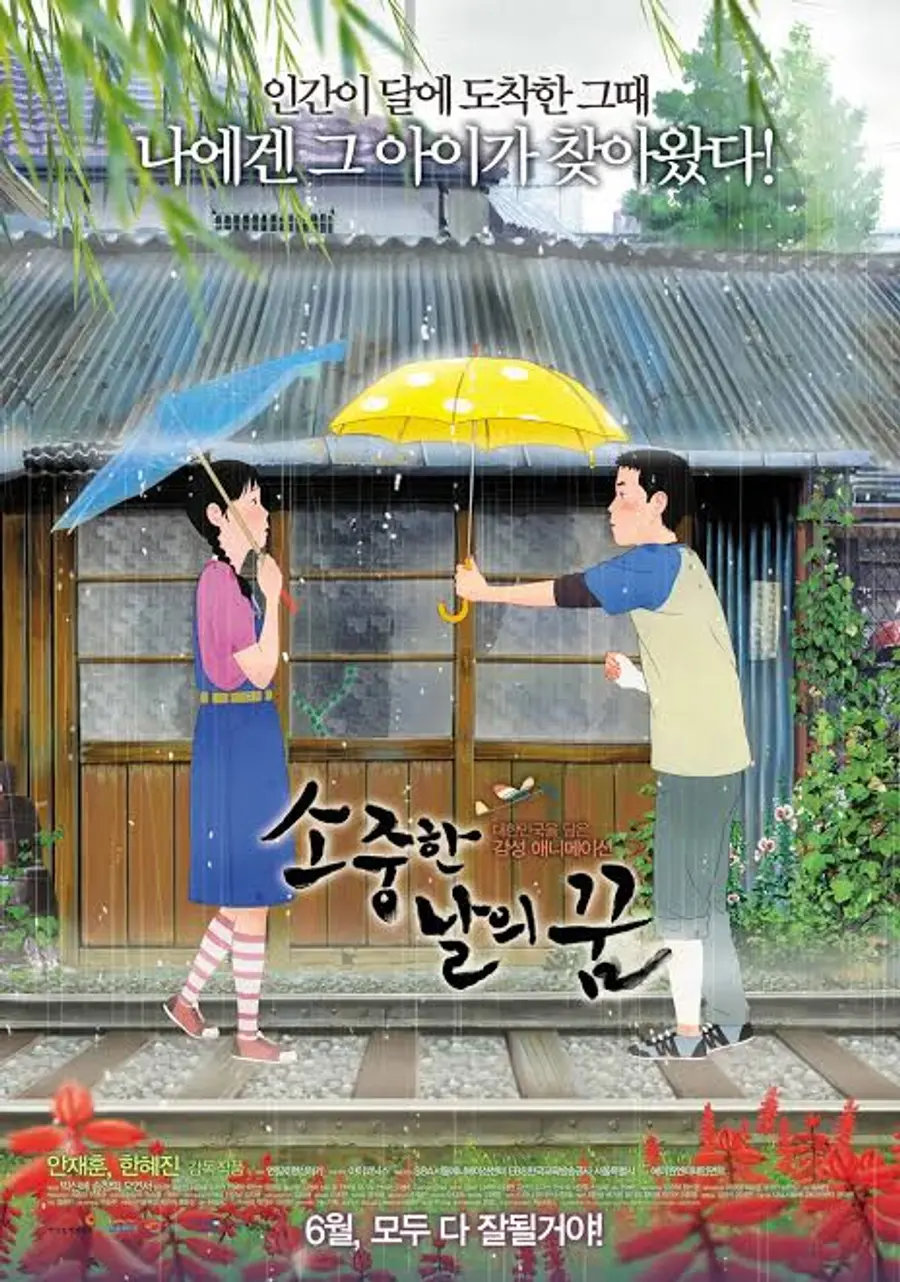
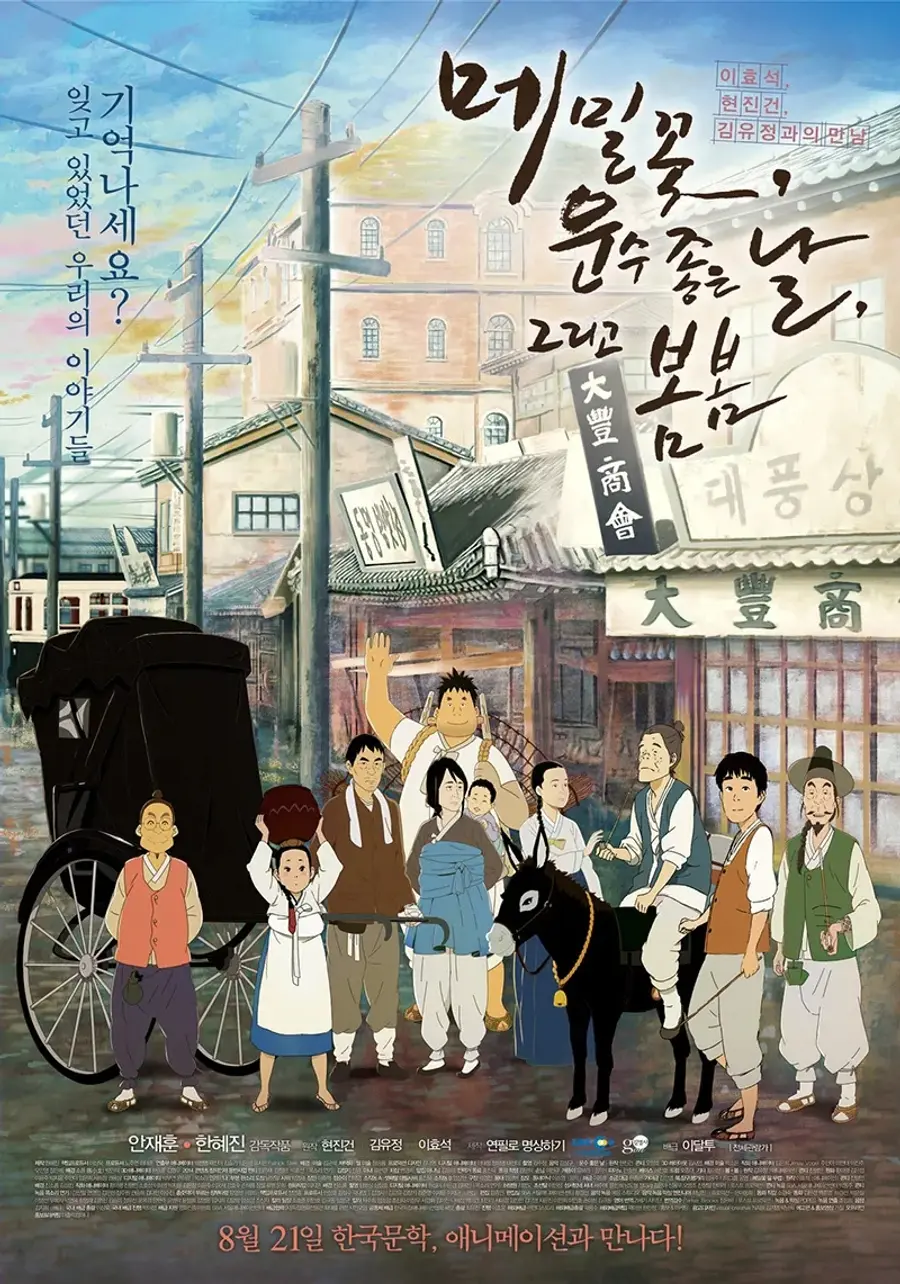
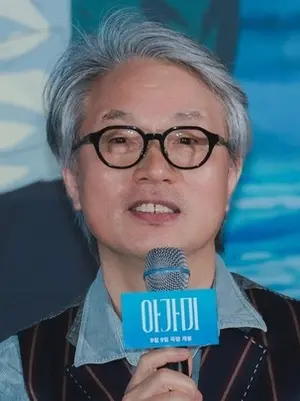
Director Ahn Jae-hoon says he turned to the skies and water in master paintings to shape the visual world of 〈Gills〉, his new animated adaptation of Gu Byeong-mo's novel 『Gills』. Ahn Jae-hoon, known for lyrical animation such as 〈Dream of a Precious Day〉 (2011), 〈Buckwheat Flowers, A Lucky Day, and Spring, Spring〉 (2014) and 〈Munyeodo〉 (2021), premiered the film at the 2024 Annecy International Animation Film Festival to a strong response; it has now reached a wide theatrical audience with voice performances by Jung Hae-in, Kang Ha-neul, Lee Chung-ah and Yoo Jae-myung. At Studio 'Meditating with a Pencil,' Ahn Jae-hoon discussed 〈Gills〉.
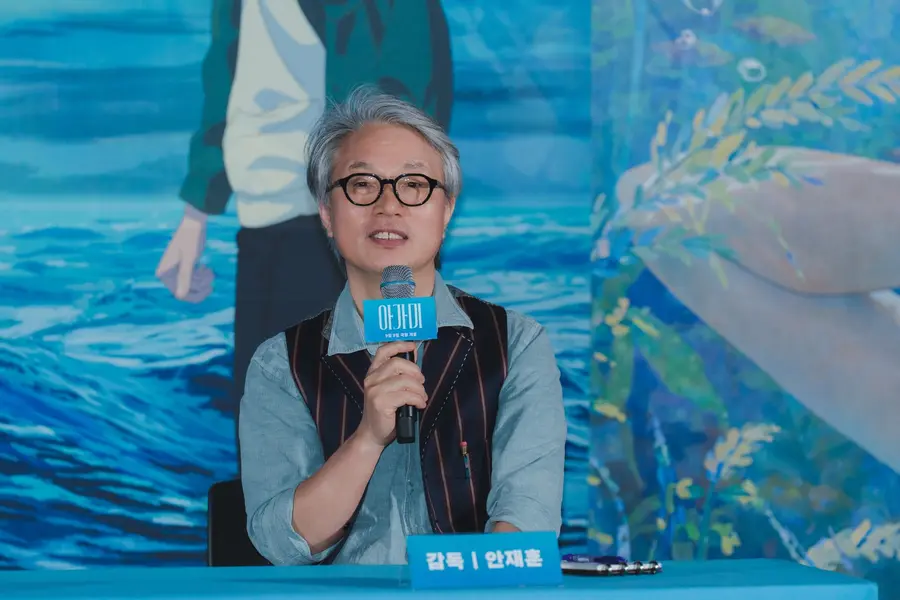
How did you come to adapt Gu Byeong-mo's novel 『Gills』? I understand someone on your staff first recommended it.
I had been working on another project called "Sal-aoreum: Cheonnyeon-ui Donghaeng" that I finished before 〈Gills〉, though it has not been released yet. As I wrapped that up, I found myself worrying about changes in production conditions and theaters and about my own stamina. At the same time, the collaboration with the staff I met then was so rewarding. I wasn't sure I could casually say it would be the last film, but I felt that if I worked with them I could part ways peacefully. Then one staff member suggested I read Gu Byeong-mo's 『Gills』. A good work lets you reflect on your own life and take something away from it, and even though the story was very different from my life, I really liked it. After reading it, we half-joked that it would make a great animation, and gradually I began to feel this might help heal wounds I had given others and wounds others had given me.
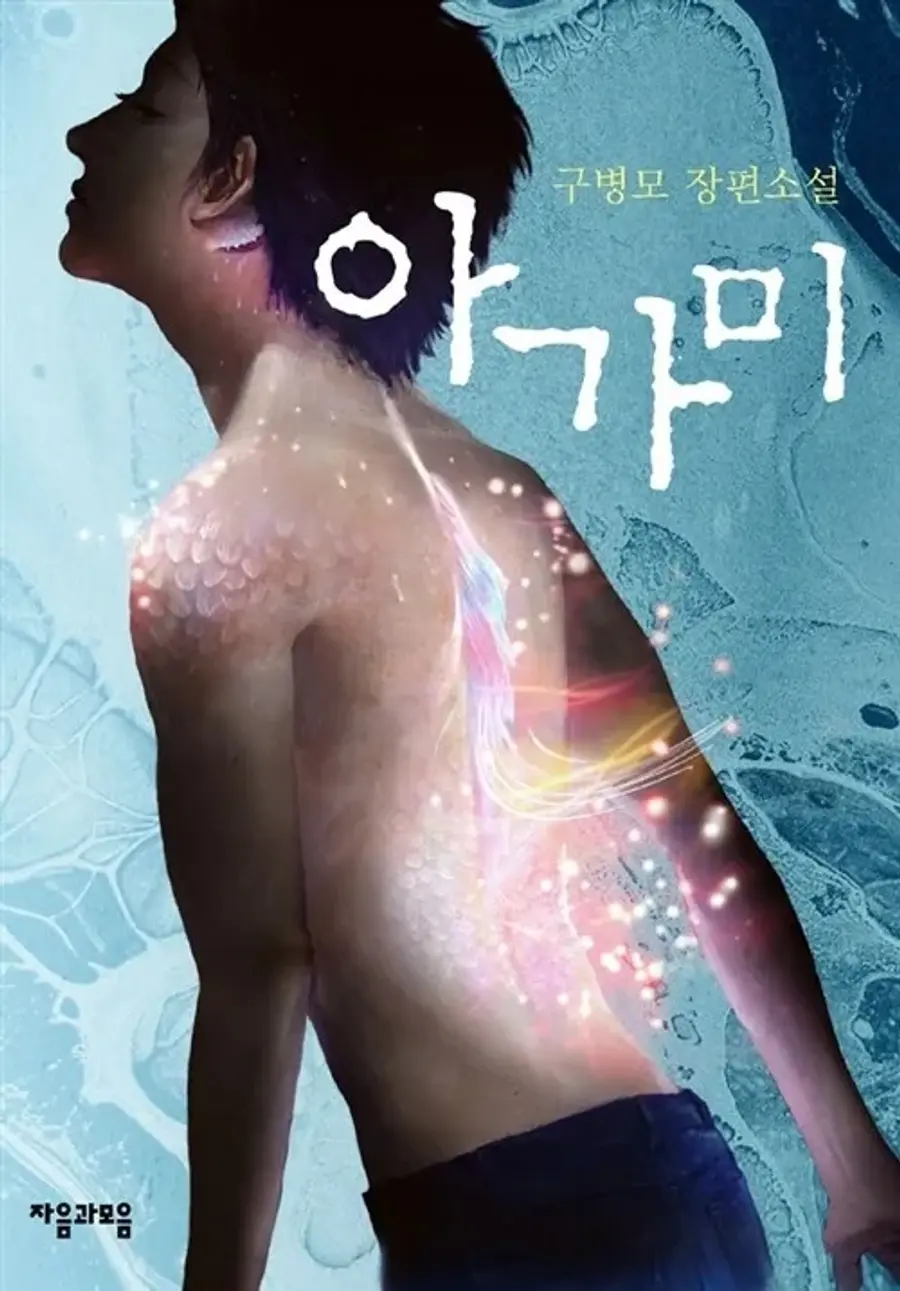
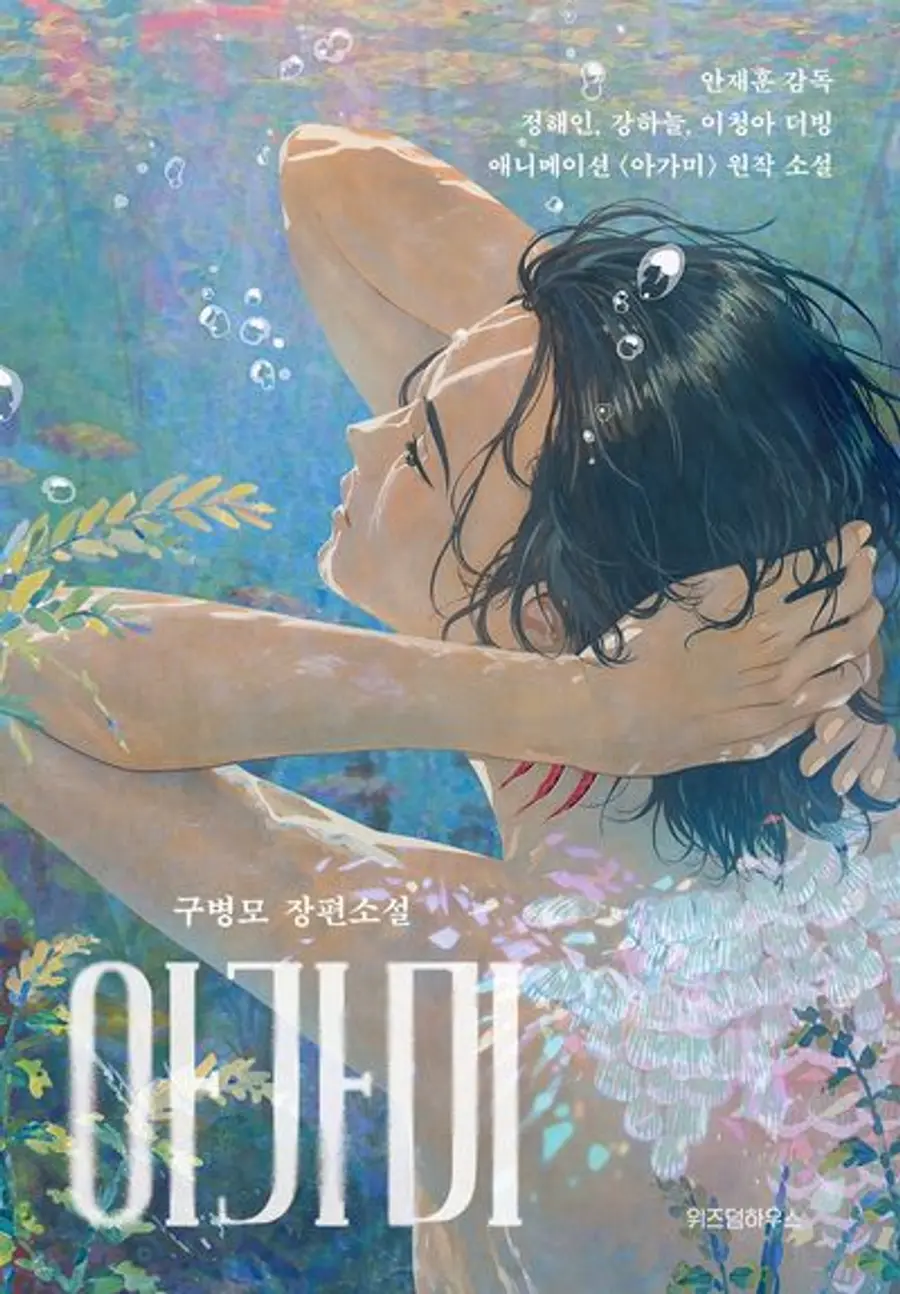
One of the biggest differences from the original is that the film is set in France. Your earlier works were set in Korea or based on Korean literature, so that move must have felt especially striking.
Gu Byeong-mo's sentences are astonishing. His choice of adjectives, nouns and verbs to describe situations is so excellent that I had to start by asking how to translate those lines into animated characters, backgrounds and props—after all, in a novel those are the sentences. The novel depicts the pains of a Korean regional community and traces of poverty; I felt I could draw that convincingly, but a part of me kept sensing something was off. I worried that portraying poverty in animation could stop at mere objectification, so while staying true to the story I looked for ways to add fantastical elements. I thought it would be better if the setting were Korea without a clear period, then I kept wondering how I would draw Europe—Japanese animators draw Europe so well—and that led me to move the background outright to France. I began work on 〈Gills〉 during the COVID period and couldn't do on-site research, so I paid people studying film abroad to send landscape photos.
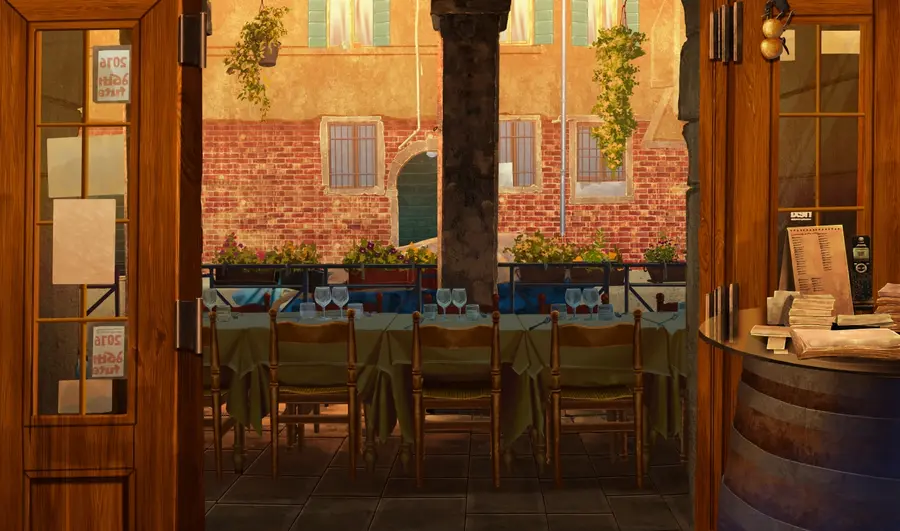
The Parisian landscapes felt so vivid that I assumed you had traveled there yourself.
If I had gone, other things might have emerged. Everyone who sent photos was studying film, and each one captured the city from their own perspective. Their images were so good that I thought it would be great to reproduce the spaces they felt connected to. One person even sent pictures of their studio apartment. The cafe where Kang-ha and Hae-ryu meet—the owner said they wanted to see work by anyone planning to make an animation of the space, so I sent our materials. After looking through everything, the owner even wrote a letter thanking us for choosing their cafe and calling our studio's work beautiful and excellent.
Unlike the novel, which begins with Hae-ryu's voice, the film opens with Gon and his father falling into the water. The sudden slide into a world of death felt like it fit the film's universe better.
The version shown at festivals placed the scene of falling into the water at the very end. Early on I considered leaving it out entirely. I found it hard to accept that parents, who hold and control their child's life and death, would actually commit suicide; it made me uncomfortable to include the scene. But in the end, the scene needed to be there to make sense of the story. We initially pushed it to the back and tried to end the film that way, but when preparing the theatrical release we took notes from the distributor and staff and moved it forward. We also took care to render the Ippap tree described in that passage in the novel very beautifully.
What would you say is the main point where the film departs from the original?
The biggest change is the decision to set it in France, as I mentioned. Beyond that, I tried to preserve the original while fitting it into a 104-minute runtime. The line "People display happiness" was "People display unhappiness" in the original, which was published in 2011. But now we live in an age when people display happiness on Instagram. After changing it that way, displaying happiness sounded lonelier than displaying unhappiness. We also fleshed out I-nyeong's arc to give it more dimensionality and made I-nyeong's character more rounded than in the original.
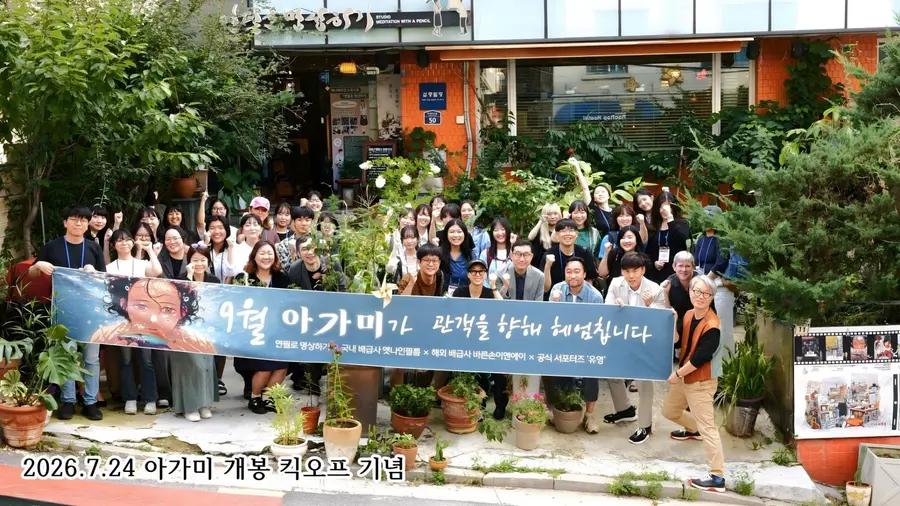
On my way from Myeong-dong Station to this interview (Studio 'Meditating with a Pencil' is near Myeong-dong Station), I found a hotel with a bathhouse the staff said you frequented during production of 〈Gills〉. (laughs)
After the Sewol ferry disaster, I had removed from my work any setup in which someone enters the water, but when I started 〈Gills〉 I felt I needed to confront that, so I went to that bath daily. Curiously, that hotel has only a men's bath. It seems to attract a few wealthy older men in the neighborhood, and usually it's empty. Being in the bath, I would think about what was going through Gon's mind, what it would be like under water—comfortable, perhaps, but also like someone's study—questions that helped me gradually shed my fear of water.
There are two close-ups of a bathroom drain. Is that an homage to Alfred Hitchcock's 〈Psycho〉 (1960)? Since your debut was 〈Hitchcock's A Day〉 (1998), it didn't feel like a coincidence.
Not intentionally. But it is hard to avoid influences you internalized long ago, even if you don't realize it. When you run out of fresh ideas and need to make a choice, something from your memory surfaces. Reading many books and studying great paintings when you're young seems to rescue you when you hit a wall.
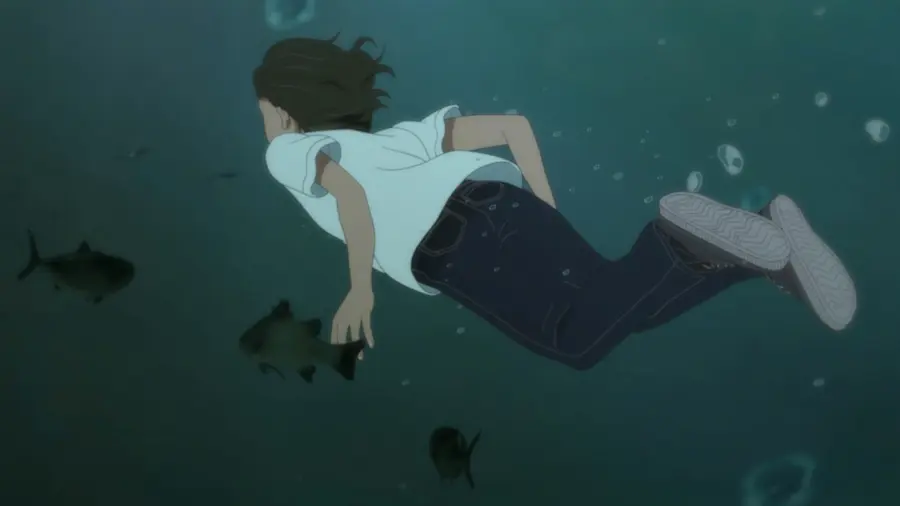
One of the most striking visual choices in 〈Gills〉 is that the water is not blue. We tend to default to a blue ideal of water, but it felt like a creator boldly moving beyond that expectation.
There was a time when the skies in Asian animation all seemed to look like Ghibli's, and after Makoto Shinkai arrived, they started to look like Shinkai skies instead. To avoid that and to create beautiful skies and water, I sent our staff only images of skies and water from master paintings.
Yet in the world of 〈Gills〉, the things that glitter are closer to pain than to beauty—the scales on Gon or the way I-nyeong is swept into past fantasies feel more like suffering than wonder.
Wounds, or the things people do not have, cannot really be helped by language, so I wanted the visual beauty of sparkle to register only as desire attached to one's own life. Useless sparkle. Scales and gills may glint, but they don't enable you to do anything.
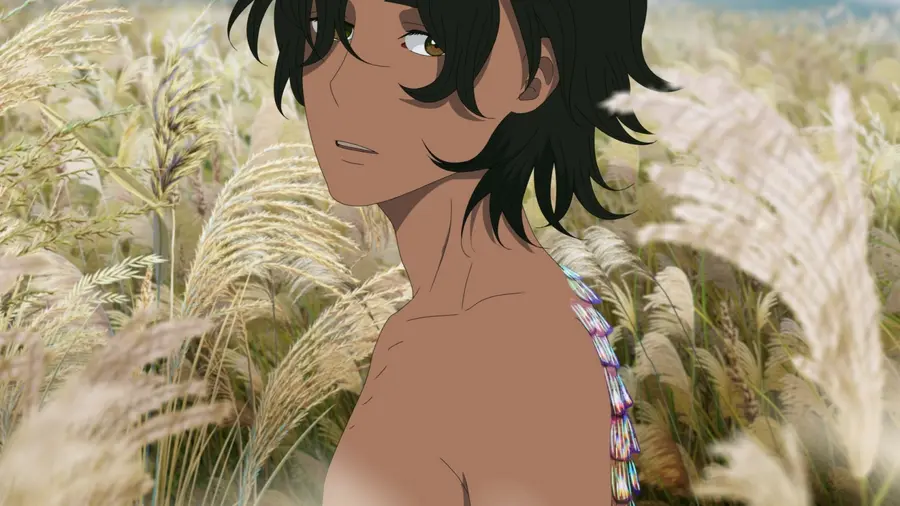
As striking as the murky water is, the film's use of varied light is equally impressive. You cover multiple time frames in 〈Gills〉, and you rendered the light differently for each.
I'm glad you noticed. In animation night scenes often lean blue, but we studied backgrounds from many master paintings and wanted to show new forms of night. At first we tried making the night scenes almost entirely black, leaving only silhouettes barely visible. But that felt too opaque. Darkness has many shades, so we introduced other colors and experimented with multiple kinds of night.
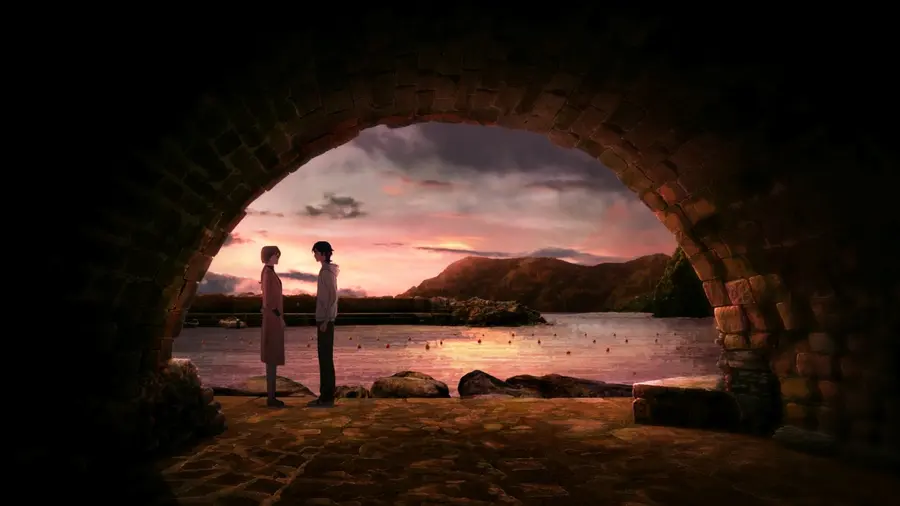
Which water sequences took the most work?
The waves. And it's one of those sequences you probably shouldn't do. (laughs) I was especially pleased with how the waves turned out when Hae-ryu goes into the water. Waves are harder than calm water because they affect people, and they have force, spray and many elements that make the animation challenging. There are also established techniques for drawing water, so we asked how to produce it while relying less on those conventions.
Why did you insist on casting well-known actors for the voices?
When a work has a clearly defined source text, I often work with voice actors to preserve the intentions the original author laid out. For 〈Gills〉, I told the voice actors at festivals we would use those voices there but had other plans for the theatrical release. Watching the festival version, even while keeping the original strong, something felt like the characters weren't coming fully alive. When casting actors, I pay close attention not only to voice quality but also to speech habits. Even when actors play different characters, they have habitual ways of speaking you can't fix in dubbing. So you need performers who can inherently solve those issues. In particular, many people are fond of Kang Ha-neul for his natural kindness, and I worried his baseline voice might sound too kind. But he layered his performance on a strong base, which fit Kang-ha's required duality very well.
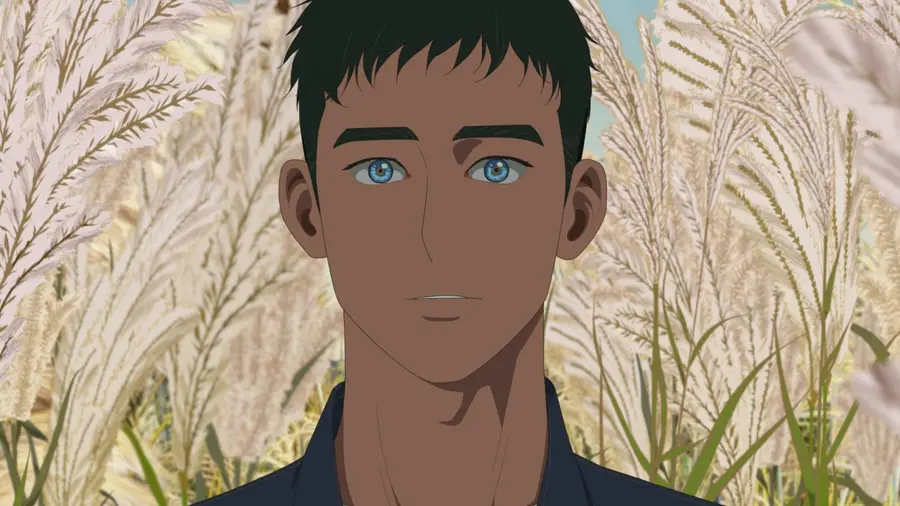
The studio name 'Meditating with a Pencil' feels all the more precious in an era awash in AI images. How do you perceive the growing influence of AI?
Uniquely—and thankfully—I began in cel animation. As we gradually adapted to digital workflows, AI has now arrived and I feel like we've lived through this whole era. I think it's great to use AI to assist production. Demanding traditional craftsmanship from a diverse, energetic younger staff is not suited to the times. If we focus on the value of using AI to handle basic labor-intensive tasks, it will greatly help creative work in Korea, and we feel fortunate AI exists. In terms of pencils, it feels like there's simply another pencil on the table with a different brand.
댓글 (0)
댓글 작성
댓글을 작성하려면 로그인이 필요합니다.
로그인하기