


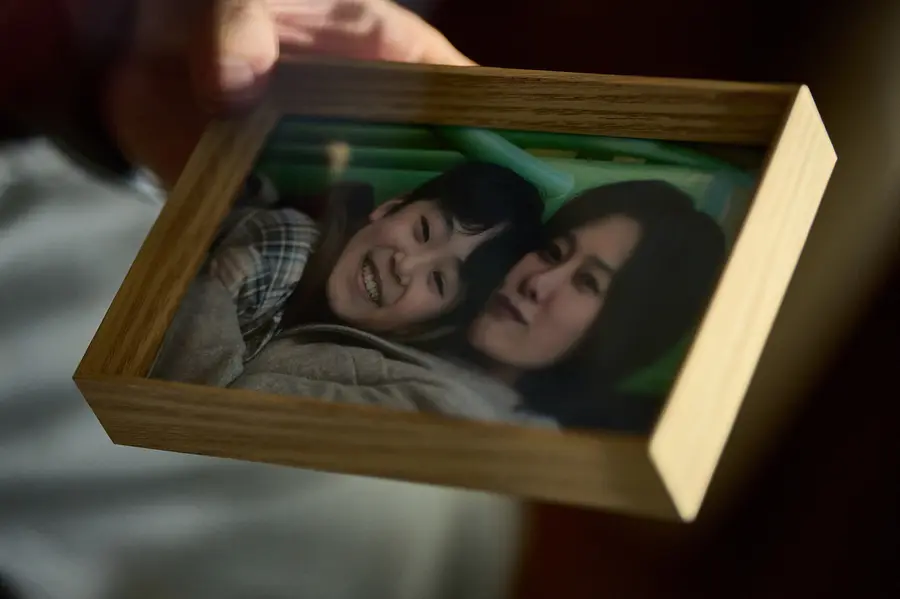
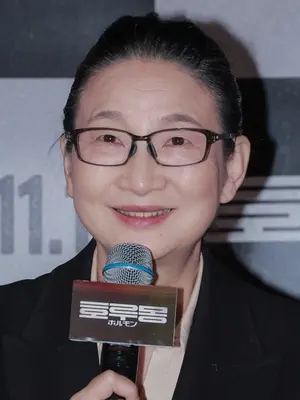
Director Yeon Sang-ho has found success again with a low-budget project following 〈The Ugly〉. His new film, 〈Paradise Lost〉, opened on October 21. The psychological thriller begins when Ryu Seon-woo (Bae Hyun-sung), a son thought to be dead, miraculously returns to his mother, Ryu So-young (Kim Hyun-joo). She lost him nine years earlier in a camping school bus disappearance. Despite a production budget of about 500 million won, the film drew more than 100,000 moviegoers in its opening weekend and recently passed 150,000 admissions in total. From a story written by the director’s mother to the depths of a woman unraveling as she faces both the son she recreated with AI and the real son who has returned after nine years, here is the story behind 〈Paradise Lost〉.
# A story that began with a piece written by Yeon Sang-ho’s mother
At a Toronto International Film Festival audience Q&A, Yeon revealed that the original idea for 〈Paradise Lost〉 came from something his mother had written herself. It began when, during a holiday visit, she handed her son a three-page story written in an exercise book. The original story was about a mother whose son did bad things in their village. Yeon bought the story directly from his mother and adapted it into the novel 「Black Inferno」, written by Oh Sung-eun, and the film 〈Paradise Lost〉. Yeon described the film as “a story that came out of trying to understand why my mother wrote something like this.”
# Why the title ‘Paradise Lost’?
〈Paradise Lost〉 is based on 「Black Inferno」, the novel Oh Sung-eun wrote from the original idea. Set in a mountain town near the Canadian border, the novel gave considerable weight to the investigators pursuing the case. When Yeon moved the setting to Korea and rewrote the screenplay, he stripped away much of the investigative plot and put the relationship between Ryu So-young and her son in its place.
The decision to bring back the son through AI was deliberate, too. “In an era when artificial intelligence is advancing rapidly, I thought deeply about what makes us human, and I wanted to explore the inner depths that only humans have,” Yeon said. “I needed a stark contrast between the son who seems perfect in her memory and the real son who comes back having grown up so differently from what she expected.”
The title comes from John Milton’s epic poem 「Paradise Lost」. Yeon explained: “Like that story of the first humans cast out of paradise, I thought losing paradise was the beginning of human identity. I chose the title because a person only gains an identity as a human being by acknowledging their own imperfection.”
# Kim Hyun-joo and Bae Hyun-sung kept their distance to play mother and son
From the start, Kim Hyun-joo was Yeon’s only choice to play Ryu So-young. He said it was an exceptionally difficult role: play her too forcefully and the performance would seem contrived; pull back too much and the audience might not pick up on what she was feeling. He wanted to entrust it to the actor he had come to trust most through his filmmaking work.
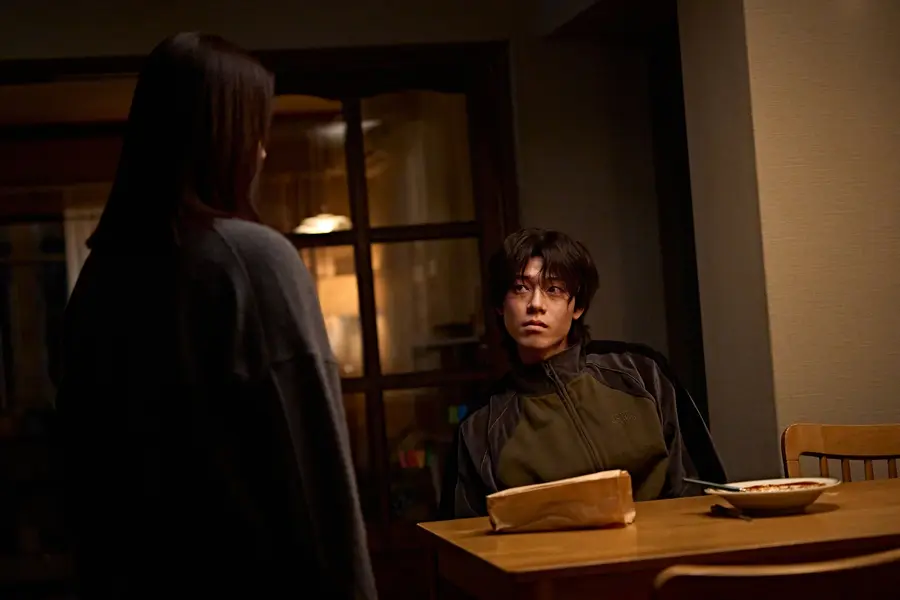
Bae Hyun-sung landed his first leading film role as Ryu Seon-woo, the unfamiliar son who returns after nine years, after a brief special appearance as Kim Shin-rok’s son in Season 2 of 〈Hellbound〉. “We worked together for about one episode, but his ability to immerse himself in the role was outstanding, and I was impressed by the way he interacted with the crew and other actors,” Yeon said. “Ryu Seon-woo had to be a mysterious figure with both an innocent side and a chilling one. I thought Bae Hyun-sung could show both.” He also called Bae “an actor with the skill to turn chilling in an instant.”
To create a sense of unfamiliarity between mother and son, the two actors deliberately kept their distance on set. They felt that making their interactions a little off-kilter and awkward, rather than relying on what came naturally to each of them, would look more realistic.
# Giving ‘Children of Paradise’ an analog feel
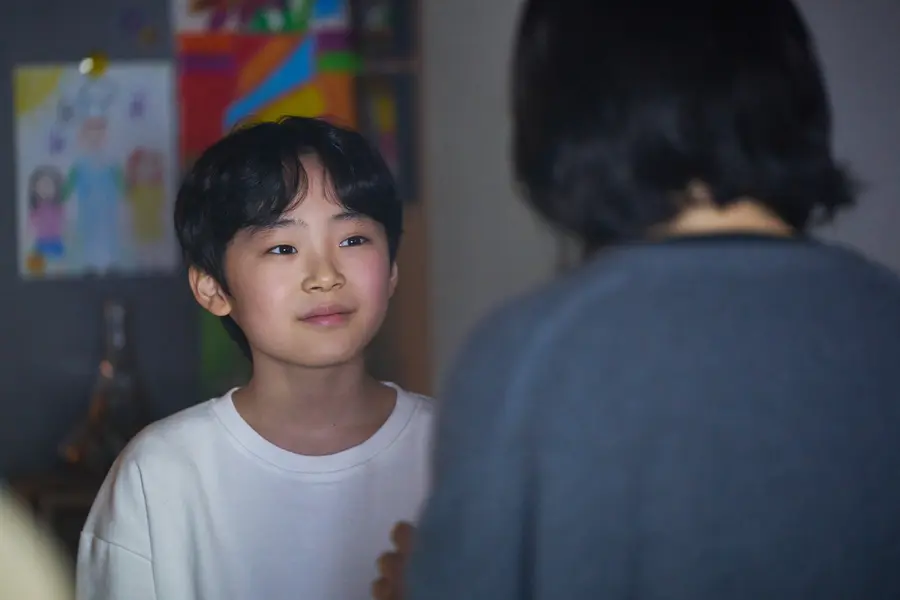
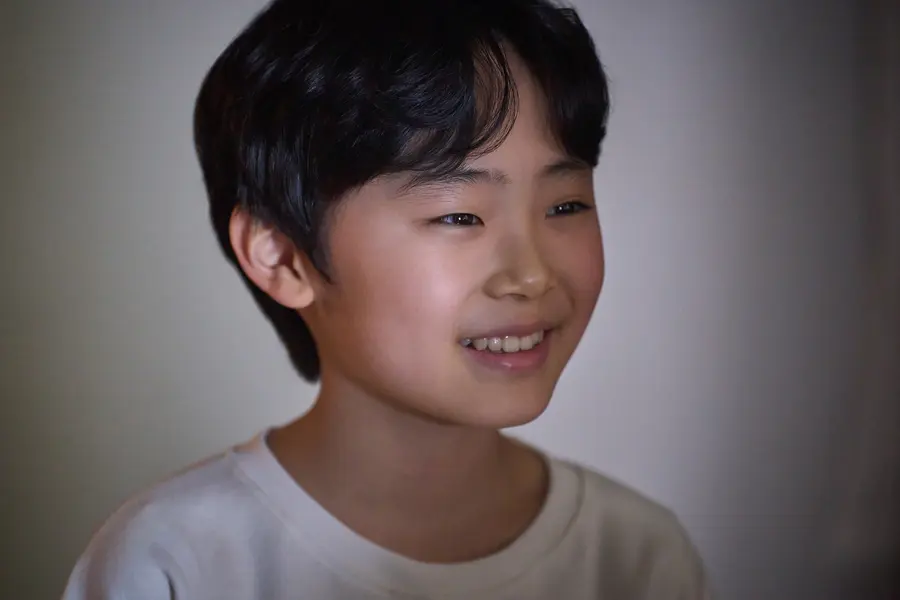
“Children of Paradise,” the AI program through which So-young meets the son she remembers at age 10, was designed to feel as emotionally evocative as possible. Yeon envisioned it as a physical manifestation of memories Ryu So-young cannot let go. He gave the glasses-like virtual reality device and its case an analog, nostalgic texture instead of a metallic finish. Virtual Seon-woo’s voice was treated to sound as though it came through bone-conduction speakers behind the glasses, signaling to the audience that, although he looks exactly like the real son, he is virtual. Subtle glitches in the “Children of Paradise” space, filled with colorful toys, made it feel warm yet somehow chilling.
Child actor Yoo Ji-wan, who played virtual Seon-woo, was not told to “act like AI,” either. Yeon said he thought Seon-woo in virtual reality should feel things just as they are and, if anything, appear more human. That, he explained, would heighten Ryu So-young’s confusion.
# A disused Samcheok mine, a Paju set and vintage lenses bring Musan to life
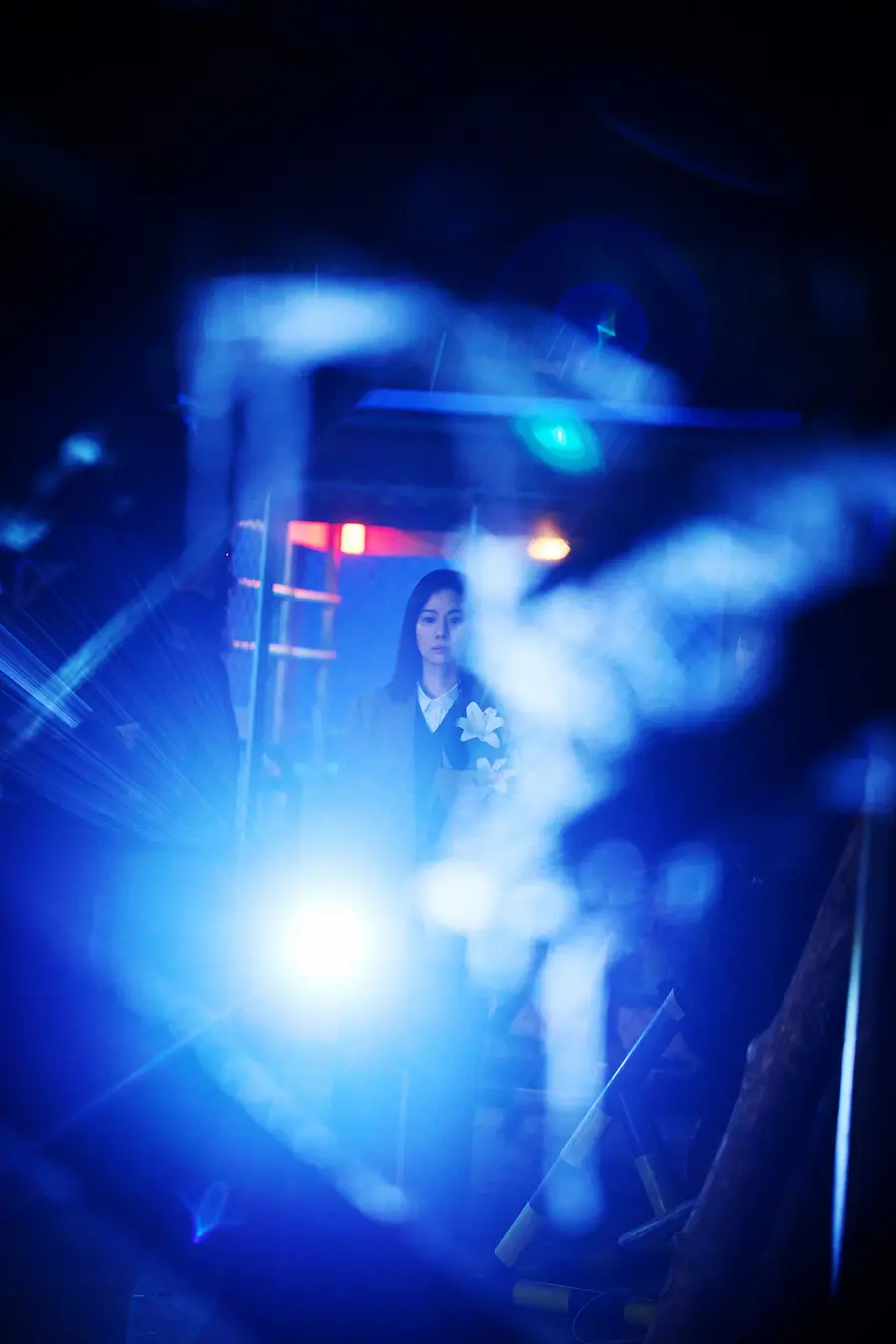
Musan, the setting of 〈Paradise Lost〉, is a fictional city that exists only in the film. Seeking the feel of a declining small city, the crew filmed across Seoul, Gyeonggi Province and Gangwon Province. They used real buildings and government offices for locations including Trans Human’s offices, Musan City Hall and the police station, and captured views of Musan by drone.
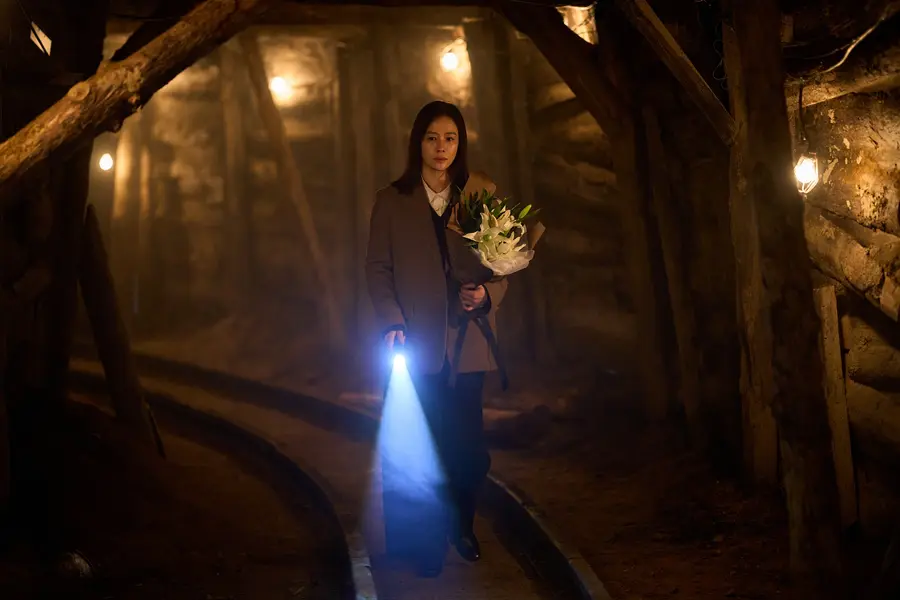
The abandoned coal mine where the story begins represents Ryu So-young’s inner world. Its exterior was filmed at the Dogye Mining Office in Samcheok, Gangwon Province. Because the interior was too narrow and dangerous for filming, it was built separately on a set in Paju, Gyeonggi Province. Instead of costly rock textures, the art team designed the tunnels with old scrap wood and dirt. A line of incandescent bulbs continued from the exterior location into the set, making the two spaces feel like one mine.
Cinematographer Song Hyun-seok chose vintage Nikon lenses, known for their natural colors and low contrast, to create images that look realistic but subtly askew. The camera moves close to the emotionally expressive So-young, while keeping the distant Seon-woo a step away in cold light.


댓글 (0)
댓글 작성
댓글을 작성하려면 로그인이 필요합니다.
로그인하기