


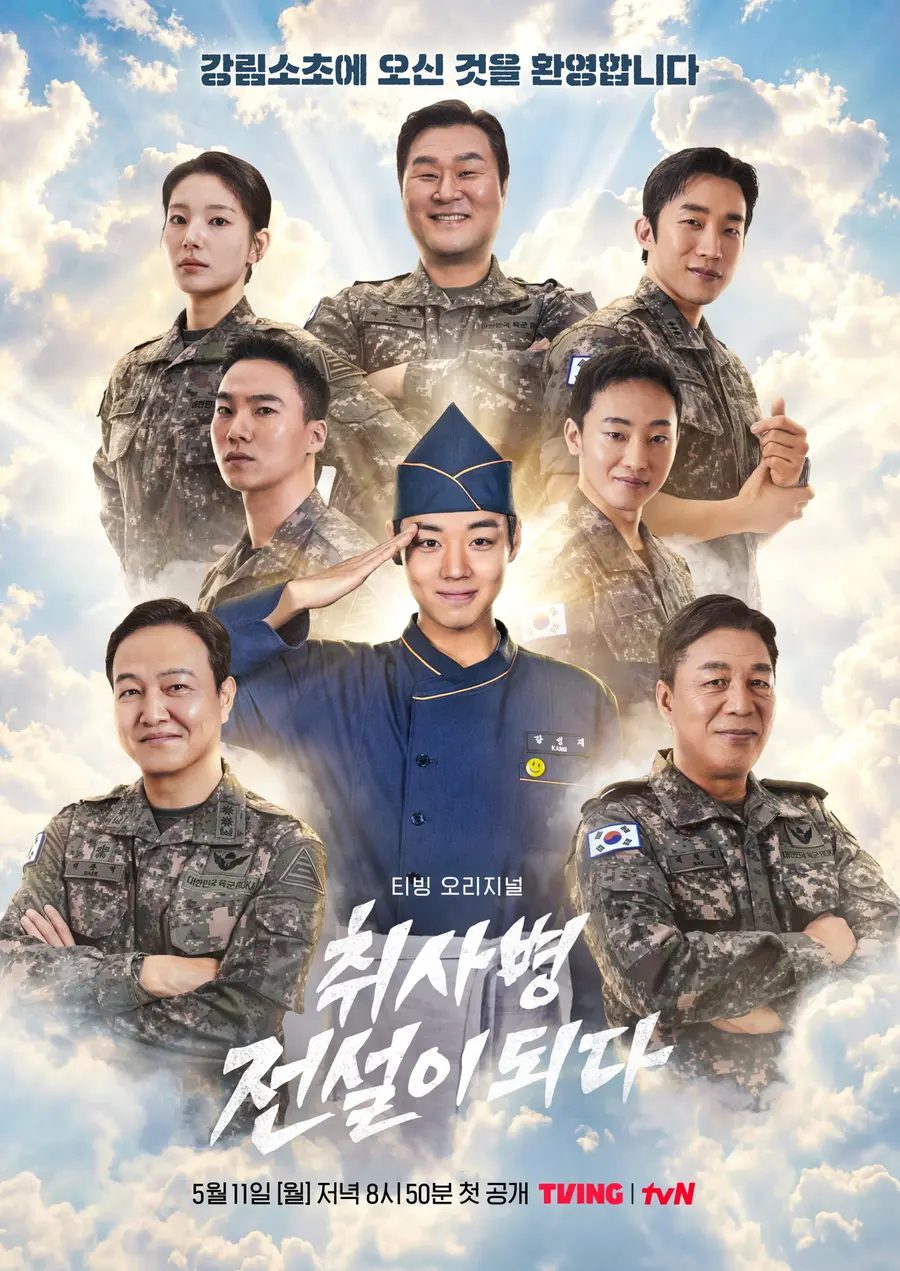
It’s the first time a drama has leaned so fully into what the show dubs “chwiral” (a newly coined blend of "kitchen soldier" and "crazy"). After a single spoonful of seaweed soup, a sudden "god of seaweed" stages a mock "creation of heaven and earth," and after tasting a multicolored rice ball an idol group called the "Mikak Boys" erupts into dance. The Tving original series 〈The Legend of Kitchen Soldier〉 (hereafter 〈Kitchen Soldier〉) commits fully to its outlandish imagination and barrage of parodies — and has posted strong ratings and buzz through eight episodes so far.
〈Kitchen Soldier〉 avoids many of the pitfalls military dramas often fall into. Rather than relying on uncomfortable jokes those shows sometimes force, Kitchen Soldier aims for harmless humor. Though set inside the closed world of the military, the series does not foreground humor built on authoritarianism, misogyny or gratuitous violence. Instead, it mixes fantasy and comedy around cooking, coming-of-age and camaraderie to produce something refreshingly different.
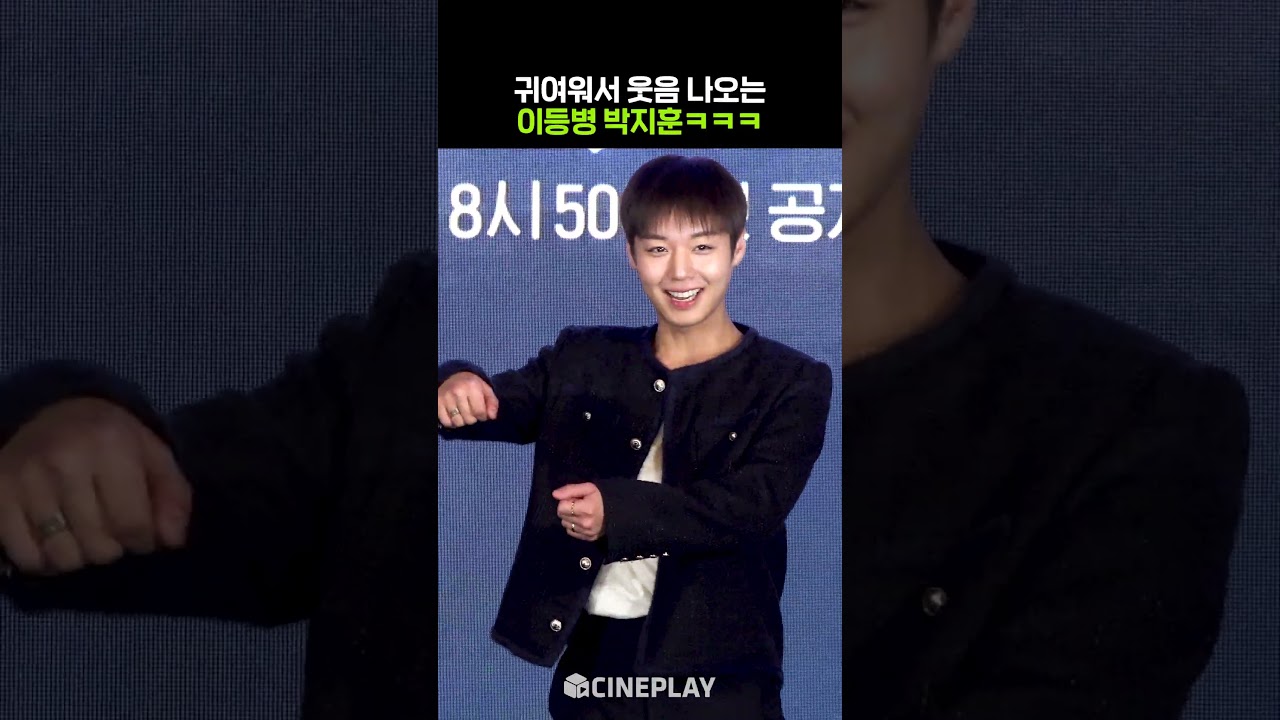
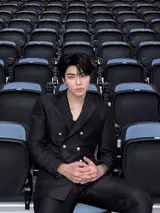
As co-star Lee Sang-yi put it, Park Ji-hoon is the axis of this "crazy drama" — the actor who also drew praise for his portrayal of Lee Hong-wi in the film 〈The Man Who Lives With the King〉. In 〈The Legend of Kitchen Soldier〉, Park Ji-hoon plays Kang Seong-jae. The role follows Seong-jae’s journey from a soldier under special watch to a legendary mess-hall cook, carrying both comedy and coming-of-age threads. On the 2nd, I met Park Ji-hoon — who calls himself a “beginner-to-intermediate actor” and is quietly walking his path — at a location in Jongno-gu, Seoul. Below is the full conversation.
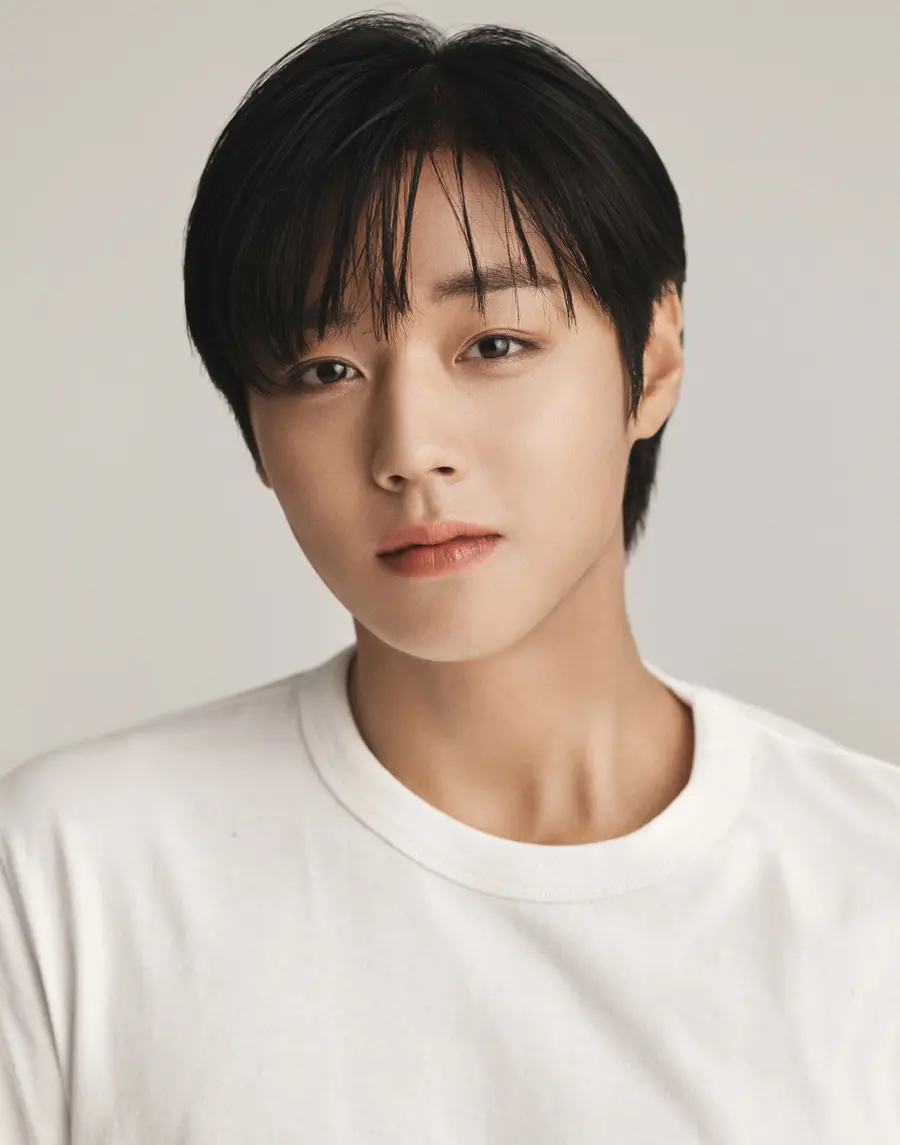
With both ratings and buzz running high for 〈Kitchen Soldier〉, people are praising the way your style of comedy has landed. What do you make of that response?
Was that phrase used? (laughs) I think what resonated with viewers was that I didn’t overdo things and kept the character’s center. Cute and comic at the same time. I wanted to create a character who would make people smile and think, "That’s kind of cute," rather than just broad comedy. I believe that’s what many people liked. I don’t think I acted in an over-the-top way. I did ad-libs and various experiments in situations that made sense for the character, and that’s probably why it landed as funny. The atmosphere on set was great, too.
How did you come to choose 〈Kitchen Soldier〉 as your next project?
I went into 〈Kitchen Soldier〉 right after finishing 〈The Man Who Lives With the King〉. The script itself was so much fun. The fantasy elements — the gestures into empty space and the way you handle sightlines — felt special for the character Seong-jae. As a person, Park Ji-hoon was very far from cooking; I didn’t even know the basics. I was curious how I’d look cooking and whether the role might spark an interest in cooking as a hobby. In reality, I actually got farther from cooking. (laughs) What I did gain, though, was a lot of improvement with knife skills.
As you said, you started without cooking knowledge. I imagine you prepared extensively to shoot 〈Kitchen Soldier〉.
Right after finishing 〈The Man Who Lives With the King〉, I attended a culinary school for about three to four months. The instructors taught the mechanics of cooking, so I learned how dishes like spicy pork stir-fry are actually made. They put me through a lot of knife practice, so my cutting skills really improved.
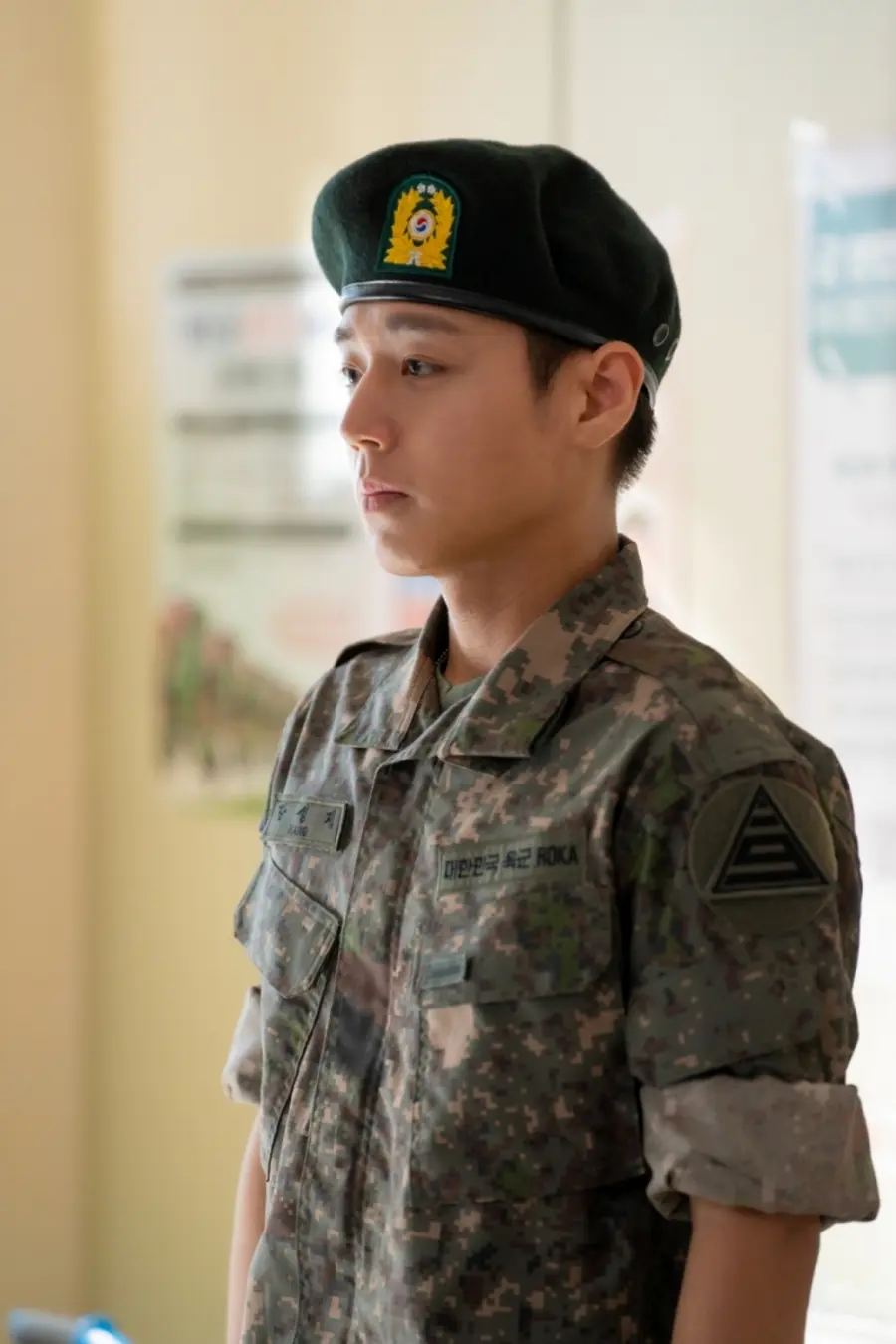
Seong-jae is a character who communicates with a "guardian" system that appears only to him. 〈Kitchen Soldier〉 is a show where you don’t really know how things will look until post-production. That must have made it hard to imagine many of the scenes just from the script.
To be honest, after reading the script I didn’t worry about that part too much. I felt strongly that we should just see and create on set. So I decided not to pre-build anything at home; on set I simulated the director’s desired blocking and sightlines. I wanted viewers to feel Seong-jae wasn’t staring at empty space but actually conversing, so I tried rolling my eyes a bit, or making slightly cute expressions while looking — little choices to avoid flatness. When I watched footage that had gone through post-production while doing ADR, it captured those expressions well, which was a relief. Early on it was hard to figure out how to talk to the guardian or how to accept that presence, but because Seong-jae is a soldier under special watch and the early narrative was well established, the guardian-related elements became convincing.
The guardian’s voice is performed by voice actor Kim Sang-hyun, who also did system narration for League of Legends (LoL). I heard production worked hard to secure him. Did you actually perform while hearing that voice on set, and did it help your immersion?
We didn’t actually play the recorded voice on set, but his voice is so familiar that I imagined it while acting. Kim Sang-hyun came to the initial table read, and I honestly thought they were playing a recorded track — but he read it live. I wondered how they managed to get him, and from that point I remember going to set more excited.
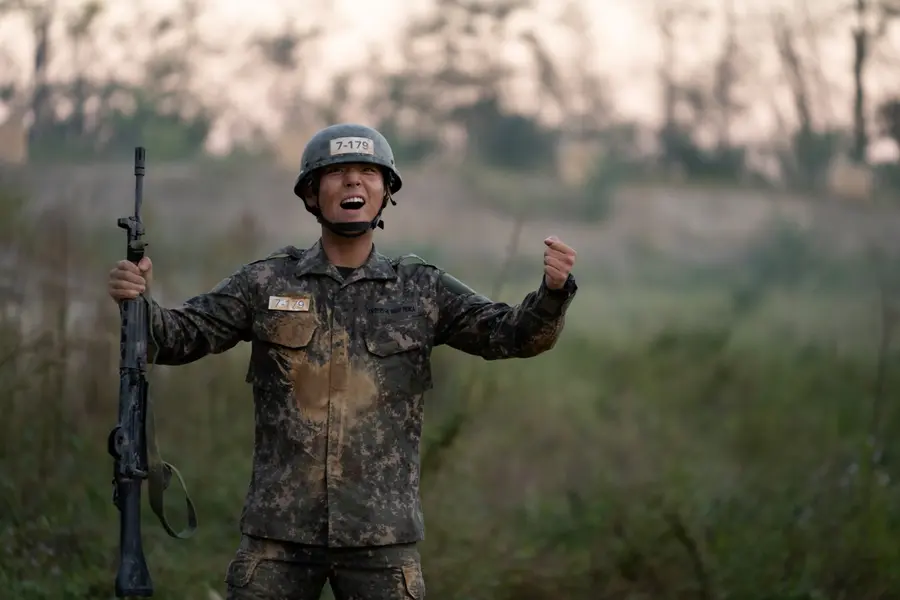
Seong-jae is bumbling but has resolve. How did you and the director shape the character of Kang Seong-jae?
They really cast me thinking of someone who hadn’t served in the military. So when I first came in, that pure private look — the "should I step forward or stay quiet" uncertainty — came through naturally. The director kept Seong-jae from becoming too lightweight or leaning only into comedy, so his center stayed grounded.
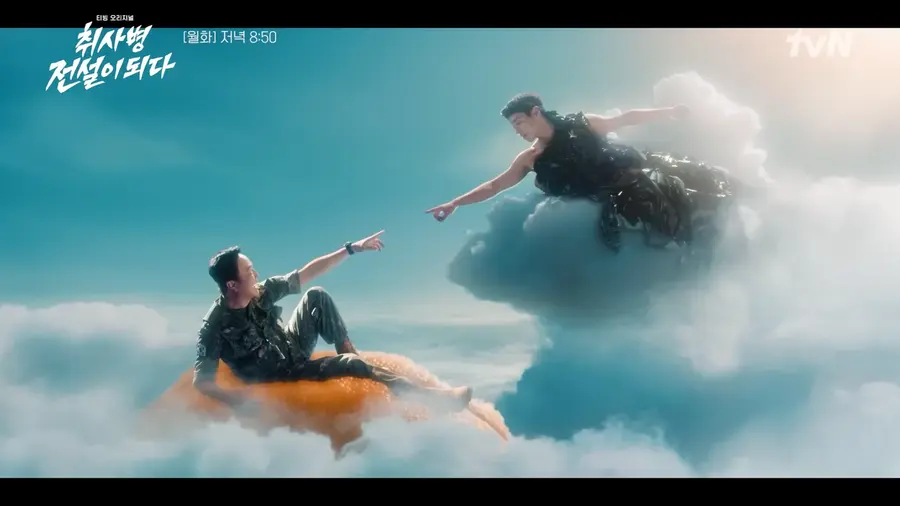
The show seems to produce a viral moment every episode — the "Namjoseon pork cutlet" rock scene, the seaweed outfit parody of the creation of heaven and earth, the appearance of the "Mikak Boys." Reading the script must have felt absurd at times.
The director staged everything exactly as he wanted, and I had no complaints — I just found it hugely fun. Those scenes lived fully, and working alongside such veteran actors meant we could just shoot more freely and have a great time on set.
Viewers have labeled some of the B-grade comedy moments — like playing a flute with a pork backbone or performing on an accordion — as "chwiral." While shooting them, did you ever have a reality check?
That accordion scene was totally unplanned. On set I asked, "Could you just play that one song?" and they played a waltz. So in the drama I end up doing what looks like a Russian folk dance inspired by that track, and the director kept the spontaneous moves I made. We shot those scenes in a pretty stripped-down state, but I didn’t really have a reality check because everyone on set burst out laughing and it was so much fun. So I don’t think I had a reality check at all.
Did the strong reactions and good responses ever make you think, "I want to push further here, pull even more laughs"?
There was a chicken-coop scene with Sergeant Yoon Dong-hyun (actor Lee Hong-nae), and everyone enjoyed it so much I thought, "Should I go a bit further here?" Seong-jae hadn’t faced such a terrifying moment before, so on set I shouted so much that there was even a take where I almost threw up — that got edited out. A lot of moments were built on set like that.
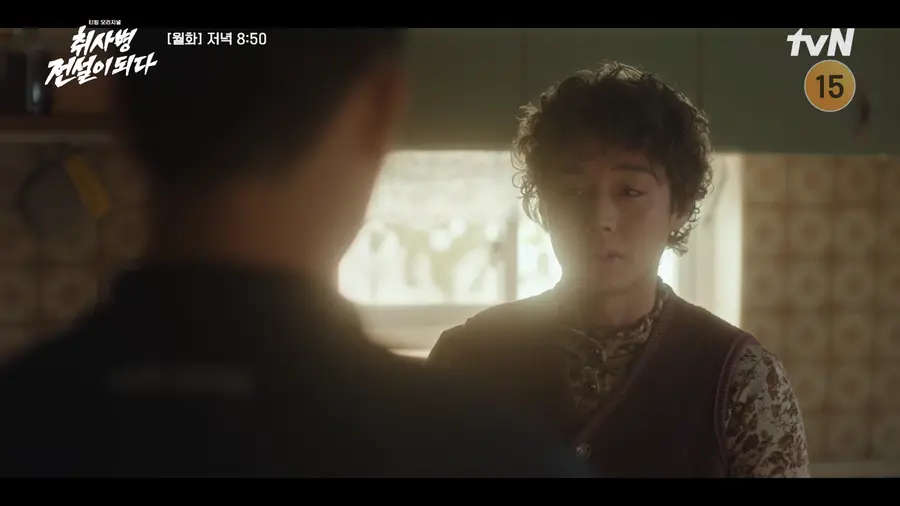
The scene in episode 7 with Corporal Kim Gwan-chul (actor Kang Ha-gyeong) was both funny and moving. As Gwan-chul recalls his grandmother’s hamburger and his emotion rises, Park Ji-hoon appears in makeup as the grandmother. It was a rare mix of comedy, sadness and emotion — what was it like filming that scene?
On screen it reads as a very funny bit, but for me it was a scene I worried about a lot. It’s an emotional moment tied to Gwan-chul’s grandmother. Before shooting, the director asked if I could play the grandmother role, and I said, "Me?" (laughs). I could do it, but the script only says "Kwan-chul eats and cries," and I was cautious — I wondered, "Would he really cry looking at my face?" On set it was very quiet. I tried to commit fully and give energy, and afterward Gwan-chul actually thanked me, saying, "I cried because of you."
The series is full of homages and parodies. Some were scripted, but I heard many were created on set. Any ad-libs or on-set ideas that stand out in your memory?
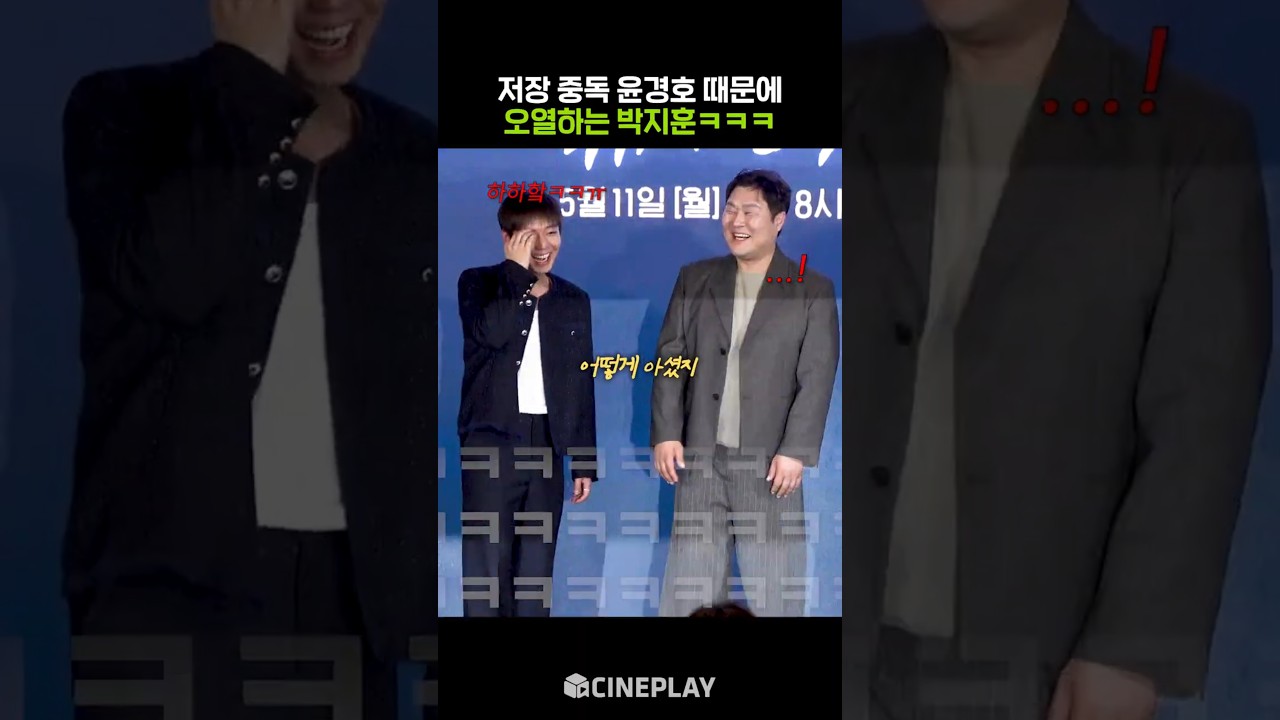
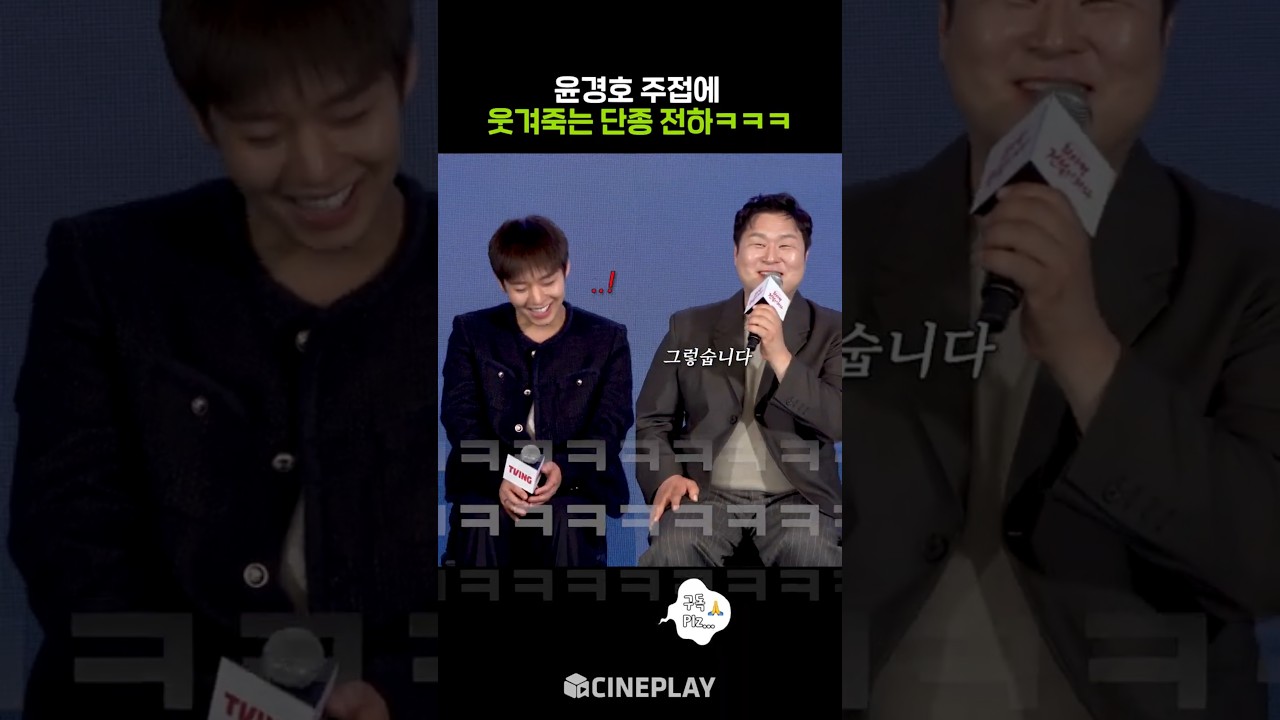
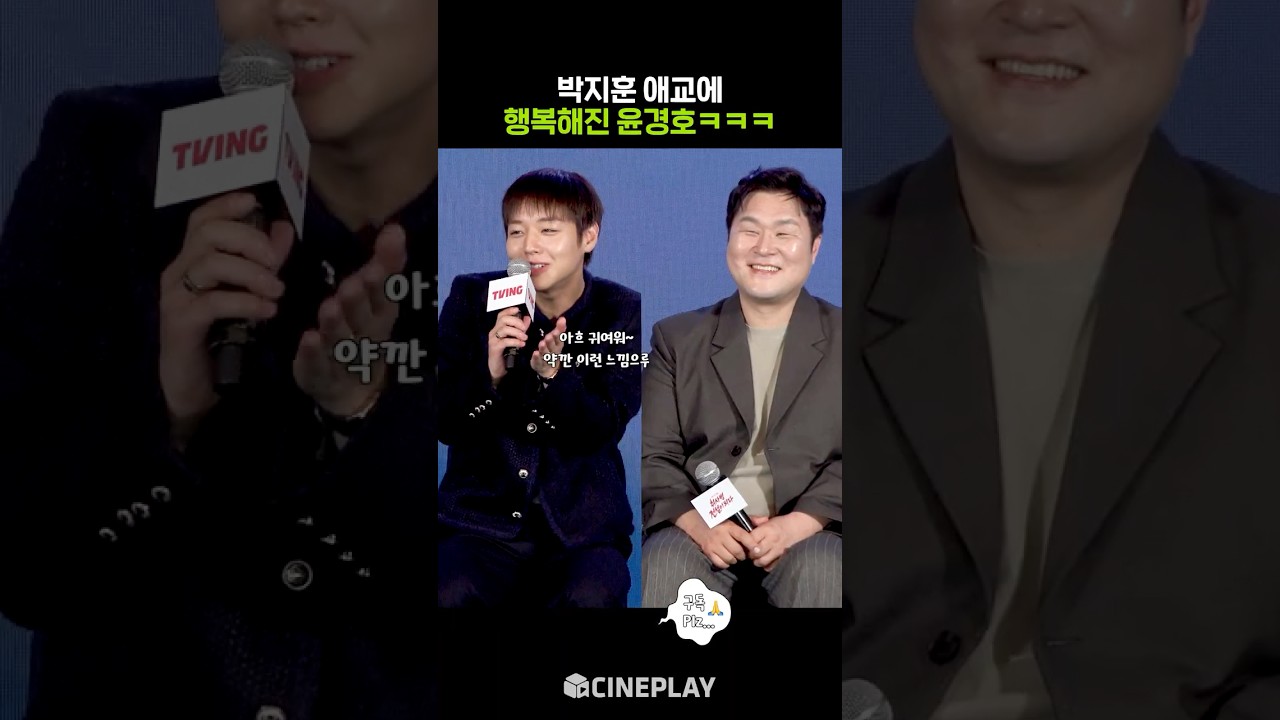
There were so many script additions it’s hard to remember them all. Senior actor Yoon Kyung-ho gave an idea on set: in episode 7 he wears a blindfold like 〈The Black-and-White Chef〉 while I hand him a hamburger — that was created on set.
The sequence that paid homage to the film 〈The Face Reader〉 also drew attention. Was that idea born on set, too?
That was actually in the script, but when I recorded the narration I thought it would be fun to give it a more historical-drama tone, so I recorded it that way. I had a clear image of how the shot would look: slow motion with the eyes, nose and mouth visible, so I recorded the narration to match that image.
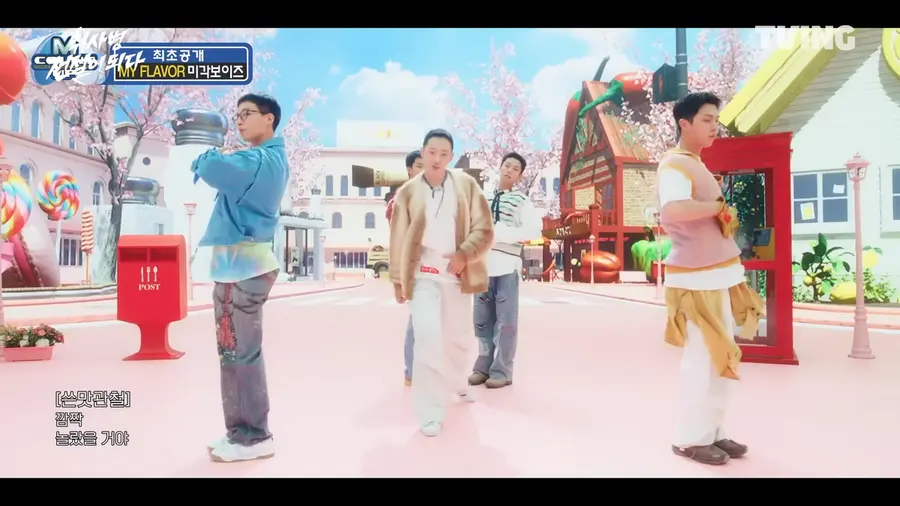
The in-show performance by the "Mikak Boys" has become a hot topic, dominating many viewers’ algorithms and even spawning individual member fancams. You’re an idol senior yourself — what did you think watching the Mikak Boys’ stage?
I didn’t really think of myself as a senior. (laughs) I just thought how hard it must have been. They are actors, but they learned choreography and everything was new to them. I wasn’t on set that day, but when I later saw the footage they danced and lip-synced on a set that looked like a real music-video stage. Their expressions were all excellent — they were so good I had nothing to add. (laughs)
※〈The Legend of Kitchen Soldier〉 actor Park Ji-hoon interview continues in Part 2.

댓글 (0)
댓글 작성
댓글을 작성하려면 로그인이 필요합니다.
로그인하기