



The film 〈KOKUHO〉 directed by Korean-Japanese director Lee Sang-il is on the verge of breaking the all-time highest box office record for live-action Japanese films. This work, based on the 'onnagata' of kabuki, attracted over 10 million viewers since its release in Japan last June, ranking second in the box office for live-action Japanese films.
At a screening held on the 13th at CGV Yongsan I-Park Mall in Seoul, Director Lee Sang-il shared in-depth insights about the core subject of the film, onnagata. 'Onnagata' refers to male actors who play female roles, a term that emerged when the Edo shogunate, which ruled Japan in the 17th century, banned women from performing in kabuki.
Director Lee Sang-il discussed the allure of onnagata, stating that while it may appear grotesque for men to portray women, there is a unique mystique that arises from the process of training oneself for art over 50 to 60 years, expressing a desire to understand how such elements emerge. He recalled that he became interested in onnagata after encountering actual onnagata during the filming of the 2011 movie 〈Villain〉.
![Scene from the movie 〈KOKUHO〉 [Media Castle provided]](https://cdn.www.cineplay.co.kr/w900/q75/article-images/2025-11-14/c0b41379-dcfa-4632-b890-58b8dff2c287.jpg)
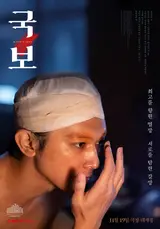
Based on the novel of the same name by Shuichi Yoshida, 〈KOKUHO〉 sheds light on the complex relationship between two onnagata actors who have devoted their lives to kabuki. Despite its three-hour running time, it received explosive responses from Japanese audiences.
The director expressed joy over the impressive reactions from Japanese audiences, stating, "They were captivated by the visual beauty and the power of sound, saying that three hours flew by in an instant, and there was an emotional impact that they did not feel when watching it at home." He also mentioned that an older audience member remarked, 'I went to the cinema for the first time in 20 years and it was worth it.'
Having had its first encounter with domestic audiences at the 30th Busan International Film Festival in September, 〈KOKUHO〉 is set for its official release on the 19th. The director is confident that this work, which has also been selected as Japan's representative for the International Feature Film category at next year's Academy Awards, contains elements that stimulate universal interest.
![Scene from the movie 〈KOKUHO〉 [Media Castle provided]](https://cdn.www.cineplay.co.kr/w900/q75/article-images/2025-11-14/9403c211-12b5-4aff-9651-d6c8c681abdf.jpg)
He explained that the deep shadows that accompany the light received by the actors, and the lives of those who live for art, are subjects that can resonate anywhere. He emphasized that especially for Korean audiences, the structure of conflict between those who inherit through bloodlines and outsiders will resonate more deeply.
The director added that this structure of the film resonates with his own identity as a Korean-Japanese. He expressed hope that Korean audiences would better feel this overlap of elements he has had since birth, which includes the structure of bloodlines and outsiders.
The kabuki performance scenes in the film serve as a key highlight. The director stated that he aimed to convey not just simple acting scenes through close-ups of the actors, but also the emotions they harbor in their private lives, the pressure they feel, and the joy of being on stage. He also mentioned wanting to show the audience what kind of scenery they see on stage.
![Scene from the movie 〈KOKUHO〉 [Media Castle provided]](https://cdn.www.cineplay.co.kr/w900/q75/article-images/2025-11-14/fd33e67f-cf1d-47ca-a665-6e69ce193593.jpg)
The contrasting images of eyes and blood are also a major visual device in the work. The director explained that white snow symbolizes a state of nothingness that covers death and everything, while blood signifies the color of life.
Director Lee Sang-il expressed his aspiration to create works that purify negative emotions as an artist. He confessed that while he sometimes harbors jealousy and malice while working in the industry, witnessing incredibly beautiful works moves him and purifies his inner negative emotions. Therefore, he conveyed his desire to continue creating such works.













댓글 (0)
댓글 작성
댓글을 작성하려면 로그인이 필요합니다.
로그인하기