


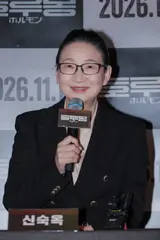
※ This interview with human rights activist Shin Sugok of 〈Horoomon〉 continues from Part 2.
You have said, “I hope the next generation gets a free ride in a world without discrimination,” but you have also told them, “I'm sorry.”
Because those who came before me went through so much, I can push back and fight, even in Japan. It was so hard. They had it harder, but it was hard for me, too. (Laughs) So if the next generation can have fun without suffering, if they can live energetic, happy lives with dreams, even as Koreans born in Japan, then I win. I won! But when I look at the next generation, all I say is, “I'm sorry.” I feel so sorry. There's that song, too. The one by Taeyang. (Sings Taeyang's “Eyes, Nose, Lips”) “I'm sorry, I'm sorry, I'm sorry.” (Everyone laughs) If we have power, we can live with dignity. We can't just tell fourth-generation Koreans in Japan to “be strong.” That's our generation's story. Instead, we have to change the society that discriminates against them. We can't say, “Be strong,” just because society is like this. In my own way, even if I'm weak, I have to do something, anything. A society where people can live as themselves. As adults, we have to pass on (that kind of society). If you become an adult at 20, I've been an adult for more than 40 years. How embarrassing is that? (Laughs) I think human beings are creatures who can help the next generation live a little more humanely, wage a little less war and share a little more. Even now, I often think, what if we had done this back then? What if we had tried a little harder at that? Because Japan is getting worse. It was only through the 1990s that we could say, “We're Koreans, whether Joseon or South Korean, so let's use our own names.” Since then, (that climate) has steadily deteriorated. There's no hope. Even young Japanese people have no hope, so if you're a minority there, you have even less.
Apart from your hopes for the next generation or the world, is there anything you personally want to achieve in the future?
No. People often ask me about marriage, but first of all, I don't need a man in my life. (Laughs) I really like children and animals, too. I love them. But why should I be confined within a framework created by the state? Wearing high heels, wearing a skirt when it's cold—why? And why can't you stand up to your boss, why can't you stand up to your boss? When I look at Korean women, I'm proud. But I know what kinds of lives Korean women led to get here. It's a Confucian country, so I know how much they suffered within that. I know how Korean women fought, and I love that. When the military dictatorship began in Myanmar, young people from Myanmar reportedly went to the Korean Embassy and asked in Korean, “Please help us.” They were turning to Korea's democracy. Even after getting through the colonial era, Korea went through so many different events. White terror, terror by people of color, military dictatorship, the Gwangju incident, the April 3 incident, the IMF crisis and so on. The country has experienced so much. I think Korea won its democracy through tremendous hardship. I think it has reached a much higher level than when it was first established, and wherever I look around the world, I think Korea is the only country like that. Korea's challenge now is discrimination against women. It has to overcome this. Look at politics: men! Look at the economy: men! (Laughs) Women appear in the media and places like that, but they need to be the bosses, too. (Everyone laughs) So I don't know whether men can understand, but we need liberation. It may be hard for men, too, but they have to let go of that, and we have to become a country where people can live as themselves. I think that may be the path our country should take. They say our land is small and we have relatively little capital, but we have people, ideas and philosophy here, and that gives us the ability to resolve human rights issues. When I look at our country, it's not as though I created it (laughs), but I feel truly proud. Watching young people fight, I feel that I'm following their lead. Japanese citizens are also seeing the light sticks at Korean protests and adopting them. I'm proud. I think Korea is at the forefront of women's rights, including in Asia. I'm following its lead. (Laughs)
You have used your Korean name since entering society and have kept your South Korean citizenship all along. What led you to choose your Korean name and nationality?
It's simple. In Japan, “Joseon person” is used more discriminatorily than “South Korean.” I experience discrimination. Even Koreans in Japan who don't like discrimination say, “I'm South Korean, not Joseon.” No, you're Joseon. What's wrong with that! That's what you should say. Because I face discrimination as a Joseon person, I didn't try to escape it. I have a Japanese name, Nakayama Setsuko, and I like that name myself. But the name Shin Sugok faces more oppression. They're both names I like, so why is only one oppressed? That's why I want to say, “I'm Shin Sugok. What's wrong with that?” I like myself. I like being a woman, I like that my shoe size is 25, I like all of it. When I entered a Japanese school, I ranked 244th out of 246 students. At the time, I thought there were two people dumber than me, but it turned out those two weren't attending school. (Everyone laughs) So I became even braver. I couldn't fall any further. I like myself. It's not about ethnic identity, patriotism or nationalism. I like people, and that's why I hate discrimination. If I'm eating and someone right in front of me can't eat, I can't eat either. If I'm full and someone beside me is hungry, I can't eat to my heart's content. Food tastes better when we eat together. So when people ask me about ethnic identity or things like that, I don't think I have it. I just hate discrimination. When I say I'm proud of Korea and see it as a model, that's not patriotism talking, either. Those who came before me and those who came after me have fought while living in this country. So even if it weren't Korea, if it were a country like this, I would have wanted to be that kind of person.
You said discrimination in Japan persists, but with Korean culture becoming popular, has there been any change in discrimination against Koreans among younger generations?
It's true that perceptions of Korea have changed. But that doesn't mean discrimination against Koreans in Japan has disappeared. Because dramas are entertaining, right? Ijime (bullying) is entertaining, right? Racial discrimination is entertaining, right? It's all a show, a consumer product. It's entertainment. It's entertainment just like Korean Wave entertainment. Politicians create racial discrimination. Politicians who have failed economically exploit racism. Politicians treat racism and discrimination as pieces they can place wherever they want. That's why we also have to dismantle racism in Korea very quickly. Whether it's discrimination or racism, it won't disappear unless politicians say, “This is unacceptable.”
You have been fighting steadily for a long time as a minority. Do you have your own tactics for fighting?
(Laughs) It's simple. Don't ask someone far removed from you to join you. Quickly join hands with someone you can reach even a little understanding with through conversation. That's how you win. Of course, there are times when you disagree. But if you agree on even 1%, you join hands. We tend to expect the people we join hands with to fulfill our hopes. You shouldn't do that. Don't have expectations; trust them. That person might be here and then go somewhere else, might lie or might go over to the enemy. All kinds of situations can arise. At those times, it's important to understand, “This is the phase that person is going through,” and keep believing in them, thinking, “Maybe they'll come back someday.” So I think lies are a weapon of the powerless. I think they betray people when things get hard. I don't think you should let that disappoint you. So don't have expectations. Join hands. Otherwise, you can't do it. Even within mainstream society, there are individual people who agree with you at least a little. Don't think of people in the mainstream as a single entity. Talk to them even a little, and you'll find a lot in their lives that you can understand. If you give up, it's over. And if you forget, it's over. It's OK to rest, as long as you don't forget. I don't think everything will be resolved in my generation. But if we try different things, we can move forward even 5 mm.
If you had to choose your favorite scene in 〈Horoomon〉, which would it be?
That's difficult. I like all of them. I even like the moments when I look vulnerable. Oh, but the scenes of me dancing... I'm too embarrassed. I can't talk about it, I can't. (Everyone laughs)
How would you like audiences to watch this film, and what changes do you hope it will bring?
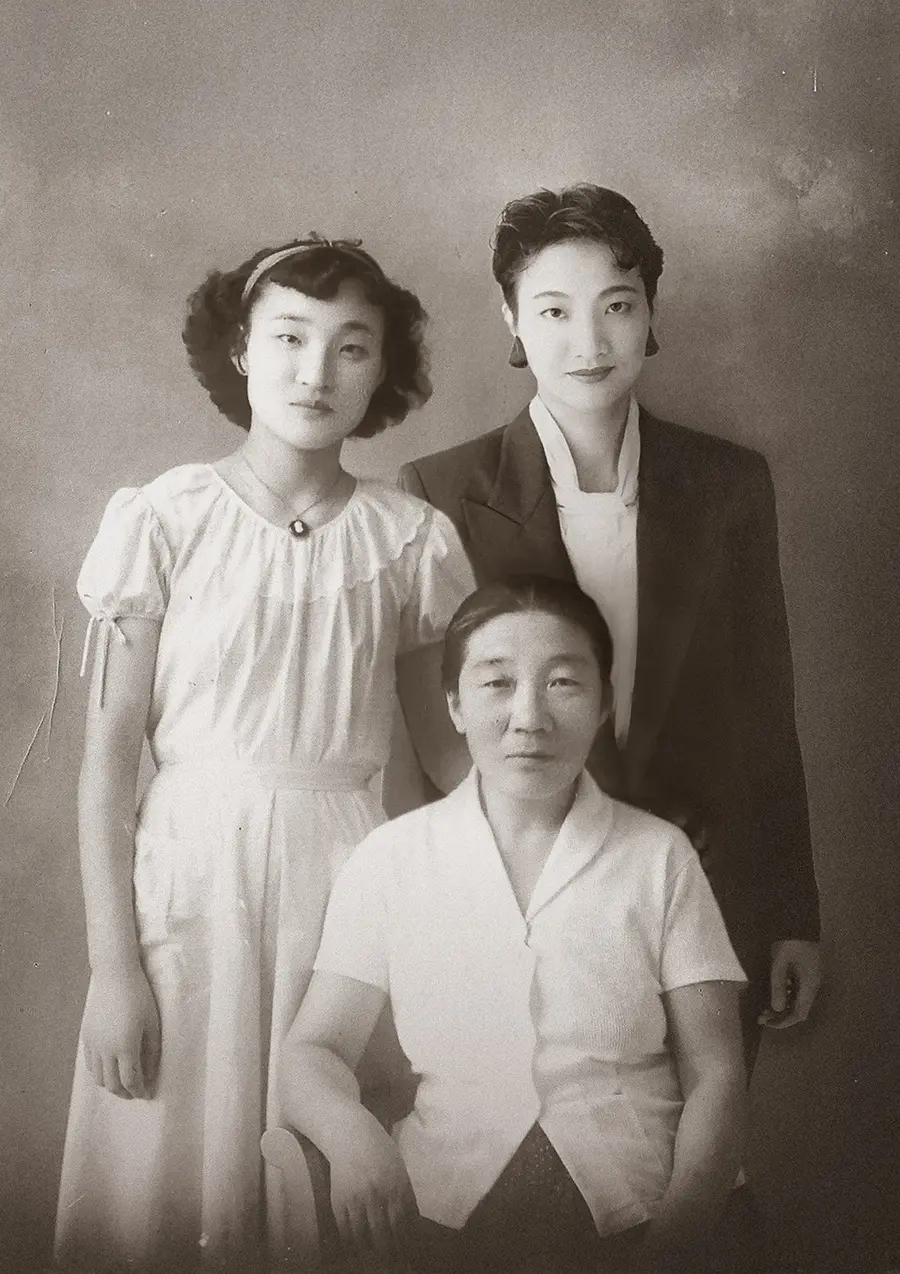
Since it is a story about three generations of women, I hope women in Korea won't face their many current worries and difficulties alone, but will ask for help. You're not alone. Don't go through that by yourself; ask someone for help. I don't think the hardships of being a woman arise because you're in Japan or because you're in Korea. I think there is a lot of overlap. So I hope they won't despair. And 〈Horoomon〉 brings up so many different emotions, but among them, I felt so, so glad we had worked hard to film it. Once, when it screened in the United States, an American audience member gave us this comment: “It's just like our history.” It turned out that “our history” meant the history of immigration. Korean Americans watched our film and told us it was exactly like their own immigration history. That made me think, “We could build solidarity after all,” and it felt wonderful.
Finally, is there a moment of victory you would like to share?
I was so tough as a child. Even Japanese boys followed me around. I played a game called “playing Korean” with my Japanese friends. “We're going to start playing Korean now. You're Park, you're Kim, you're Lee!” We gave everyone Korean names and played. Then if one of the Japanese students with a nasty personality said, “Setchan (a nickname for Setsuko, Shin Sugok's Japanese name), give me a Japanese name, too,” I'd say, “You have a nasty personality, so you're Japanese!” (Everyone laughs) When I went to a Japanese middle school, I had school lunches for the first time. All the girls left food on their plates. I was really surprised. When I asked, they gave all kinds of reasons, but mostly it was because they were in front of the boys. So I got served last and ate a lot. Then the boy serving the food said, “You eat a lot because you're Korean.” The next time I was in charge of serving, I gave him a little and said, “You're a Japanese man, so you don't eat much, right?” They don't expect me to fight back. If I'm attacked, I attack, too. So I think the most important thing is not to put up with anything, however small. When all those little things pile up and grow this big, it becomes incredibly hard. Don't put up with it. Women in particular endure and endure and endure, living their lives watching the faces of their superiors, their fathers, their husbands and so on. Is that really what you want to do? What is your life for? There's an interesting finding from Japan: When people nearing death were asked whether they had any regrets, they reportedly said, “Not having lived as myself.” Living as yourself is incredibly difficult. What do I like? People have lived without thinking that way. So you have to discover how you want to live and what brings you the most joy. The promise of politics and society is to let people live as themselves. How do we make it possible for someone to live as themselves, whether they're a sexual minority, have a disability or are elderly? I think that's what politics and economics are about.
댓글 (0)
댓글 작성
댓글을 작성하려면 로그인이 필요합니다.
로그인하기