



Chuseok has arrived, and with it comes a wave of Korean releases vying for holiday audiences over the long break. A variety of movies are opening now, each hoping to capture viewers during the holiday. CinePLAY reporters previewed three titles that have drawn the most attention and anticipation. All three offer elements some viewers will find satisfying and others will find puzzling. Here’s where each film shines—and where it stumbles. We hope this piece helps audiences planning a theater visit.
〈The Intern〉
Release 2026.09.16
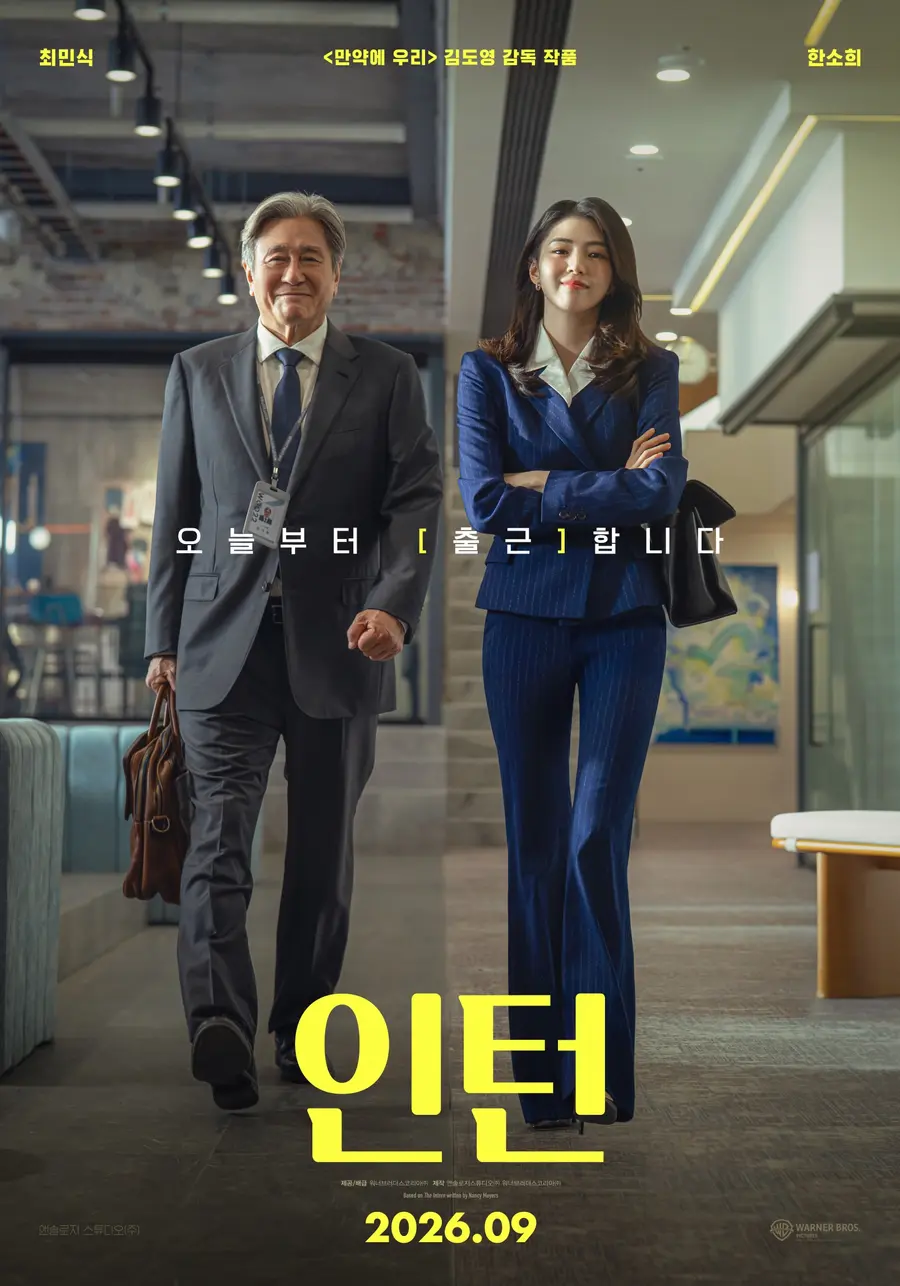
Pros Kim Ji-yeon_A fantasy that refuses to romanticize innovation
"Senior, do you want to exit now?" Sun-woo (Han So-hee) asks Yeong-hwan (Kim Jun-han), her co‑founder at the startup U2U2. Yeong-hwan does not deny it. After all, the dream of most startups is an exit. With that in mind, Yeong-hwan’s decision to bring Ki-ho (Choi Min-sik) into U2U2 as an intern was, in part, driven by tax advantages. The original film 〈The Intern〉 (2015) came out at a moment when “innovation” was being touted everywhere, and the movie reflected that zeitgeist. The 2015 film’s office design brings to mind the co‑working giant WeWork, which, at the time, was enjoying unicorn status with a valuation around $10 billion. In 〈The Intern〉 (2015), Jules (Anne Hathaway) bikes around the office while taking work calls and rings a bell to praise employees. At a time when creative spaces and breakneck work styles were seen as romantic and virtuous—and therefore synonymous with innovation—Ben (Robert De Niro) joins About the Fit as an intern not for tax reasons but as part of a community program, an ESG‑style activity. The era that prized only things that looked good eventually exposed the limits of that approach: WeWork filed for bankruptcy in 2023. As a side note, Anne Hathaway appeared in and produced the series about WeWork’s rise and fall titled 〈WeCrashed〉. A little over a decade later, the Korean remake 〈The Intern〉 (2026) replaces the naive 2015 romance with a more grounded attempt to weave the practical responsibilities and calculations that follow innovation into the story.
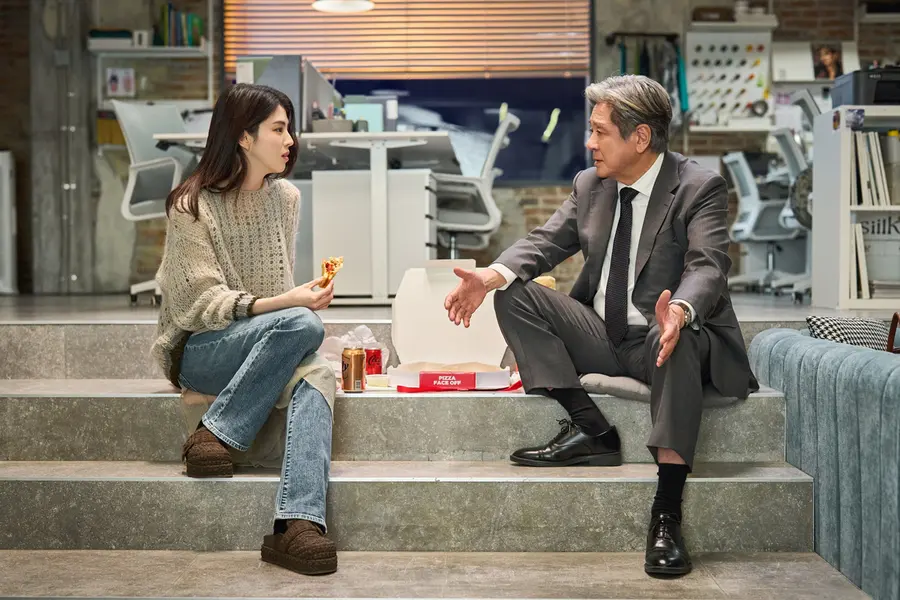
Cons Joo Seong-chul_Added strengths not in the original make some weaknesses feel larger
In Nancy Meyers’s original 〈The Intern〉 (2015), some viewers were uncomfortable with the scene in which Jules (Anne Hathaway) and Ben share a bed. The sequence was triggered by an accidental hotel fire on a business trip, but it was still, arguably, a device that invited misunderstanding. Fortunately, the Korean remake replaces the hotel with an izakaya, and that change alters the context. Lowering Sun-woo’s age slightly so the film can wrestle with pregnancy and childcare issues is a strength. Yet in that izakaya scene—where the shouted line “Snap out of it!” startles many viewers—the relationship between Ki-ho (Choi Min-sik) and Sun-woo risks reading like that of a father and daughter. By emphasizing some strengths, the remake also makes Sun-woo look more dependent as a CEO. The filmmakers introduce male antagonists absent from the original, which creates fresh, cathartic payoffs, but in making Ki-ho a better adult than Ben was, the film may have lost more than it gained. It is also disappointing that the remake fails to discard some needless elements. In the original, Ben and the younger staff stage a 007‑style operation to prevent Jules’s mother from reading a misdirected email—a scene that felt pointless both comedically and narratively. The Korean 〈The Intern〉 doesn’t improve on it either.

〈Assassin(s)〉
Release 2026.09.23
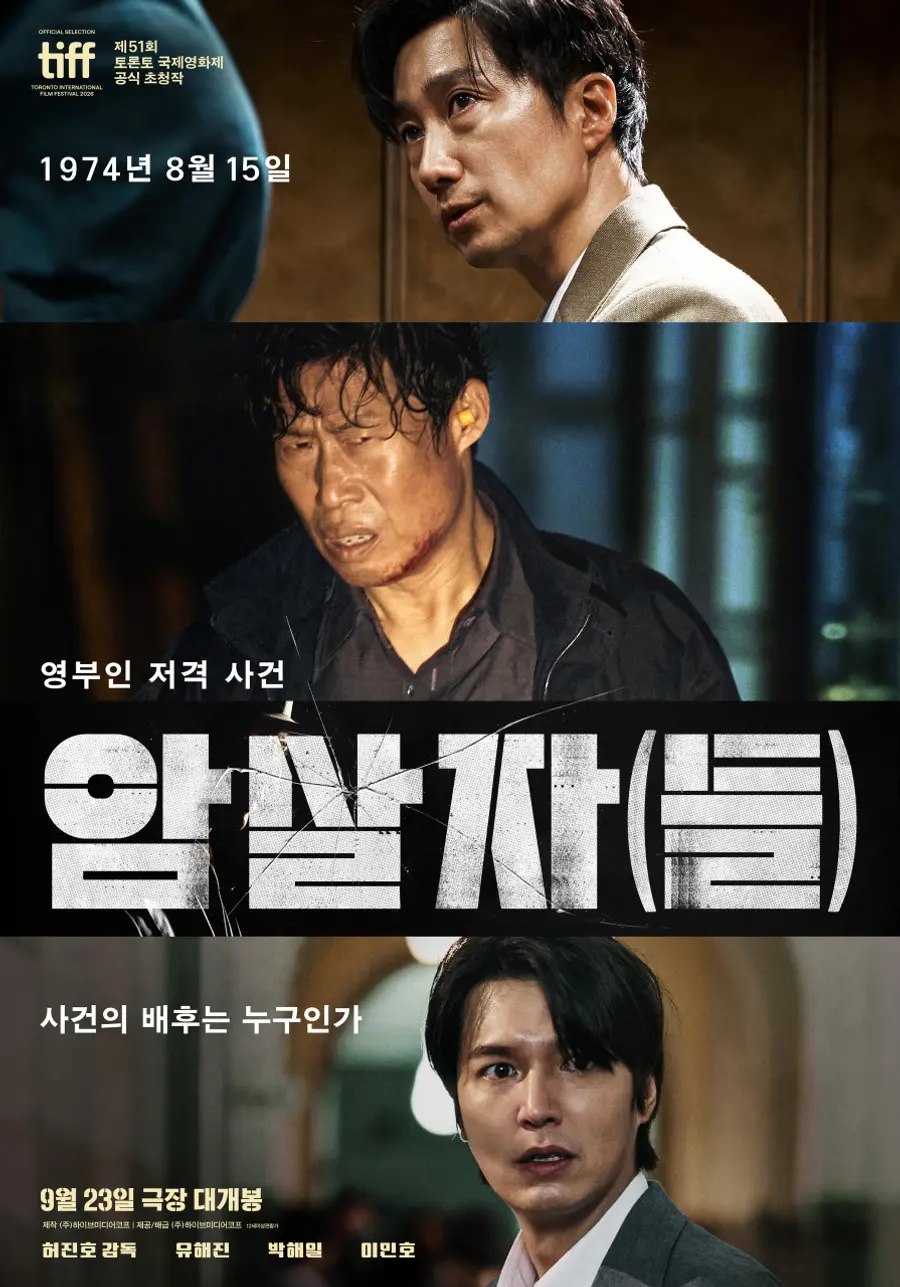
Pros Joo Seong-chul_The crowd-pleasing craft smartly offsets the weight of history
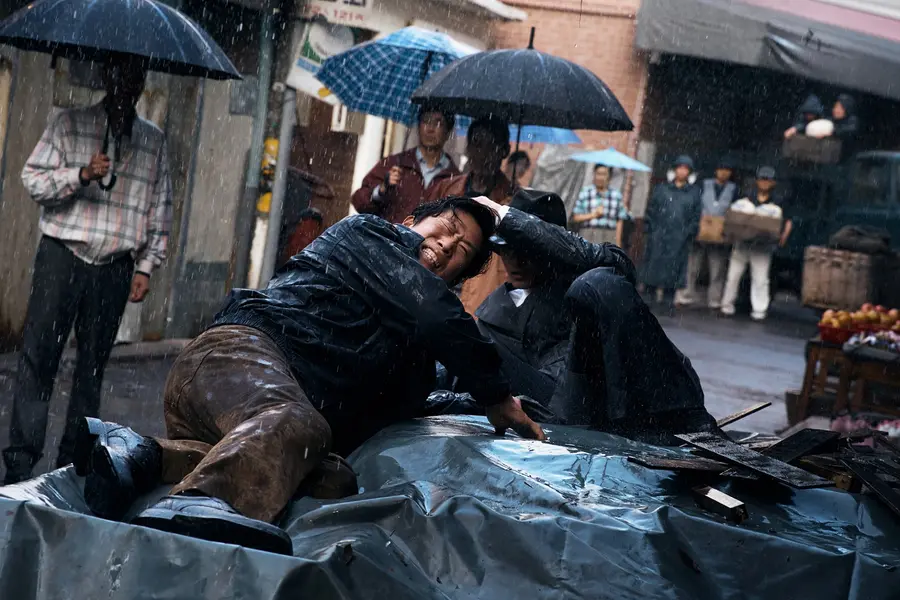
The film traces the suspicions and possible backers behind the 1974 August 15 shooting of the first lady of the Republic of Korea. Starting from the shocking premise that the first lady might have been used as a scapegoat to reverse public opinion, the movie effectively maps a stream of political developments that continue to run through Korean politics today. HYBE Media Corp. has repeatedly returned to South Korea in the late 1970s, from Woo Min-ho’s 〈The Drug King〉 (2018) and 〈The Man Standing at Namsan〉 (2020), to the Disney+ series 〈Made in Korea〉 (two seasons, 2025–2026) and Kim Seong-su’s 〈Seoul Spring〉 (2023). 〈Assassin(s)〉 shows that the brutal modernization of 1970s Korean society was carried out by a variety of different “assassins.” In terms of making a political film accessible to general audiences, director Heo Jin-ho—who had long been associated with Korean melodrama—seems to have adopted a wholly new cinematic language following 〈Ordinary Family〉 (2024) and the series 〈The Laws of Love in a Big City〉 (2024). The chemistry between Yoo Hae-jin and Lee Min-ho is strong, and the rain-soaked, typewriter-punctuated chase sequences are as sharp as any thriller. The film’s very large ensemble—surpassing even 〈1987〉 in its multi‑casting—helps diffuse the story’s weight. The movie also offers a pointed critique of today’s changed media landscape through events at Dongsung Ilbo.
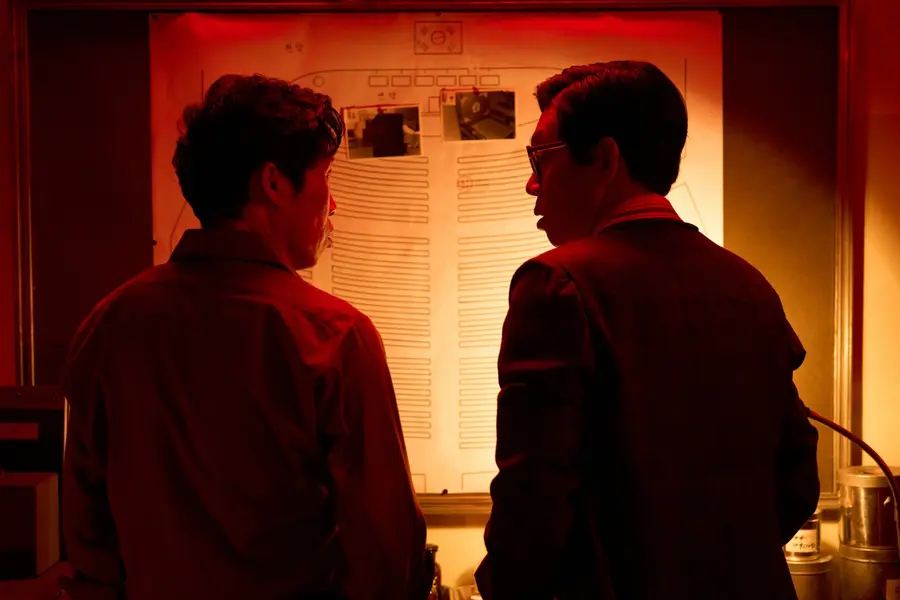
Cons Seong Chan-eol_One of the two—head or heart—needed to hold the temperature
To be clear: 〈Assassin(s)〉 is, in my view, the finest film in this Chuseok slate. On craftsmanship alone it could be considered one of the year’s best Korean films. The problem lies in the film’s temperature. A work inspired by a real 1974 incident poses questions while also illuminating the violently modernizing social conditions of the 1970s. That should naturally produce many moments that make viewers’ blood boil. But at a certain point the film crosses that boiling point outright. I do not deny that the era’s widespread violence must be condemned, but repeatedly depicting the impact on those caught in it can create a backlash. Given how intense the film is overall, stepping back briefly could still have conveyed its heat to the audience. Instead, 〈Assassin(s)〉 seems to urge viewers a step closer. For me, that made the film feel as if it were pressing its point on the audience. As a result, despite an excellent first half, the second half becomes difficult to stay immersed in. The movie naturally invites comparison to 〈1987〉—and when you think about how that film guided audiences into its fever, 〈Assassin(s)〉’s failure to modulate its intensity is even more regrettable. The film is very good, and the first half is genuinely riveting, which only made the distance‑control issues feel larger.
〈Tazza: Belzebub's Song〉
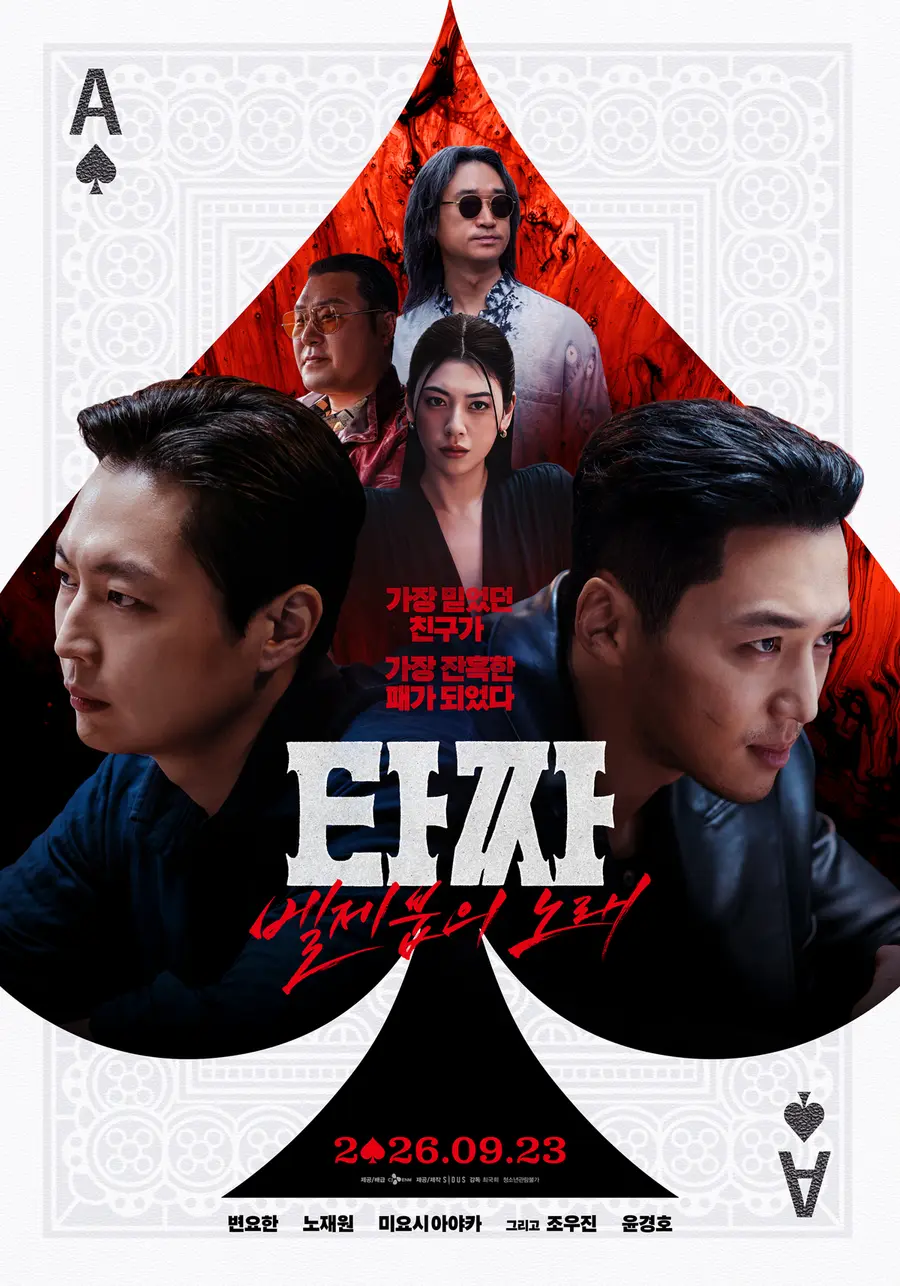
Release 2026.09.23
Pros Seong Chan-eol_The pettiness the "Tazza" brand can show
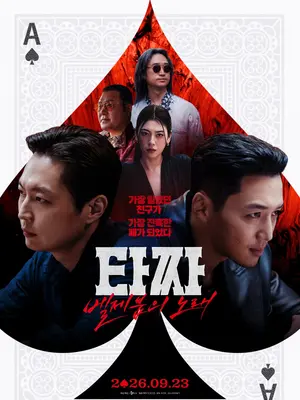
In a good way, the 〈Tazza〉 series is meant to be lowbrow. The first installment was so stylish that its swindlers were often depicted coolly, but at heart they are crass people who live and die by money and gambling. 〈Tazza: Belzebub's Song〉 stubbornly continues the series’ aesthetic. None of the characters, including the two protagonists who are not exactly likable, are free from greed. Even when they win big, they want more; if it’s not money, they hurt others to get what they want. No one among them becomes someone we actually admire. If you feel no admiration for any successful character, the film may be the most accurate portrait yet of people ruined by gambling. I do not think it surpasses the first film, but in an era when so much prompts the question “Should we be doing this?” it is commendable that the series presses its virtues to the end. On that basis, 〈Tazza: Belzebub's Song〉 earns passing marks.
Cons Kim Ji-yeon_Their relationship needed to be, "I struggled a lot because of you, but without you my life was empty"
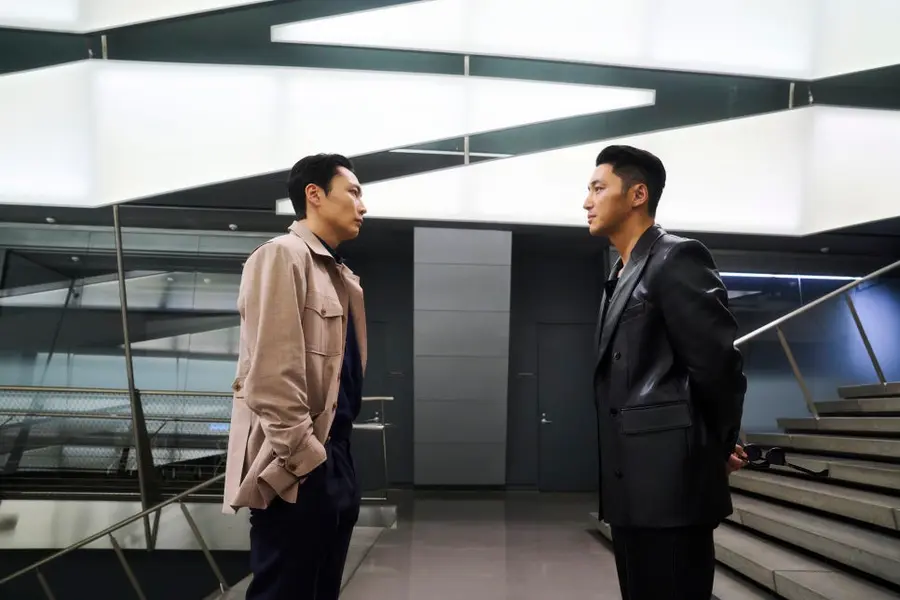
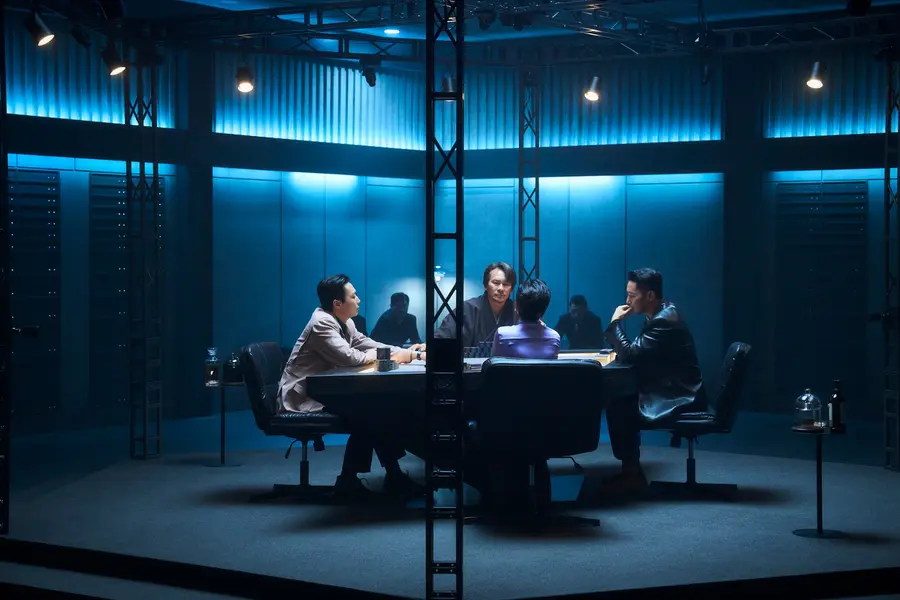
Love and hate are often separated by a very thin line. As the subtitle suggests, 〈Tazza: Belzebub's Song〉 (hereafter 〈Tazza 4〉) begins with the rivalry between Lucifer and Belzebub—the two protagonists. But contrary to expectations, the clash between Lucifer (Jang Tae-young) and Belzebub (Park Tae-young) plays out somewhat flatly. The level of violence may be high and the revenge plot flashy, but the core emotional density between "Jang-tae" and "Park-tae" is thin, which makes it feel undercooked. As actor Noh Jae-won, who plays Park Tae, put it: "Park Tae loves Jang Tae." All of Park Tae’s motives originate from Jang Tae (Byun Yo-han). His leap into poker, his willingness to risk everything on the casino business, even his desire to possess Jang Tae’s sister Tae-hee (Im Se-mi)—all are distorted expressions of love for Jang Tae. Their relationship should have been sticky and messy in a way that simple words like friendship, jealousy, desire or inferiority cannot fully describe. You can infer Park Tae’s emotions from Noh Jae-won’s eyes and manner, but the film devotes its energy to other narratives instead. It leans into a homage sequence between Kwak Dong-wook (Jo Woo-jin) and Jang Tae that nods to the master-and-apprentice dynamic of the first film, and it introduces a slew of characters—Kaneko (Miyoshi Ayaka), Sasaki (Ihara Tsuyoshi), Tao (Hong Dao)—which fragments the focus. As a result, Park Tae’s actions are flattened into the simple category of “villain.” The confrontation where Park Tae and Jang Tae could finally erupt with the love and hate between them is staged in a sealed, ring-like room in the latter half, but even that space functions more as a psychological game than a stage that reveals emotional depths.

![[Interview] In 〈Intern〉, Choi Min-sik’s moving wrinkles reflect 46 years in the making: Part 2](https://cdn.www.cineplay.co.kr/w160/q75/article-images/2026-09-14/32103b89-19c0-4d29-a49f-e17c4b12b6ec.jpg)


![[Lee Hwa-jung’s Deep Talk] “Even after taking the college entrance exam four times, I shamelessly made it this far.” Meeting Noh Jae-won, star of ‘Tazza: The Song of Belzebub’ and ‘Made in Korea Season 2’ ③](https://cdn.www.cineplay.co.kr/w160/q75/article-images/2026-09-18/c5ec35fe-9487-4063-ac5b-5b1a52c5265b.jpg)


댓글 (0)
댓글 작성
댓글을 작성하려면 로그인이 필요합니다.
로그인하기