


I am drawn to music in movies. Sometimes, music reveals a character’s innermost feelings in ways that images and dialogue alone cannot fully convey. It can also offer a window into a filmmaker’s hidden intentions. For me, understanding a film’s music has been one way of finding my way into the film itself. “Chu A-young’s Music Box” listens more closely to the voices of films through their music. (P.S. I hope you will listen to the music as you read.)
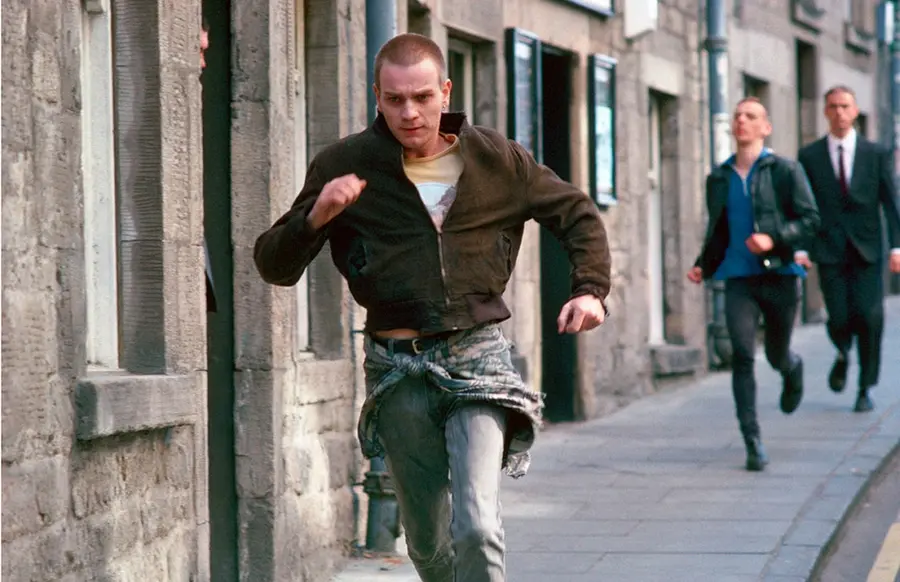
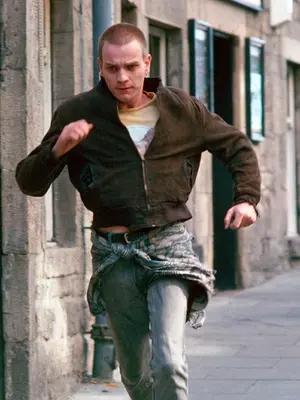
“Choose Life.” Danny Boyle’s 〈Trainspotting〉 opens with defiant narration by Mark Renton (Ewan McGregor), a young man squandering his youth on heroin. He sneers at the consumerist injunction to “choose life,” which seems to promise freedom, and lists the nearly identical lives people have supposedly chosen for themselves: “a big television, washing machines, cars…a three-piece suite on hire purchase, game shows, junk food.” He declares that he has turned his back on all these trappings of an ordinary life and chosen heroin instead. As his narration plays, Renton races through the streets of Edinburgh, Scotland, appearing as an embodiment of youth rejecting the social order. Iggy Pop’s classic “Lust for Life” perfectly matches the film’s intoxicating momentum. Yet the music in 〈Trainspotting〉 goes beyond mere background accompaniment, cutting to the heart of its concerns with youth, freedom and existence. In particular, “Lust for Life” in the opening and Underworld’s “Born Slippy (Nuxx)” in the ending bring the film’s themes into focus, bookending its beginning and end.
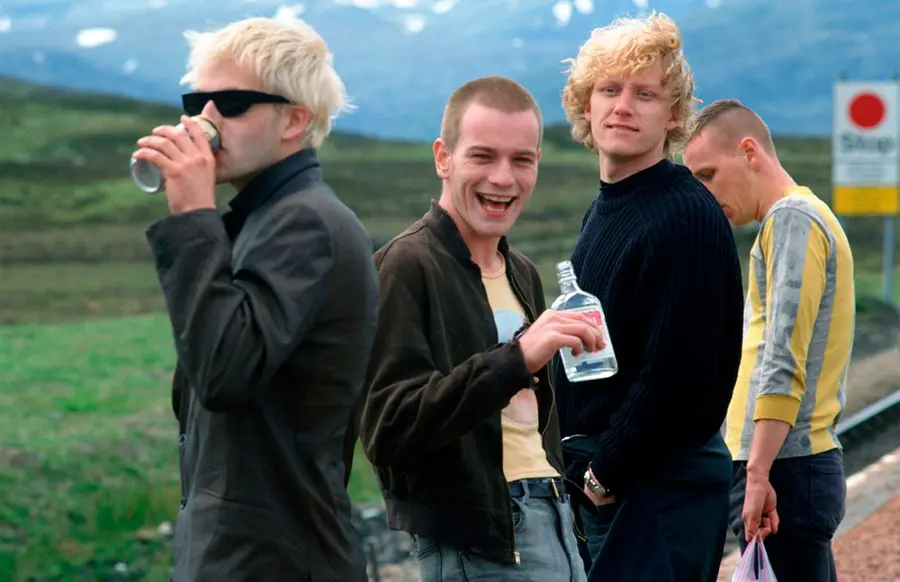
Renton, a drug addict, seeks an escape from his listless daily life through pleasure. Day by day, he descends toward rock bottom in the company of his relatively guileless best friend Spud (Ewen Bremner), the cynical Sick Boy (Jonny Lee Miller), the violent Begbie (Robert Carlyle) and Tommy (Kevin McKidd), who dreamed of a life different from those of his friends, mired in drugs and violence, but ultimately succumbed to despair. Renton struggles to break the cycle of addiction, but escape does not come easily. The friends he relies on gradually become the very people keeping him trapped in Edinburgh’s dark underbelly, while his past also holds him back as he tries to change.
Where the Desire to Live Meets Self-Destruction
Iggy Pop’s “Lust for Life”
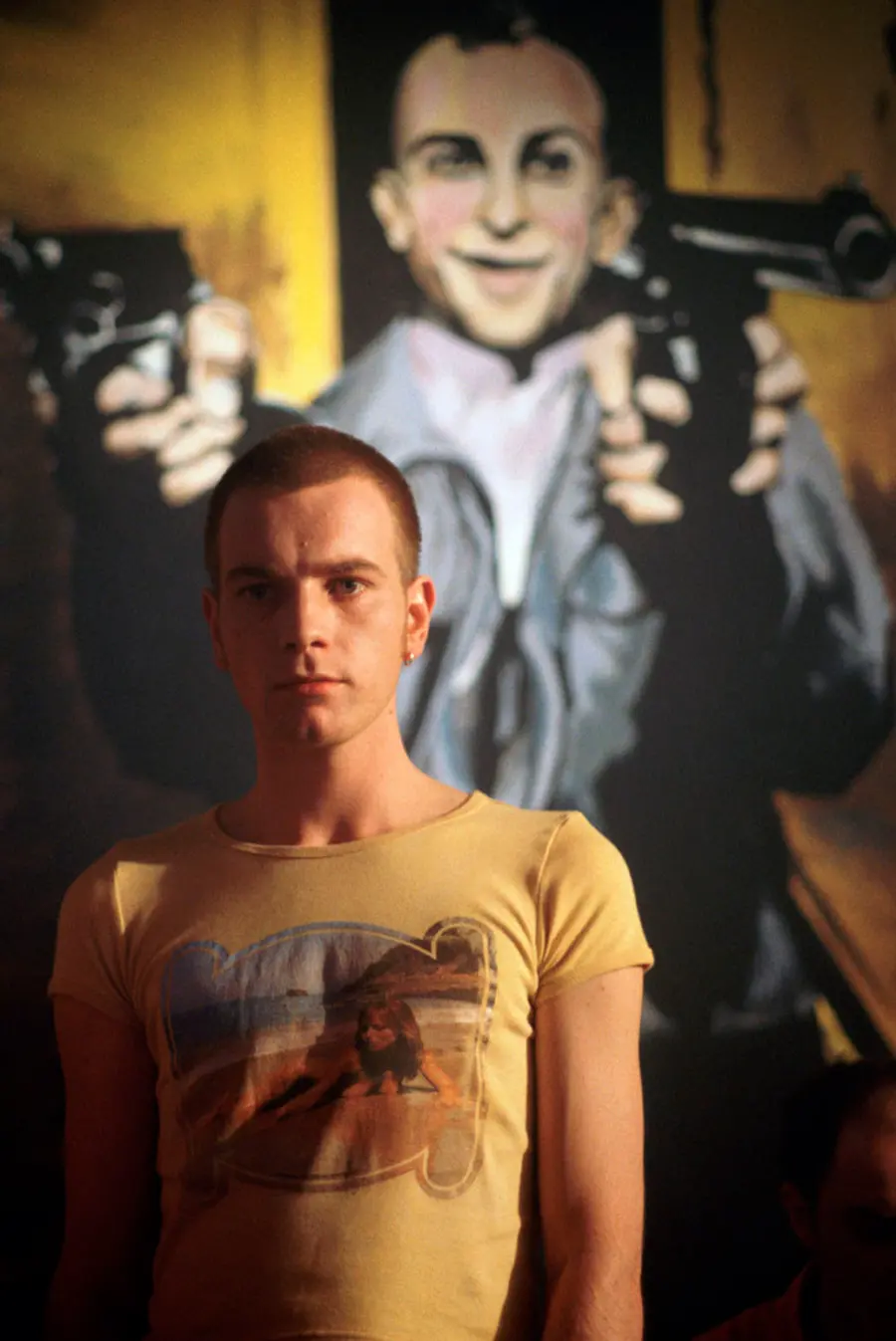
“Lust for Life,” by punk rock pioneer Iggy Pop, is the title track of his 1977 album, with David Bowie contributing as co-writer and producer. The song took shape during their time in West Berlin, when Bowie played Iggy Pop a rhythm on the ukulele inspired by the Morse code-like signal of the American Forces Network, AFN. Iggy Pop wrote the lyrics by blending his own experiences of trying to escape drug addiction and sexual wandering with characters and imagery borrowed from William S. Burroughs’ surreal novels 「The Ticket That Exploded」 (The Ticket That Exploded) and 「The Soft Machine」 (The Soft Machine), which explore control and liberation through sex, drugs and power. The critique of capitalism in Burroughs’ novels, where even love and desire become commodities, carries over intact into Iggy Pop’s music. At the same time, the song’s repeated lyrics express both a desire to stay alive and a self-destructive craving. By placing the song at the opening, Danny Boyle captures Renton’s destructive desperation as he wavers between a consumerist life and a life of addiction.
Contradictions Hidden Beneath the Euphoria
Underworld’s “Born Slippy (Nuxx)”
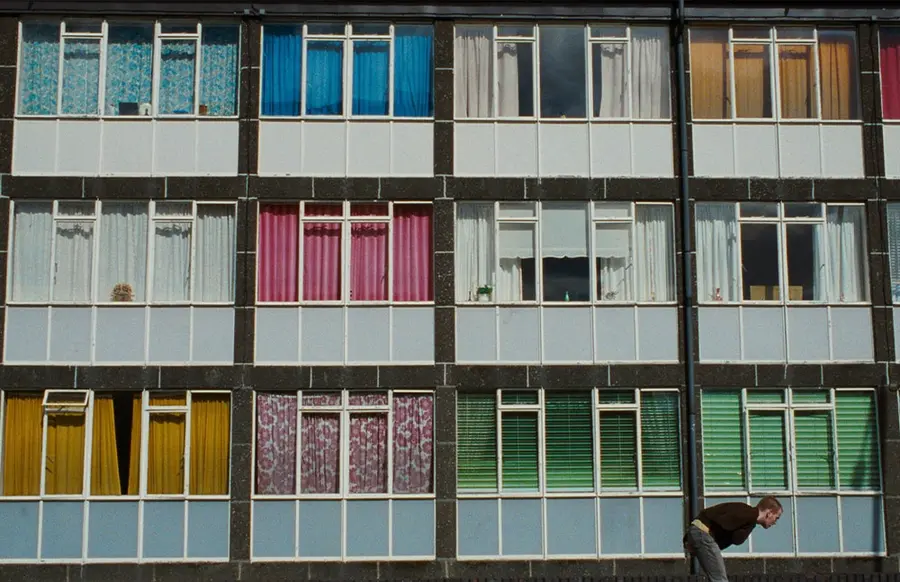
Renton leaves Edinburgh for London to escape a life stained by drugs and violence. In London, he works diligently as a real estate agent and seems to have settled into a second life, but that life is precisely the one he once rejected. He relies on the outward trappings of a job and financial stability, soothing the loneliness of city living by watching television. He has escaped drug addiction, only to experience another form of alienation as a low-wage worker on the margins of the capitalist order.
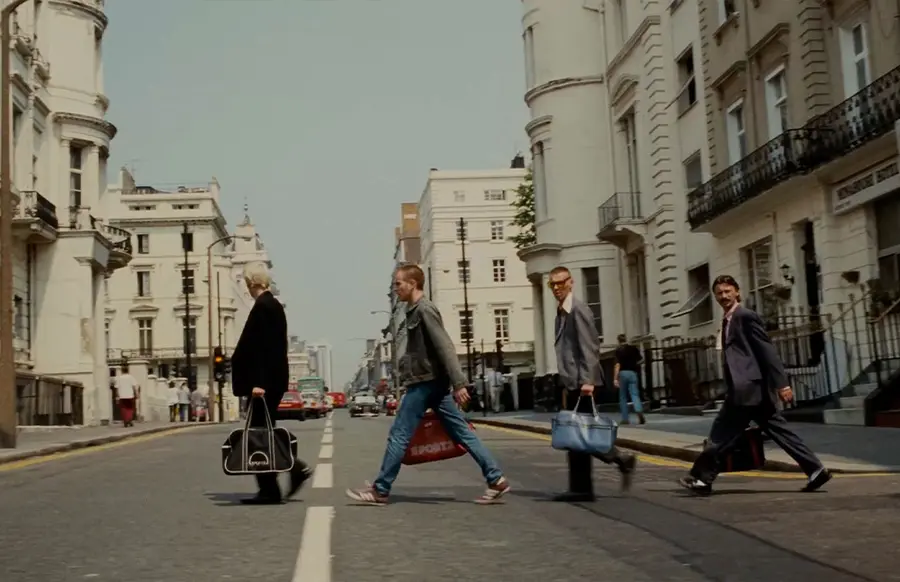
In fact, this is merely a transitional period for Renton: He still does not believe in the value of a normal life, but has compromised by accepting the outward appearance of financial stability. When Sick Boy comes back into his life, he removes the television, a symbol of normal modern life, from Renton’s home. The act is deeply symbolic, foreshadowing how the life Renton has built in London will be brought down by friends from his past. Ultimately, Renton readily agrees to a drug deal proposed by the friends who have come looking for him, falling once again.
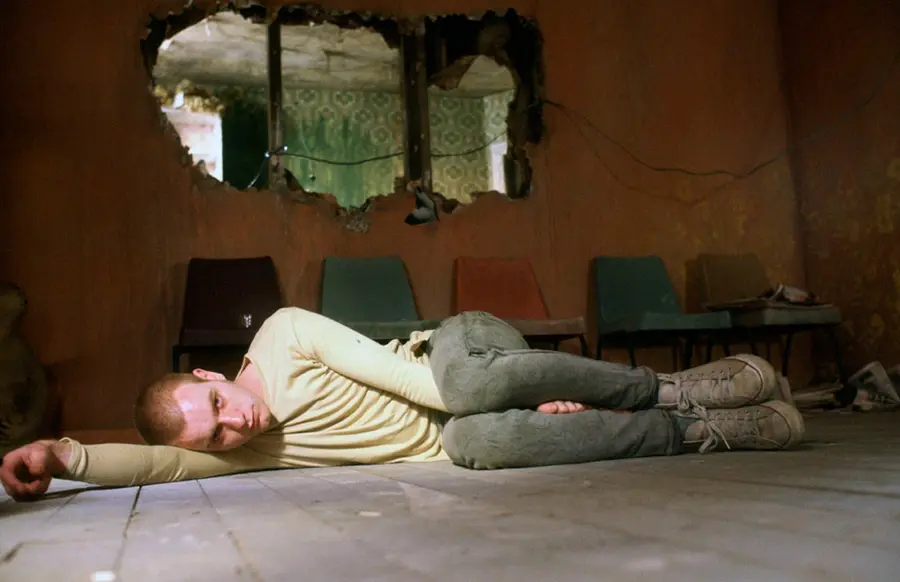
Underworld’s “Born Slippy (Nuxx)” plays at the film’s climax, when Renton betrays his friends and runs off with the money from the drug deal. The scene mirrors the film’s opening. Once again, Renton is fleeing something. Accompanying his flight, the track draws on the musical language of rave, plunging the audience into euphoria with endlessly rising synths, chopped-up vocal samples, and explosive drums and bass. But that euphoria is not pure liberation; it acts as an anesthetic, keeping us from recognizing the contradictions in his choice. In the closing narration, Renton declares that he will choose the consumerist life he rejected in the opening. Through these contrasting voice-overs, Danny Boyle refuses to end the film as a linear story of personal growth. Because Renton’s new life begins with betrayal and ill-gotten gains, it is already morally compromised and can never amount to growth.






댓글 (0)
댓글 작성
댓글을 작성하려면 로그인이 필요합니다.
로그인하기