



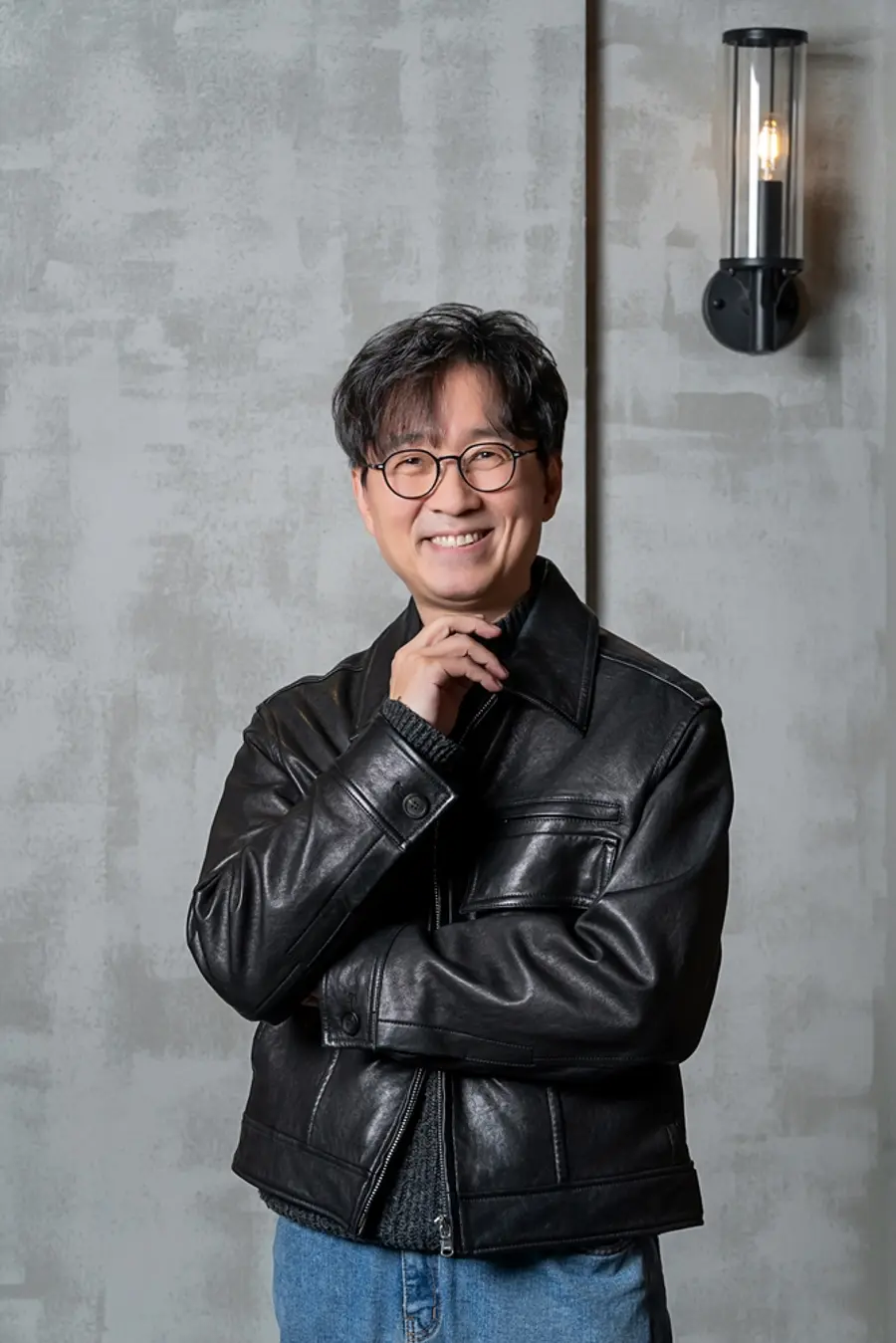
Fortunately, he was cheerful even at the interview site. He is known to be a cheerful person, but he was probably in a good mood here because his new work 〈The King's Warden〉 received good reviews right after the premiere. Director Jang Hang-jun, who is also active as a broadcaster, presents his first 'Jang Hang-jun-style historical drama' with 〈The King's Warden〉, which was released on February 4. He looked into the character of 'Dan Jong' Lee Hong-wi, who has been portrayed as an unfortunate king and a victim of ambition, through the figure of Eom Heung-do, who is remembered in history for recovering his body. Two days after the premiere, where the trusted actor Yoo Hae-jin played Eom Heung-do and the captivating Park Ji-hoon took on the role of Lee Hong-wi, I had a conversation with Director Jang Hang-jun about 〈The King's Warden〉 at a cafe in Jongno-gu, Seoul. As a pre-advice, if you closely observe the above photo of Director Jang Hang-jun while reading the interview, you might experience self-voice support.
※ It is noted that descriptions related to the climax of 〈The King's Warden〉 are included.
Additionally, although Lee Hong-wi is referred to by his military title 'Noh San-gun' in the film, for the convenience of the interview, I will unify the notation to the posthumous title 'Dan Jong'.
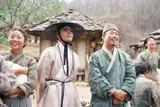
![A scene from the movie 〈The King's Warden〉 [Provided by Showbox]](https://cdn.www.cineplay.co.kr/w900/q75/article-images/2026-01-29/2a51503b-6956-4059-9d81-f7c16d440a56.jpg)
You mentioned that you search for your name in the morning. Do you also search for 〈The King's Warden〉 every day?
Of course. (Because the response is good) I feel really good. (laughs) I'm so relieved. So, not just me, but our actors, staff, everyone searches for 〈The King's Warden〉 when they wake up in the morning. It's a joyful and exciting time. Since the lid hasn't been opened yet (before the release), I think that's why. That kind of response was the best. "I cried and laughed while watching the premiere," "When it’s released, I will definitely buy tickets to watch it with my family." When we eat delicious food outside, we want to eat with our families, right? I felt that they had that kind of feeling, like 'I want to eat this with my mom', so I was really happy.
This film depicts the aftermath of the Gye-yu Jeongnan, but surprisingly, the character of Su Yang Daegun does not appear. Was that your intention from the beginning?
That's right. In the film, Han Myung-hoe (played by Yoo Ji-tae) fulfills the role of Su Yang Daegun. And in reality, Su Yang never took the forefront. Even in situations where he should have, he probably didn't step forward due to his political position or image. So I think Han Myung-hoe is sufficiently playing Su Yang's role. In a way, Han Myung-hoe is the person who played the most decisive role in Su Yang becoming king. Since Han Myung-hoe is present, Su Yang's role becomes less important in our film. And the true evil must not be seen to be more frightening. Also, if Su Yang appears, I felt it would break the audience's immersion. Because he looks like an actor. His brief appearance as an actor... Su Yang was never considered from the beginning. In fact, I briefly thought about it. 'Who should I cast for a cameo?' But I really dislike it when a cameo breaks the immersion. As you can see in the film, I didn't even include the usual 'Cinematography by' or 'Cast' at the beginning. That's it. I didn't want the audience to feel, 'Oh, this is a story that was made.' I thought that returning to this remote area of Gangwon-do and several hundred years ago in Joseon would break the immersion. So I didn't include opening credits. I thought that everything that could break immersion should be removed, and I considered everything that could break immersion unnecessary, not just Su Yang.
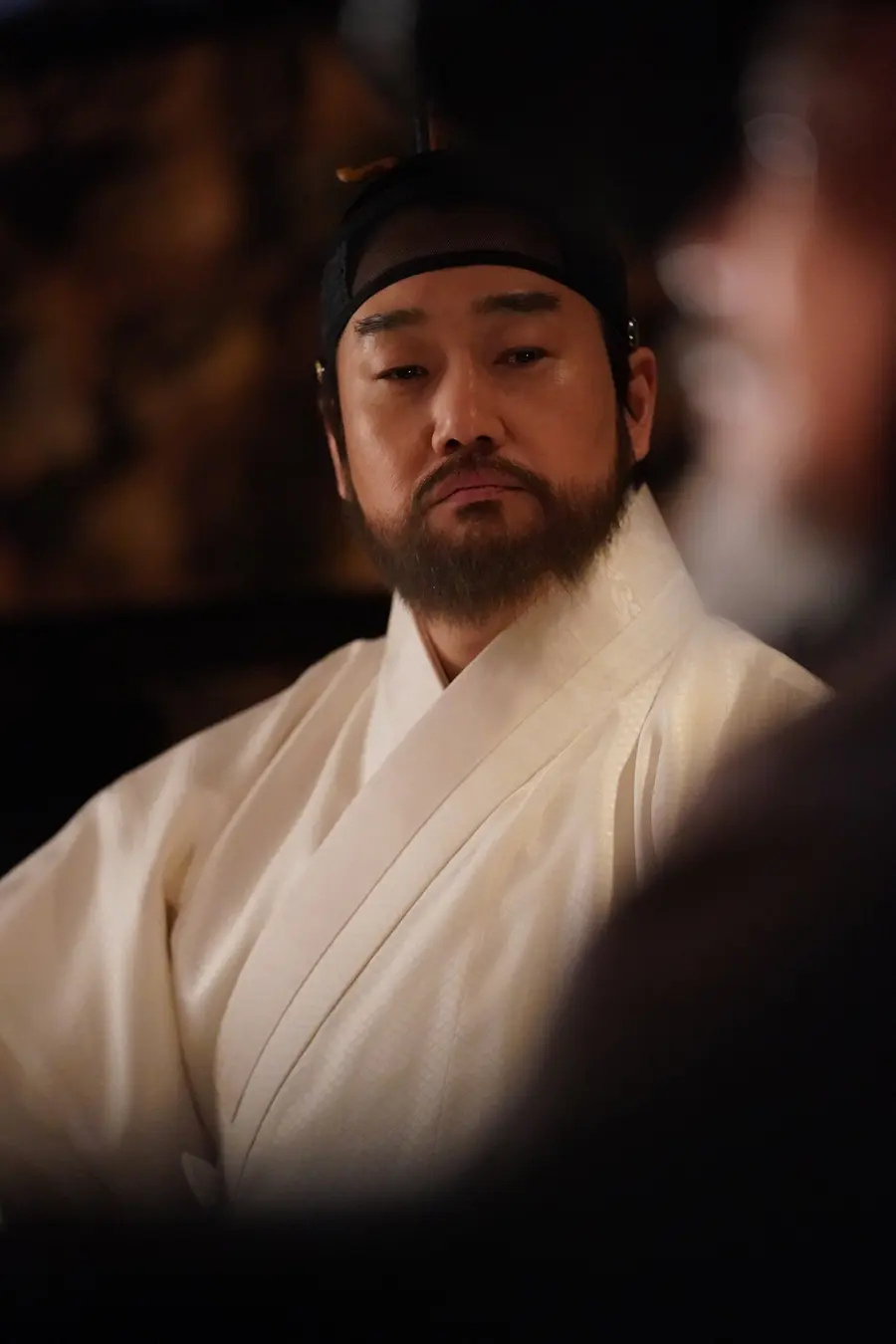
In the initial scene where the ministers are being tortured, the atmosphere suddenly shifts to the deer hunting scene in Gwangcheon-gol. Is there a reason you conceived the opening that way?
First of all, the deer hunting scene was quite important. Because it shows that 'this place (Gwangcheon-gol) is not Hanyang. This is not the center of power. However, here too, there are issues of survival and chains of killing or being chased. But it is a life scene where a different form of chain exists.' In Hanyang, there are scenes of killing people, where powers clash fiercely... I thought those things were important, and Gwangcheon-gol was an important life scene. The image of the tiger was also very important. We often express the tiger as the king of the mountains, so the metaphor could be, 'Then who is the real king?' Is the real king Su Yang or the deposed Dan Jong? That's the question.
There were reactions that the quality of the tiger's CGI was disappointing.
That's a timing issue. In fact, it needed about a month or two more work... According to the CGI team, the tiger's fur, you know, they work on each hair and rendering takes 16 hours for one frame, which is 1/24 of a second. So it actually requires much more time. They had to keep correcting errors on how the tiger would look in the scene's lighting, but there wasn't enough time.
The character Eom Heung-do, played by Yoo Hae-jin, is a very capitalistic figure who voluntarily goes into exile to revitalize the village. However, in the end, he makes an irrational choice to give it all up.
I believe that any main character in a drama must grow. Lee Hong-wi (played by Park Ji-hoon) is the same, and so is Eom Heung-do. The audience follows the emotions of the main characters. In depicting that growth, I thought it was necessary to have a somewhat secular character that resembles us, as you mentioned, to highlight the irrational aspects. I hoped that the audience could laugh and empathize with a character that is familiar to us, yet transparent and somewhat cute. When the audience meets Hong-wi through a relatable character, I thought this film ultimately reflects Heung-do's perspective on Hong-wi. The seemingly weak and powerless king Hong-wi gradually finds himself in this exile, and through him, Heung-do sees a warmth and a side of a ruler that he had not felt from other nobles or royalty, leading Heung-do to feel, 'Ah, this is someone I truly want to follow. I hope this person returns to his rightful place.' I wanted the audience to feel that connection between the character and their emotions.
The relationship between the two is hard to define. It seems like friendship, yet also like a father-son relationship. Was there a directorial point in depicting it that way?
It was the most important aspect. If that doesn't resonate, I think this film would fail. The emotions you mentioned between Hong-wi and Heung-do, whether it can be called affection (情), loyalty (忠), or righteousness (義), those ambiguous feelings must resonate for the film to function well. I believe they learn from each other. Heung-do learns from Hong-wi, and Hong-wi sees the real lives of the people. If Dan Jong had a long reign or had not been deposed, he would not have seen the lives of the people. Because Hong-wi is one of the few kings born in the palace among Joseon kings. He was born in the palace and lived there, but that wasn't for long. The problem is that this boy king, who lived in the palace, sees the lives of the people he had not known in exile, and he sees their hopes, what they enjoy, and what they desire. Joseon is a land of the yangban, but it is also said that 'the people are the foundation,' a phrase often quoted by King Sejong. I wondered if this young boy understood the meaning of what his ancestors said. 'What should a true king do?' and thus he resolves, 'I must return to that place.' In the early Joseon period, it wasn't a Joseon led by powerful authority and status. People were appointed regardless of status, but that changed as time went on. Eventually, a moment came when the class system became completely solidified, and this is a hypothesis about that. If Dan Jong had come to exile and returned to the throne, would an era of equality have followed? I imagined that it would have been a much better Joseon, not one where the yangban monopolized power.
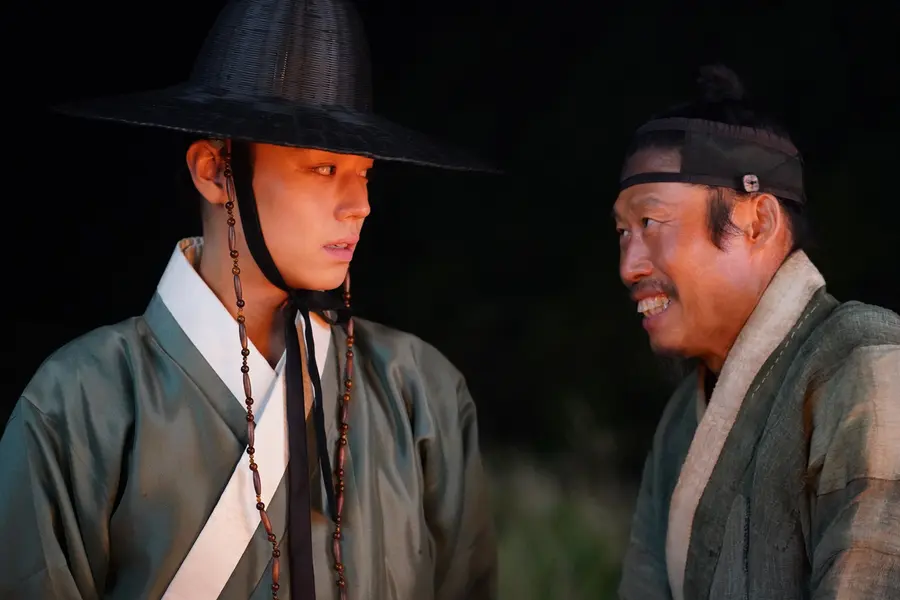
Eom Heung-do is recorded as a loyal subject, but in the film, it seems to be due to affection.
That's right. It seems to be affection. In fact, isn't affection a broader category than loyalty? And in a way, when Heung-do and Hong-wi first met, they met as master and guest. They met as a precious guest and a host, and then they were master and servant. As their relationship gradually changed, the roles reversed. Hong-wi becomes the elder, and Heung-do becomes the subordinate. Then later, it changes again. Heung-do becomes a father... So it evolves into a father-son relationship. According to the records of the dynasty, it is loyalty. But from a human perspective, I think it is true affection.
You portrayed Dan Jong not as a weak king but as a proactive figure. I'm curious about what feelings you had towards this character of Dan Jong.
I thought of it as a kind of 〈Saving Private Ryan〉. In 〈Saving Private Ryan〉, the unit goes to rescue the last son of the Ryan family, and one by one, they die. At that time, the soldiers say, "I hope he is a valuable person." The same goes for me. I have no way of knowing what Dan Jong was really like, but I hope that the person who is the result of many sacrifices possesses the qualities of a virtuous king. When I thought that, I hoped he wouldn't be a weak and powerless figure. In fact, looking at history, there are no records of Dan Jong being weak or powerless. On the contrary, he was very intelligent, quick to learn, had clear discernment, and was a skilled archer, which made him a favorite grandson of King Sejong, and he was a son that his father, King Munjong, cherished dearly. The tragedy is that when Dan Jong came to power at the age of 12, his grandfather, grandmother, father, and mother were all gone. There was no one to protect him. It is said that before King Sejong passed away, he told Munjong and his brothers, "Please take care of Hong-wi." Su Yang also heard that. And later, Munjong, like other ministers, also told Su Yang, "Please take care of him." He was so intelligent that he was cherished as a royal blood relative. But I have also imagined this. Why did Munjong ask Su Yang to take care of him? Perhaps Munjong knew Su Yang's temperament? Maybe it was to prevent him from executing (the usurpation of the throne) at the last moment because of my words? There is a saying, "The villain has a seed somewhere in his body." Could it be that Munjong saw that seed in Su Yang?
Anyway, the weakness and image of Dan Jong that we know are all created by later generations. They are merely the product of political outcomes. Any strong figure, if politically removed, if we have no records of their appearance or character, we think they simply lost because they were weak. A failed athlete is not someone who cannot play sports, right? They just lost in competition. The film starts from the assumption that Hong-wi is not like that. At the beginning, when Hong-wi is exiled, he has a very sad and unwilling expression. I thought at that moment, (Hong-wi's expression) is not 'What should I do now?' but rather 'The people who followed me, liked me, and cared for me have all died because of me.' That is the expression. It is not a selfish expression of just me... So even after coming here until the end, as that danger approaches, he feels, 'I can no longer be treated like this, I want to save (the people).' But within that, there was also Heung-do... So I think those aspects were important to consider.
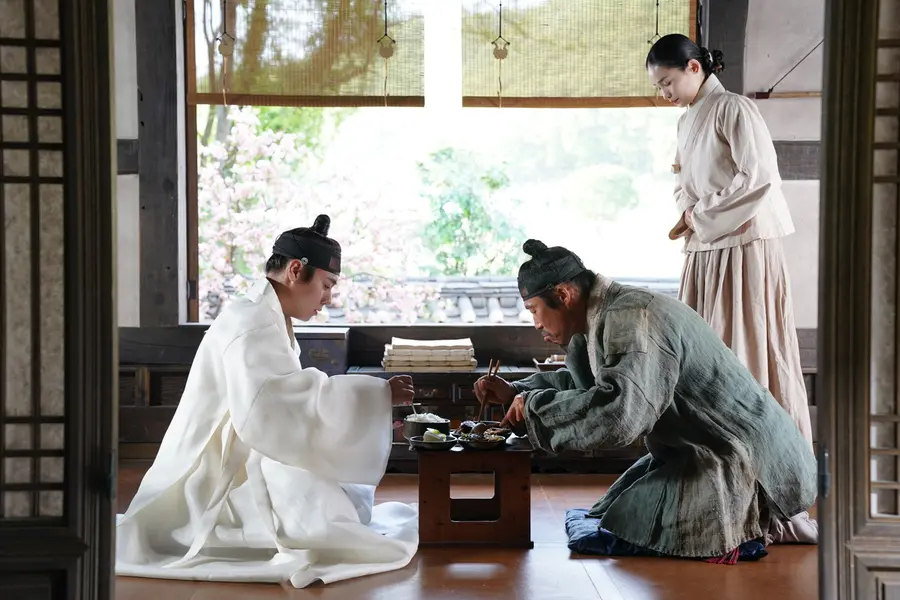
There is a scene where Dan Jong, who initially refused food, later comes to understand the value of rice, and there is also a scene where the king and the people eat together. How did you want the audience to feel about that?
In fact, that scene doesn't make sense. No matter how much he is in exile, the royal family and these commoners, the poor people of the mountains, having such a conversation... Now, Yeongwol is about 2 hours from Seoul, but back then, I guess the clothing was much older than what we know. When going outside and coming back, they could be attacked by wild animals or slip off a cliff and die; it is a real treacherous mountain. So, it is impossible for the king to eat with the common people in such a place, so I actually wanted to show that scene a bit more. They are now eating the same thing. They are talking at the same eye level, sharing emotions while eating the same food. And Hong-wi is serving that food. So in a way, while Hong-wi is interacting with the common people at that table, he must have felt, 'If another opportunity comes, I must do politics for these people.' And the people would have thought, 'Ah, that's why he was a king.' I believe that fundamentally, these people in the remote mountains have never dared to think about the king or even mentioned him. Even when tyranny began, I don't think many people thought it was because of the king. They probably thought it was because of the treacherous ministers that the country became like this, based on their perception at the time. I think the scene of the king eating with such people is very important, so I made the location of that place as beautiful as possible, along the riverbank. I asked to make the windows as wide as possible. When the windows are fully opened, it feels like the king and the common people are eating together in a meadow. It is one of my favorite scenes.
Rice appears a lot in the movie. They share rice. In fact, during the Joseon Dynasty, I realized while looking at the history of customs that rice was really precious. Rice itself is a symbol of status, wealth, and a symbol of success and class... (In the film) sharing that has a different meaning than just eating together now. It means giving everything.

![[OTT Ratings] Cineplay reporter ratings for Netflix series 'Scandal'](https://cdn.www.cineplay.co.kr/w300/q75/article-images/2026-09-21/b3a9b606-46e0-40e8-9d5c-c054a0f03ba4.jpg)
![[First Reactions] 'The King and the Man' Cineplay Reporter Star Rating](https://cdn.www.cineplay.co.kr/w160/q75/article-images/2026-01-22/66352098-ec4e-443d-be31-8eea2db359e0.jpg)

댓글 (0)
댓글 작성
댓글을 작성하려면 로그인이 필요합니다.
로그인하기